
The evolution of power generation technology continuously pushes the boundaries of efficiency and environmental responsibility. A significant leap forward is the development of ultra-high-temperature ultra-supercritical (UHT-USC) steam turbines. These advanced systems operate with main and reheat steam temperatures elevated to approximately 620°C, compared to the 580°C typical of conventional USC units. This increase yields a notable 4% to 6% improvement in thermal efficiency, translating directly to reduced fuel consumption and lower CO₂ emissions, which is paramount for sustainable industrial development. A critical component enabling this technological leap is the reheat stop and control valve casing. The successful production of this complex, high-integrity steel casting, designated as material ZG13Cr9Mo2Co1NiVNbNB (CB2), represents a pinnacle in modern foundry engineering, combining advanced alloy design, precise process simulation, rigorous metallurgical control, and sophisticated heat treatment.
The valve casing is a large-scale, heavy-section steel casting with an as-cast weight exceeding 13,000 kg and intricate internal passages. Its geometry, resembling a large manifold, presents significant challenges for soundness and dimensional accuracy. The material itself, a high-alloy martensitic steel, is selected for its exceptional creep strength and oxidation resistance at the target service temperature. However, this very alloy composition introduces considerable complexities into the steel casting process. The development journey from digital model to finished product encapsulates a holistic approach to modern, quality-driven heavy steel casting manufacture.
Technical Specifications and Foundry Challenges
The performance requirements for the valve casing steel casting are stringent, dictating tight control over chemistry, mechanical properties, and internal integrity.
Chemical Composition and Mechanical Properties
The alloy is a carefully balanced system of over ten elements. Carbon is kept in a low range to ensure good weldability and toughness, while chromium provides oxidation resistance. Molybdenum, cobalt, vanadium, niobium, nitrogen, and boron act in synergy to form stable carbides, nitrides, and carbonitrides that provide precipitation strengthening and impede dislocation climb at high temperatures. The target and permissible ranges for chemical composition are critical for achieving the desired microstructure. The internal control standards used during production were even tighter than the specification requirements to ensure margin for process variation and optimal properties.
| Element | Specification Range | Internal Control Target | Key Function |
|---|---|---|---|
| C | 0.11 – 0.14 | 0.11 – 0.14 | Strength, carbide former |
| Si | 0.20 – 0.30 | 0.20 – 0.30 | Deoxidizer |
| Mn | 0.80 – 1.00 | 0.85 – 0.95 | Strength, sulfide morphology control |
| P | ≤ 0.020 | ≤ 0.010 | Impurity (embrittlement) |
| S | ≤ 0.010 | ≤ 0.010 | Impurity (hot shortness) |
| Cr | 9.00 – 9.60 | 9.20 – 9.45 | Oxidation resistance |
| Ni | 0.10 – 0.20 | 0.10 – 0.20 | Toughness, austenite stabilizer |
| Mo | 1.40 – 1.60 | 1.50 – 1.60 | Solid solution strengthening |
| Co | 0.90 – 1.10 | 0.90 – 1.10 | Reduces temper embrittlement, raises Ac1 |
| V | 0.18 – 0.23 | 0.20 – 0.23 | Precipitation strengthening (V(C,N)) |
| Nb | 0.05 – 0.08 | 0.05 – 0.08 | Grain refinement, precipitation (Nb(C,N)) |
| B | 0.008 – 0.011 | 0.008 – 0.011 | Enhances hardenability, grain boundary strength |
| N | 0.015 – 0.022 | 0.015 – 0.022 | Precipitation strengthening (with V, Nb) |
| Altot | ≤ 0.020 | ≤ 0.010 | Deoxidizer (controlled to avoid excess) |
The room temperature mechanical properties serve as a key quality indicator for the steel casting, verifying that the heat treatment has successfully produced the required martensitic microstructure with adequate strength and, crucially, toughness.
| Property | Symbol | Requirement |
|---|---|---|
| Yield Strength | Rp0.2 | ≥ 500 MPa |
| Tensile Strength | Rm | 630 – 750 MPa |
| Elongation | A5 | ≥ 15 % |
| Reduction of Area | Z | ≥ 40 % |
| Charpy V-Notch Impact Energy (Avg.) | KV | ≥ 30 J (Min. single value ≥ 24 J) |
Inherent Challenges in Producing This Steel Casting
The manufacture of this specific steel casting presents a confluence of material- and geometry-related difficulties:
1. Alloy-Related Casting Challenges: The high alloy content, particularly chromium, reduces the fluidity of the molten steel, demanding higher pouring temperatures which can exacerbate segregation and grain growth. Elements like niobium, vanadium, and titanium have high affinity for carbon and nitrogen, leading to the formation of stable compounds. If these compounds precipitate preferentially at grain boundaries during the final stages of solidification, they can severely impair hot strength and promote hot tearing. Furthermore, the intentional addition of nitrogen, while beneficial for precipitation hardening, increases the risk of gas porosity (nitrogen pores) if not carefully controlled during melting and casting.
2. Geometry-Related Solidification Challenges: The valve body features multiple intersecting cylindrical sections (nozzles) and thick flanges. These intersections create isolated thermal centers, or hot spots, that are difficult to feed from a centralized riser. The geometry impedes directional solidification, creating a high risk of shrinkage porosity and macro-segregation in these junction areas. Additionally, the large, cored internal cavities subject the molding sand to prolonged intense heat, increasing risks of burn-on, penetration, and core distortion, which can lead to dimensional inaccuracies or fusion defects in the final steel casting.
Casting Process Design and Simulation
To address these challenges, a comprehensive casting process was designed, leveraging both traditional foundry principles and modern simulation tools.
The steel casting was oriented horizontally, with its primary parting plane along the central axis. This allowed for symmetrical molding and provided good access for placing cores and risers. A linear shrinkage allowance of 2.0% was applied to the pattern. The most critical step in the process design was managing the dispersed thermal centers. The casting was strategically segmented into three distinct feeding zones (A, B, C) using chills placed at the junctions. This division effectively broke down the complex geometry into simpler, more manageable units that could be made to solidify directionally.
The design of the feeding system (risers and chills) followed the modulus method. The modulus (M) of a casting section, defined as its volume (V) divided by its cooling surface area (A), is a measure of its solidification time:
$$ M = \frac{V}{A} $$
For a riser to effectively feed a section, its modulus must be greater than that of the section. A common rule is $M_{riser} \geq 1.2 \cdot M_{casting}$. For the main body section (Zone A), the calculated casting modulus was approximately 6.84 cm. Consequently, a riser with a modulus > 8.21 cm was required. A large rectangular insulating riser with a modulus of 12.8 cm was selected. The required riser volume was calculated based on the solidification shrinkage of the alloy (ε ≈ 5.8%) and the feeding efficiency (η) of the insulated riser (assumed 18%), using the formula:
$$ G_{riser} = \frac{G_{casting} \cdot \epsilon}{\eta – \epsilon} $$
where $G_{riser}$ and $G_{casting}$ are the weights of the riser and the casting section, respectively. External chills were extensively used at the lower sections of the nozzles and in hot-spot junctions to accelerate cooling, create a defined thermal gradient, and extend the effective feeding range of the risers.
To validate this design, the entire process model was analyzed using Experto-ViewCast simulation software. The software solves the governing equations of fluid flow and heat transfer to predict potential defects. The simulation confirmed that with the designed riser and chill layout, the last regions to solidify were safely confined within the riser bodies, and no major shrinkage porosity was predicted in the casting proper. This virtual validation de-risked the expensive prototyping phase for this critical steel casting.
The gating system was designed for a quiet, non-turbulent fill to minimize oxide formation. A bottom-gating, open system with multiple in-gates was used. The total cross-sectional areas were balanced according to the ratio $\Sigma A_{pouring-basin} : \Sigma A_{sprue} : \Sigma A_{runner} : \Sigma A_{ingate} = 1 : 2.3 : 2.3 : 6.4$. The target pouring time (t) was under 100 seconds, calculated based on the casting weight (W), density (ρ), average fill rate (v), and total ingate area (Aingate):
$$ t \approx \frac{W}{\rho \cdot A_{ingate} \cdot v} $$
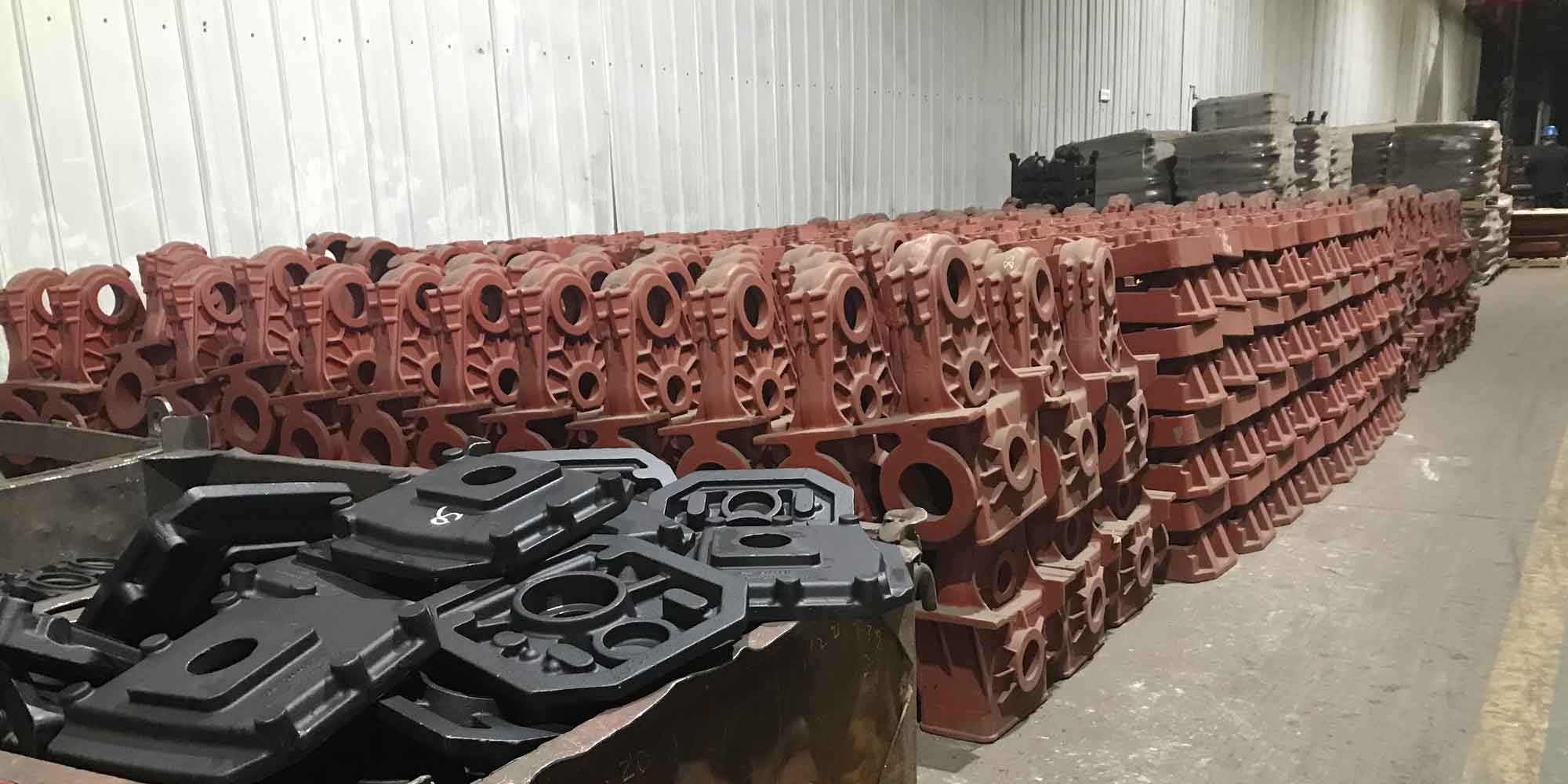
Melt Processing and Pouring Control
The quality of a high-performance steel casting is fundamentally determined in the melt shop. For the CB2 alloy, a three-stage process was employed: Electric Arc Furnace (EF) → Ladle Furnace (LF) → Vacuum Degassing (VD).
Stringent charge material control was enforced. Low-residual scrap and master alloys with certified low levels of trace elements like tin, antimony, and arsenic were selected to minimize temper embrittlement risks. The LF stage was crucial for precise alloy trimming, deep desulfurization to below 0.010%, and deoxidation to achieve a low oxygen activity. The final VD stage was critical for gas removal. Under a vacuum better than 133 Pa for over 30 minutes, with argon stirring, dissolved hydrogen was reduced to ≤ 2.0 ppm and nitrogen levels were tightly controlled within the specified range. This control is vital to prevent gas porosity in the heavy-section steel casting.
Pouring was conducted under an argon shroud to protect the steel stream from atmospheric re-oxidation during transfer from the ladle to the mold. The pouring temperature was tightly controlled between 1570°C and 1580°C, a compromise between adequate fluidity and minimizing grain growth and segregation. After pouring, exothermic covering compounds were added to the risers to prolong their liquid state and maximize feeding efficiency.
Heat Treatment Strategy
The heat treatment of this steel casting was a multi-stage process designed to relieve stresses, refine the as-cast structure, and develop the final tempered martensitic microstructure with optimal properties.
1. Pre-heat Treatment (Stress Relieving & Grain Refinement): Due to the high alloy content and complex shape, the as-cast condition is highly stressed and prone to cracking during subsequent operations like riser removal. Therefore, immediately after shakeout and cleaning, the casting underwent a specialized pre-heat treatment cycle. It was heated to a sub-critical temperature (e.g., 700-750°C), held for a prolonged period to homogenize the structure and relieve internal stresses, and then slowly cooled. This process also helps in tempering any hard, brittle transformation products from the casting process, making the steel casting safe for cutting.
2. Hot Riser Removal: The risers were removed while the casting was still at an elevated temperature (>200°C) immediately following the pre-heat treatment cool-down. This “hot cutting” technique prevents the initiation of cracks that can occur if cutting is done at room temperature on a high-strength, low-ductility material.
3. Final Heat Treatment (Normalizing & Tempering): This is the key treatment to achieve the service properties. The steel casting was austenitized (normalized) at a temperature high enough to dissolve the majority of carbides (typically 1040-1100°C for this alloy), followed by forced-air cooling to transform the austenite to martensite throughout the heavy sections. The final step was tempering, typically between 730-780°C, which transforms the brittle as-quenched martensite into tough tempered martensite, precipitates fine alloy carbides for secondary hardening, and further relieves residual stresses. The precise time-temperature parameters are derived from the Continuous Cooling Transformation (CCT) and Time-Temperature-Tempering (TTT) diagrams for the specific steel casting chemistry.
| Process Stage | Temperature Range | Key Objective | Microstructural Outcome |
|---|---|---|---|
| Pre-heat Treatment | 700 – 750°C (Slow Cool) | Stress relief, safe condition for cutting | Spheroidized carbides in ferrite matrix |
| Normalizing (Austenitizing) | 1040 – 1100°C (Air Cool) | Homogenization, full austenitization | Uniform prior austenite grain size |
| Tempering | 730 – 780°C (Air Cool) | Toughening, stress relief, precipitation | Tempered martensite with fine M23C6, MX precipitates |
Results and Verification
Following the complete manufacturing and heat treatment cycle, the finished steel casting underwent comprehensive inspection. Dimensional accuracy met the CT13 grade specification. Non-destructive testing, including 100% magnetic particle inspection (MT) of surfaces and 100% ultrasonic testing (UT) of the volume, confirmed a high level of internal and external soundness, with a very low weld repair rate of only 0.7%, which is exceptional for a casting of this complexity and alloy type.
Chemical analysis from cast-on test coupons verified that the composition was within the strict internal control ranges. Most importantly, mechanical tests from these separately cast but similiarly heat-treated coupons demonstrated properties that significantly exceeded the minimum requirements, confirming the effectiveness of the entire process chain.
| Property | Result | Requirement | Status |
|---|---|---|---|
| Yield Strength (Rp0.2) | 615 MPa | ≥ 500 MPa | Exceeded |
| Tensile Strength (Rm) | 742 MPa | 630 – 750 MPa | Met |
| Elongation (A5) | 18.7 % | ≥ 15 % | Exceeded |
| Reduction of Area (Z) | 59.7 % | ≥ 40 % | Exceeded |
| Charpy Impact (KV) Avg. | 37 J | ≥ 30 J | Exceeded |
| Gas Content [H] | 0.3 ppm | ≤ 2.0 ppm | Exceeded |
| Weld Repair Rate | 0.7 % | Minimize | Excellent |
Conclusion
The successful development and production of the ultra-high-temperature USC turbine valve casing from ZG13Cr9Mo2Co1NiVNbNB steel demonstrate a fully integrated, state-of-the-art approach to advanced steel casting manufacturing. The project synergized several key elements: meticulous process design using modulus calculations and zone segregation, validated upfront by advanced solidification simulation; the use of robust silicate-bonded sand systems with chromite facings for thermal resistance; ultra-clean melt practice via the EF-LF-VD route with argon-protected pouring to control gas and inclusions; and a sophisticated multi-stage heat treatment regimen incorporating stress-relieving, hot cutting, and final normalizing and tempering. The result was a high-integrity steel casting that met all stringent dimensional, non-destructive testing, and mechanical property requirements. This accomplishment underscores the capability of modern foundry engineering to produce critical components that enable next-generation, high-efficiency power generation technology, contributing directly to global energy sustainability goals. The methodologies established—from alloy control and simulation-led design to controlled melting and precise heat treatment—form a replicable blueprint for the manufacture of other complex, high-alloy steel castings for demanding applications.