
In the die casting process, molten alloy flows through the shot sleeve, runners, and gates into the mold cavity to form a casting. Theoretically, the metal at the gate should be of the highest quality, but it is often observed that slag inclusions and gas porosity exist in this region, leading to casting defects. In severe cases, this results in scrap parts, causing unnecessary losses and reducing the effective gate cross-sectional area, which impairs the filling of the mold cavity. This issue is prevalent in die casting production and requires thorough examination from a first-person perspective as an engineer in the field.
Through my experience, I have identified two primary causes for these defects. The first relates to the gate geometry. Gates are typically thin, and during the slow shot phase—where molten metal accumulates—the alloy’s temperature drops rapidly upon reaching the gate. This accelerates solidification, causing premature crystallization that blocks the gate. Subsequently, under pressure, the following molten metal breaks through this solidified layer to fill the cavity. However, the breakthrough does not occur along the entire gate length; instead, it happens partially. This process traps air behind the unbroken solidified block, forming gas porosity that often extends deep into the casting interior. The mechanism can be visualized as follows: let the gate thickness be denoted as $t_g$, and the temperature drop rate as $\frac{dT}{dt}$. The solidification time $t_s$ can be approximated by the Chvorinov’s rule modified for gates: $t_s = k \cdot \left( \frac{V_g}{A_g} \right)^2$, where $V_g$ is the gate volume, $A_g$ is the gate surface area, and $k$ is a constant dependent on material properties. When $t_s$ is less than the filling time, blockage occurs.
| Factor | Description | Impact on Slag Inclusions |
|---|---|---|
| Gate Thickness | Thin gates reduce thermal capacity, accelerating heat loss. | Increases risk of premature solidification, trapping slag and gas. |
| Slow Shot Velocity | Low velocity during accumulation phase allows temperature drop. | Promotes solidification, leading to blockage and porosity formation. |
| Alloy Cleanliness | High gas and slag content in molten metal. | Directly introduces slag inclusions and gas bubbles into gates. |
| Filling Dynamics | Partial breakthrough of solidified layers. | Creates air pockets behind blockages, causing porosity. |
The second cause stems from inadequate alloy cleanliness. When the molten metal contains excessive gas and slag, it forms a slurry-like mixture with poor fluidity. Upon entering the thin gate section, the temperature plummets, causing rapid solidification. This traps slag blocks at the gate, reducing the cross-sectional area and hindering fill. Behind these slag blocks, gas porosity develops, exacerbating defects. In both scenarios, examining the gate fracture surface reveals evident gas pores, oxide skins, and other inclusions. The presence of slag inclusions is particularly detrimental as they act as stress concentrators and reduce mechanical integrity.
To quantify the effect of slag, consider the density of inclusions $\rho_s$ and their volume fraction $f_s$ in the alloy. The effective viscosity $\mu_{eff}$ of the mixture can be modeled as $\mu_{eff} = \mu_0 \cdot (1 + 2.5 f_s)$, where $\mu_0$ is the viscosity of clean alloy. Higher $\mu_{eff}$ reduces flowability, increasing the likelihood of gate blockage. Additionally, gas content measured by porosity index $P_i$ relates to hydrogen dissolution: $P_i = k_H \cdot \sqrt{p_{H_2}}$, where $k_H$ is the solubility constant and $p_{H_2}$ is the partial pressure. Ensuring low $P_i$ is crucial to minimize porosity.
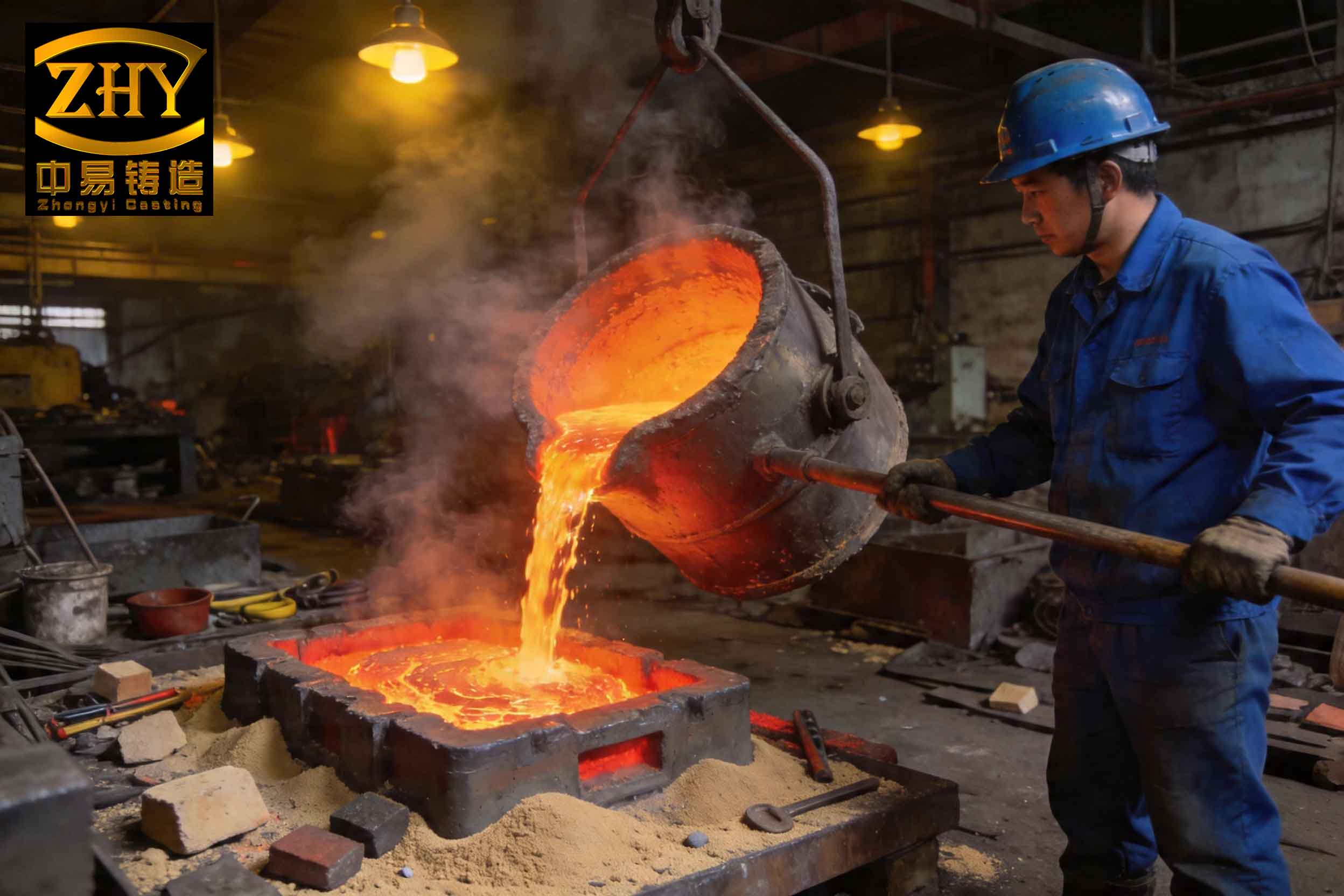
Addressing these issues requires a multifaceted approach focused on maintaining alloy fluidity and preventing premature solidification at the gate. From my practice, I emphasize two key strategies: ensuring clean alloy melt and optimizing the fast shot stroke. These methods have proven effective in mitigating slag inclusions and gas porosity.
First, alloy cleanliness must be rigorously controlled. This involves several steps, as summarized in the table below, which I have implemented in production settings to reduce slag inclusions significantly.
| Step | Procedure | Technical Details | Impact on Slag Reduction |
|---|---|---|---|
| 1. Melting Process | Perform thorough degassing and deslagging during melting. | Use degassing agents like nitrogen or argon; deslagging temperature ≥720°C. Deslagging efficiency $E_d$ can be calculated as $E_d = 1 – \frac{C_{after}}{C_{before}}$, where $C$ is slag concentration. | Directly removes slag inclusions and dissolved gas, improving fluidity. |
| 2. Holding Furnace Maintenance | Regularly remove slag and settled alloy from holding furnaces. | For closed energy-saving furnaces, clean weekly if alloy quality is poor. Slag accumulation rate $R_s$ (kg/hour) monitored via sampling. | Prevents slag buildup that can be carried into gates, reducing slag inclusions. |
| 3. Ladling Technique | Optimize ladle trajectory to avoid slag entrainment. | Program ladle path to skim surface; use ladles without back-pouring notches to retain oxide films. The ladle efficiency $\eta_l$ is defined as $\eta_l = \frac{m_{clean}}{m_{total}}$, where $m_{clean}$ is slag-free metal mass. | Minimizes introduction of surface oxides and slag inclusions into the shot. |
| 4. Plunger Lubrication | Select lubricants that do not generate residual slag. | Use high-temperature stable lubricants; test for carbon residue. Lubricant contribution to slag $S_l$ measured in ppm. | Reduces external contamination, lowering slag inclusions from process aids. |
| 5. Gate Design | Avoid excessively thin or small gates to preserve thermal capacity. | Design gate thickness $t_g$ based on alloy thermal diffusivity $\alpha$: $t_g > \sqrt{\alpha \cdot t_f}$, where $t_f$ is filling time. For aluminum alloys, $\alpha \approx 50 \text{ mm}^2/\text{s}$. | Reduces premature solidification, preventing blockage and associated slag inclusions. |
Second, the fast shot stroke must be precisely determined to prevent molten metal from entering the gate during the slow shot phase. Based on my calculations, the fast shot stroke length $L$ can be derived from volume considerations. Let $V$ be the total volume of the casting and overflow wells in cm³, $Q$ be their mass in grams, and $\rho_l$ be the liquid alloy density (approximately 2.4 g/cm³ for aluminum alloys). The volume is given by $V = \frac{Q}{\rho_l}$. To account for practical factors like contraction and flow resistance, I add a safety factor of 1.5 cm. Thus, the formula becomes:
$$ L = \frac{V}{F} = \left( \frac{Q}{2.4 \cdot F} + 1.5 \right) $$
Here, $F$ is the cross-sectional area of the shot sleeve in cm². This ensures that the fast shot initiates only after the molten metal has accumulated sufficiently, avoiding early gate exposure. Implementing this requires monitoring process parameters such as shot speed $v_s$ and pressure $p$. The Reynolds number $Re = \frac{\rho_l v_s d_h}{\mu_{eff}}$ should be kept above 4000 to ensure turbulent flow that minimizes slag inclusions settling. Additionally, the gate velocity $v_g$ relates to shot sleeve dynamics: $v_g = v_s \cdot \frac{A_s}{A_g}$, where $A_s$ is shot sleeve area and $A_g$ is gate area. Optimizing $v_g$ prevents stagnation and solidification.
Beyond these core strategies, I have found that process monitoring and control are vital. For instance, using real-time sensors to measure melt temperature $T_m$ and hydrogen content $H_c$ can alert operators to deviations. A common standard is to maintain $T_m$ above 680°C for aluminum alloys and $H_c$ below 0.1 ml/100g. Statistical process control (SPC) charts can track defect rates, with slag inclusions counted per batch. The defect density $D_s$ (inclusions per cm²) can be modeled as $D_s = \alpha \cdot e^{-\beta T_m} + \gamma \cdot H_c$, where $\alpha, \beta, \gamma$ are material constants. Regular training for personnel on ladling and maintenance procedures also reduces human error.
In terms of material science, the composition of the alloy influences slag formation. For aluminum-silicon alloys, elements like iron can form intermetallic compounds that contribute to slag inclusions. The iron content should be controlled below 0.8% to minimize sludge formation. The sludge factor $SF$ is calculated as $SF = \%Fe + 2 \cdot \%Mn + 3 \cdot \%Cr$. Keeping $SF < 1.5$ helps reduce inclusions. Moreover, grain refiners such as titanium-boron additions can enhance fluidity by promoting fine equiaxed grains, reducing hot tearing and porosity. The grain size $d$ relates to refiner addition rate $R_r$ by $d = \frac{k_d}{\sqrt{R_r}}$, where $k_d$ is a constant.
Another aspect is die design and thermal management. Gates should be positioned to avoid abrupt changes in direction, which can trap slag. Computational fluid dynamics (CFD) simulations can predict flow patterns and identify stagnation zones where slag inclusions might accumulate. The die temperature $T_d$ should be regulated, typically between 150°C and 250°C for aluminum, to prevent premature cooling at the gate. The heat transfer coefficient $h$ at the gate-die interface affects solidification: $q = h \cdot (T_m – T_d)$, where $q$ is heat flux. Using conformal cooling channels can improve temperature uniformity.
To illustrate the economic impact, consider a production run with a defect rate of 5% due to gate-related slag inclusions. If each casting costs $10 to produce and annual output is 100,000 pieces, losses amount to $50,000 yearly. Implementing the above measures can reduce defects to below 1%, saving over $40,000 annually. This justifies investment in better melting equipment, training, and process controls.
In conclusion, preventing slag inclusions and gas porosity in die casting gates demands a holistic approach. From my firsthand experience, prioritizing alloy cleanliness through disciplined melting, furnace maintenance, and ladling techniques is fundamental. Coupled with precise calculation of the fast shot stroke to avoid premature gate exposure, these strategies form a robust framework. Continuous monitoring and adaptation based on data—such as using the formulas and tables discussed—are essential for sustained improvement. While challenges like thin gate designs persist, a focus on thermal management and fluid dynamics can mitigate risks. Ultimately, by addressing these factors systematically, die casters can achieve higher quality castings with minimal defects, enhancing productivity and profitability in the industry.