
In the modern manufacturing landscape, high-end large-scale CNC machine tools are pivotal as the core equipment for intelligent manufacturing. The bed, being the most fundamental component of a machine tool, constitutes approximately 70% to 80% of the total weight and is critical in determining machining performance, accuracy, and accuracy retention. Thus, the quality of machine tool castings, especially bed castings, is of utmost importance. Currently, a gap exists between domestic machine tool castings and those from advanced international producers, particularly in material properties such as high carbon equivalent, high strength, high stiffness, and low stress. This article explores the evolution, measurement criteria, and key technologies for producing advanced machine tool castings that meet these demanding requirements.
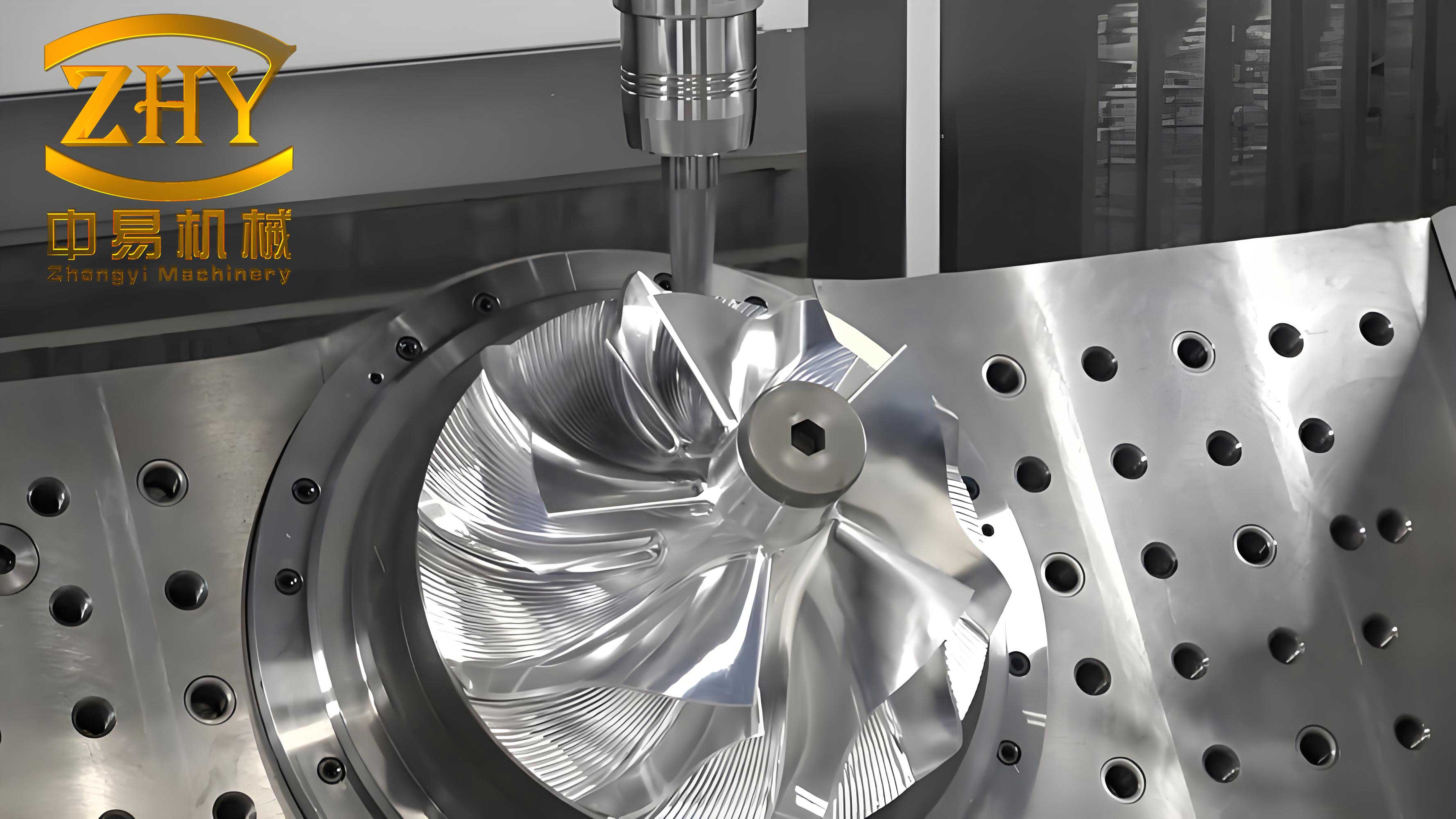
We begin by examining the trends in machine tool casting development. The rapid advancement of CNC machine tools has imposed stricter demands on castings, focusing on high precision, powerful cutting, high-speed operations, large-scale designs, and ultra-thin sections. These trends necessitate that machine tool castings exhibit excellent casting performance, machinability, low casting stress, and superior damping capacity. The primary directions include achieving high strength, high stiffness, thin-walled structures, low stress, good vibration damping, enhanced machinability, and suitability for large-scale applications. For instance, high-strength machine tool castings often use grades like HT250, HT300, and HT350, but domestic practices frequently reduce carbon equivalent to attain strength, leading to issues like shrinkage porosity and increased stress. International standards, however, maintain higher carbon equivalent levels for comparable grades, as shown in Table 1.
| Grade | International Average CE (%) | Domestic Average CE (%) |
|---|---|---|
| HT250 | 3.95 | 3.75 |
| HT300 | 3.83 | 3.60 |
| HT350 | 3.76 | 3.48 |
High stiffness is essential for machine tool castings to resist deformation during high-speed or powerful cutting, ensuring machining accuracy. Elastic modulus serves as a key indicator, and higher carbon equivalent values contribute to better stiffness. Thin-walled designs are facilitated by high carbon equivalent, which allows weight reduction without compromising performance. For example, international machine tool castings have seen wall thicknesses decrease to 14-20 mm for medium-sized beds and 8-12 mm for small ones, reducing weight by 8-10%. Low casting stress is crucial for dimensional stability and precision retention in machine tool castings. The relationship between tensile strength and casting stress indicates that stress tends to increase with strength, but elevating carbon equivalent can mitigate this effect. Empirical data suggests that casting stress σ_c correlates with tensile strength R_m and carbon equivalent CE, approximated by $$ \sigma_c \propto \frac{R_m}{CE} $$. Thus, high carbon equivalent helps achieve low stress levels.
Good vibration damping is another vital property for machine tool castings, as it affects machining accuracy. Gray iron inherently offers excellent damping, but as strength increases (often via lower carbon equivalent), damping capacity diminishes. Therefore, maintaining high carbon equivalent is beneficial. Machinability is critical for cost-effective production, typically assessed by hardness and the machinability index m, defined as $$ m = \frac{R_m}{HBW} $$. For optimal performance, m should fall within specific ranges; for instance, for GG30 (similar to HT300), m is ideally 1.15-1.50. High carbon equivalent promotes better machinability by controlling hardness. Large-scale machine tool castings, weighing tens to hundreds of tons, face challenges like reduced mechanical properties, graphite degradation, and shrinkage due to slow cooling. Addressing these requires advanced techniques such as alloying and improved inoculation.
To quantify the quality of machine tool castings, we consider several measurement indicators. The mechanical performance targets high carbon equivalent, high strength, high stiffness, and low stress. Key parameters include tensile strength, carbon equivalent, elastic modulus, and casting stress, as summarized in Table 2.
| Grade | Tensile Strength (MPa) | Carbon Equivalent Range (%) | Elastic Modulus (GPa) | Casting Stress after Heat Treatment (MPa) |
|---|---|---|---|---|
| HT250 | ≥250 | 3.90-4.00 | 115-120 | ≤20 |
| HT300 | ≥300 | 3.80-3.85 | 120-125 | ≤20 |
| HT350 | ≥350 | 3.73-3.78 | 125-130 | ≤20 |
| QT600-3 | ≥600 | 4.35-4.55 | 150-170 | ≤30 |
The metallographic structure of machine tool castings is equally important. For gray iron like HT300, the matrix should be over 98% pearlite, with graphite predominantly type A (over 90%), size 4-5级 (6-25 mm at 100x), and phosphide plus carbide below 2%. For ductile iron QT600-3, spheroidization rate should exceed 90%, with similar graphite size and matrix requirements. Metallurgical quality is assessed using metrics like eutectic degree Sc, maturity RG, hardening degree HG, and quality coefficient Qi. These are calculated as follows: $$ Sc = \frac{C}{4.26 – \frac{1}{3}Si} $$, $$ RG = \frac{R_m}{1000 – 800 \cdot Sc} $$, $$ HG = \frac{R_m}{900 – 744 \cdot Sc} $$, and $$ Qi = \frac{RG}{HG} $$. For high-quality machine tool castings, Sc should be ≥0.85, RG ≥1.0, HG ≤1.0, and Qi ≥1.0. Hardness, particularly for guideways, is typically controlled at 200 HBW ± 20 HBW to balance wear resistance and machinability.
Producing high-carbon-equivalent, high-strength, low-stress machine tool castings involves a systematic approach with key technologies. High-temperature melting is foundational, with molten iron superheated to 1500-1550°C. This refines graphite and the matrix, enhances mechanical properties, purifies the iron by reducing oxides, and increases undercooling to improve inoculation effectiveness. For example, elevating the superheating temperature from 1450°C to 1510°C can boost tensile strength by 10-20 MPa and elastic modulus by 5-10 GPa for grades like HT300. The scrap carburization process is another critical technique, where high scrap steel ratios (50-80%) combined with carburizers like graphite or SiC are used. This improves graphite nucleation, enhances iron purity, and reduces shrinkage and section sensitivity. Table 3 illustrates the strength improvement achieved through scrap carburization.
| Process | Carbon Equivalent (%) | Tensile Strength (MPa) | Hardness (HBW) |
|---|---|---|---|
| Traditional Charge | 4.03 | 280 | 203 |
| 100% Scrap Carburization | 4.00 | 325 | 217 |
Optimizing the ω(Si)/ω(C) ratio is essential for high-carbon-equivalent machine tool castings. A ratio of 0.55-0.60 is generally recommended. For instance, at a carbon equivalent of 3.66%, increasing the ω(Si)/ω(C) ratio from 0.51 to 0.60 can raise tensile strength from 325 MPa to 350 MPa and elastic modulus from 102.5 GPa to 126.8 GPa. The relationship can be expressed as $$ R_m \propto \left( \frac{Si}{C} \right)^k $$ for a constant CE, where k is an empirical exponent. However, at very high carbon equivalent levels (e.g., above 3.8%), excessive silicon may coarsen pearlite, so alloying becomes necessary. Low alloying with elements like copper, chromium, tin, and antimony is employed to strengthen the matrix without significantly increasing cost or stress. For example, adding 0.4-0.6% Cu and 0.2-0.4% Cr to HT300 can enhance strength by 30-50 MPa while maintaining high carbon equivalent.
Nitrogen and tin have emerged as effective strengtheners for high-carbon-equivalent machine tool castings. Nitrogen, introduced via ferromanganese nitride, refines graphite and pearlite, increasing strength and elastic modulus. Tin promotes pearlite formation and refines the microstructure. The optimal ranges are ω(N) = 0.008-0.010% and ω(Sn) = 0.02-0.06%. The synergistic effect can be modeled as $$ \Delta R_m = \alpha \cdot N + \beta \cdot Sn $$, where α and β are coefficients. Table 4 shows the mechanical properties achieved with nitrogen-containing machine tool castings.
| Parameter | Control Target | Maximum Value | Minimum Value | Average Value |
|---|---|---|---|---|
| Tensile Strength (MPa) | ≥300 | 368 | 321 | 339 |
| Elastic Modulus (GPa) | ≥120 | 131 | 120 | 124 |
| Hardness (HBW) | ≤240 | 223 | 201 | 223 |
The metallographic structure of these castings shows over 95% type A graphite, with graphite size of 4-6级 and pearlite content exceeding 98% and fine lamellar spacing. The metallurgical quality indicators for such machine tool castings typically include Sc around 0.89, RG averaging 1.17, HG around 0.94, and Qi averaging 1.24, all meeting the high standards for precision applications. Other factors like pouring temperature, inoculation methods, and heat treatment also play roles. For resin sand molds, pouring temperatures of 1380-1400°C are common, and inoculation with barium-silicon alloys (0.4% addition) followed by stream inoculation (0.05-0.1% FeSi) ensures graphite refinement. Stress relief annealing at 500-550°C for several hours reduces residual stress to below 20 MPa, which is critical for dimensional stability in machine tool castings.
In conclusion, the development of high-performance machine tool castings hinges on achieving a balance between high carbon equivalent, high strength, high stiffness, and low stress. Traditional approaches that rely on low carbon equivalent for strength lead to high casting stress and poor machinability, whereas advanced techniques like high-temperature melting, scrap carburization, optimized ω(Si)/ω(C) ratios, low alloying, and nitrogen-tin strengthening enable superior properties. These machine tool castings are essential for modern CNC machines, offering enhanced accuracy retention, vibration damping, and machinability. Future directions should focus on refining these technologies, expanding the use of synthetic cast iron, and addressing challenges in large-scale castings. By adopting these strategies, the quality of domestic machine tool castings can align with international standards, supporting the growth of precision manufacturing industries worldwide.
Throughout this discussion, we emphasize that machine tool castings are not merely structural components but precision elements that define the performance of entire machining systems. The continuous innovation in materials and processes for machine tool castings will drive advancements in manufacturing efficiency and capability, making them a cornerstone of industrial progress.