
In the pursuit of advancing our product line, we embarked on a critical project to develop a lost foam casting process for the 863 gearbox housing, a key component for a new 6-ton loader. This endeavor was not merely about replicating existing methods but innovating to overcome significant challenges inherent in the complex geometry and stringent requirements of this large, thin-walled casting. The lost foam casting process, known for its ability to produce intricate shapes with minimal machining, was selected for its potential to achieve high dimensional accuracy and surface finish. However, the 863 gearbox presented unique hurdles: a multi-tiered structure with internal cavities, thin walls as fine as 12 mm, and critical high-pressure oil passages that demanded leak-proof integrity. This article details our first-person journey through the research and development, from initial foam pattern fabrication to stable mass production, highlighting the technical strategies, problem-solving approaches, and quantitative analyses that led to success.
The 863 gearbox housing is a substantial component, with overall dimensions of 1135 mm in length, 640 mm in width, and 500 mm in height. Its weight targets approximately 295 kg in HT250 gray iron. Structurally, it features a three-tiered external staircase design and a double-chamber internal layout, including an auxiliary oil tank adjacent to the oil pan. This complexity is compounded by the need to cast integral, bent oil channels within hydraulic valve faces, which must pass rigorous pressure tests without leakage. The primary wall thickness is 12 mm, with local maxima reaching 40 mm. Such a design imposes severe demands on the lost foam casting process, particularly regarding mold filling, gas evacuation, and prevention of defects like carbon inclusions, sand penetration, porosity, and distortion. Our technical specifications mandated stress-relief annealing and zero tolerance for these flaws across numerous machined surfaces.
Our development followed a systematic technical roadmap: starting from the product drawing, we created a casting drawing, then a 3D model. This model was segmented into multiple slices for CNC milling from large foam boards. These slices were bonded into a complete pattern assembly, onto which the gating system was attached. Subsequent steps included coating, drying, mold filling with sand, pouring, cleaning, inspection, and sampling for machining trials. Only after thorough validation did we proceed to design and manufacture permanent metal molds for pattern production. This iterative approach allowed us to refine process parameters before committing to costly tooling, a crucial aspect of lost foam casting development where upfront simulation has limitations.
The cornerstone of lost foam casting is the foam pattern, which must precisely mirror the final casting. Typically, this is produced using aluminum tooling, but to de-risk the project, we initially employed CNC machining of expanded polystyrene (EPS) blocks. The 3D model was divided into strategic segments to facilitate milling and bonding. For instance, the main body, oil pan, and internal features were separated. Using a gantry milling machine, we carved these segments from high-density EPS boards. The bonding process used specialized adhesives that minimize gas generation during pouring. A critical sub-step was the pre-placement of sand cores for the bent oil channels. We fabricated these cores from existing resin sand cores, modifying them by grinding and bonding, then coating them three times with refractory paint before embedding them into the foam pattern during assembly. This ensured the oil passages would be formed accurately without relying on post-casting drilling, a vital requirement for the lost foam casting process. The assembled foam pattern, with integrated cores and preliminary gating, became our test vehicle for process optimization.
Designing the gating system for vertical pouring was paramount. We drew experience from a similar, smaller 853 gearbox housing previously produced via lost foam casting. For the 863, vertical orientation with the oil pan face down was chosen to enhance metallurgical soundness in critical areas and mimic the in-service position. However, the increased height (1135 mm in the pouring position) posed a challenge: our existing flask height limited the effective metallostatic pressure head. The pressure head $P$ in a casting system is given by $$P = \rho g h$$ where $\rho$ is the molten iron density (approximately $7000 \, \text{kg/m}^3$), $g$ is gravity ($9.8 \, \text{m/s}^2$), and $h$ is the height difference between the pouring cup and the casting top. With a limited flask, $h$ was initially only about 50 mm, risking mistruns and shrinkage. We calculated required heads and devised solutions.
| Parameter | Value | Rationale |
|---|---|---|
| Pouring Orientation | Vertical (Oil Pan Down) | Ensures density in lower sections, reduces leak risk |
| Number of In-gates | 8 | Distributes flow evenly across thin walls |
| Gating Levels (Step Gates) | 5 | Sequential filling to reduce turbulence and erosion |
| Cross-sectional Area Ratio (Sprue:Runner:Ingate) | 1.0 : 1.2 : 0.8 | Based on Chvorinov’s rule for controlled filling |
| Choke Area (Total In-gate) | ~28 cm² | Calculated from desired pouring time (~30 seconds) |
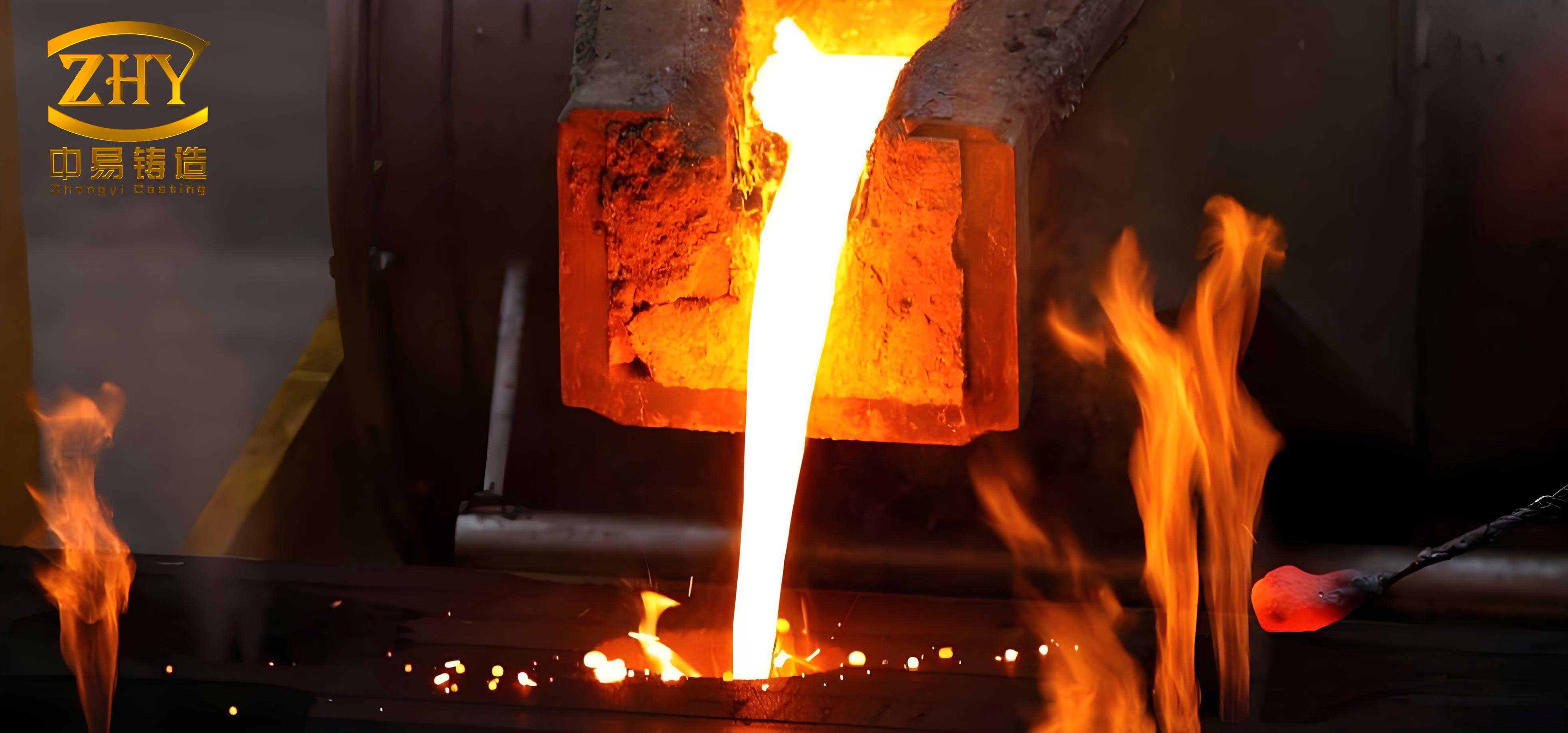
The gating was attached to the side of the pattern, avoiding direct impingement on the embedded oil core areas to prevent thermal erosion. The system comprised a sprue, multiple horizontal runners at different heights, and ingates. The dimensions were iteratively refined through pouring trials. To address the low pressure head, we implemented a dual strategy: first, we minimized the bottom sand layer to 100 mm (the practical minimum for vacuum integrity), and second, we added supplemental weight on top of the sand above the pattern during pouring. This effectively increased the effective pressure head by countering mold wall movement. The weight was calculated to compensate for the ferrostatic pressure: $$F = A \cdot P$$ where $A$ is the projected area of the casting top and $P$ is the pressure from molten iron. We used sand-filled steel buckets placed atop the flask, providing an adjustable and reusable solution.
Coating application is critical in lost foam casting to ensure mold stability and gas permeability. The coating serves multiple functions: it prevents sand penetration, supports the foam pattern during sand compaction, and allows decomposition gases to escape. We used a water-based refractory coating with high zircon content for its excellent thermal stability. The coating viscosity was controlled at 35-40 seconds (Ford cup #4) for optimal dipping. The pattern assembly was dipped twice, achieving a dry thickness of 1.0-1.2 mm on the body and 1.6-1.8 mm on the gating. Drying was performed in a convection oven at 50-60°C for 8-12 hours per layer to avoid cracking or distortion. To support the heavy, complex pattern during drying, we placed it on a flat ceramic plate with foam blocks strategically positioned under overhanging sections like the auxiliary oil tank. This prevented sagging, a common issue in lost foam casting of large parts.
Innovation was applied to the pouring cup attachment. Traditionally, the cup is attached during mold filling, interrupting the process. We pre-attached the cup after coating and drying. The cup, a lightweight foam funnel, was connected to the sprue via a foam tube joint. The joint was sealed with hot melt adhesive, wrapped with glass fiber tape, and recoated locally. This assembly was then oven-dried again. This method ensured a robust, leak-proof connection and allowed continuous, uninterrupted sand filling and compaction, improving productivity and reliability in the lost foam casting process.
Sand filling and compaction presented significant challenges due to the enclosed internal cavities. Our equipment uses bottom-vacuum flasks and rain sanders, but the vertical orientation left “dead zones” at the top of internal chambers where sand could not flow freely. Inadequate compaction here leads to “iron-sand” inclusions (sand penetration). We developed a multi-pronged approach. First, before placing the pattern in the flask, we manually filled intricate internal recesses with resin-bonded sand to create initial support. Second, during filling, we used guided chutes to direct sand into internal cavities through available openings, maintaining sand levels inside and out. Third, we employed air-assisted sanding wands to fluidize and compact sand in hard-to-reach areas. The compaction efficiency $\eta$ can be related to sand flowability and vibration parameters: $$\eta \propto \frac{A_v \cdot f \cdot t}{d}$$ where $A_v$ is vibration amplitude, $f$ is frequency, $t$ is time, and $d$ is sand grain size. We optimized these parameters through trial, ensuring uniform compaction density above 1.6 g/cm³ throughout the mold, which is crucial for dimensional accuracy in lost foam casting.
The limited flask height exacerbated the risk of mold wall lifting (buoyancy effect) during pouring, known as “floating” or “swelling.” The buoyancy force $F_b$ acting on the pattern is $$F_b = V_{pattern} \cdot \rho_{sand} \cdot g$$ where $V_{pattern}$ is the foam volume and $\rho_{sand}$ is the sand density. This force must be countered by the weight of overlying sand and any additional weights. With our flask, the natural sand cover was insufficient. Our solution was to heap extra sand above the pattern and place weighted buckets on top. The required counterweight $W$ was estimated as: $$W \geq F_b – W_{sand\_cover}$$ where $W_{sand\_cover}$ is the weight of sand above the pattern. Practical trials determined that two buckets filled with sand (total ~80 kg) sufficed to prevent swelling, ensuring dimensional stability in the lost foam casting process.
Initial trials using CNC-machined foam patterns yielded invaluable data but also highlighted defects. Over 82 pattern sets were machined, with 75 reaching the pouring stage. Early failure modes included swelling, core sand erosion leading to blocked oil passages, carbon inclusions, and distortions. We systematically addressed each. For carbon defects, which manifest as lustrous carbon films on the casting surface, we optimized coating permeability and pouring temperature. The gas evolution rate $Q$ from foam decomposition is $$Q = k \cdot e^{-E_a/(R T)}$$ where $k$ is a constant, $E_a$ activation energy, $R$ the gas constant, and $T$ the pouring temperature. By controlling temperature between 1380-1400°C and ensuring adequate coating venting, we minimized carbon residue. For oil core issues, we enhanced core coating thickness and refractory quality. Dimensional accuracy was achieved by applying precise pattern allowances. The linear shrinkage allowance $S$ for HT250 in lost foam casting is a composite of foam shrinkage $S_f$ and metal contraction $S_m$: $$S = S_f + S_m – C$$ where $C$ is a correction factor for mold restraint. Through iterative measurements, we established $S$ at 1.8-2.0% for this geometry.
| Defect Type | Root Cause | Corrective Measure | Result |
|---|---|---|---|
| Swelling/Lifting | Insufficient mold top pressure | Added sand heaping and weighted buckets | Eliminated |
| Oil Passage Blockage | Core erosion from metal impingement | Relocated gating away from cores; improved core coating | Reduced to <1% |
| Carbon Inclusions | Incomplete foam pyrolysis; low coating permeability | Optimized pouring temperature; increased coating vent holes | Minimized |
| Sand Penetration | Inadequate compaction in internal cavities | Implemented guided chute and air-assisted sanding | Eliminated |
| Distortion | Uneven coating drying; weak foam support | Improved drying support; balanced gating | Within tolerance |
After validating the process with machined patterns, we designed permanent aluminum molds for mass production of foam patterns. The molds were engineered for use with horizontal automated molding machines, featuring independent steam chambers for even heating, water cooling, and vacuum-assisted demolding. Key design principles included zero draft angles (enabled by vacuum demolding), conformal cooling channels, and multi-cavity layouts for efficiency. The mold design accounted for the established shrinkage allowances and segmented the pattern into four major and ten minor pieces for optimal molding. The tooling was manufactured via CNC machining from CAD models, ensuring precision. This transition to dedicated tooling significantly improved pattern consistency and surface finish, core aspects of the lost foam casting process.
With production molds, we initiated batch production. Over five months, 556 castings were poured, with a casting yield (good castings per pour) of 91.4%. After machining, the overall合格率 reached 87.9%, a substantial improvement over the 53.3% achieved with machined patterns. Statistical process control was implemented to monitor key variables: pouring temperature, sand compaction density, coating thickness, and pouring time. The capability index $C_{pk}$ for critical dimensions was maintained above 1.33. The lost foam casting process demonstrated stability, meeting all technical requirements, including pressure-tight oil passages verified by testing at 3 bar for 5 minutes.
In conclusion, the successful development of the lost foam casting process for the 863 gearbox housing underscores the importance of iterative prototyping and systematic problem-solving in advanced manufacturing. By initially using CNC-machined foam patterns, we de-risked the project, optimized gating and process parameters, and validated design modifications before investing in permanent tooling. The integration of innovative techniques—such as pre-attached pouring cups, guided sand filling, and weighted top pressure—overcame the limitations of existing equipment for this large casting. The lost foam casting process proved capable of producing complex, high-integrity components with excellent dimensional accuracy and surface quality. This achievement not only enabled the timely launch of the new loader but also enriched our expertise in lost foam casting, providing a framework for future developments of similar complex castings. The continuous improvement in quality metrics from prototyping to mass production highlights the robustness of the finalized lost foam casting process, ensuring reliability and efficiency in manufacturing.