
The landscape of metal component manufacturing is perpetually challenged by the demand for parts of increasing geometric complexity, often coupled with stringent requirements for internal surface quality and dimensional accuracy. Traditional sand casting methodologies, while versatile, frequently encounter significant bottlenecks when dealing with such components. For parts characterized by intricate internal geometries and large overall dimensions, conventional approaches—such as extensive machining from solid forgings/bar stock or segmenting, machining, and welding—prove to be inefficient, costly, and may compromise structural integrity. Crucially, traditional sand casting struggles to produce complex, non-machined internal as-cast surfaces with the required precision and consistency, as it is heavily reliant on the manual crafting of patterns and core boxes.
The advent of computer-integrated manufacturing has ushered in a transformative era for foundries. The widespread application of digital technologies is no longer merely an accessory but a fundamental driver for innovation within the sand casting industry. It promises not only enhanced productivity and reduced costs but also facilitates the emergence of novel processes, steering the field from an experience-based craft towards a science-guided discipline. A pivotal innovation within this digital revolution is the integration of 3D sand printing, or binder jetting, into the casting workflow. This article, from my perspective as a practitioner in the field, delves into the core principles and advantages of a digital casting paradigm centered on 3D printed sand molds and cores. This integrated approach offers a compelling solution to the historical limitations of sand casting, enabling rapid, flexible, and precise fabrication of complex components.
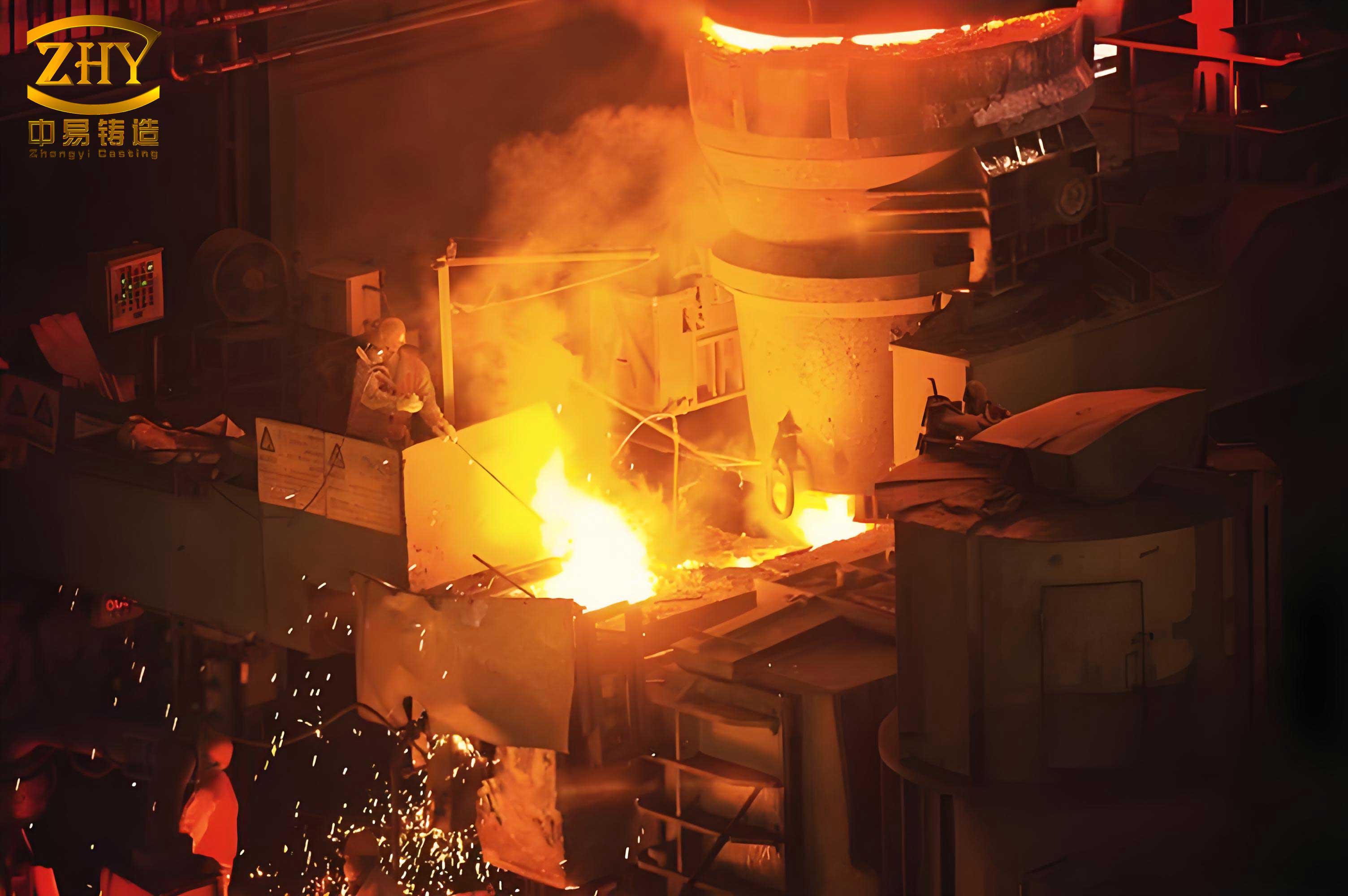
Core Limitations of Conventional Sand Casting Processes
To appreciate the impact of digitalization, one must first understand the inherent constraints of traditional methods. The primary challenges can be systematically categorized as follows:
| Challenge Category | Description | Consequence |
|---|---|---|
| Pattern/Mold Tooling | Difficulty in fabricating wooden patterns or sweep templates for complex, large parts. Complexity and size directly increase lead time and cost. | Prolonged development cycles (often weeks), high cost for low-volume production. |
| Process Design | Reliance on 2D technical drawings for gating and risering system design. This method is non-intuitive and inadequate for visualizing complex 3D flow and thermal dynamics. | Slow response to design changes, low flexibility, and increased risk of undetected defects. |
| Dimensional Stability | Part dimensions are subject to pattern wear, deformation, and variability in manual molding operations (e.g., pattern shifting, core misalignment). | Poor repeatability and consistency between casts, necessitating larger machining allowances. |
| Geometric Freedom | Manufacturing constraints of core boxes limit the complexity of internal passages and surfaces that can be produced. | Simplification of part design, or recourse to post-casting assembly/machining. |
The underlying equation for the lead time in a traditional development cycle can be simplified as:
$$ T_{traditional} = T_{pattern} + T_{mold\_design} + T_{trial\_casts} $$
where $T_{pattern}$ is often the dominant and most variable factor for complex parts.
The Digital Casting Workflow: An Integrated Approach
The digital casting technology based on 3D sand printing fundamentally re-engineers this workflow. It involves the direct creation of mold and core geometries from a digital 3D model, effectively decoupling geometric complexity from manufacturing difficulty. The core of this approach lies in a seamless digital thread from part design to mold production.
The foundational step is Digital 3D Casting Process Design. This involves working directly on the 3D CAD model of the final part. The foundry engineer digitally designs all necessary casting features—including gating systems, risers, filters, chills, and mold partitions—as 3D bodies within the same virtual environment. This eliminates the interpretive gap of 2D drawings. Crucially, this digital model can be instantly used for simulation-driven optimization. Software tools allow for the numerical simulation of mold filling, solidification, and cooling, predicting potential defects like shrinkage porosity, mistuns, or inclusions. The gating and risering system can be iteratively optimized virtually before any physical asset is created. The benefit is quantified by a radically compressed design cycle:
$$ T_{digital\_design} = T_{3D\_modeling} + T_{simulation\_loops} $$
where $T_{3D\_modeling}$ is typically shorter than $T_{pattern} + T_{mold\_design}$, and $T_{simulation\_loops}$ reduces or eliminates $T_{trial\_casts}$.
For instance, in the production of a large aluminum alloy (e.g., ZL101) housing with complex internal ribs and non-machined inner surfaces, the digital workflow allows for rapid design of stepped gating systems to control metal velocity, placement of chills for directional solidification, and addition of reinforcement ribs to prevent warping—all validated through simulation. The transition from a finalized digital process model to a physical mold is where 3D sand printing comes into play.
Hybrid Molding Strategy: Combining Strengths for Efficiency
A particularly effective strategy within this digital framework is the Dual-Material Composite Molding Technique. This strategy intelligently combines different molding materials and methods within a single mold assembly based on functional requirements. It resolves the conflict between complexity, precision, and production efficiency.
The principle is straightforward: utilize 3D printed sand for mold sections demanding high geometric complexity, accuracy, and surface finish (typically internal cores or intricate cavity surfaces), while employing conventional, faster methods like hand molding with resin-bonded sand for larger, geometrically simple mold sections (like outer flasks or large backing molds). The key engineering challenge is the precise interface and registration between these dissimilar mold sections.
This is solved through integrated digital design. The 3D printed core is designed with precise locating features—such as extended “core prints” or interlocking grooves—that create a negative space in the conventionally molded section. During conventional molding, these features are formed around a printed positive or a simple pattern representing the interface. The 3D printed core then fits into this cavity with high precision. The coupling effectiveness can be conceptualized by a registration tolerance metric:
$$ \delta_{registration} = \sqrt{ \delta_{print}^2 + \delta_{conv}^2 } $$
where $ \delta_{print} $ is the accuracy of the 3D printed core’s locating feature and $ \delta_{conv} $ is the accuracy of the corresponding feature in the conventionally molded part. By keeping both tolerances tight through good process control, $ \delta_{registration} $ is minimized, ensuring a seamless mold assembly.
| Molding Strategy | Cycle Time | Cost for Low Volume | Dimensional Accuracy (Internal Features) | Flexibility for Design Changes |
|---|---|---|---|---|
| Fully Traditional | Very High | Very High (full pattern/core box) | Low/Medium | Very Low |
| Fully 3D Printed Mold | Medium (print time-bound) | Medium | Very High | Very High |
| Hybrid (Dual-Material) | Low | Low | High (on critical surfaces) | High |
Engineering Large 3D Printed Sand Molds: Segmentation and Handling
Applying this technology to large-scale castings introduces specific challenges, as the build volume of 3D sand printers is finite. Therefore, large molds must be segmented into printable blocks and assembled. This necessitates innovative design solutions to ensure assembly accuracy, structural integrity during handling, and prevention of metal penetration (“run-out”) at joints.
Intelligent Mold Segmentation is critical. A robust strategy involves a staggered, interlocking block design. Rather than simple planar splits, blocks are divided both horizontally (for ease of cleaning and chill placement) and vertically in an overlapping pattern. This creates longer, more tortuous paths along joint planes, significantly reducing the risk of run-out compared to straight vertical seams. An additional safeguard is the incorporation of anti-runout grooves along critical joint faces. These are recessed channels printed into the sand block. During mold assembly, these grooves are packed with a refractory paste or a fine-grain backup sand, creating a compressible, sealed barrier against molten metal. The probability of run-out $P_{runout}$ can be modeled as inversely proportional to the effective sealing path length $L_{seal}$ and the quality of the sealant $Q_{sealant}$:
$$ P_{runout} \propto \frac{1}{L_{seal} \cdot Q_{sealant}} $$
The staggered joint and groove design maximizes $L_{seal}$.
Furthermore, integrated alignment features are printed directly into the blocks. These include cylindrical locator pins and matching sockets, as well as clear alphanumeric layer identifiers. These features guide rapid and error-free assembly, which is vital for maintaining the dimensional accuracy inherent in each printed block.
Specialized Lifting and Handling Systems are equally important, as traditional sandboxes with integral lifting lugs are absent. The solution involves designing bespoke lifting features directly into the 3D printed sand geometry. For lighter segments, simple handle-like protrusions can be printed, suitable for both manual and strap-based lifting. For heavier blocks, strategically placed reinforced sockets are printed. Custom-fabricated metal lifting bars are then inserted into these sockets, providing a robust attachment point for crane hooks. The design must account for the tensile and shear strength of the printed sand around the socket. A simplified check involves ensuring the load-bearing area $A_{bearing}$ satisfies:
$$ F_{lift} < \sigma_{sand} \cdot A_{bearing} $$
where $F_{lift}$ is the lifting force and $\sigma_{sand}$ is the effective tensile/shear strength of the printed sand material. For very large cores, through-holes can be designed to allow for the insertion of lifting bars, which also can serve as venting channels during pouring.
The 3D Sand Printing Process: A Brief Technical Overview
At the heart of this digital sand casting transformation is the binder jetting process itself. It is an additive manufacturing technique that builds sand molds layer by layer. A recoating mechanism spreads a thin layer of foundry sand (typically silica, zircon, or olivine). An inkjet print head then selectively deposits a liquid binder agent onto the sand layer according to the cross-sectional data from the digital model. The binder locally glues the sand particles together. The build platform then lowers, a new layer of sand is spread, and the process repeats. After completion, the loose, unbonded sand is removed, revealing the fully formed, monolithic sand mold or core. Post-processing, such as curing or infiltration with strengthening agents, may be applied.
The primary advantages of this process for sand casting are:
- Unprecedented Geometric Freedom: It can produce undercuts, internal channels, and complex surfaces that are impossible to achieve with traditional core boxes.
- Elimination of Hard Tooling: No patterns or core boxes are needed, making it ideal for prototypes, low-volume production, and complex parts.
- High Accuracy and Repeatability: The digital process ensures that every mold is an exact replica of the CAD model, casting after casting.
- Rapid Response: Lead time is shifted from “tooling fabrication” to “digital file preparation and print time,” which can be orders of magnitude faster for complex parts.
Expanding the Digital Ecosystem: Data and Integration
The full potential of digital sand casting is realized when 3D printing is embedded within a broader digital ecosystem. This includes:
- Digital Twin of the Foundry: Creating a virtual model of the entire casting process, integrating simulation data, real-time sensor data from furnaces and printers, and quality inspection results.
- Advanced Simulation: Moving beyond basic filling and solidification to include stress/deformation prediction during casting and cooling, and even microstructural modeling.
- Automated Process Planning: Software that can automatically suggest optimal parting lines, segmentation strategies, and gating system layouts based on part geometry and material.
- Integrated Quality Management: Linking the digital process file to each cast part, allowing for full traceability and data-driven root cause analysis of any defects.
| Aspect | Traditional Sand Casting | Digital Sand Casting (with 3D Printing) |
|---|---|---|
| Information Carrier | 2D Drawings, Physical Patterns | 3D Digital Model (CAD file) |
| Tooling | Wood/Metal Patterns, Core Boxes | Digital File (No physical tooling for molds) |
| Design Verification | Physical Trial Casts (Iterative) | Computational Simulation (Virtual) |
| Lead Time for New Part | Weeks to Months | Days to Weeks |
| Economy of Scale | High volume required for cost amortization | Cost-effective for low-to-medium volumes and high complexity |
| Flexibility | Low (costly and slow design changes) | Very High (digital file modification) |
Conclusion
The integration of 3D sand printing into the sand casting workflow represents a paradigm shift. It directly addresses the long-standing inefficiencies and limitations associated with producing complex, high-integrity metal components. The digital thread—from 3D process design and simulation to tooling-less mold fabrication—dramatically compresses development cycles, enhances dimensional accuracy and repeatability, and unlocks new frontiers in geometric design. Strategies like dual-material composite molding and engineered large-mold segmentation further optimize the technology for practical, efficient foundry application. While challenges remain, such as the economic optimization for very high-volume production and the continued development of printing materials and binders, the trajectory is clear. Digital sand casting technology, anchored by 3D printing, is fundamentally transforming the industry from a craft reliant on physical artistry to a precise, agile, and data-driven engineering discipline, perfectly suited for the manufacturing demands of the 21st century.