
In the evolving landscape of manufacturing, the casting industry faces persistent challenges in producing complex components efficiently. Traditional sand casting methods often struggle with intricate internal geometries and large-scale parts, leading to extended production cycles and high costs. As a researcher immersed in this field, I have explored how digital casting technology, particularly based on 3D printing of sand molds, can revolutionize the production of sand casting products. This approach leverages computer-aided design, simulation, and additive manufacturing to enhance flexibility, precision, and speed. In this article, I will delve into the core aspects of this technology, emphasizing its application in creating high-quality sand casting products, and provide insights through tables and formulas to summarize key concepts.
The advent of digital technologies has transformed casting from an experience-driven craft to a science-based process. Traditional sand casting often involves manual pattern-making, which is time-consuming and prone to errors, especially for complex sand casting products. For instance, producing a wooden pattern for a cylindrical part of Φ1000 mm × 400 mm can take over three days, and non-cylindrical shapes require even longer. Moreover, two-dimensional工艺 design limits responsiveness and adaptability, while dimensional stability suffers from pattern wear and operational inconsistencies. To address these issues, I have focused on integrating 3D sand printing into casting workflows. This digital approach allows for direct translation of 3D part models into sand molds, reducing lead times and improving accuracy for sand casting products. The core advantages include rapid response, high flexibility, superior precision, and stable process control, making it ideal for prototyping and low-volume production of sand casting products.
Digital three-dimensional casting工艺 design is a cornerstone of this technology. It involves creating casting工艺 directly on 3D part models, eliminating the need for 2D drawings and manual pattern fabrication. This method significantly shortens the development cycle for sand casting products. For example, in designing a large sand casting product with a diameter of Φ727 mm and height of 810 mm, I optimized the structure by adding reinforcement ribs to prevent deformation. The internal cavity, featuring flanged edges and protrusions, was left un-machined to reduce post-processing. The gating system was designed with a gravity pour approach, incorporating分流浇道 to缓冲 metal flow and minimize turbulence-related defects like gas entrapment. Simulation tools, such as Anycasting, were used to predict solidification behavior and shrinkage porosity. The gating system and simulation results highlighted areas for improvement, ensuring sound sand casting products. A key formula in this context is the Chvorinov’s rule for solidification time, which helps estimate cooling rates:
$$ t = C \left( \frac{V}{A} \right)^n $$
where \( t \) is the solidification time, \( V \) is the volume of the casting, \( A \) is the surface area, \( C \) is a constant dependent on mold material, and \( n \) is an exponent typically around 2. This formula aids in designing risers and冷铁 to achieve dense sand casting products. To summarize the design parameters, I have compiled a table comparing traditional and digital casting工艺 for sand casting products:
| Aspect | Traditional Casting | Digital Casting with Sand Printing |
|---|---|---|
| Design Time | 2 weeks (for complex patterns) | 1 week (direct 3D modeling) |
| Pattern Making | Manual woodworking or刮板 | 3D printed sand molds |
| Flexibility | Low, changes are costly | High, easy modifications in CAD |
| Dimensional Stability | Variable due to pattern wear | High, consistent打印精度 |
| Suitability for Sand Casting Products | Limited to simpler geometries | Ideal for complex internal features |
Another critical innovation is the dual molding material composite造型 technique, which combines different molding materials and methods to balance精度 and efficiency. In producing sand casting products with intricate内部型面, I often use手工造型 resin sand for simple external surfaces and 3D printed sand for complex internal cores. This hybrid approach resolves conflicts between complexity and manufacturability, as well as between precision and production speed. For instance, in a large sand casting product, the outer mold is made manually for cost-effectiveness, while the inner core is 3D printed to ensure accurate non-machined surfaces. The integration is achieved through designed 3D printed core heads that fit into the manual mold, ensuring precise alignment. This technique enhances operational efficiency and stability, reducing overall造型 time for sand casting products. The bonding strength between materials can be approximated using the following formula for interfacial shear stress:
$$ \tau = \frac{F}{A} $$
where \( \tau \) is the shear stress, \( F \) is the applied force, and \( A \) is the contact area. This helps in designing secure joints to prevent leakage during pouring. The benefits of this technique are evident in the production of various sand casting products, where it streamlines workflows and minimizes defects.
For large sand casting products, 3D printed sand mold design requires careful consideration of分块 methods and handling mechanisms. Due to printer size limitations, large molds must be printed in segments and assembled. I have developed a纵横交错分块 scheme, where critical parting planes are divided horizontally for easy冷铁 placement and cleaning, while vertical splits are staggered layer-by-layer to prevent metal leakage. To further mitigate跑火 risks,预留槽 are designed at纵向分型面 and filled with粘土砂 or resin sand after assembly. Additionally, cylindrical定位稍 and layer numbering enhance assembly accuracy. This approach has proven effective in producing reliable sand casting products. The分块 strategy can be optimized using computational geometry, such as minimizing the number of segments while ensuring structural integrity. A formula for assessing the risk of leakage based on pressure differentials is:
$$ P = \rho g h + \Delta P_{flow} $$
where \( P \) is the total pressure at the parting line, \( \rho \) is the metal density, \( g \) is gravity, \( h \) is the metal head height, and \( \Delta P_{flow} \) is the dynamic pressure from flow. This guides the design of sealing features for sand casting products.
Handling large 3D printed sand molds is another challenge, as traditional芯骨 and吊运 methods are incompatible. I have devised specialized lifting solutions: for light molds, integrated handles are printed directly; for heavier molds, lifting holes with metal handles are inserted, capable of supporting up to 400 kg; and for cores,卡孔 are designed to allow横向 metal rod insertion for吊钩 lifting. These methods facilitate safe搬运 and合箱, ensuring the production of flawless sand casting products. The structural strength of these lifting designs can be evaluated using beam theory formulas, such as for deflection under load:
$$ \delta = \frac{F L^3}{3 E I} $$
where \( \delta \) is deflection, \( F \) is load, \( L \) is length, \( E \) is Young’s modulus, and \( I \) is the moment of inertia. This ensures durability during handling of sand casting products.
Throughout my research, I have observed that砂型打印 significantly enhances the manufacturability of sand casting products. The integration of digital design and additive manufacturing reduces trial-and-error, leading to faster iterations. For example, in one project, the development cycle for a complex sand casting product was halved from two weeks to one, thanks to direct 3D工艺 design and sand printing. The repeatability of printed molds ensures consistent quality across batches of sand casting products, minimizing variations common in traditional methods. Moreover, the ability to produce intricate internal passages without machining opens new possibilities for lightweight and high-performance sand casting products, such as those used in aerospace and automotive industries.
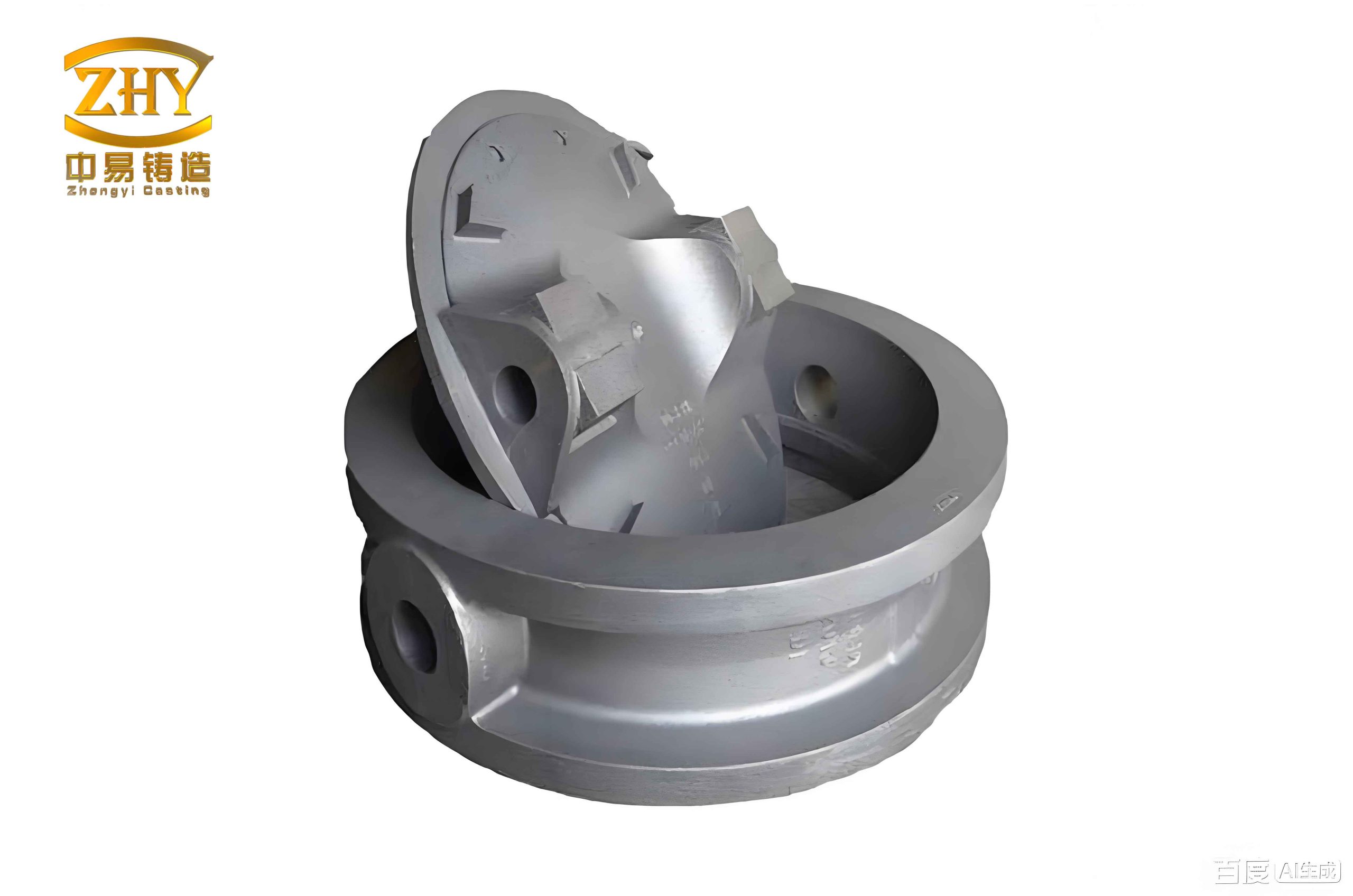
To quantify the benefits of数字化铸造, I have analyzed key performance metrics for sand casting products. The table below summarizes a comparison based on industrial case studies, highlighting the impact on sand casting products:
| Metric | Traditional Sand Casting | Digital Casting with Sand Printing | Improvement for Sand Casting Products |
|---|---|---|---|
| Lead Time | 4-6 weeks | 2-3 weeks | Up to 50% reduction |
| Dimensional Accuracy | ±2 mm | ±0.5 mm | Enhanced precision |
| Surface Finish (Ra) | 12.5-25 μm | 6.3-12.5 μm | Smoother surfaces |
| Material Utilization | 60-70% | 85-90% | Less waste in sand casting products |
| Cost per Unit for Low Volume | High due to tooling | Lower, no pattern costs | Economical for custom sand casting products |
The application of simulation tools further optimizes sand casting products. For instance, fluid flow and thermal analysis during solidification can be modeled using the Navier-Stokes equations and heat transfer equations. A simplified version for mold filling is:
$$ \frac{\partial \vec{v}}{\partial t} + (\vec{v} \cdot \nabla) \vec{v} = -\frac{1}{\rho} \nabla p + \nu \nabla^2 \vec{v} + \vec{g} $$
where \( \vec{v} \) is velocity, \( p \) is pressure, \( \nu \) is kinematic viscosity, and \( \vec{g} \) is gravity. Coupled with heat conduction:
$$ \frac{\partial T}{\partial t} = \alpha \nabla^2 T $$
where \( T \) is temperature and \( \alpha \) is thermal diffusivity. These simulations help predict defects like shrinkage and porosity in sand casting products, allowing for proactive工艺 adjustments.
In conclusion, digital casting technology based on sand printing represents a paradigm shift for producing sand casting products. My experience shows that三维工艺 design, dual material造型, and innovative砂型分块 methods collectively address the limitations of traditional casting. The technology offers rapid response, high flexibility, and stable精度, making it indispensable for complex and large-scale sand casting products. As additive manufacturing advances, I anticipate further integration with AI and IoT for real-time monitoring, pushing the boundaries of what’s possible in sand casting products. The future of casting lies in digitization, and sand printing is at its forefront, enabling smarter, faster, and more sustainable production of sand casting products.