
In my assessment of modern wind energy systems, ductile iron castings occupy a central position because they combine high strength, useful toughness, corrosion resistance, good castability, and strong machinability. Wind turbines operate under cyclic loads, low temperatures, and long service expectations, often with a design life of twenty years or more. These conditions make material reliability essential. Among the candidate materials for hubs, bases, gearbox housings, bearing caps, and planetary carriers, ductile iron castings are widely selected because they offer a favorable balance of mechanical performance and production cost. In this article, I review the current development status and trends of ductile iron castings for wind power, with emphasis on matrix microstructure, chemical composition, trace elements, nodulization, and inoculation. I also summarize the main production problems and propose future directions.
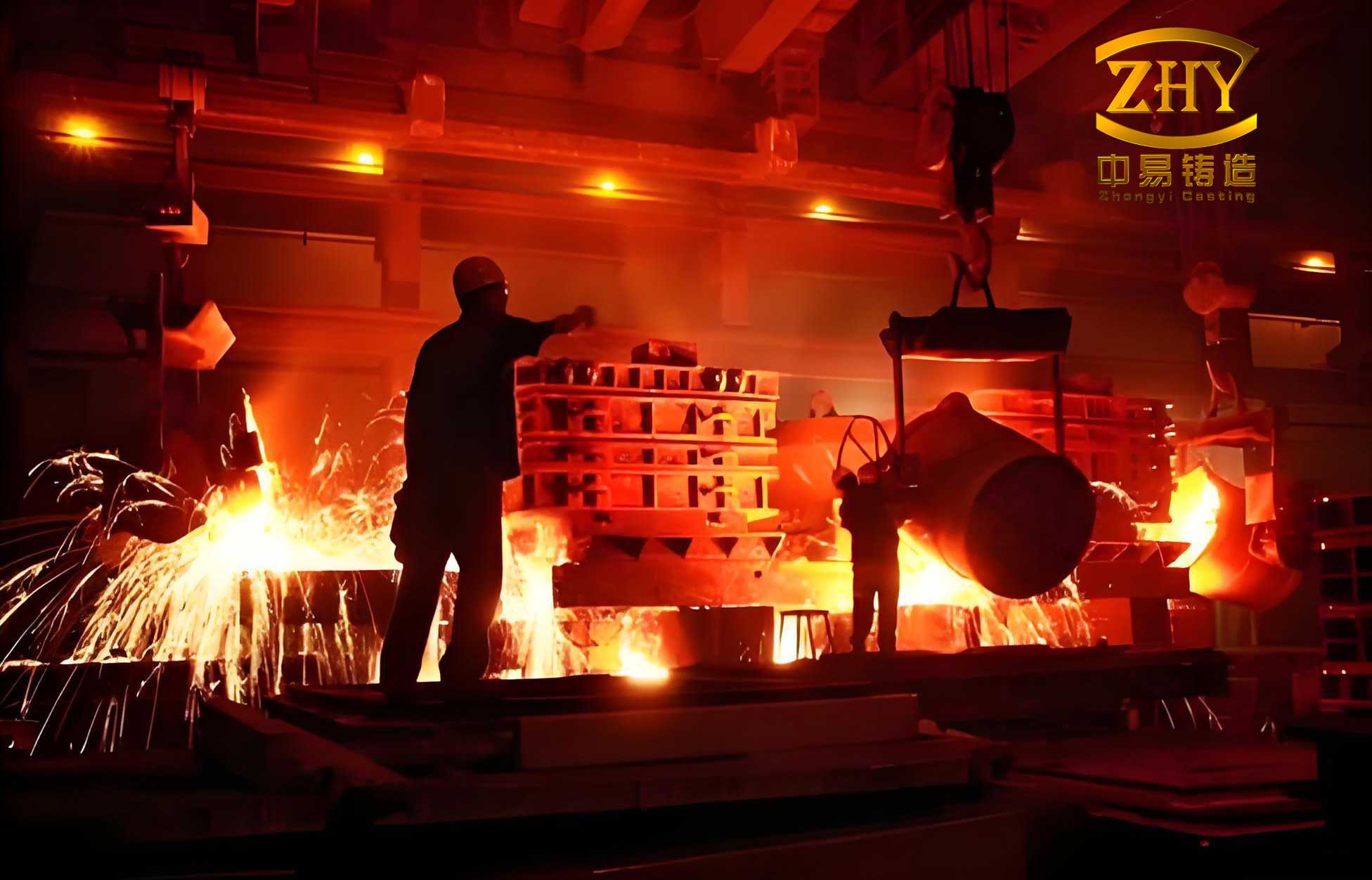
The global wind market continues to expand. Onshore and offshore installations are increasing, and the demand for large, heavy-section ductile iron castings is rising accordingly. In mature markets, production capacity for wind power ductile iron castings is relatively stable, while emerging markets are expanding rapidly. This growth places greater demands on foundries to produce thick-walled ductile iron castings with consistent microstructure and reliable mechanical properties. The main difficulty is that large section size leads to long solidification times, which can cause nodularization and inoculation fading, graphite degeneration, chunky graphite, shrinkage porosity, and property gradients. Therefore, the development of ductile iron castings for wind power is not only a matter of alloy design but also a matter of process control.
Matrix Microstructure and Property Requirements
The mechanical behavior of ductile iron castings depends strongly on both graphite morphology and matrix structure. In wind power applications, ferritic ductile iron castings dominate because they provide good ductility, low-temperature impact toughness, and resistance to brittle fracture. Pearlitic ductile iron castings are used in selected high-strength components such as planetary carriers, where higher strength and wear resistance are required. I summarize typical requirements in Table 1.
| Grade | Wall thickness (mm) | Tensile strength (MPa) | Yield strength (MPa) | Elongation (%) | Ferrite (%) | Pearlite (%) | Typical component |
|---|---|---|---|---|---|---|---|
| QT350-22AL | ≤30 | 350 | 220 | 22 | ≥90 | – | Bearing cap |
| QT350-22AL | >30–60 | 330 | 210 | 18 | ≥90 | – | Gearbox |
| QT350-22AL | >60–200 | 320 | 200 | 15 | ≥90 | – | Hub, base |
| QT350-22L | ≤60 | 350 | 220 | 22 | ≥90 | – | Bearing cap |
| QT400-18AL | ≤30 | 400 | 240 | 18 | ≥90 | – | Bearing cap |
| QT400-18AL | >30–60 | 390 | 230 | 15 | ≥90 | – | Gearbox |
| QT400-18AL | >60–200 | 370 | 220 | 12 | ≥90 | – | Hub, base |
| QT400-18L | ≤60 | 400 | 240 | 18 | ≥90 | – | Bearing cap |
| QT700-2A | >60–200 | 660 | 380 | 1 | – | ≥90 | Planetary carrier |
For ferritic ductile iron castings, the graphite nodule count, nodularity, and nodule size are critical. A high nodule count with uniform distribution reduces stress concentration and improves toughness. The matrix must contain at least ninety percent ferrite for most wind power components. Pearlitic ductile iron castings require a fine pearlite lamellar spacing to achieve high strength while retaining acceptable ductility. The relationship between grain size and yield strength can be described by the Hall–Petch equation:
$$ \sigma_y = \sigma_0 + k_y d^{-1/2} $$
where \(\sigma_y\) is yield strength, \(\sigma_0\) is friction stress, \(k_y\) is the strengthening coefficient, and \(d\) is grain size. In ductile iron castings, grain refinement can be promoted by inoculation, trace element control, and optimized cooling. Because thick sections cool slowly, the grain size often coarsens, and the mechanical properties decrease. Therefore, I consider cooling rate control to be as important as composition control in heavy-section ductile iron castings.
The cooling rate in a casting can be approximated by:
$$ \dot{T} = \frac{K}{\delta} $$
where \(\dot{T}\) is cooling rate, \(K\) is a constant related to mold and alloy properties, and \(\delta\) is local wall thickness. This simple relation explains why thick sections of ductile iron castings suffer from long solidification times, graphite degeneration, and inoculation fading. The carbon equivalent also affects solidification and graphite formation:
$$ CE = C + \frac{Si}{3} + \frac{P}{3} + \frac{Mn}{6} + \frac{Ni}{15} + \frac{Cu}{13} $$
For wind power ductile iron castings, the carbon equivalent is usually controlled near the eutectic range to promote graphite spheroidization and reduce shrinkage. However, too high a carbon equivalent can increase the risk of graphite flotation in heavy sections, while too low a carbon equivalent can promote carbide formation and shrinkage porosity.
Influence of Alloying Elements on Ductile Iron Castings
Alloying elements influence ductile iron castings through solid solution strengthening, carbide formation, graphite modification, and interaction with rare earth elements. In my analysis, the most important elements for wind power ductile iron castings are silicon, lanthanum, bismuth, antimony, niobium, and selected nano-sized additives. Each element has a different role, and the optimum addition depends on wall thickness, matrix target, and required low-temperature toughness.
Silicon
Silicon is a graphite-promoting element and a ferrite stabilizer. In ductile iron castings, silicon increases the number of graphite nodules, reduces nodule size, and promotes a ferritic matrix. These effects improve ductility and impact toughness at room temperature. However, excessive silicon causes solid solution embrittlement, raises the ductile-to-brittle transition temperature, and can lead to graphite degeneration. The influence of silicon on impact fracture behavior is summarized in Table 2.
| Silicon content (wt.%) | Fracture mode | Graphite condition | Impact toughness trend |
|---|---|---|---|
| 2.1 | Fully ductile | Many nodules, fine and uniform | High |
| 3.03 | Mixed ductile–brittle | Fewer dimples, cleavage steps | Reduced |
| 3.64 | Fully cleavage | Broken graphite nodules | Low |
I interpret the silicon effect as a competition between ferrite stabilization and solid solution embrittlement. The beneficial effect is that silicon increases ferrite content, which improves toughness. The detrimental effect is that silicon dissolves in ferrite and distorts the lattice, which makes ferrite brittle at low temperature. For wind power ductile iron castings, silicon content is therefore usually kept within a narrow range, often around 2.0–2.6 wt.%, depending on section size and required low-temperature impact energy. The low-temperature transition behavior can be expressed qualitatively as:
$$ T_{41J} = f(Si, P, Mn, nodule\,count, cooling\,rate) $$
where \(T_{41J}\) is the transition temperature at 41 J impact energy. I use this relation to emphasize that low-temperature toughness in ductile iron castings is not controlled by silicon alone but by a combination of composition and microstructure.
Modified Nano Vanadium Carbide Powder
Nano-sized additives have been explored to refine grains and improve strength–toughness balance in ductile iron castings. Modified nano vanadium carbide powder, typically in the range of 20–80 nm, can act as a heterogeneous nucleation site and grain boundary inhibitor. When added at about 0.1 wt.%, it increases graphite nodule count, decreases average nodule diameter, and refines the matrix grains. Vanadium can also enter ferrite and cause lattice distortion, producing solid solution strengthening. The strengthening contribution can be approximated by:
$$ \Delta \sigma = \alpha G b \sqrt{\rho} + \beta c^{1/2} $$
where \(\Delta \sigma\) is the strengthening increment, \(\alpha\) and \(\beta\) are constants, \(G\) is shear modulus, \(b\) is Burgers vector, \(\rho\) is dislocation density, and \(c\) is solute concentration. In my view, nano additives are promising for ductile iron castings, but their practical use in heavy-section wind power castings still requires solutions for particle agglomeration and interfacial bonding.
Lanthanum
Lanthanum is a rare earth element that promotes ferrite and suppresses pearlite. In ductile iron castings, lanthanum increases graphite nodule count, decreases nodule size, improves nodularity, and promotes uniform distribution. These changes improve ductility and elongation, although yield strength may decrease slightly. Lanthanum also modifies graphite nucleation, leading to finer and rounder nodules. However, for very thick wind power ductile iron castings, the effect of lanthanum alone is often insufficient because rare earth elements can interact with trace elements and may cause rare earth-rich inclusions. The nodularity can be expressed as:
$$ S = \frac{N_{spherical}}{N_{total}} \times 100\% $$
where \(S\) is nodularity, \(N_{spherical}\) is the number of spherical graphite particles, and \(N_{total}\) is the total number of graphite particles. Lanthanum generally increases \(S\), but the effect depends on residual magnesium, sulfur, oxygen, and rare earth content.
Bismuth
Bismuth was once considered a harmful element because it can act as an anti-nodulizing element. However, in controlled amounts, bismuth combines with rare earth elements to form stable high-melting-point compounds that serve as heterogeneous nuclei for graphite. This increases graphite nodule count and suppresses chunky graphite in heavy-section ductile iron castings. Bismuth also reduces the negative effect of high silicon on graphite morphology. The effect of bismuth is summarized in Table 3.
| Bismuth content (wt.%) | Graphite nodule count | Nodularity | Chunky graphite | Ferrite content |
|---|---|---|---|---|
| 0 | Baseline | Baseline | High | Baseline |
| 0.002 | Increased | Improved | Reduced | Slightly increased |
| 0.006 | Further increased | Further improved | Low | Increased |
| 0.01 | High | High | Nearly absent | High |
For a 100 mm wall thickness, only about 0.01 wt.% bismuth can increase nodularity above 80%, with fine and round graphite. In my analysis, bismuth is especially useful in thick-section ductile iron castings because it counteracts the slow cooling that promotes chunky graphite. The optimum bismuth addition must be balanced with rare earth and residual magnesium to avoid over-treatment and inclusion formation.
Antimony
Antimony is a strong pearlite stabilizer and can also improve graphite morphology when added in trace amounts. In ductile iron castings, antimony increases graphite nodule count and nodularity, but it also increases pearlite content, strength, and hardness while reducing elongation. Therefore, antimony is mainly used in pearlitic ductile iron castings, such as planetary carriers. When antimony is added at 0.01–0.02 wt.% together with rare earth control, the ratio of rare earth to antimony is often kept between 1.5 and 2.5 for best performance. Excess antimony can deteriorate graphite shape, promote white iron, and reduce machinability.
The pearlite content as a function of antimony content can be described qualitatively by a saturation-type relation:
$$ P_{earlite} = P_0 + \Delta P_{max}\left(1 – e^{-k\,C_{Sb}}\right) $$
where \(P_0\) is the initial pearlite content, \(\Delta P_{max}\) is the maximum increase, \(k\) is a kinetic constant, and \(C_{Sb}\) is antimony concentration. This relation helps explain why small antimony additions cause a rapid increase in pearlite, while further additions provide diminishing returns and may harm graphite morphology.
Niobium
Niobium forms niobium carbide, which can act as a nucleation site for graphite and matrix phases. It refines grains, reduces pearlite lamellar spacing, and strengthens the matrix. In ductile iron castings, niobium increases hardness and strength, but excessive niobium reduces nodularity and ferrite content because niobium carbide consumes carbon and hinders carbon diffusion during graphitization. The effect of niobium on nodularity and ferrite content is summarized in Table 4.
| Niobium content (wt.%) | Nodularity | Ferrite content | Pearlite lamellar spacing | Application note |
|---|---|---|---|---|
| 0 | High | High | Coarse | Ferritic ductile iron castings |
| 0.05 | Slightly reduced | Slightly reduced | Finer | Balanced strength and toughness |
| 0.1 | Reduced | Reduced | Fine | Pearlitic ductile iron castings |
| 0.2–0.7 | Strongly reduced | Low | Very fine | High-strength, low-ductility parts |
Because most wind power ductile iron castings are ferritic, I recommend careful control of niobium. Niobium is more suitable for pearlitic ductile iron castings where high strength is the priority. For ferritic ductile iron castings, niobium should be kept at a low level to avoid reducing nodularity and low-temperature toughness.
Nodulization and Inoculation of Ductile Iron Castings
Nodulization and inoculation are decisive for the quality of wind power ductile iron castings. Nodulization removes sulfur and oxygen from the melt and allows graphite to grow as spheres. Inoculation increases graphite nodule count, improves nodularity, reduces carbides, and refines the eutectic cells. In thick-section ductile iron castings, both nodulization and inoculation can fade because solidification is slow and the melt remains liquid for a long time. This fading is one of the main reasons for chunky graphite and property scatter.
Nodulizers
Common nodulizers contain magnesium, calcium, rare earth elements, iron, and silicon. Magnesium-based nodulizers are widely used because magnesium has strong desulfurization and deoxidation ability. Rare earth-containing nodulizers are divided into light rare earth and heavy rare earth types. Light rare earth nodulizers are based on cerium and lanthanum, while heavy rare earth nodulizers are based on yttrium. Heavy rare earth nodulizers generally provide better fading resistance in heavy-section ductile iron castings. A comparison is given in Table 5.
| Nodulizer type | Main elements | Advantages | Limitations | Suitable section |
|---|---|---|---|---|
| Light rare earth Mg alloy | Ce, La, Mg, Si, Fe | Good nodularity, low cost | Higher fading in thick sections | Thin to medium |
| Heavy rare earth Mg alloy | Y, Mg, Si, Fe | Strong fading resistance, good toughness | Higher cost | Heavy section |
| Calcium-based alloy | Ca, Si, Fe | Stable reaction | Lower nodulizing power | Selected applications |
| Nickel–magnesium alloy | Ni, Mg | High density, smooth reaction, alloying effect | High cost | Special castings |
Nodulization methods include the tundish cover method, in-mold treatment, sandwich method, and wire feeding. The sandwich method is common because it is simple and low cost, but magnesium recovery is often only 30–50%. For heavy-section ductile iron castings, wire feeding and tundish cover methods can provide more controlled magnesium addition and better consistency. The magnesium recovery can be expressed as:
$$ R_{Mg} = \frac{M_{Mg,residual}}{M_{Mg,added}} \times 100\% $$
where \(R_{Mg}\) is magnesium recovery, \(M_{Mg,residual}\) is residual magnesium in the iron, and \(M_{Mg,added}\) is added magnesium. A low recovery indicates poor process control and can lead to inconsistent nodularity in ductile iron castings.
Inoculants and Inoculation Methods
Inoculants are usually ferrosilicon-based and may contain barium, calcium, rare earth elements, bismuth, or antimony. Barium-bearing inoculants are often used in heavy-section ductile iron castings because barium retards carbon and silicon diffusion, prolongs graphite growth, and provides strong fading resistance. Rare earth inoculants can improve nodularity but may increase chunky graphite if added excessively. The total inoculant addition for large castings is often about 0.7–1.0 wt.%, but the exact amount depends on sulfur, oxygen, holding time, and section size.
Inoculation methods include stream inoculation, in-mold inoculation, wire inoculation, and inoculating block in the pouring basin. For heavy-section ductile iron castings, a pouring basin inoculating block is often effective because it provides uniform and lasting inoculation without the need for stirring. The inoculation fading index can be defined as:
$$ I_f = \frac{N_0 – N_t}{N_0} \times 100\% $$
where \(I_f\) is fading index, \(N_0\) is initial nodule count, and \(N_t\) is nodule count after time \(t\). A lower \(I_f\) indicates better inoculation persistence. For wind power ductile iron castings, minimizing \(I_f\) is essential because the solidification time can be several hours in thick sections.
One useful inoculant system for pearlitic ductile iron castings is an Sb–Ba–Ce–Si–Fe post-inoculant. When added at about 0.2 wt.%, it can produce a matrix with approximately 90% pearlite and 10% ferrite, with refined pearlite lamellar spacing. I consider this type of complex inoculant promising for ductile iron castings that require both high strength and acceptable toughness.
Production Problems and Metallurgical Mechanisms
In my review, the main problems in wind power ductile iron castings are chunky graphite, graphite degeneration, shrinkage porosity, inoculation fading, nodularization fading, and property gradients across thick sections. These problems are interrelated. A long solidification time promotes carbon diffusion over long distances, which can cause graphite to grow in irregular forms. Rare earth and magnesium can be consumed by oxygen and sulfur, leading to nodularization fading. Inoculation fading reduces nodule count and promotes carbides. Shrinkage porosity forms when feeding is blocked by thick walls and hot spots.
The formation of chunky graphite can be understood through the competition between spherical growth and branched growth. A simplified growth condition can be written as:
$$ \Delta G = \Delta G_v – \Delta G_s – \Delta G_d $$
where \(\Delta G\) is the net driving force for graphite growth, \(\Delta G_v\) is the chemical driving force, \(\Delta G_s\) is the surface energy penalty, and \(\Delta G_d\) is the strain energy penalty. When the chemical driving force is high and the surface energy penalty is low, graphite tends to grow in a branched or chunky form. Alloying elements such as bismuth and antimony can increase the number of heterogeneous nucleation sites and change the local growth conditions, thereby suppressing chunky graphite.
Shrinkage porosity can be estimated by the feeding resistance parameter:
$$ F = \frac{L^2}{D_{eff} \Delta P} $$
where \(F\) is feeding resistance, \(L\) is feeding distance, \(D_{eff}\) is effective permeability, and \(\Delta P\) is pressure drop. In heavy-section ductile iron castings, \(L\) is large, so feeding resistance increases. This means that riser design, chill placement, and pouring temperature must be optimized to reduce shrinkage defects.
Current Development Status
At present, ductile iron castings for wind power are produced in many countries and regions. Mature markets have stable capacity and well-established quality systems. Emerging markets are expanding capacity rapidly. The global wind energy council expects continued growth in onshore and offshore installations, which will maintain demand for large ductile iron castings. The main technical trend is toward larger components, thicker walls, higher strength, better low-temperature toughness, and more consistent quality.
I observe that foundries are increasingly using computer simulation for solidification, filling, and stress analysis. Simulation helps predict hot spots, shrinkage porosity, and graphite degeneration risk. It also helps optimize gating and risering systems. However, simulation accuracy depends on accurate thermophysical properties and boundary conditions. For ductile iron castings, the latent heat of graphite formation and the effect of inoculation on nucleation are difficult to model precisely. Therefore, simulation must be combined with experimental validation.
Another trend is the use of rare earth and trace element combinations. Heavy rare earth nodulizers, bismuth, antimony, and barium-bearing inoculants are being used together to control graphite morphology in heavy sections. The goal is to achieve high nodularity, fine graphite, and a ferritic matrix while avoiding chunky graphite and carbides. This requires careful balancing of residual magnesium, rare earth, sulfur, oxygen, and trace elements. Table 6 summarizes the typical control ranges I consider useful.
| Parameter | Typical range | Effect on ductile iron castings |
|---|---|---|
| Residual Mg | 0.035–0.055 wt.% | Promotes nodularization; too high increases carbides and shrinkage |
| Residual Ce + La | 0.01–0.03 wt.% | Improves nodularity; excess promotes chunky graphite |
| Residual S | <0.015 wt.% | High sulfur consumes Mg and rare earth |
| Residual O | <0.0030 wt.% | High oxygen reduces nodule count |
| Si | 2.0–2.6 wt.% | Promotes ferrite; excess embrittles |
| Bi | 0.002–0.010 wt.% | Suppresses chunky graphite in thick sections |
| Sb | 0.005–0.020 wt.% | Stabilizes pearlite; excess harms graphite |
| Nb | <0.10 wt.% for ferritic grades | Refines pearlite; reduces nodularity at high levels |
I also note that melt cleanliness is a recurring theme. Phosphorus, sulfur, and oxygen are harmful because they consume nodulizing elements and form inclusions. Low phosphorus is especially important for low-temperature toughness. In ferritic ductile iron castings, phosphorus can form steadite, which is brittle and raises the ductile-to-brittle transition temperature. Therefore, raw material selection, desulfurization, and slag control are essential.
Future Trends and Recommendations
In my view, the future development of ductile iron castings for wind power will focus on four areas: performance improvement, process innovation, green manufacturing, and digitalization.
First, performance improvement requires a deeper understanding of the relationship between composition, cooling rate, microstructure, and properties. I recommend further study on the formation mechanism of chunky graphite in heavy sections. Long-lasting inoculants and nodulizers should be developed specifically for thick-wall ductile iron castings. The interaction between heavy rare earth elements, bismuth, antimony, and residual magnesium should be quantified through thermodynamic and kinetic models. A useful framework is:
$$ \frac{\partial C}{\partial t} = D \nabla^2 C + S(x,t) $$
where \(C\) is solute concentration, \(D\) is diffusion coefficient, and \(S(x,t)\) is a source or sink term from phase transformation. Such models can help predict segregation and graphite growth in ductile iron castings.
Second, process innovation should include improved melting, pouring, and heat treatment. For heavy-section ductile iron castings, forced cooling, chills, and optimized riser design can reduce solidification time and minimize chunky graphite. Heat treatment can homogenize the matrix and relieve internal stress, but it must be controlled to avoid changes in graphite morphology. I also recommend the use of advanced inoculation methods such as wire feeding and in-mold inoculation to improve consistency.
Third, green manufacturing is becoming more important. Wind power is a renewable energy technology, so the castings used in wind turbines should also be produced with low energy consumption and low environmental impact. This includes reducing emissions, recycling foundry sand, recovering waste heat, and increasing the use of recycled charge materials. In my assessment, green manufacturing will become a competitive advantage for foundries producing ductile iron castings.
Fourth, digitalization and smart manufacturing will improve quality control. Sensors, machine learning, and digital twins can be used to monitor melt quality, inoculation efficiency, and solidification behavior. A digital twin can integrate thermal, metallurgical, and mechanical models. The overall product quality index can be expressed as:
$$ Q = w_1 S + w_2 N + w_3 \sigma + w_4 \delta – w_5 P $$
where \(Q\) is a quality index, \(S\) is nodularity, \(N\) is nodule count, \(\sigma\) is strength, \(\delta\) is elongation, \(P\) is porosity, and \(w_i\) are weighting factors. Such an index can help foundries optimize multiple objectives simultaneously.
Summary of Key Effects
To consolidate my analysis, Table 7 summarizes the effects of major elements and treatments on ductile iron castings for wind power.
| Element or treatment | Graphite nodule count | Nodularity | Ferrite | Pearlite | Strength | Toughness | Main risk |
|---|---|---|---|---|---|---|---|
| Si increase | Increase | Slight increase | Increase | Decrease | Increase | Increase then decrease | Embrittlement at high Si |
| Nano VC | Increase | Improve | Slight increase | Refine | Increase | Improve | Agglomeration |
| La addition | Increase | Improve | Increase | Decrease | Slight decrease | Improve | Rare earth inclusions |
| Bi addition | Increase | Improve | Increase | Decrease | Moderate | Improve | Over-treatment |
| Sb addition | Increase | Improve | Decrease | Increase | Increase | Decrease | White iron |
| Nb addition | Slight increase | Decrease at high levels | Decrease | Increase and refine | Increase | Decrease | Low nodularity |
| Heavy rare earth nodulizer | Increase | Improve | Increase | Decrease | Moderate | Improve | Higher cost |
| Ba-bearing inoculant | Increase | Improve | Increase | Slight decrease | Moderate | Improve | Excess inoculant |
I conclude that ductile iron castings for wind power require an integrated approach. The chemical composition must be matched to wall thickness and matrix target. Trace elements must be controlled within narrow ranges. Nodulization and inoculation must be designed for long solidification times. Process simulation and quality control must be used to reduce defects. As wind turbines become larger and more demanding, ductile iron castings will continue to evolve toward higher purity, finer microstructure, better low-temperature toughness, and more sustainable production.
In my future work, I would prioritize the following: low-phosphorus and low-sulfur melting practice; heavy rare earth and bismuth combinations for thick sections; barium-bearing long-lasting inoculants; grain refinement by nano-sized additives; and digital twin models for solidification and inoculation. These measures can improve the reliability of ductile iron castings and support the continued growth of wind energy.
Conclusion
In this article, I have reviewed the development status and trends of ductile iron castings for wind power. Ferritic ductile iron castings dominate because of their excellent toughness and low-temperature performance. Pearlitic ductile iron castings are used for high-strength components such as planetary carriers. Silicon, lanthanum, bismuth, antimony, niobium, and nano-sized additives each influence graphite morphology and matrix structure. Silicon promotes ferrite but can embrittle at high levels. Lanthanum improves nodularity and ferrite content. Bismuth suppresses chunky graphite in heavy sections. Antimony stabilizes pearlite. Niobium refines pearlite but reduces nodularity at high levels. Heavy rare earth nodulizers and barium-bearing inoculants provide better fading resistance for thick-wall ductile iron castings. The main challenges are chunky graphite, shrinkage porosity, nodularization fading, and inoculation fading. Future development should focus on cleaner melts, long-lasting treatment agents, trace element control, process simulation, green manufacturing, and digital quality control. With these advances, ductile iron castings will remain a key material for wind power components and will support the global transition to renewable energy.