
In the landscape of modern engineering materials, ductile iron castings occupy a pivotal role, particularly within the demanding sphere of automotive manufacturing. Emerging as a commercially significant material in the mid-20th century, ductile iron, also known as nodular or spheroidal graphite iron, has revolutionized the design and production of critical components. Its unique combination of high strength, good ductility, excellent machinability, and cost-effectiveness—often surpassing that of cast steel—makes it an indispensable choice. This article delves into the fundamental properties of ductile iron, elucidates its manufacturing nuances, and comprehensively explores its extensive and evolving applications in the automotive sector, underscoring how this material continues to optimize vehicle performance, durability, and manufacturing economics.
Fundamental Characteristics and Metallurgy of Ductile Iron
Ductile iron is fundamentally an iron-carbon-silicon alloy, where the carbon content exceeds the eutectic point (typically >2.1 wt.%). Its defining characteristic is the spheroidal morphology of the graphite phase, a stark contrast to the flake graphite found in gray iron. This spherical shape is achieved through a controlled inoculation and spheroidization process, primarily involving the addition of magnesium (Mg) and/or cerium (Ce) to the molten iron just prior to casting. These elements act as graphitizing agents, altering the surface energy of the growing graphite crystals and forcing them to form spheres rather than flakes.
The mechanical superiority of ductile iron castings stems directly from this spherical graphite morphology. In gray iron, the sharp flake tips act as severe stress concentrators and crack initiation sites, leading to brittle fracture and negligible ductility. In ductile iron, the rounded graphite nodules blunt propagating cracks, allowing the metallic matrix (which can be ferritic, pearlitic, or a mixture) to bear load effectively. This results in a material that exhibits tensile strength comparable to many cast steels, a distinct yield point, and remarkable toughness.
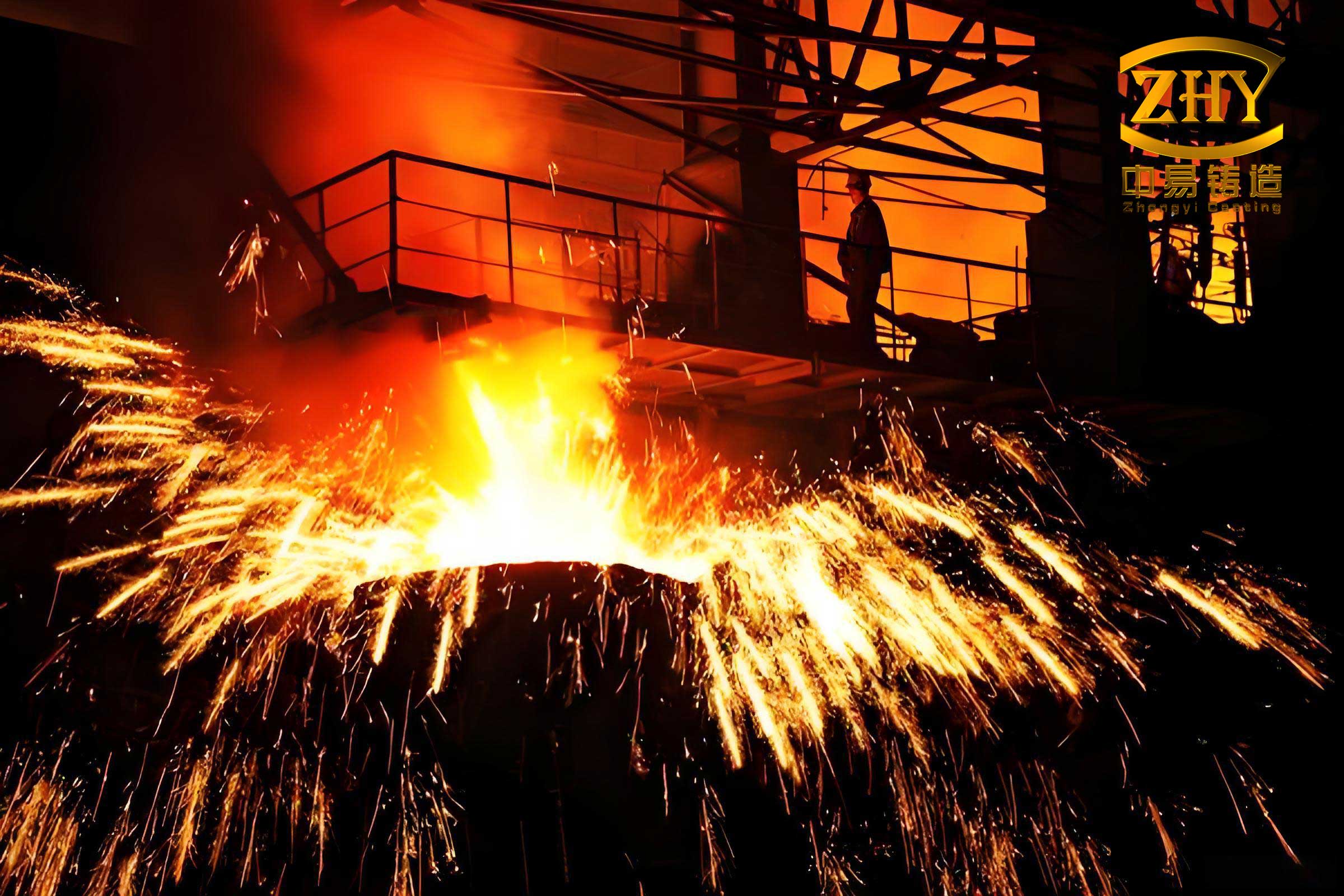
The matrix structure, and consequently the properties, of ductile iron castings can be tailored through alloying and heat treatment to suit specific applications. The most common grades are defined by their tensile strength and elongation, as shown in the table below. Austempered Ductile Iron (ADI) is a special grade achieved through an isothermal heat treatment, offering an exceptional combination of high strength, wear resistance, and fatigue performance.
| Grade Designation | Matrix Structure (Typical) | Tensile Strength (MPa, min) | Yield Strength (MPa, min) | Elongation (%, min) | Key Characteristics |
|---|---|---|---|---|---|
| EN-GJS-400-18 / QT400-18 | Ferritic | 400 | 250 | 18 | High ductility, good impact resistance, excellent machinability. |
| EN-GJS-500-7 / QT500-7 | Ferritic-Pearlitic | 500 | 320 | 7 | Good compromise between strength and ductility. |
| EN-GJS-600-3 / QT600-3 | Pearlitic | 600 | 370 | 3 | High strength, good wear resistance. |
| EN-GJS-700-2 / QT700-2 | Pearlitic | 700 | 420 | 2 | Very high strength, used for highly stressed parts. |
| EN-GJS-800-2 (ADI) | Austempered | 800 | 500 | 2 | Exceptional strength-to-weight ratio, high fatigue limit. |
The relationship between the graphite nodule characteristics and mechanical properties can be qualitatively described. Generally, a higher nodule count, smaller nodule size, and higher nodularity (sphericity) lead to improved mechanical properties. The yield strength ($\sigma_y$) of ferritic ductile iron, for instance, is influenced by the matrix strength and the inhibiting effect of nodules on dislocation motion. A simplified Hall-Petch type relationship, considering the inter-nodule spacing ($\lambda$), can be conceptualized:
$$ \sigma_y \approx \sigma_0 + k_y \cdot \lambda^{-1/2} $$
where $\sigma_0$ is the lattice friction stress and $k_y$ is a strengthening coefficient. This highlights the importance of a fine, uniform distribution of graphite spheroids in high-performance ductile iron castings.
Manufacturing and Process Control for Automotive-Quality Castings
The production of consistent, high-quality ductile iron castings for the automotive industry demands rigorous control over every stage of the process, from raw materials to final inspection.
1. Raw Material and Melt Control: The base iron composition is critical. High-purity pig iron or steel scrap is used to keep tramp elements (Pb, Bi, Sb, Ti, etc.) low, as they can impair nodularity. The target chemistry is carefully balanced. Carbon equivalent (CE) is a key parameter controlling fluidity and shrinkage behavior:
$$ CE = \%C + \frac{\%Si + \%P}{3} $$
For most automotive ductile iron castings, the CE is controlled between 4.3 and 4.7 to avoid defects like graphite flotation (at high CE) and excessive shrinkage porosity (at low CE). Sulfur (S) content must be very low (<0.02%) prior to treatment, as it consumes the costly spheroidizing agent.
2. Spheroidization and Inoculation: This is the heart of the process. Magnesium is the primary spheroidizing element, added via FeSiMg alloys. The reaction is highly exothermic and must be controlled. Modern methods include:
- Sandwich Method: Mg-FeSi is placed in a pocket at the bottom of the ladle and covered with steel punchings, then molten iron is poured over it.
- In-Mold Process: The spheroidizing and inoculating alloys are placed in a reaction chamber built into the gating system. As metal flows through, treatment occurs instantly just before entering the mold cavity. This offers high Mg recovery, minimal fume, and excellent consistency for high-volume production of automotive ductile iron castings.
- Tundish Cover/Flow-Through Process: A continuous treatment method using a pressurized vessel or controlled-flow tundish, ideal for large-scale, automated foundries.
Inoculation (post-inoculation) with ferrosilicon alloys containing elements like Ca, Al, and Sr is performed immediately after spheroidization to enhance nucleation, prevent chilling (carbide formation), and ensure a fine, uniform nodule structure.
3. Process Parameters: Key parameters must be tightly monitored:
| Parameter | Typical Target Range | Significance |
|---|---|---|
| Pouring Temperature | 1350 – 1450 °C | Avoids mistruns (too low) and gas defects/oxide formation (too high). |
| Mg Residual | 0.03 – 0.06 wt.% | Ensures full nodularity; excess can promote carbides and shrinkage. |
| Inoculant Addition | 0.2 – 0.8 wt.% | Controls nodule count and matrix structure. |
| Cooling Rate | Mold-design dependent | Dictates final microstructure (ferrite/pearlite ratio) in critical sections. |
Applications in Modern Automotive Systems
The automotive industry is the largest consumer of ductile iron castings, leveraging their unique properties across powertrain, chassis, and structural components. The trend is consistently towards substituting heavier or more costly materials like forged steel or aluminum, driven by the need for cost reduction, weight optimization (especially with ADI), and performance enhancement.
1. Powertrain Components: This is a traditional and critical domain for ductile iron castings.
- Crankshafts: Both traditional pearlitic grades (e.g., EN-GJS-600-3) and, increasingly, Austempered Ductile Iron (ADI) are used. ADI crankshafts can be up to 10% lighter than forged steel counterparts while offering superior damping capacity and fatigue resistance. The high strength of these ductile iron castings withstands cyclical bending and torsional loads.
- Cylinder Blocks and Heads: While aluminum dominates for blocks in passenger cars, heavy-duty diesel engines often use compacted graphite iron (CGI) or ductile iron for the block or critical liners. Valve guides, turbocharger housings, and exhaust manifolds (particularly Si-Mo alloyed ductile iron for heat resistance) are common applications.
- Differential Carriers and Gears: The high strength and good wear resistance of pearlitic and ADI grades make them ideal for differential cases and ring gears, often replacing forged steel.
2. Chassis, Suspension, and Steering Components: Safety-critical parts demanding high fatigue strength and reliability extensively use ductile iron castings.
- Knuckles and Hubs: Steering knuckles and wheel hubs are prime examples. They experience complex multiaxial stresses. High-strength grades like QT600-3 or QT700-2 are standard, offering an optimal balance of strength, ductility, and cost. Their castability allows for complex, lightweight geometries unachievable with forging.
- Control Arms and Links: Both front and rear suspension control arms are increasingly made from thin-wall ductile iron castings. They can be designed to be stiffer and lighter than stamped/welded steel assemblies, improving handling and ride quality.
- Steering Gear Housings and Components: The high rigidity and damping capacity of ductile iron are beneficial for steering system housings, reducing noise, vibration, and harshness (NVH).
3. Braking System and Other Structural Parts:
- Brake Calipers: Especially for commercial vehicles, ductile iron is the material of choice for brake calipers due to its high rigidity, thermal stability, and fatigue resistance under cyclic pressure loading.
- Brackets and Supports: Numerous engine mounts, transmission crossmembers, and suspension brackets are made as ductile iron castings for their strength and ability to be cast into stiff, intricate shapes.
| Vehicle System | Component | Typical Ductile Iron Grade | Key Property Leveraged |
|---|---|---|---|
| Powertrain | Crankshaft | EN-GJS-600-3, EN-GJS-800-2 (ADI) | High Fatigue Strength, Damping, Wear Resistance |
| Powertrain | Differential Carrier | EN-GJS-500-7, EN-GJS-600-3 | High Strength, Stiffness, Castability for Complex Shape |
| Suspension | Steering Knuckle | EN-GJS-600-3, EN-GJS-700-2 | High Strength/Ductility Combo, Fatigue Resistance |
| Suspension | Control Arm | EN-GJS-400-18, EN-GJS-500-7 (Thin-Wall) | High Stiffness-to-Weight, Good Impact Strength |
| Braking | Brake Caliper | EN-GJS-500-7, EN-GJS-600-3 | High Rigidity, Thermal Stability, Pressure Integrity |
| Structural | Engine Mount Bracket | EN-GJS-400-18, EN-GJS-500-7 | Stiffness, Damping of Vibrations, Cost-Effectiveness |
Performance Advantages and Technical Challenges
The widespread adoption of ductile iron castings in automobiles is justified by a compelling set of advantages:
- Superior Strength-to-Cost Ratio: The tensile and yield strength of ductile iron approach or exceed those of cast mild steel at a significantly lower raw material and processing cost.
- Excellent Damping Capacity: The graphite nodules absorb vibrational energy, making components quieter and reducing resonant stresses. This is quantified by a higher damping coefficient compared to steel.
- Good Machinability: Despite its strength, ductile iron is generally easier to machine than steel, reducing tool wear and production time for finished components.
- Design Flexibility: The casting process enables the integration of multiple features into a single, net-shape or near-net-shape component, reducing assembly steps and weight.
- Wear Resistance: Pearlitic and ADI grades offer excellent wear resistance, crucial for components like crankshaft journals and brake parts.
However, producing defect-free, high-integrity automotive ductile iron castings presents ongoing challenges that require advanced process control:
1. Shrinkage Porosity Control: Ductile iron undergoes significant expansion during graphite precipitation (graphitic expansion). If this expansion is not properly harnessed to compensate for liquid and solidification shrinkage, internal shrinkage porosity can form. This is managed through careful design of the feeding system (risers), use of chills, and control of cooling rates and CE. The modulus (Volume/Surface Area) of casting sections is a critical design parameter, often expressed as $M = V/A$. Proper riser design ensures $M_{riser} > M_{casting}$ to enable effective feeding.
2. Achieving Consistent Microstructure: Ensuring uniform ferrite/pearlite distribution and high nodularity (>80-90%) throughout a complex casting, especially with varying section thicknesses, is difficult. This requires optimized inoculation practices, controlled cooling, and sometimes subsequent heat treatment (e.g., ferritizing anneal).
3. Fatigue Performance Optimization: For dynamically loaded parts like crankshafts and knuckles, fatigue strength is paramount. It is highly sensitive to casting defects (shrinkage, dross), surface condition, and microstructure. The fatigue limit ($\sigma_f$) can be related to the tensile strength ($\sigma_{UTS}$) and defect size. For high-quality ductile iron castings, the ratio is favorable:
$$ \frac{\sigma_f}{\sigma_{UTS}} \approx 0.35 – 0.50 $$
Shot peening and fillet rolling are often employed to induce compressive surface stresses and further enhance the fatigue life of these critical ductile iron castings.
Future Trends and Conclusion
The future of ductile iron castings in the automotive industry is intertwined with the megatrends of electrification, light-weighting, and sustainability. While electric vehicles (EVs) reduce the demand for traditional engine blocks, they create new opportunities:
- E-Motor Housings and Components: The high stiffness, damping, and magnetic shielding properties of ductile iron are beneficial for e-motor housings and rotor carriers.
- Battery Frame and Structural Components: High-strength ADI grades can contribute to lightweight, rigid battery enclosures and chassis reinforcements.
- Light-Weighting through High-Strength Grades: The continued development and adoption of ADI and high-silicon ferritic ductile irons allow for wall thickness reduction, directly contributing to vehicle weight reduction without sacrificing performance.
- Process Digitalization and Sustainability: The use of simulation software for solidification and stress analysis is becoming standard, minimizing prototyping time and defect rates. Furthermore, the high recyclability of ductile iron scrap aligns with circular economy goals.
In conclusion, ductile iron castings remain a cornerstone material in automotive engineering. Their exceptional blend of mechanical properties, design freedom, and cost-effectiveness is unmatched for a vast array of safety-critical and performance-critical components. From the enduring crankshaft to the sophisticated suspension knuckle, the integrity of modern vehicles relies heavily on the consistent quality of these castings. As the industry evolves, ongoing material and process innovations will ensure that ductile iron continues to be a vital, adaptable, and high-performance solution, driving forward the efficiency, safety, and reliability of the automobiles of tomorrow.