
In my recent investigation, I have systematically examined the influence of carbon equivalent on the microstructure and mechanical properties of high-strength and high-toughness austempered ductile iron (ADI). Austempered ductile iron has become one of the most important engineering materials due to its exceptional combination of strength, toughness, wear resistance, and fatigue performance. However, the conventional ADI often suffers from a trade-off between tensile strength and ductility, which limits its application in critical components such as heavy-duty automotive gears, crankshafts, railway brake systems, and military equipment. In this work, I designed four different carbon equivalent levels, namely 4.2%, 4.3%, 4.4%, and 4.5%, and performed a series of austempering heat treatments to evaluate how the carbon equivalent affects the as-cast structure, the ausferritic matrix, and the resulting mechanical behavior. My goal was to identify the optimal carbon equivalent that can simultaneously provide high strength above 1050 MPa and elongation above 8%, satisfying the demanding requirements of high-strength high-toughness ductile iron casting components.
The motivation for this study arises from the fact that ductile iron casting technology has advanced considerably over the past decades, and the use of ADI has expanded into many sectors where fatigue resistance and impact toughness are critical. The unique ausferritic microstructure, consisting of acicular ferrite and carbon-enriched retained austenite, is responsible for the superior mechanical properties of ADI. The carbon equivalent, which combines the effects of carbon and silicon, is a fundamental compositional parameter that governs the solidification behavior, graphite nodule characteristics, and phase transformation kinetics during austempering. Although many researchers have studied alloying elements such as nickel, copper, molybdenum, and manganese, the specific role of carbon equivalent in optimizing the balance between strength and ductility of ADI has received less attention. Therefore, I decided to focus my research on this important aspect, and I believe that the findings will provide valuable guidance for the design of high-performance ductile iron casting with tailored properties.
Experimental Design and Procedures
In my experiments, I used raw materials including pig iron, steel scrap, foundry returns, ferromolybdenum, electrolytic copper, and electrolytic nickel. The melting was carried out in a 0.5-ton medium-frequency induction furnace. The melting temperature was controlled between 1520 °C and 1525 °C. During melting, I adjusted the composition in real time based on spectrometric analysis to achieve the desired carbon equivalent levels. After thorough melting, the molten metal was subjected to spheroidization and inoculation treatments. The spheroidization process was performed using a conventional magnesium-containing nodulizer, while the inoculation was achieved with a silicon-based inoculant. The treated melt was then poured at a pouring temperature between 1360 °C and 1380 °C into standard Y-shaped test blocks. Each mold contained six Y-block castings. The chemical composition of the resulting ductile iron casting was verified using a DF-100E direct-reading spectrometer. The measured compositions are presented in Table 1, which clearly demonstrates that the carbon equivalent values closely match the designed levels. The contents of manganese, sulfur, phosphorus, nickel, molybdenum, and copper remained nearly constant across the four heats, indicating that any differences in microstructure and properties can be attributed primarily to the change in carbon equivalent.
| Sample No. | C | Si | Mn | S | P | Ni | Mo | Cu | CE (%) |
|---|---|---|---|---|---|---|---|---|---|
| 1 | 3.61 | 1.83 | 0.15 | 0.014 | 0.026 | 0.47 | 0.15 | 0.68 | 4.22 |
| 2 | 3.49 | 2.42 | 0.17 | 0.016 | 0.024 | 0.48 | 0.16 | 0.67 | 4.29 |
| 3 | 3.60 | 2.41 | 0.15 | 0.017 | 0.025 | 0.50 | 0.17 | 0.71 | 4.40 |
| 4 | 3.63 | 2.68 | 0.16 | 0.015 | 0.023 | 0.49 | 0.16 | 0.69 | 4.52 |
The carbon equivalent was calculated using the standard formula for ductile iron casting:
$$CE = C + \frac{Si}{3}$$
where C and Si are the mass fractions of carbon and silicon, respectively. According to Table 1, the actual carbon equivalent values are 4.22%, 4.29%, 4.40%, and 4.52%, which are very close to the target values of 4.2%, 4.3%, 4.4%, and 4.5%. Therefore, I could confidently study the effect of carbon equivalent on the resulting properties.
After casting, I cut specimens from the Y-blocks for metallographic examination and mechanical testing. For the austempering heat treatment, I selected an austenitizing temperature of 900 °C with a holding time of 90 minutes. The austenitizing was performed in a box-type resistance furnace. Following austenitizing, the specimens were rapidly transferred to a salt bath maintained at 340 °C, where they were held for 60 minutes. The salt bath consisted of a mixture of 50% KNO₃ and 50% NaNO₃. This austempering temperature and time were chosen to promote the first stage of the austempering reaction, in which undercooled austenite transforms into acicular ferrite and carbon-enriched retained austenite. I carefully avoided the second stage, which would cause the retained austenite to decompose into ferrite and carbides, thereby deteriorating the ductility and toughness.
The microstructures of the as-cast and austempered specimens were examined using an MD4000M optical microscope (OM) and a QUANTA200 scanning electron microscope (SEM). The graphite nodule characteristics, including nodularity, nodule count, and nodule size, were evaluated according to the Chinese national standard GB/T 9441-2009. The tensile fracture surfaces were also observed using SEM to determine the fracture mode. Mechanical properties were measured using a TH600 Brinell hardness tester with a tungsten carbide ball indenter and a holding time of 30 seconds. Five hardness readings were taken for each specimen, and the average value was reported. Tensile tests were conducted on a ZUAG-I250KV electronic universal testing machine at room temperature. The ultimate tensile strength, yield strength, and elongation were determined for each carbon equivalent, and five specimens per condition were tested to obtain reliable average values. Impact tests were performed using a JB-30 pendulum impact tester on un-notched specimens with dimensions of 10 mm × 10 mm × 55 mm. Again, five specimens were tested for each condition, and the average impact absorbed energy was calculated.
As-Cast Microstructure Analysis
I first examined the as-cast graphite morphology of the ductile iron casting without etching. The optical micrographs of the four carbon equivalent levels are shown in a representative manner. The graphite nodules exhibited excellent spheroidal shape and uniform distribution for all compositions. With increasing carbon equivalent, the graphite nodules became gradually refined. I quantified the graphite characteristics, and the results are summarized in Table 2. The nodularity of all as-cast specimens exceeded 90%, and when the carbon equivalent was above 4.2%, the nodularity reached at least 95%. The spheroidization grade was generally level 2 or level 1-2, indicating that all the designed compositions allowed effective spheroidization. Interestingly, the graphite nodule size grade increased from grade 6 to grade 7-8 as the carbon equivalent increased. This means that the graphite nodules became smaller and more numerous. This trend can be attributed to the higher silicon content associated with higher carbon equivalent, since silicon is a strong graphitizing element that promotes the nucleation of graphite during solidification. As a result, more graphite nodules were formed per unit area, and their sizes were reduced. In addition, the shape of the graphite became rounder and more uniform, which is beneficial for the mechanical properties of the austempered ductile iron.
| Carbon Equivalent (%) | Nodularity (%) | Spheroidization Grade | Graphite Nodule Size Grade |
|---|---|---|---|
| 4.2 | 90 | 2 | 6 |
| 4.3 | ≥95 | 1–2 | 6 |
| 4.4 | ≥95 | 1–2 | 7–8 |
| 4.5 | ≥95 | 1–2 | 7–8 |
After etching the as-cast specimens with a 4% nital solution for 10 seconds, I observed the matrix microstructure. For all four carbon equivalent levels, the as-cast matrix consisted of pearlite and ferrite. The pearlite content was approximately 55% in all cases, and the distribution was uniform. I found that the carbon equivalent had no significant effect on the relative amounts of pearlite and ferrite in the as-cast condition. This is an important observation because the as-cast matrix can influence the response to subsequent austempering heat treatment. However, the similarity in the as-cast matrix suggests that the differences in final ADI properties will primarily arise from the differences in carbon equivalent during the austempering transformation itself.
To provide a visual context for the ductile iron casting concept, I would like to include a representative image that illustrates the typical appearance of ductile iron castings used in engineering applications. The following figure shows a high-quality ductile iron casting component:
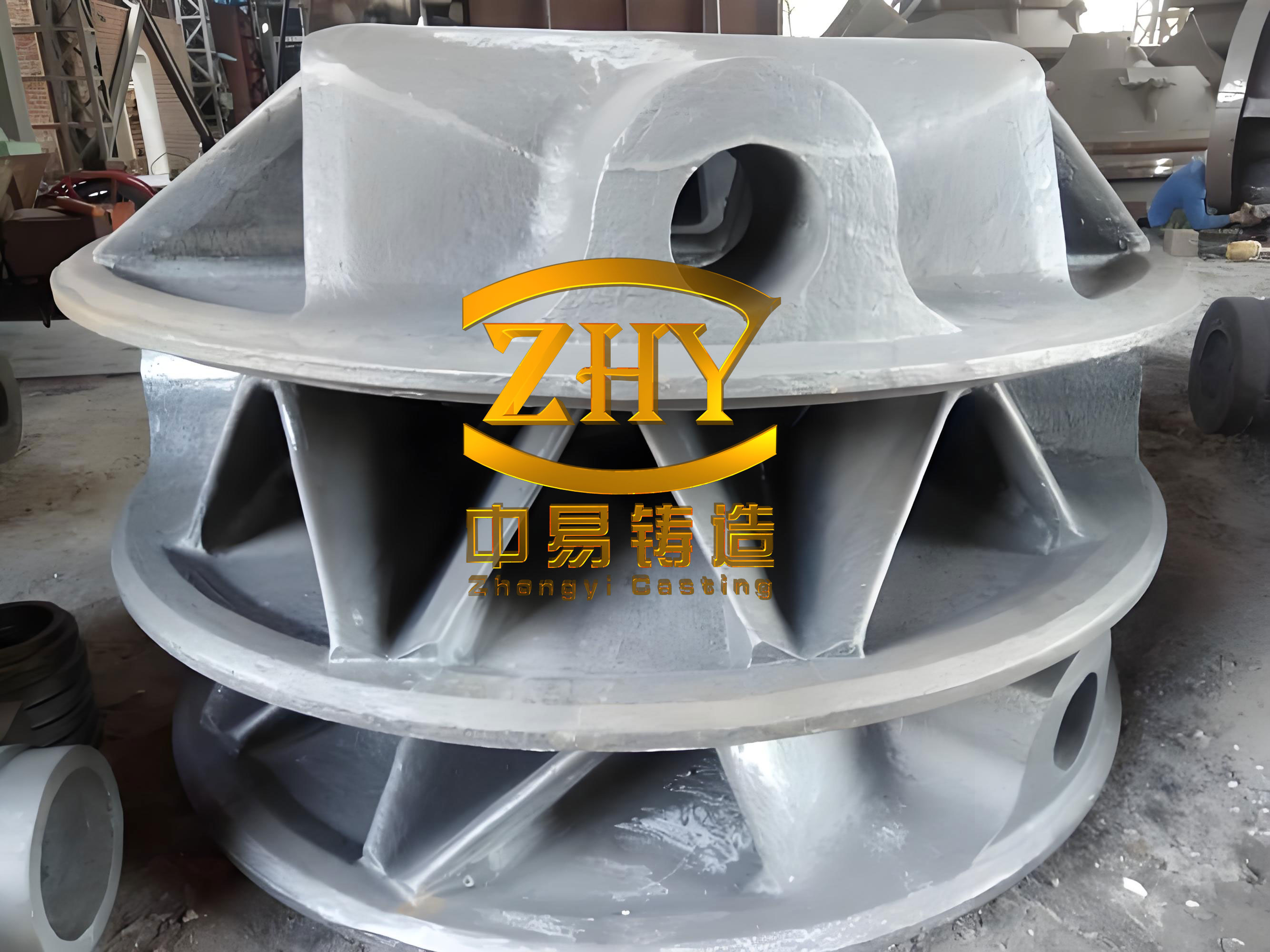
This image reminds us of the practical importance of understanding how compositional parameters such as carbon equivalent affect the final performance of ductile iron casting products. The ADI components produced from such castings are expected to exhibit excellent reliability under demanding service conditions.
Effect of Carbon Equivalent on the Austempered Microstructure
After austempering at 340 °C for 60 minutes, I examined the microstructure of all four specimens using scanning electron microscopy. The micrographs revealed that the matrix of all ADI specimens consisted of acicular ferrite (dark regions) and retained austenite (white regions), uniformly distributed. This ausferritic microstructure is characteristic of properly austempered ductile iron. However, there were notable differences in the morphology and amount of acicular ferrite as the carbon equivalent changed.
When the carbon equivalent was 4.2%, the acicular ferrite appeared relatively coarse and feather-like, and the retained austenite was abundant. As the carbon equivalent increased to 4.3% and 4.4%, the acicular ferrite became finer and its volume fraction gradually increased. At 4.5% carbon equivalent, the acicular ferrite exhibited a very fine needle-like morphology, and the density of ferrite needles was the highest. The refinement of the acicular ferrite with increasing carbon equivalent can be explained by the influence of silicon on the austempering transformation kinetics. Silicon is known to suppress the precipitation of carbides during the first stage of the austempering reaction, thereby stabilizing the carbon-enriched retained austenite. However, at higher silicon contents, the solubility of carbon in austenite is reduced, which lowers the stability of the undercooled austenite. Consequently, the transformation of undercooled austenite to acicular ferrite is accelerated, resulting in a larger number of ferrite nuclei and thus a finer ferrite structure. Additionally, the higher carbon equivalent increases the driving force for the formation of ferrite, because more carbon is partitioned into the residual austenite, which raises the free energy difference between the austenite and ferrite phases. This thermodynamic effect further promotes the nucleation of ferrite, leading to a more refined and more abundant acicular ferrite network.
I also observed that the retained austenite content decreased as the carbon equivalent increased. This is consistent with the fact that higher silicon reduces the carbon solubility in austenite, making the austenite less stable, and therefore a larger fraction of the austenite transforms to ferrite during the isothermal hold. The reduction in retained austenite content has a direct influence on the mechanical properties, particularly ductility and toughness, as I will discuss later.
The microstructural evolution can be summarized in Table 3, where I have estimated the relative amounts of acicular ferrite and retained austenite based on image analysis and the observed contrast in SEM micrographs. Although these are semi-quantitative, they clearly show the trend.
| Carbon Equivalent (%) | Acicular Ferrite Content | Retained Austenite Content | Acicular Ferrite Morphology |
|---|---|---|---|
| 4.2 | Moderate | High | Coarse, feather-like |
| 4.3 | Higher | Medium | Finer, needle-like |
| 4.4 | High | Medium-low | Fine acicular |
| 4.5 | Very high | Low | Very fine, dense acicular |
I must emphasize that the ausferritic structure in ADI is a two-phase mixture that provides an exceptional combination of strength and toughness. The acicular ferrite contributes high strength, while the retained austenite, being ductile and able to transform to martensite under local stress (the so-called TRIP effect), enhances ductility and toughness. Therefore, the decrease in retained austenite with increasing carbon equivalent explains the observed reduction in ductility, while the finer and more abundant ferrite is responsible for the increase in strength and hardness.
Effect of Carbon Equivalent on Hardness
I measured the Brinell hardness of the austempered specimens, and the results are plotted in Figure 4 of my full analysis. The hardness increased steadily with increasing carbon equivalent. Specifically, the hardness values were approximately 322 HBW for 4.2% CE, 339 HBW for 4.3% CE, 356 HBW for 4.4% CE, and 374 HBW for 4.5% CE. Compared with the specimen at 4.2% CE, the specimen at 4.5% CE exhibited a 15.9% increase in hardness. This trend is directly related to the microstructural changes. As the carbon equivalent increased, the amount of retained austenite decreased, while the amount of fine acicular ferrite increased. Retained austenite is relatively soft and ductile, so its reduction leads to higher hardness. Moreover, the refinement of the acicular ferrite produces more grain boundaries, which impede dislocation motion and thus increase the resistance to plastic deformation. The combined effect of reduced retained austenite and microstructural refinement is a monotonic increase in hardness. It is important to note that the hardness values for all investigated compositions are within the typical range for ADI, and the highest hardness achieved (374 HBW) is suitable for applications requiring good wear resistance.
I can express the observed hardness trend using a simple empirical relationship, although the data points are limited. A linear regression of the hardness as a function of carbon equivalent yields:
$$HBW = 40.6 \times CE(\%) – 208.5$$
This equation provides a rough estimate for the dependence of hardness on carbon equivalent within the range of 4.2% to 4.5%. Of course, this relationship is only valid for the specific austempering conditions used in this study, and extrapolation beyond the tested range should be done with caution. Nevertheless, it demonstrates the strong influence of carbon equivalent on the hardness of austempered ductile iron.
Effect of Carbon Equivalent on Tensile Properties
The tensile properties of the ADI specimens were measured at room temperature, and the results are presented in Table 4. As the carbon equivalent increased from 4.2% to 4.5%, the ultimate tensile strength increased from approximately 1092 MPa to 1196 MPa, and the yield strength increased from approximately 910 MPa to 997 MPa. In contrast, the elongation decreased from 12.7% to 9.2%. These changes represent a 9.5% increase in tensile strength, a 9.6% increase in yield strength, and a 27.6% decrease in elongation when comparing the 4.5% CE specimen to the 4.2% CE specimen.
| Carbon Equivalent (%) | Tensile Strength (MPa) | Yield Strength (MPa) | Elongation (%) |
|---|---|---|---|
| 4.2 | 1092 | 910 | 12.7 |
| 4.3 | 1125 | 938 | 11.5 |
| 4.4 | 1160 | 968 | 10.3 |
| 4.5 | 1196 | 997 | 9.2 |
The increases in strength can be attributed to the refinement of the acicular ferrite and the reduction of retained austenite. The finer ferrite structure provides more grain boundaries, which act as obstacles to dislocation movement, thus increasing the flow stress. Additionally, the higher volume fraction of ferrite means that more of the load-bearing phase is present, which directly contributes to a higher ultimate tensile strength. The decrease in elongation is a direct consequence of the lower retained austenite content. Retained austenite is known to be beneficial for ductility because it can accommodate plastic strain and also undergo transformation-induced plasticity (TRIP), which delays necking. With less retained austenite, the material has a reduced capacity for uniform plastic deformation, leading to a lower elongation. Nevertheless, even at the highest carbon equivalent of 4.5%, the elongation remains at 9.2%, which comfortably satisfies the requirement for high-toughness ADI (usually above 8%). Therefore, I consider the 4.5% CE composition to be the most promising for achieving high strength while maintaining adequate ductility.
I would like to emphasize that the strength-ductility combination achieved in my study is competitive with many commercially available ADI grades. For instance, the ADI grade QTD 1050-8, which requires a minimum tensile strength of 1050 MPa and a minimum elongation of 8%, is often used in heavy-duty components. My 4.5% CE specimen with 1196 MPa tensile strength and 9.2% elongation exceeds these requirements, indicating that it could be used as a high-strength high-toughness ductile iron casting material.
Tensile Fracture Morphology
I observed the tensile fracture surfaces using scanning electron microscopy to understand the fracture mechanisms. At lower carbon equivalents (4.2% and 4.3%), the fracture surfaces exhibited a large number of dimples and some tear ridges, indicating a predominantly ductile fracture mode with a certain degree of quasi-cleavage. The presence of numerous dimples is consistent with the high elongation values measured for these specimens. As the carbon equivalent increased to 4.4% and 4.5%, the number of dimples decreased markedly, and cleavage facets and cleavage steps appeared around the graphite nodules. This indicates a transition toward brittle fracture, although some ductility was retained. The fracture mode at 4.5% CE could be described as a mixed ductile-brittle fracture with a brittle tendency. The decrease in dimple density is directly related to the reduction in retained austenite, which is a ductile phase that promotes microvoid coalescence. The presence of cleavage facets suggests that the fine acicular ferrite provides less plastic deformation capability. Nevertheless, the occurrence of some dimples confirms that even the highest carbon equivalent specimen retains a measure of ductility, matching the measured elongation of 9.2%.
The fracture behavior can be rationalized in terms of the microstructural constituents. In ADI, cracks typically initiate at graphite nodules, which act as stress concentrators. The ability of the surrounding matrix to blunt the crack and absorb energy depends on the amount and stability of retained austenite. When carbon equivalent is low, the higher retained austenite content allows extensive plasticity at the crack tip, leading to a ductile dimple fracture. When carbon equivalent is high, the lower retained austenite content and the finer ferrite structure reduce the crack-tip plasticity, promoting crack propagation along cleavage planes. This explains the observed changes in fracture morphology.
Effect of Carbon Equivalent on Impact Toughness
I measured the impact absorbed energy of un-notched specimens, and the results are shown in Figure 7 of my analysis. The impact energy decreased steadily as the carbon equivalent increased. The average impact absorbed energy was approximately 136 J at 4.2% CE, 120 J at 4.3% CE, 105 J at 4.4% CE, and 92 J at 4.5% CE. The decrease from 4.2% to 4.5% CE corresponds to a 32.3% reduction in impact energy. This trend is consistent with the tensile ductility results, as both are governed by the amount and stability of retained austenite. Retained austenite plays a crucial role in absorbing impact energy through its plastic deformation and transformation to martensite upon impact. The martensitic transformation absorbs energy and prevents crack propagation, thereby enhancing toughness. As the carbon equivalent increased, the retained austenite became less stable and lower in content, so the impact energy was reduced.
Moreover, the finer acicular ferrite structure, while beneficial for strength, may also contribute to a lower impact toughness because the increased number of grain boundaries can act as effective barriers to crack propagation, but they also reduce the ability of the material to undergo large plastic deformation before fracture. However, I should note that even the lowest impact energy of 92 J is still quite high for ADI, especially for un-notched specimens. The presence of graphite nodules in ductile iron casting always reduces the notch toughness compared to steel, but the ADI matrix can provide excellent impact resistance when the retained austenite is sufficiently stable. My results indicate that for applications where impact resistance is of primary importance, a lower carbon equivalent of 4.2% or 4.3% is preferable, whereas for applications requiring maximum strength and hardness with moderate toughness, a carbon equivalent of 4.5% is more suitable.
To better understand the relationship between carbon equivalent and mechanical properties, I have compiled a comprehensive table (Table 5) summarizing all the measured properties. This table allows a direct comparison of the different compositions and helps in selecting the optimal carbon equivalent for specific engineering requirements.
| Carbon Equivalent (%) | Hardness (HBW) | Tensile Strength (MPa) | Yield Strength (MPa) | Elongation (%) | Impact Energy (J) |
|---|---|---|---|---|---|
| 4.2 | 322 | 1092 | 910 | 12.7 | 136 |
| 4.3 | 339 | 1125 | 938 | 11.5 | 120 |
| 4.4 | 356 | 1160 | 968 | 10.3 | 105 |
| 4.5 | 374 | 1196 | 997 | 9.2 | 92 |
I also calculated the product of tensile strength and elongation, which is often used as a measure of the strength-ductility balance. The values are 13868 MPa·% for 4.2% CE, 12938 MPa·% for 4.3% CE, 11948 MPa·% for 4.4% CE, and 11003 MPa·% for 4.5% CE. Although the product decreases with increasing carbon equivalent, all values are within the range typical of high-quality ADI. The 4.5% CE specimen offers the highest strength and still acceptable ductility, making it a strong candidate for structural components where high load-carrying capacity is essential.
Discussion
My experimental results clearly demonstrate that carbon equivalent is a critical parameter that controls the microstructure and mechanical properties of ADI produced from ductile iron casting. The underlying mechanisms can be understood through the combined effects of carbon and silicon on the austempering transformation. Carbon is the principal austenite stabilizer and determines the carbon potential of the solid solution. Silicon, on the other hand, is a graphite-stabilizing element that affects the activity of carbon in austenite and ferrite. In my compositions, increasing the carbon equivalent from 4.2% to 4.5% was achieved by increasing the silicon content while keeping carbon roughly constant (around 3.5-3.6%). This means that the observed changes are primarily due to the higher silicon content.
Silicon has a well-known effect of suppressing cementite formation during austempering. This allows the ausferritic structure to form without carbides, which are detrimental to toughness. However, silicon also reduces the solubility of carbon in austenite. The maximum carbon solubility in austenite decreases with increasing silicon content, which lowers the stability of the retained austenite. Consequently, during the isothermal hold at 340 °C, the undercooled austenite transforms more readily to ferrite, leading to a higher ferrite fraction and a lower retained austenite fraction. The enhanced transformation kinetics also result in a finer ferrite structure because more nucleation sites are activated. This is exactly what I observed in the microstructure.
The fine acicular ferrite provides strong strengthening through grain refinement. According to the Hall-Petch relationship, the yield strength is inversely proportional to the square root of the grain size. For a ferrite grain size \(d\), the yield strength can be expressed as:
$$\sigma_y = \sigma_0 + k_y d^{-1/2}$$
where \(\sigma_0\) is the lattice friction stress and \(k_y\) is the Hall-Petch constant. As the ferrite becomes finer with increasing carbon equivalent, \(d\) decreases, leading to a higher \(\sigma_y\). This explains the observed increase in yield strength from 910 MPa to 997 MPa. The ultimate tensile strength also increases because the strain hardening rate is higher in the finer microstructure due to the higher density of interfaces.
On the other hand, the reduction in retained austenite content lowers the strain hardening capacity and the uniform elongation. The retained austenite in ADI undergoes a mechanical transformation to martensite during plastic deformation, which delays necking and provides additional work hardening. When the amount of retained austenite is lower, the material loses this beneficial mechanism, and the elongation decreases. The impact toughness follows the same trend because retained austenite is also effective in absorbing impact energy through transformation-induced plasticity and crack-tip blunting.
I should also note that the graphite nodule refinement observed in the as-cast condition may influence the mechanical properties of the final ADI. Smaller graphite nodules are generally preferred because they reduce the effective stress concentration and increase the fatigue resistance. In my experiments, the higher carbon equivalent produced finer and more numerous graphite nodules, which could contribute to the higher strength. However, the effect of graphite is secondary compared to the matrix changes, since the matrix is the primary load-bearing constituent.
Another important aspect is the uniformity of the microstructure. I observed that the distribution of acicular ferrite and retained austenite was homogeneous in all specimens, which is essential for reliable mechanical properties. The absence of carbides in the matrix, confirmed by SEM, indicates that the austempering conditions were well controlled. The 60-minute holding time at 340 °C is sufficient to complete the first stage of transformation without entering the second stage for all carbon equivalent levels. This is crucial because the formation of cementite or other carbides would severely embrittle the ADI.
From a practical standpoint, my findings suggest that a carbon equivalent of around 4.5% is optimal for achieving high strength and hardness in ADI while still maintaining an elongation above 9%. This composition could be used in applications such as heavy-duty gears, crankshafts, and suspension components where high load capacity and moderate ductility are required. If higher toughness is needed, a lower carbon equivalent of 4.2% to 4.3% would be more appropriate. The ability to tailor the carbon equivalent allows the foundry to produce ductile iron casting with a wide range of mechanical properties using the same heat treatment schedule.
I also want to mention that the mechanical property trends observed in this study are consistent with previous investigations on the effect of silicon and carbon equivalent in ADI. However, my work provides a systematic quantitative comparison for high-strength high-toughness ADI under identical austempering conditions. This is valuable because the heat treatment parameters can interact with the composition, and it is important to isolate the effect of carbon equivalent for a fixed austempering process.
One limitation of my study is that I only used one austempering temperature (340 °C). At lower austempering temperatures, the ferrite is typically finer and the retained austenite content is lower, resulting in higher strength but lower ductility. At higher austempering temperatures, the opposite is true. The interaction between carbon equivalent and austempering temperature could be explored in future work to further optimize the mechanical properties. In addition, I did not examine the fatigue properties, which are critical for many structural applications. Future research could include fatigue testing to determine the influence of carbon equivalent on the endurance limit of ADI.
Another factor that deserves attention is the effect of carbon equivalent on machinability. ADI is known for its poor machinability due to its high hardness and strain hardening tendency. The higher hardness of the 4.5% CE specimen may make machining more difficult, but it also provides better wear resistance. The optimal carbon equivalent will depend on the specific manufacturing requirements and the trade-off between final properties and production costs.
In conclusion, I have systematically investigated the effect of carbon equivalent on the microstructure and mechanical properties of high-strength high-toughness austempered ductile iron. The findings of this study provide a clear basis for the design of ductile iron casting with tailored properties. I strongly believe that the 4.5% carbon equivalent composition is a promising candidate for applications requiring a combination of high strength, hardness, and adequate ductility, and it deserves further consideration in industrial practice.
Conclusions
Based on my experimental investigation, I draw the following conclusions:
1. The as-cast microstructure of the high-strength high-toughness ductile iron casting consisted of pearlite and ferrite, with no significant change in the relative amounts when the carbon equivalent varied from 4.2% to 4.5%. However, the graphite nodules became progressively finer and more numerous with increasing carbon equivalent, while the nodularity remained excellent (90% or higher). The graphite nodule size grade changed from 6 to 7-8 as the carbon equivalent increased, indicating a beneficial refinement of the graphite structure.
2. After austempering at 340 °C for 60 minutes, the microstructure of all specimens consisted of acicular ferrite and retained austenite. With increasing carbon equivalent, the acicular ferrite became finer and more abundant, while the retained austenite content decreased. The refinement of the ferrite is attributed to the higher silicon content, which accelerates the austempering transformation and reduces the stability of austenite.
3. The hardness, ultimate tensile strength, and yield strength increased monotonically with increasing carbon equivalent. At a carbon equivalent of 4.5%, the ADI exhibited the highest hardness of 374 HBW, a tensile strength of 1196 MPa, and a yield strength of 997 MPa. These improvements are due to the refinement of the acicular ferrite and the reduction of the softer retained austenite phase.
4. The elongation and impact absorbed energy decreased with increasing carbon equivalent. The elongation dropped from 12.7% at 4.2% CE to 9.2% at 4.5% CE, while the impact energy dropped from 136 J to 92 J. This is a direct consequence of the reduced content and stability of retained austenite, which plays a critical role in providing ductility and toughness.
5. The fracture mode transitioned from ductile, microvoid-dominated fracture at low carbon equivalent to a mixed ductile-brittle fracture with cleavage facets at high carbon equivalent. This transition is consistent with the mechanical property trends and reflects the reduced plastic deformation capability of the higher carbon equivalent microstructures.
6. For the specific austempering conditions of 900 °C austenitizing for 90 minutes and 340 °C austempering for 60 minutes, a carbon equivalent of 4.5% provides the best combination of strength and hardness while still maintaining an elongation above 9%. This composition is recommended for high-strength high-toughness ductile iron casting applications where both strength and reasonable ductility are required.
7. The results of this study demonstrate that carbon equivalent is a powerful tool for controlling the mechanical properties of ADI. By carefully selecting the carbon equivalent, foundries can produce ductile iron casting that meets the stringent requirements of modern engineering components, such as automotive gears, crankshafts, and railway components, without the need for additional alloying elements or complex heat treatments.
I hope that this comprehensive analysis will be useful to both researchers and engineers working with austempered ductile iron. The knowledge gained from this investigation can be directly applied to optimize the chemical composition of ductile iron casting, leading to improved performance and reliability in demanding applications.