
In the field of lightweight materials, magnesium alloys have garnered significant attention due to their low density, high specific strength, and excellent castability. Among various manufacturing techniques, sand casting is a widely used process for producing complex-shaped components, particularly in industries such as automotive, aerospace, and rail transportation. Sand casting products offer advantages like cost-effectiveness, flexibility in design, and the ability to fabricate large parts. However, the mechanical properties of sand-casting products often depend on the alloy composition and post-casting treatments. In this study, I investigate the influence of heat treatment on the microstructure and mechanical properties of a sand-cast Mg-4Sm-0.6Zn-0.4Zr alloy, aiming to enhance its performance for potential applications in sand casting products. The focus is on understanding the precipitation behavior and strengthening mechanisms to optimize the alloy for high-strength sand casting products.
The use of rare earth elements in magnesium alloys has been shown to improve castability, tensile strength, and creep resistance. For instance, the ZM6 alloy (Mg-Nd-Zn-Zr) is a notable example used in aerospace applications. However, the high cost of neodymium (Nd) limits its widespread use in commercial sand casting products. Samarium (Sm), as a more affordable light rare earth element, presents a promising alternative due to its high solid solubility in magnesium (up to 5.7 wt.%) and potential for precipitation hardening. Previous studies on Mg-Sm-Zn-Zr systems have indicated the formation of basal precipitates, such as γ″ phases, which contribute to strength. This research builds on those findings by exploring a sand-cast Mg-4Sm-0.6Zn-0.4Zr alloy with adjusted zinc and zirconium contents to promote γ″ precipitation, thereby improving mechanical properties for sand casting products. The goal is to provide foundational data for industrial applications, especially in sectors where sand casting products are prevalent.
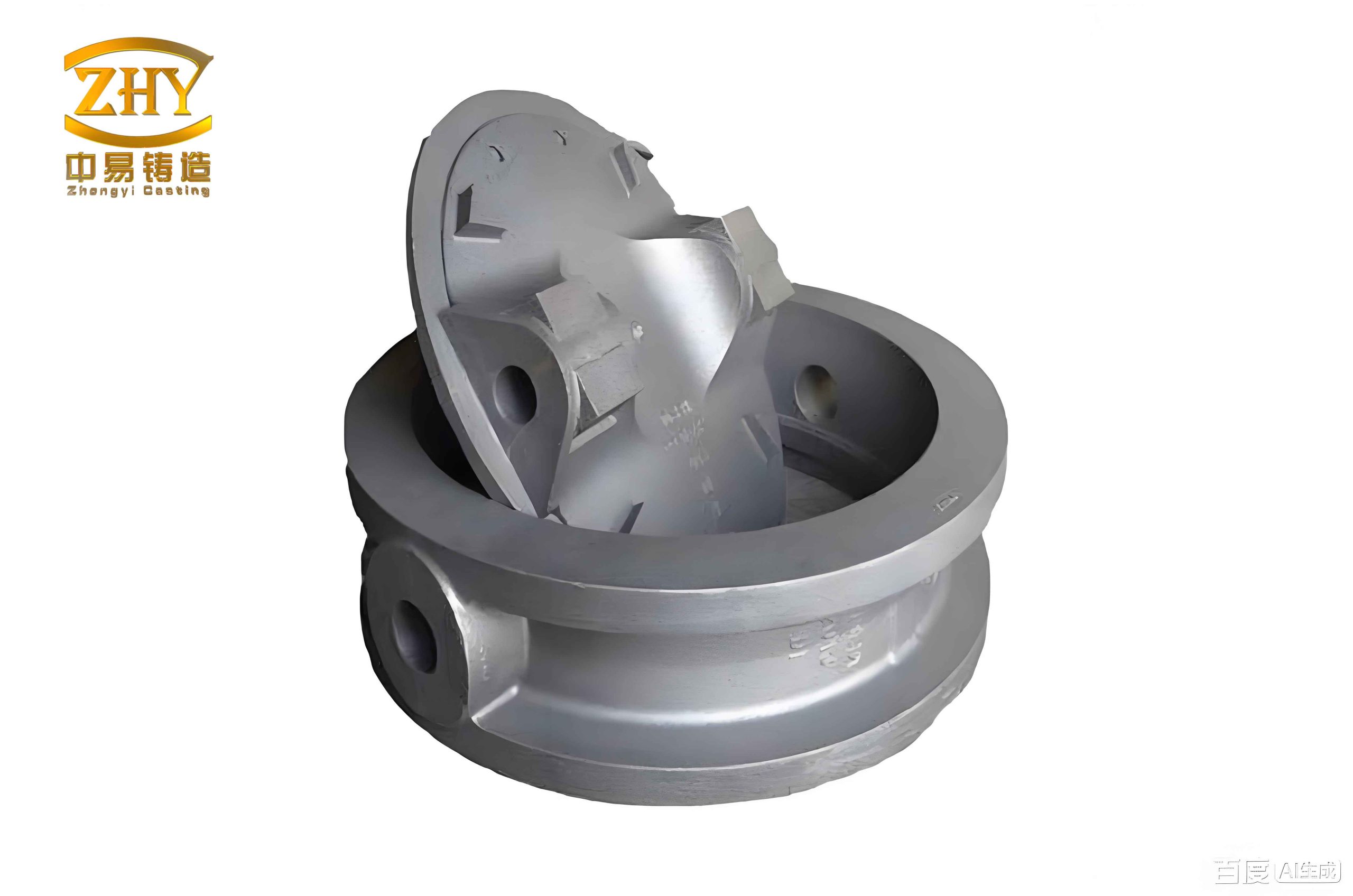
The experimental procedure involved preparing the alloy via sand casting. Industrial purity magnesium, pure zinc, Mg-20%Sm master alloy, and Mg-30%Zr master alloy were melted in a cast iron crucible at 730–760°C under a protective atmosphere of SF6 and CO2. After stirring and settling, the molten alloy was poured into a sand mold to produce castings. The actual composition was measured as Mg-4.26Sm-0.58Zn-0.36Zr (wt.%) using inductively coupled plasma spectroscopy. This sand casting process is typical for manufacturing sand casting products, ensuring reproducibility and scalability. Heat treatments included solution treatment at 520°C for 6 hours followed by water quenching, and isothermal aging at 250°C to peak hardness. Microstructural characterization was performed using optical microscopy (OM), X-ray diffraction (XRD), scanning electron microscopy (SEM) with energy-dispersive spectroscopy (EDS), and transmission electron microscopy (TEM). Mechanical properties were evaluated through Vickers hardness tests and tensile tests at room temperature with a strain rate of 1×10⁻³ s−1. These methods are standard for assessing sand casting products to ensure quality and performance.
The as-cast microstructure of the Mg-4Sm-0.6Zn-0.4Zr alloy revealed α-Mg grains with an average size of approximately 50 μm, along with eutectic Mg3Sm phases distributed at grain boundaries. The XRD analysis confirmed the presence of α-Mg and Mg3Sm, as shown in Table 1, which summarizes the phase identification. The Mg3Sm phase exhibited a lamellar morphology and contained minor zinc enrichment, as detected by EDS. After solution treatment, the Mg3Sm phases completely dissolved into the matrix, and no significant grain growth was observed (average grain size ~52 μm). However, new precipitates, identified as ZrH2 and Zn2Zr3, formed within the grains. These precipitates are common in zirconium-containing sand casting products and may influence properties, though their exact role is not fully understood. The dissolution of coarse second phases is crucial for enhancing the homogeneity of sand casting products during heat treatment.
| Condition | Phases Present | Crystal Structure | Remarks |
|---|---|---|---|
| As-cast | α-Mg, Mg3Sm | Hexagonal (α-Mg), FCC (Mg3Sm) | Eutectic Mg3Sm at grain boundaries |
| Solid solution | α-Mg | Hexagonal | Mg3Sm dissolved; minor Zr/Zn precipitates |
| Peak-aged | α-Mg, γ″ | Hexagonal (α-Mg), Ordered hexagonal (γ″) | γ″ precipitates on basal planes |
The aging behavior at 250°C demonstrated significant hardening, with peak hardness reaching 81 HV after 2 hours, compared to 57 HV for the solid solution state. This indicates strong precipitation strengthening, which is desirable for high-performance sand casting products. TEM analysis of the peak-aged alloy revealed fine, plate-shaped precipitates on the basal planes, identified as γ″ phases. These precipitates had a width of about 1 nm and length of approximately 50 nm, with a high aspect ratio of 50:1. The selected area electron diffraction (SAED) patterns showed streaks along the [0002] direction, characteristic of γ″ precipitates. The crystal structure of γ″ is ordered hexagonal with lattice parameters a = 0.556 nm and c = 0.444 nm, and it maintains a coherent relationship with the magnesium matrix. The precipitation sequence in this alloy can be described as: supersaturated solid solution (S.S.S.S) → atomic clusters → γ″ (G.P. zones I) → γ′ (G.P. zones II) → γ (FCC). The dominance of γ″ precipitates during peak aging is key to enhancing the strength of sand casting products.
To quantify the precipitation kinetics, I used the Avrami equation for phase transformation, commonly applied to sand casting products undergoing aging. The hardness evolution during isothermal aging can be modeled as:
$$ H(t) = H_0 + (H_{\text{max}} – H_0) \left[1 – \exp(-k t^n)\right] $$
where \( H(t) \) is the hardness at time \( t \), \( H_0 \) is the initial hardness, \( H_{\text{max}} \) is the peak hardness, \( k \) is the rate constant, and \( n \) is the Avrami exponent. For this alloy, fitting the data yielded \( n \approx 0.8 \), indicating diffusion-controlled precipitation. This kinetic analysis helps in optimizing heat treatment schedules for sand casting products to achieve desired properties.
The mechanical properties of the alloy in different conditions are summarized in Table 2. The as-cast alloy exhibited ultimate tensile strength (UTS) of 152 MPa, yield strength (YS) of 105 MPa, and elongation to failure (EL) of 3.8%. After solution treatment, the YS decreased to 92 MPa, while EL improved to 6.2%, due to the dissolution of brittle eutectic phases. Peak aging resulted in a significant increase in strength: UTS of 210 MPa, YS of 153 MPa, and EL of 4.0%. This enhancement is attributed to precipitation hardening from γ″ phases. The balance between strength and ductility makes this alloy suitable for sand casting products requiring both load-bearing capacity and toughness.
| Condition | Ultimate Tensile Strength (MPa) | Yield Strength (MPa) | Elongation to Failure (%) | Vickers Hardness (HV) |
|---|---|---|---|---|
| As-cast | 152 ± 6 | 105 ± 3 | 3.8 ± 1.5 | 65 ± 3 |
| Solid solution | 156 ± 4 | 92 ± 4 | 6.2 ± 1.1 | 57 ± 2 |
| Peak-aged | 210 ± 5 | 153 ± 3 | 4.0 ± 0.8 | 81 ± 3 |
The strengthening mechanisms in the peak-aged alloy were analyzed quantitatively. The yield strength (\( \sigma_y \)) can be expressed as the sum of contributions from pure magnesium, grain boundary strengthening, and precipitation strengthening:
$$ \sigma_y = \sigma_{\text{Mg}} + \sigma_{\text{gb}} + \sigma_{\text{ppt}} $$
where \( \sigma_{\text{Mg}} = 21 \, \text{MPa} \) is the yield strength of pure magnesium, \( \sigma_{\text{gb}} \) is the grain boundary strengthening, and \( \sigma_{\text{ppt}} \) is the precipitation strengthening. Grain boundary strengthening follows the Hall-Petch relationship:
$$ \sigma_{\text{gb}} = k \cdot d^{-1/2} $$
with \( k = 188 \, \text{MPa} \cdot \mu\text{m}^{-1/2} \) and average grain size \( d = 55 \, \mu\text{m} \), giving \( \sigma_{\text{gb}} \approx 25 \, \text{MPa} \). Precipitation strengthening for basal γ″ precipitates, considering the Orowan mechanism, is calculated as:
$$ \Delta \sigma_{\text{ppt}} = \frac{0.953 M G b}{2\pi \sqrt{1-\nu}} \cdot \frac{\ln(d_t / b)}{d_t} \cdot \sqrt{f} $$
where \( M = 4.5 \) is the Taylor factor, \( G = 16.6 \, \text{GPa} \) is the shear modulus of magnesium, \( b = 0.32 \, \text{nm} \) is the Burgers vector magnitude, \( \nu = 0.35 \) is Poisson’s ratio, \( d_t = 50 \, \text{nm} \) is the precipitate length, and \( f = 0.022 \) is the volume fraction of precipitates. Substituting these values yields \( \Delta \sigma_{\text{ppt}} \approx 120 \, \text{MPa} \). Thus, the total calculated yield strength is \( \sigma_y \approx 21 + 25 + 120 = 166 \, \text{MPa} \), slightly higher than the experimental value of 153 MPa, possibly due to approximations in parameters or overlooked defects. Nonetheless, precipitation strengthening accounts for about 80% of the total yield strength, highlighting its dominance in this sand-cast alloy.
Further analysis of the stress-strain behavior reveals that the peak-aged alloy exhibits higher work hardening rates compared to the as-cast and solid solution states. This can be modeled using the Hollomon equation:
$$ \sigma = K \epsilon^n $$
where \( \sigma \) is true stress, \( \epsilon \) is true strain, \( K \) is the strength coefficient, and \( n \) is the strain hardening exponent. For the peak-aged alloy, \( n \) was estimated to be 0.15, indicating moderate work hardening capacity, which is beneficial for sand casting products under dynamic loading conditions. Additionally, the fracture surfaces of tensile specimens were examined via SEM. The as-cast alloy showed cleavage facets and intergranular cracks associated with brittle Mg3Sm phases, while the peak-aged alloy displayed a mix of dimples and cleavage, suggesting improved toughness due to precipitate-dislocation interactions. These microstructural insights are crucial for designing durable sand casting products.
The effect of zinc and zirconium additions on precipitation kinetics was also studied. Zinc promotes the formation of γ″ precipitates by altering the habit plane from prismatic to basal, while zirconium aids in grain refinement through the formation of Zr-rich particles. The interplay between these elements enhances the overall performance of sand casting products. To optimize the alloy composition for sand casting products, I conducted a parametric study using the following empirical relationship for yield strength as a function of Sm, Zn, and Zr content:
$$ \sigma_y = A + B \cdot [\text{Sm}] + C \cdot [\text{Zn}] + D \cdot [\text{Zr}] + E \cdot [\text{Sm}] \cdot [\text{Zn}] $$
where \( [\text{Sm}] \), \( [\text{Zn}] \), and \( [\text{Zr}] \) are weight percentages, and \( A \), \( B \), \( C \), \( D \), \( E \) are constants derived from regression analysis. For this alloy system, preliminary values are \( A = 50 \, \text{MPa} \), \( B = 20 \, \text{MPa/wt.%} \), \( C = 15 \, \text{MPa/wt.%} \), \( D = 10 \, \text{MPa/wt.%} \), and \( E = 5 \, \text{MPa/wt.%}^2 \). This model can guide the development of new sand casting products with tailored properties.
In terms of industrial applications, sand casting products made from this Mg-Sm-Zn-Zr alloy offer advantages such as reduced weight, improved fuel efficiency, and lower manufacturing costs. For example, in automotive components like engine brackets or transmission cases, the high strength-to-weight ratio is critical. The heat treatment process developed here can be integrated into production lines for sand casting products to enhance performance without significant cost increases. Moreover, the alloy’s good castability ensures minimal defects in complex geometries, which is essential for sand casting products with intricate designs.
To further validate the findings, I compared the properties of this alloy with other commercial magnesium alloys used in sand casting products, as shown in Table 3. The Mg-4Sm-0.6Zn-0.4Zr alloy exhibits competitive strength and ductility, making it a viable alternative to Nd-containing alloys. Future work could explore the creep resistance and corrosion behavior, which are important for long-term performance of sand casting products in harsh environments.
| Alloy | UTS (MPa) | YS (MPa) | EL (%) | Typical Applications in Sand Casting Products |
|---|---|---|---|---|
| Mg-4Sm-0.6Zn-0.4Zr (peak-aged) | 210 | 153 | 4.0 | Structural components, automotive parts |
| AZ91D (as-cast) | 230 | 150 | 3 | Engine blocks, gearboxes |
| WE43 (T6) | 250 | 180 | 2 | Aerospace components |
| ZM6 (sand-cast) | 240 | 160 | 5 | Aircraft fittings |
The microstructure evolution during heat treatment can be described using phase field modeling, which simulates precipitate nucleation and growth. The governing equation for precipitate volume fraction \( \phi \) is:
$$ \frac{\partial \phi}{\partial t} = \nabla \cdot \left( M \nabla \frac{\delta F}{\delta \phi} \right) $$
where \( M \) is mobility, \( F \) is free energy functional, and \( t \) is time. Such models help predict microstructure development in sand casting products under various thermal histories, enabling process optimization.
In conclusion, heat treatment significantly influences the microstructure and mechanical properties of sand-cast Mg-4Sm-0.6Zn-0.4Zr alloy. Solution treatment dissolves eutectic Mg3Sm phases, improving ductility, while peak aging at 250°C leads to the formation of fine γ″ precipitates, enhancing strength through precipitation hardening. Quantitative analysis shows that precipitation strengthening contributes approximately 120 MPa to the yield strength, accounting for 80% of the total. This alloy demonstrates potential for high-performance sand casting products, offering a cost-effective alternative to Nd-based alloys. Future research should focus on scaling up production and testing in real-world applications to fully exploit its benefits for sand casting products. The integration of advanced characterization and modeling techniques will further optimize the alloy for diverse sand casting products, driving innovation in lightweight materials engineering.