
The influence of various alloying elements on the properties of cast irons has been extensively studied to meet the ever-increasing demands of industry. Among gray irons, nitrogen (N) is recognized for its ability to refine graphite morphology, increase pearlite content, and consequently enhance tensile strength. It is understood to shorten primary austenite dendrites, reduce secondary dendrite arm spacing, and refine eutectic cells. However, its role in ductile iron casting, a material prized for its combination of strength and ductility, remains a relatively underexplored domain. While excessive nitrogen is known to cause gas porosity defects due to decreased solubility during solidification, a systematic investigation into its effects on the microstructure and mechanical properties of ductile iron casting is lacking. This study aims to bridge this knowledge gap by experimentally examining the impact of controlled nitrogen additions on mixed-matrix (ferritic-pearlitic) ductile iron casting, specifically focusing on thick-section castings which are common in heavy industrial applications.
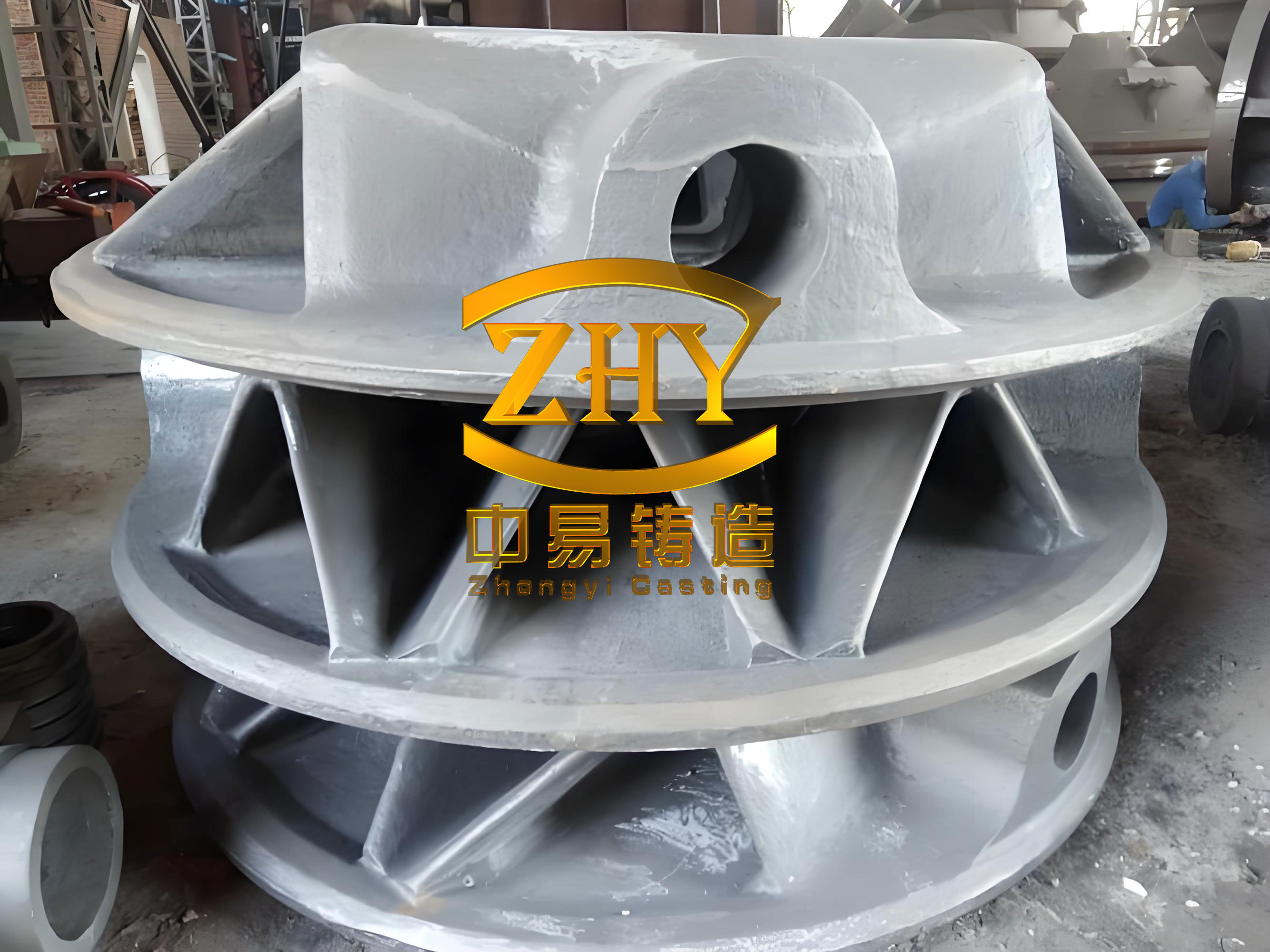
The production of high-integrity ductile iron casting relies on precise control over melt chemistry and solidification conditions. This investigation was conducted using industrial-scale melting and casting practices to ensure relevance to real-world manufacturing. A 10-ton medium-frequency induction furnace was used for melting. The molds were prepared with resin-bonded sand. To evaluate the interaction between cooling rate (section size) and nitrogen content, stepped test blocks were designed and poured. While standards often specify test bars for sections up to 70mm, the focus here was on heavy-section ductile iron casting, common in large components. Therefore, the blocks were cast with two distinct section thicknesses: 150 mm and 250 mm. The design of the stepped block and its gating system are detailed in the methodology. The target material grade was QT500-7, a common mixed-matrix grade.
To introduce nitrogen in a controlled manner, manganese nitride (MnN) was employed as an alloying additive. Its composition and particle size are critical for consistent recovery and are summarized below:
| Chemical Composition (wt.%) | Particle Size (mm) |
|---|---|
| N: 6.7-7.5, Mn: 80-85, C ≤ 1.0, Si ≤ 1.5 | 30-50 |
Three distinct heats were conducted to achieve different nitrogen levels in the final ductile iron casting:
- Heat A: Added 0.35% MnN.
- Heat B: Added 0.80% MnN.
- Heat C: No MnN addition (baseline).
The Mg-treatment was performed using the sandwich method in a ladle with a divided bottom—one compartment for nodulizing alloy and the other for the nitrogen-additive (MnN). A nodulizer addition of 1.1% was used, covered with steel punchings to moderate the reaction. The pouring temperatures were tightly controlled between 1317°C and 1375°C. Chemical analysis was performed on both base and final iron. The key chemical compositions for the three ductile iron casting batches are presented in the following table. Note the significant variation in final nitrogen content.
| Batch ID | C | Si | Mn | P | S | Mg | CE | N (ppm) |
|---|---|---|---|---|---|---|---|---|
| A (Final) | 3.59 | 2.33 | 0.61 | 0.019 | 0.009 | 0.049 | 4.37 | 77 |
| B (Final) | 3.57 | 2.40 | 0.79 | 0.030 | 0.005 | 0.050 | 4.37 | 99 |
| C (Final) | 3.63 | 2.47 | 0.58 | 0.017 | 0.009 | 0.046 | 4.45 | 50 |
From each stepped block, a 20mm thick slice was extracted from the central region of both the 150mm and 250mm sections. From these slices, multiple tensile test bars were machined according to the standard dimensions, ensuring the properties were evaluated from the core of the ductile iron casting, representative of slow-cooling conditions. The sampling locations were systematically numbered (e.g., A1-1 to A1-8 for the 250mm section of Batch A). Tensile tests were performed to determine ultimate tensile strength (UTS), yield strength (YS), and elongation (El%). Brinell hardness (HBW) was measured on both the machined test bars and directly on the remaining sections of the blocks. For microstructural evaluation, samples were prepared for metallographic examination according to GB/T 9441. Graphite nodularity, nodule size, and nodule count were quantified using image analysis software. The nitrogen content of each batch was confirmed using an oxygen/nitrogen analyzer on samples taken after inoculation.
The stepped block design is crucial for studying the behavior of ductile iron casting under different solidification rates. The two sections, 150mm and 250mm, represent significantly different cooling conditions. The solidification time (tf) for a simple casting can be approximated by Chvorinov’s rule:
$$ t_f = B \left( \frac{V}{A} \right)^n $$
where \( V \) is the volume, \( A \) is the surface area, \( B \) is a mold constant, and \( n \) is an exponent (typically ~2). For a plate-like geometry, the modulus \( M = V/A \) is approximately half the plate thickness. Therefore, the solidification time for the 250mm section is considerably longer than for the 150mm section. This influences graphite nucleation, growth, and the resulting matrix structure, making the interaction with nitrogen an important factor in the production of heavy-section ductile iron casting.
Results: Mechanical Properties of Ductile Iron Casting
The mechanical properties of ductile iron casting are paramount for its application. The data obtained from the tensile tests and hardness measurements for both section sizes are consolidated and analyzed below.
Mechanical Properties at 250mm Section Thickness
The results for the thickest section (250mm) of the ductile iron casting are summarized in the following comprehensive table. This slow-cooling condition is most challenging for achieving consistent properties.
| Batch (N ppm) | Sample ID | Tensile Properties | Hardness (HBW) | ||
|---|---|---|---|---|---|
| UTS (MPa) | YS (MPa) | El. (%) | |||
| A (77) | A1-8 | 430 | 275 | 11.5 | 159 |
| A1-7 | 437 | 280 | 15.5 | 148 | |
| A1-6 | 438 | 282 | 15.0 | 145 | |
| A1-5 | 437 | 278 | 17.0 | 154 | |
| A1-4 | 443 | 285 | 16.5 | 151 | |
| A1-3 | 433 | 277 | 17.5 | 148 | |
| A1-2 | 425 | 268 | 20.0 | 141 | |
| A1-1 | 431 | 272 | 20.0 | 140 | |
| Average | 434 | 277 | 16.6 | 148 | |
| B (99) | B1-8 | 449 | 352 | 2.5 | 155 |
| B1-7 | 442 | 348 | 4.5 | 158 | |
| B1-6 | 446 | 358 | 3.0 | 178 | |
| B1-5 | 473 | 385 | 9.0 | 178 | |
| B1-4 | 467 | 380 | 7.0 | 170 | |
| B1-3 | 461 | 375 | 4.0 | 173 | |
| B1-2 | 436 | 355 | 3.5 | 177 | |
| B1-1 | 416 | 340 | 4.0 | 169 | |
| Average | 449 | 362 | 4.7 | 170 | |
| C (50) | C1-8 | 446 | 285 | 9.5 | 142 |
| C1-7 | 445 | 284 | 8.0 | 163 | |
| C1-6 | 447 | 286 | 11.5 | 152 | |
| C1-5 | 450 | 288 | 14.0 | 154 | |
| C1-4 | 451 | 290 | 13.5 | 153 | |
| C1-3 | 444 | 283 | 13.0 | 153 | |
| C1-2 | 441 | 281 | 15.5 | 146 | |
| C1-1 | 442 | 282 | 16.5 | 148 | |
| Average | 446 | 285 | 12.7 | 151 | |
Analysis of 250mm Section Data: For this heavy-section ductile iron casting, Batch B (99 ppm N) exhibited the highest average UTS (449 MPa) and the highest average hardness (170 HBW), but at the severe expense of ductility, with an average elongation of only 4.7%. Batch A (77 ppm N) showed the best combination, with good UTS (434 MPa), the highest elongation (16.6%), and moderate hardness (148 HBW). Batch C (50 ppm N) displayed properties between A and B for strength and hardness but with ductility closer to A. The yield strength followed a clear trend: significantly higher for the high-nitrogen Batch B. All batches met the minimum specified requirements for QT500-7 grade ductile iron casting (UTS ≥ 400 MPa, El. ≥ 3% for sections >60mm).
Mechanical Properties at 150mm Section Thickness
The properties for the 150mm section of the ductile iron casting, which solidified under a faster cooling rate, are presented in the table below.
| Batch (N ppm) | Sample ID | Tensile Properties | Hardness (HBW) | ||
|---|---|---|---|---|---|
| UTS (MPa) | YS (MPa) | El. (%) | |||
| A (77) | A2-5 | 425 | 272 | 15.0 | 154 |
| A2-4 | 438 | 280 | 16.0 | 146 | |
| A2-3 | 439 | 281 | 17.5 | 141 | |
| A2-2 | 426 | 273 | 21.5 | 140 | |
| A2-1 | 422 | 270 | 21.5 | 151 | |
| Average | 430 | 275 | 18.3 | 146 | |
| B (99) | B2-5 | 411 | 335 | 3.0 | 180 |
| B2-4 | 480 | 392 | 9.5 | 174 | |
| B2-3 | 479 | 390 | 6.5 | 179 | |
| B2-2 | 469 | 382 | 3.5 | 182 | |
| B2-1 | 445 | 363 | 5.0 | 156 | |
| Average | 457 | 372 | 5.5 | 174 | |
| C (50) | C2-5 | 438 | 280 | 14.5 | 150 |
| C2-4 | 450 | 288 | 14.0 | 154 | |
| C2-3 | 454 | 291 | 13.0 | 149 | |
| C2-2 | 444 | 284 | 16.0 | 148 | |
| C2-1 | 423 | 271 | 20.0 | 151 | |
| Average | 442 | 283 | 15.5 | 150 | |
Analysis of 150mm Section Data: The trends observed in the 250mm ductile iron casting were consistent in the 150mm section. Batch B (99 ppm N) again showed the highest average UTS (457 MPa) and hardness (174 HBW), with very low ductility (5.5%). Batch A (77 ppm N) maintained excellent ductility (18.3%) with satisfactory strength (430 MPa). Batch C (50 ppm N) presented an intermediate profile. The consistency across section sizes confirms that the effect of nitrogen is inherent to the solidification and transformation processes within the ductile iron casting, not merely a function of cooling rate within the studied range.
The bulk hardness measurements taken directly on the casting blocks (after test bar removal) corroborated the test bar data, showing Batch B to be consistently the hardest and Batch A the softest for both section sizes of the ductile iron casting.
Results: Microstructural Analysis of Ductile Iron Casting
The mechanical properties of ductile iron casting are a direct consequence of its microstructure. The quantitative metallography results for graphite characteristics are critical for understanding the role of nitrogen.
Microstructure at 250mm Section Thickness
The graphite morphology parameters for the slow-cooled 250mm ductile iron casting sections are detailed below.
| Batch (N ppm) | Sample ID | Graphite Morphology | ||
|---|---|---|---|---|
| Nodularity (%) | Nodule Size (mm) | Nodule Count (/mm²) | ||
| A (77) | A1-8 | 72 | 0.080 | 50 |
| A1-7 | 79 | 0.049 | 94 | |
| A1-6 | 77 | 0.052 | 102 | |
| A1-5 | 93 | 0.057 | 68 | |
| A1-4 | 77 | 0.062 | 71 | |
| A1-3 | 81 | 0.052 | 73 | |
| A1-2 | 82 | 0.061 | 57 | |
| A1-1 | 80 | 0.054 | 81 | |
| Average | 80 | 0.058 | 75 | |
| B (99) | B1-8 | 39 | 0.130 | 23 |
| B1-7 | 85 | 0.091 | 33 | |
| B1-6 | 56 | 0.099 | 25 | |
| B1-5 | 70 | 0.100 | 23 | |
| B1-4 | 77 | 0.087 | 30 | |
| B1-3 | 56 | 0.105 | 25 | |
| B1-2 | 60 | 0.105 | 20 | |
| B1-1 | 65 | 0.113 | 23 | |
| Average | 63 | 0.104 | 25 | |
| C (50) | C1-8 | 70 | 0.079 | 50 |
| C1-7 | 78 | 0.077 | 46 | |
| C1-6 | 75 | 0.066 | 51 | |
| C1-5 | 84 | 0.029 | 61 | |
| C1-4 | 75 | 0.051 | 46 | |
| C1-3 | 85 | 0.040 | 52 | |
| C1-2 | 81 | 0.077 | 55 | |
| C1-1 | 81 | 0.057 | 80 | |
| Average | 79 | 0.060 | 55 | |
Analysis of 250mm Section Microstructure: A stark contrast is evident. The ductile iron casting from Batch A (77 ppm N) exhibited the best overall graphite structure: the highest average nodularity (80%), the smallest average nodule size (0.058 mm), and the highest average nodule count (75/mm²). Batch C (50 ppm N) showed similar nodularity but slightly larger nodules and a significantly lower nodule count. Critically, Batch B (99 ppm N) displayed a severely degraded graphite structure: the lowest nodularity (63%), the largest nodule size (0.104 mm, nearly double that of Batch A), and the lowest nodule count (25/mm²). This indicates that high nitrogen levels can be detrimental to graphite formation in ductile iron casting.
Microstructure at 150mm Section Thickness
The microstructural trends were confirmed in the faster-cooled 150mm ductile iron casting sections, as shown in the following table.
| Batch (N ppm) | Sample ID | Graphite Morphology | ||
|---|---|---|---|---|
| Nodularity (%) | Nodule Size (mm) | Nodule Count (/mm²) | ||
| A (77) | A2-5 | 75 | 0.059 | 60 |
| A2-4 | 71 | 0.058 | 62 | |
| A2-3 | 79 | 0.057 | 73 | |
| A2-2 | 77 | 0.051 | 90 | |
| A2-1 | 80 | 0.053 | 94 | |
| Average | 76 | 0.056 | 76 | |
| B (99) | B2-5 | 35 | 0.118 | 23 |
| B2-4 | 43 | 0.098 | 21 | |
| B2-3 | 45 | 0.121 | 20 | |
| B2-2 | 73 | 0.154 | 15 | |
| B2-1 | 81 | 0.134 | 16 | |
| Average | 55 | 0.125 | 19 | |
| C (50) | C2-5 | 75 | 0.088 | 20 |
| C2-4 | 74 | 0.060 | 66 | |
| C2-3 | 76 | 0.073 | 45 | |
| C2-2 | 70 | 0.075 | 57 | |
| C2-1 | 79 | 0.071 | 56 | |
| Average | 75 | 0.073 | 49 | |
Analysis of 150mm Section Microstructure: The same clear pattern emerges. The ductile iron casting with moderate nitrogen (Batch A, 77 ppm) consistently shows the most favorable graphite characteristics: high nodularity, fine nodule size, and high nodule count. The high-nitrogen Batch B again shows poor nodularity, very large nodules, and a sparse nodule population. Batch C shows intermediate nodule size and count. The matrix structure (not tabulated in detail) was observed to be predominantly ferritic-pearlitic, with Batch B exhibiting a visibly higher pearlite fraction, which explains its higher hardness and strength but lower ductility.
Discussion: Mechanisms of Nitrogen in Ductile Iron Casting
The results present a compelling and somewhat dualistic role of nitrogen in ductile iron casting. The data clearly shows that nitrogen content significantly influences both the microstructure and the resulting mechanical properties, but not necessarily in a linearly beneficial way as sometimes reported for gray iron.
1. The Beneficial Effect of Moderate Nitrogen (up to ~80 ppm): Comparing Batch A (77 ppm) and Batch C (50 ppm), the ductile iron casting with slightly higher nitrogen exhibited superior graphite morphology. Batch A had a higher nodule count, smaller nodule size, and comparable or slightly better nodularity. This suggests that within this range, nitrogen may act as a mild inoculant or refine the solidification structure. It could form minute nitrides (e.g., Si3N4, AlN) that provide additional heterogeneous nucleation sites for graphite nodules during the eutectic reaction. The relationship between nodule count (Nv) and undercooling/nucleation potency can be conceptually described as an increase in effective nucleation sites (I):
$$ N_v \propto I \cdot \exp\left(-\frac{\Delta G^*}{k T}\right) $$
where \( \Delta G^* \) is the critical energy for nucleation. If nitrogen-containing compounds reduce \( \Delta G^* \) or increase I, the nodule count rises. A higher nodule count leads to smaller nodules due to limited carbon diffusion distance, as described by the growth law for a nodule of radius R: \( dR/dt = D (C_\gamma – C_{Gr}) / R \), where D is diffusivity and C are interfacial concentrations. Finer, more numerous graphite nodules contribute to a more homogeneous stress distribution, improving ductility without sacrificing strength, as seen in Batch A’s excellent elongation.
2. The Detrimental Effect of High Nitrogen (>90 ppm): The most striking finding is the severe degradation of graphite structure in Batch B (99 ppm). This ductile iron casting displayed low nodularity, very large nodules, and a low nodule count. This indicates that excessive nitrogen interferes with the nodulizing process. Potential mechanisms include:
- Interaction with Magnesium: Nitrogen has a high affinity for magnesium, potentially forming magnesium nitride (Mg3N2). This could effectively reduce the amount of free, active magnesium available for graphite spheroidization, leading to vermicular or irregular graphite shapes. The reaction can be represented as: $$ 3 \text{Mg} + \text{N}_2 \rightarrow \text{Mg}_3\text{N}_2 $$ This loss of effective Mg would explain the drop in nodularity.
- Solidification Interference: High nitrogen levels may alter the solidification sequence or the stability of the graphite-liquid interface, promoting fewer, faster-growing nodules. The large final nodule size suggests a significant decrease in nucleation events.
3. The Paradox of Mechanical Properties: Despite having the worst graphite structure, the high-nitrogen Batch B ductile iron casting exhibited the highest tensile strength and hardness. This creates a clear paradox: worse graphite typically leads to lower ductility and often lower strength. The resolution lies in the matrix. The significantly higher hardness and yield strength of Batch B point to a substantial increase in pearlite content and/or solid solution strengthening. Nitrogen is a strong pearlite promoter. It can increase the stability of austenite, lowering the temperature of the eutectoid transformation and shifting the continuous cooling transformation (CCT) diagram to favor pearlite over ferrite. The strength contribution from the matrix (σmatrix) can overshadow the negative effect of poor graphite morphology on strength, though not on ductility. The overall strength of ductile iron casting can be approximated by a rule of mixtures considering the matrix strength and the graphite effect:
$$ \sigma_{UTS} \approx f_{matrix} \cdot \sigma_{matrix} – K \cdot (1 – \text{Nodularity}) $$
where \( f_{matrix} \) is the matrix volume fraction, \( \sigma_{matrix} \) is its strength, and K is a constant. In Batch B, the increase in \( \sigma_{matrix} \) (from pearlite) was large enough to result in a net increase in UTS, even though the nodularity term was negative.
4. Implications for Heavy-Section Ductile Iron Casting: The results were consistent across 150mm and 250mm sections, indicating that the core mechanisms are not overly sensitive to moderate changes in cooling rate for these thick sections. This is important for foundries producing large ductile iron casting components. A controlled, moderate nitrogen level (e.g., 70-80 ppm) appears to offer microstructural benefits (finer graphite) that support good ductility. However, intentionally using high nitrogen as a strength enhancer for ductile iron casting is a risky strategy, as it trades off the essential ductility and may lead to unreliable nodularity, increasing the risk of mechanical property scatter and potential shrinkage or gas-related issues at even higher levels.
Conclusion
This comprehensive investigation into the effect of nitrogen content on mixed-matrix ductile iron casting has revealed significant and non-linear relationships between nitrogen level, microstructure, and mechanical properties. The study was conducted on industrially relevant heavy-section castings, providing practical insights for metallurgists and foundry engineers.
The key conclusions are as follows:
- Optimal Nitrogen Range for Microstructure: For the production of ductile iron casting, a moderate nitrogen content in the range of 70-80 ppm was found to be beneficial for graphite morphology. Compared to a lower nitrogen level (50 ppm), this moderate level resulted in a higher graphite nodule count, a smaller average nodule size, and maintained high nodularity. This suggests a potential refining effect of nitrogen at controlled levels.
- Detrimental Effect of High Nitrogen: A nitrogen content of approximately 100 ppm proved to be detrimental to the graphite structure in ductile iron casting. It caused a significant decrease in nodularity, a dramatic increase in graphite nodule size, and a sharp reduction in nodule count. This is likely due to interactions with the nodulizing element (Mg) and/or interference with graphite nucleation.
- Mechanical Property Trade-off: The high-nitrogen (99 ppm) ductile iron casting exhibited the highest tensile strength and hardness but the lowest elongation. This is attributed to a substantial increase in pearlitic matrix content induced by nitrogen, which overcompensated for the negative effect of poor graphite morphology on strength but severely compromised ductility.
- Process Window: Therefore, nitrogen in ductile iron casting acts as a double-edged sword. While it can be used to increase strength and hardness through matrix control, exceeding a threshold (around 80-90 ppm in this study) poses a serious risk to graphite spheroidization—the defining characteristic of ductile iron casting. The optimal window for achieving a balanced combination of strength and ductility in mixed-matrix ductile iron casting appears to be at a carefully controlled, moderate nitrogen level.
For practical applications, monitoring and controlling nitrogen content is crucial for consistent quality in ductile iron casting, especially when using raw materials that may introduce variable nitrogen. The findings suggest that intentional nitrogen alloying, if used, must be precisely managed and is more suitable for applications where high hardness and wear resistance are prioritized over ductility. For general engineering-grade ductile iron casting requiring good toughness, maintaining nitrogen below 80-90 ppm is recommended to safeguard graphite nodularity and ensure reliable mechanical properties.