
In the pursuit of higher power density and efficiency for internal combustion engines, the tribological performance of the cylinder liner-piston ring (CL-PR) system has become a critical area of investigation. As one of the most significant friction pairs, its behavior directly impacts mechanical efficiency, durability, and operational reliability. Our study focuses on the challenges faced by this interface under heavy-duty, high-load conditions, specifically examining how surface engineering of the piston ring can enhance the wear resistance and frictional characteristics of the mating nodular cast iron cylinder liner.
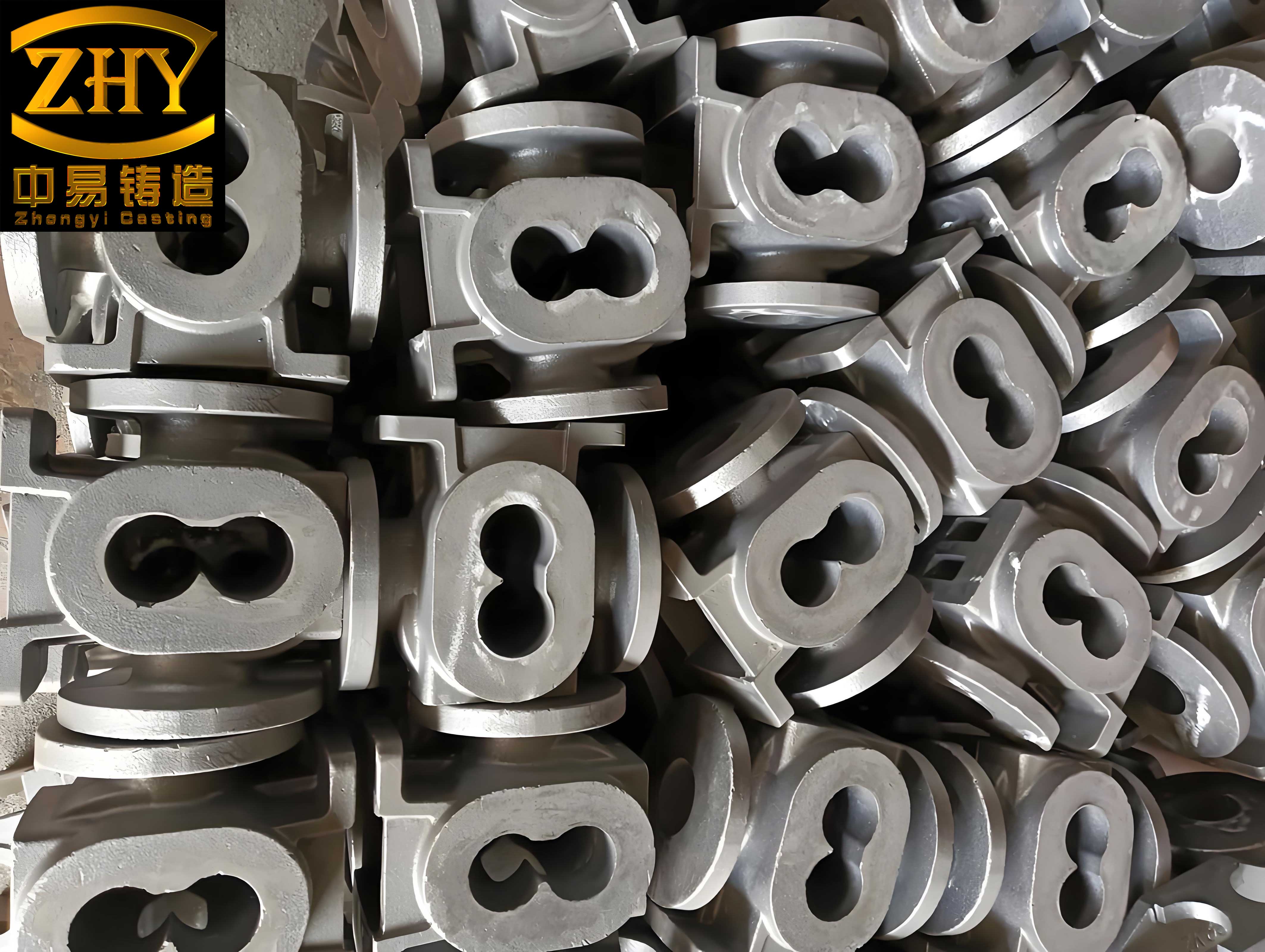
The nodular cast iron liner, favored for its good castability, damping capacity, and strength-to-weight ratio, typically features a honed surface with a cross-hatch pattern to aid oil retention. However, under extreme pressures and temperatures near the top dead center (TDC), lubrication regimes can shift towards boundary conditions, leading to increased wear and the risk of scuffing. Traditional hard chrome (Cr) plating on piston rings offers excellent wear resistance but can be prone to high friction and may contribute to liner wear under severe conditions. This has spurred research into alternative coatings, including soft metallic overlays like copper-tin (Cu-Sn) alloys. While studies have explored Cu-Sn nanoparticles as lubricant additives, the direct impact of a piston ring’s Cu-Sn coating layer interacting with standard lubricant additives like Zinc Dialkyl Dithiophosphate (ZDDP) on nodular cast iron liner performance is less documented. In this investigation, we compare the tribological behavior of a standard single-layer Cr-coated ring against a multi-layer Cu-Sn/Cr-coated ring paired with honed nodular cast iron liners under simulated high-load engine conditions.
1. Materials and Experimental Methodology
The cylinder liner samples were sectioned from a large-bore nodular cast iron (Grade QT600) sleeve with an internal honed finish. The material’s hardness and initial surface roughness were characterized. Piston ring segments were sourced from two types: a conventional single-layer chromium-plated ring (Cr) and a multi-layer ring featuring an electroplated Cu-Sn coating over a standard Cr base layer (Cu-Sn/Cr). The surface topography, coating thickness, and hardness of both ring types were analyzed. The lubricant used was a commercial engine oil containing the common anti-wear and extreme pressure additive ZDDP.
The experimental simulation was conducted on a reciprocating tribometer designed to replicate the motion and thermal conditions at the TDC region. The test protocol consisted of two distinct phases: a low-load running-in stage to establish conformal contact between the surfaces, followed by a prolonged high-load stage simulating severe operating conditions. Critical parameters such as applied load, temperature, and sliding speed were carefully controlled. Friction force was measured in real-time using a piezoelectric sensor system to calculate the friction coefficient. Post-test analysis included quantitative wear measurement of the nodular cast iron liner using laser confocal microscopy and detailed qualitative examination of the worn surfaces via Scanning Electron Microscopy (SEM) and Energy Dispersive X-ray Spectroscopy (EDX) to study morphology and chemical composition changes.
| Component | Material / Coating | Key Properties |
|---|---|---|
| Cylinder Liner | Honed Nodular Cast Iron (QT600) | Hardness: 415 HV; Roughness (Ra): 1.07 µm |
| Piston Ring A | Single-layer Chromium (Cr) | Hardness: 902 HV; Roughness (Ra): 0.24 µm |
| Piston Ring B | Multi-layer Cu-Sn / Chromium (Cu-Sn/Cr) | Cu-Sn Layer Hardness: ~154 HV; Roughness (Ra): 18.36 µm |
| Lubricant | Commercial Engine Oil | Formulated with ZDDP anti-wear additive |
2. Results: Frictional Response and Wear Analysis
2.1 Friction Coefficient and Wear Loss
The steady-state friction coefficient during the high-load phase and the final volumetric/linear wear loss of the nodular cast iron liners were the primary metrics for comparison. Our results demonstrated a clear advantage for the system employing the Cu-Sn/Cr-coated ring.
| Performance Metric | Cr-coated Ring vs. Nodular Cast Iron | Cu-Sn/Cr-coated Ring vs. Nodular Cast Iron | Percentage Improvement |
|---|---|---|---|
| Average Friction Coefficient (µ) | 0.1061 | 0.1033 | -2.6% |
| Cylinder Liner Linear Wear (µm) | 1.10 | 0.53 | -51.8% |
The data indicates that the presence of the Cu-Sn overlay contributed to a modest yet consistent reduction in friction. More significantly, it dramatically reduced the wear of the nodular cast iron liner by over half. This suggests that the Cu-Sn layer effectively modified the interfacial interactions, protecting the softer liner material from aggressive wear mechanisms prevalent under high load.
2.2 Analysis of Worn Surface Topography and Composition
Laser confocal microscopy revealed that both liner surfaces developed a “plateau” structure typical of a well-run-in surface. However, distinct differences were evident. The liner paired with the Cr ring exhibited a plateau surface with sharper, more jagged asperities. In contrast, the liner that ran against the Cu-Sn/Cr ring showed a much smoother plateau structure with flattened asperities, contributing to a lower measured surface roughness (0.159 µm vs. 0.198 µm for the Cr-paired liner).
SEM and EDX analysis provided profound insights into the underlying mechanisms. On the liner surface run against the standard Cr ring, EDX spectra from plateau areas showed primarily base nodular cast iron elements (Fe, C). Elements from the ZDDP additive (P, S, Zn) were detected only in valleys and grooves, not on the load-bearing plateaus. The Cr ring itself showed signs of fatigue spalling, and ZDDP-derived deposits were unevenly distributed on its surface.
The scenario was markedly different for the Cu-Sn/Cr system. EDX analysis of the nodular cast iron liner surface revealed patchy regions rich in Copper (Cu) and Tin (Sn), elements originating from the piston ring coating. These patches were embedded into the liner surface. Crucially, these same patches, as well as other plateau areas, showed strong signals for Phosphorus (P), Sulfur (S), and Zinc (Zn). This indicates a significantly higher concentration of tribofilm derived from the ZDDP additive on the active wear surface.
| Sample & Location | Fe | C | Cu | Sn | P | S | Zn | Key Observation |
|---|---|---|---|---|---|---|---|---|
| Liner (vs. Cr Ring): Plateau | 92.5 | 6.1 | 0 | 0 | 0.3 | 0.5 | 0.6 | Minimal ZDDP film on load-bearing areas. |
| Liner (vs. Cu-Sn/Cr Ring): Embedded Patch | 65.8 | 5.2 | 15.3 | 4.5 | 2.1 | 3.5 | 3.6 | High concentrations of Cu, Sn, and ZDDP elements. |
| Cr Ring Surface | – | – | – | – | 1.2 | 1.8 | 2.0 | Uneven ZDDP deposits; evidence of fatigue spalling. |
| Cu-Sn/Cr Ring Surface (Worn) | – | – | ~2.5 | ~0.8 | 3.0 | 4.2 | 4.5 | Higher, more uniform ZDDP-derived tribofilm coverage. |
3. Discussion: Mechanistic Role of the Cu-Sn Coating
The superior performance of the Cu-Sn/Cr-coated piston ring system can be attributed to a synergistic combination of mechanical and chemical effects facilitated by the soft metallic overlay interacting with the nodular cast iron surface and the lubricant additives.
3.1 Mechanical Action and Surface Modification
Under high contact pressure, the relatively soft Cu-Sn coating undergoes shear and material transfer. This process can be conceptually described by a modified form of the Archard wear equation, where the wear volume $V$ is related to the applied load $N$, sliding distance $S$, material hardness $H$, and a wear coefficient $k$:
$$ V = k \frac{N S}{H} $$
For the Cu-Sn coating ($H_{Cu-Sn} \approx 154 \, HV$), the wear coefficient $k$ for the coating itself may be higher due to its softness, but this is strategically beneficial. The coating acts as a sacrificial layer, transferring material onto the harder nodular cast iron liner ($H_{liner} \approx 415 \, HV$). This transferred layer fills in valleys and smoothens asperities on the liner, creating the observed flatter plateau topography. This “in-situ” surface modification reduces the effective roughness and promotes a more favorable contact condition, lowering the shear stress and thus the friction coefficient. The process protects the underlying liner material from direct, severe interaction with the hard Cr substrate of the ring, explaining the drastic reduction in liner wear.
3.2 Enhancement of Tribofilm Formation
The most critical finding is the enhanced formation of ZDDP-derived anti-wear tribofilm on surfaces involved with the Cu-Sn coating. The formation of effective boundary films is thermally activated. The thermal conductivity of copper-based alloys is significantly higher than that of chromium or cast iron. During asperity-level contact, the Cu-Sn coating facilitates more efficient heat dissipation away from the immediate contact zone, preventing localized overheating which can lead to desorption of protective films or direct metal welding. However, it also ensures that the contact interface sustains a temperature conducive to the thermal decomposition of ZDDP and its reaction with the surface.
The reaction kinetics can be considered an Arrhenius-type process, where the rate of tribofilm formation $R$ depends on temperature $T$ and activation energy $E_a$:
$$ R \propto \exp\left(-\frac{E_a}{k_B T}\right) $$
By maintaining an optimal interfacial temperature range, the Cu-Sn coating promotes the formation of a durable polyphosphate glass film. Furthermore, copper and tin are known to be catalytically active in the decomposition of ZDDP and can integrate into the developing tribofilm structure, potentially forming complexes like copper sulfides/tin sulfides within the phosphate matrix. This results in a more robust, tenacious, and protective composite boundary layer.
The EDX results confirm this: ZDDP elements (P, S, Zn) are found in high concentration co-located with Cu and Sn on the liner surface and uniformly on the worn ring surface. In contrast, with the hard Cr ring, the contact conditions likely lead to higher flash temperatures that can degrade the ZDDP film or lower, less stable temperatures that inhibit its formation, resulting in poor tribofilm coverage on load-bearing plateaus and accelerated wear.
3.3 Integrated Model of Friction and Wear Reduction
The overall friction coefficient $\mu$ in the boundary lubrication regime can be modeled as a combination of the shear strength of the boundary film and the plastic deformation of asperities:
$$ \mu = \alpha \left( \frac{\tau_{film}}{H_{eff}} \right) + (1-\alpha) \mu_{metal} $$
where $\tau_{film}$ is the shear strength of the tribofilm, $H_{eff}$ is the effective hardness of the contact, $\mu_{metal}$ is the friction coefficient for bare metal contact, and $\alpha$ represents the fractional surface area covered by an effective tribofilm.
In the Cu-Sn/Cr system:
- The effective hardness $H_{eff}$ at the interface is lowered by the presence of the soft transferred layer, reducing the first term.
- The area fraction $\alpha$ of a robust, low-shear-strength tribofilm is significantly increased due to the catalytic and thermal regulation effects of Cu-Sn.
- The probability of direct metal contact ($\mu_{metal}$) is minimized by both the physical separation provided by the transferred layer and the superior tribofilm coverage.
This multi-faceted approach leads to the observed simultaneous reduction in both friction and wear for the nodular cast iron liner.
4. Conclusion
Our investigation demonstrates that a multi-layer piston ring coating incorporating a soft Cu-Sn overlay over a standard Cr base provides a significant tribological advantage when paired with a honed nodular cast iron cylinder liner under high-load conditions. The key findings and mechanisms are summarized as follows:
- Performance Enhancement: The Cu-Sn/Cr coating reduced the steady-state friction coefficient by 2.6% and, more importantly, decreased the linear wear of the nodular cast iron liner by over 51% compared to a standard Cr coating.
- Surface Topography Modification: The wear process resulted in a smoother, more flattened plateau structure on the liner surface, indicative of a less severe wear mechanism and better conformity.
- Mechanistic Synergy: The Cu-Sn coating operates through a dual mechanism:
- Mechanical Action: It acts as a sacrificial material that transfers to and smoothens the nodular cast iron liner surface, reducing asperity interlocking and shear stress.
- Chemical Promotion: It enhances the thermal management at the asperity contacts and likely acts as a catalyst, dramatically promoting the formation and quality of the protective ZDDP-derived anti-wear tribofilm on both contacting surfaces.
This study confirms that the strategic use of soft metallic coatings on piston rings can effectively mitigate the challenges of wear and friction in heavy-duty engine applications involving nodular cast iron liners. The approach leverages synergistic interactions with common lubricant additives to form superior boundary films, offering a promising pathway for improving the durability and efficiency of advanced internal combustion engines.