
This investigation focuses on the machining of spheroidal graphite cast iron, a material of paramount importance in modern manufacturing due to its unique combination of castability, strength, and damping characteristics. This material is extensively used in demanding applications such as engine blocks, cylinder heads, crankshafts, and various automotive and general machinery components. While offering excellent service properties, the machining of spheroidal graphite cast iron presents distinct challenges, as its behavior lies between that of ductile steels and brittle cast irons. The efficiency and economy of machining this material are heavily influenced by tool geometry, particularly the three-dimensional groove profile on the rake face of indexable inserts. This profile governs chip flow, cutting forces, heat dissipation, and ultimately, tool life. This study systematically examines how specific geometrical features of the rake face groove—namely the first rake angle, cutting edge land (or hone), and cutting edge inclination angle—affect the cutting performance of a D-style insert when turning spheroidal graphite cast iron. Performance is evaluated through comparative analysis of cutting forces, flank wear progression, and resistance to mechanical shock under interrupted cutting conditions.
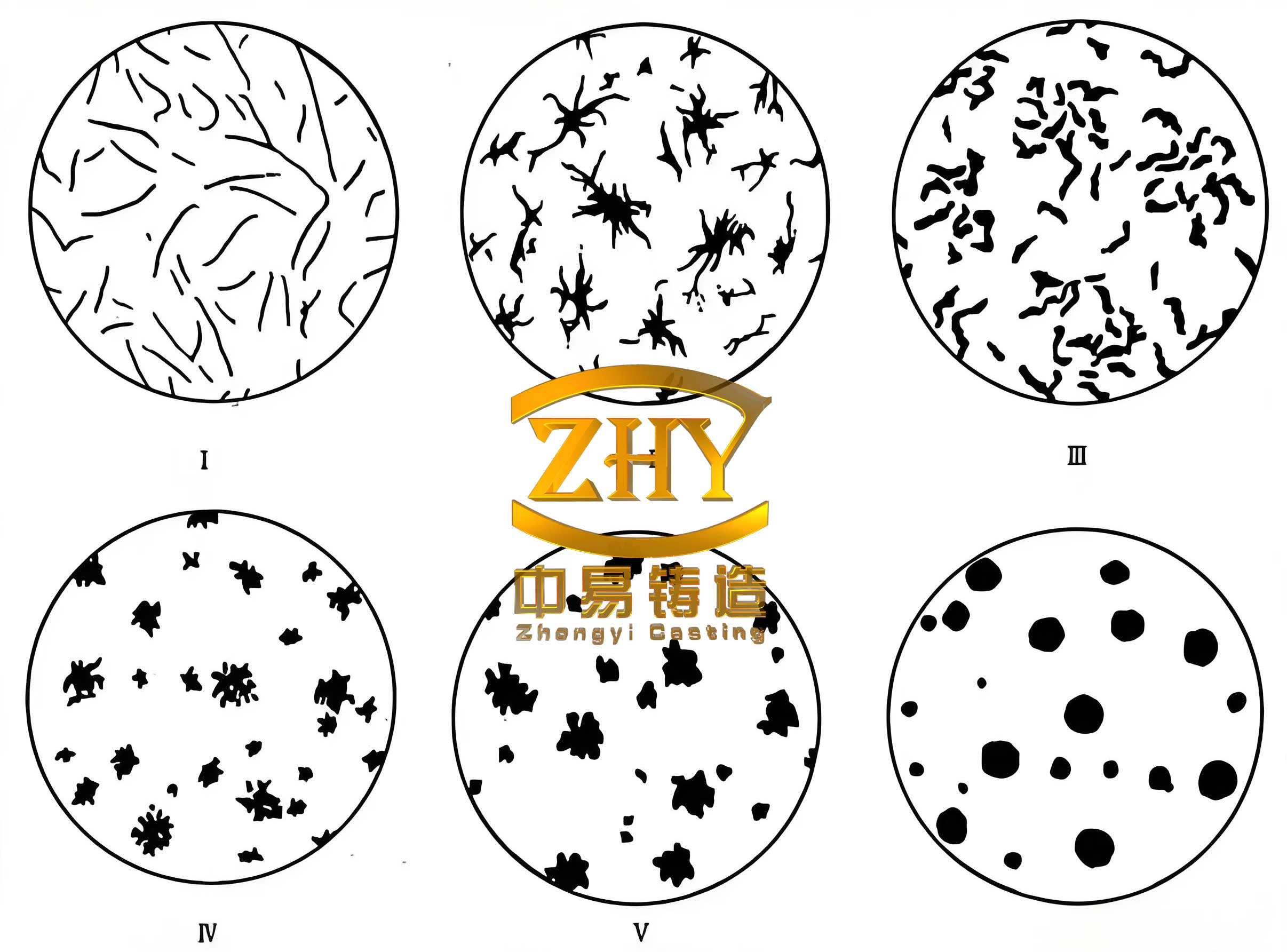
The widespread adoption of spheroidal graphite cast iron, particularly grades like QT500-7, is driven by its excellent mechanical properties derived from its unique microstructure. The graphite nodules act as crack arresters, providing good toughness and ductility while maintaining the wear resistance and castability typical of cast irons. However, this very microstructure influences its machinability. During cutting, the interaction between the tool and the iron matrix (pearlitic or ferritic) combined with the hard oxide inclusions and graphite particles leads to a complex wear mechanism involving abrasion and adhesion. Furthermore, the often-interrupted nature of machining cast components (e.g., cross-holes, slots) subjects the cutting tool to cyclic mechanical and thermal shocks, making toughness a critical tool property alongside wear resistance. Therefore, optimizing tool geometry is not a trivial task; it requires balancing sharpness for low cutting force with strength for durability.
Previous research has provided a foundational understanding of machining spheroidal graphite cast iron. Studies have indicated that optimal tool performance is achieved within a specific range of rake angles, typically suggested to be between $10^{\circ}$ and $15^{\circ}$ for carbide tools. Exceeding this range may weaken the cutting edge, while a smaller angle increases cutting forces and power consumption. The influence of cutting speed is noted to be less pronounced on forces compared to ductile steels due to reduced plastic deformation and friction at the chip-tool interface, allowing for the potential of high-speed machining to boost productivity. Beyond the basic angles, the micro-geometry of the cutting edge, such as the land or hone, plays a crucial role. When the insert is mounted, this land effectively acts as a negative chamfer or T-land, strengthening the cutting edge at the expense of slightly increased forces. Its width is a critical parameter for wear resistance. Another significant but often less emphasized parameter is the cutting edge inclination angle ($\lambda_s$). A positive inclination angle can improve tool entry, distribute cutting forces more favorably, and enhance edge strength, which is particularly beneficial for withstanding the impacts encountered in interrupted cutting of spheroidal graphite cast iron.
The design of three-dimensional chip breaker grooves on the rake face adds another layer of complexity and opportunity. These grooves are engineered not just for chip control but also to influence the cutting mechanics by modifying the effective rake angle locally, guiding chip flow, and facilitating coolant access. The interaction between the primary rake angle, the groove’s secondary surfaces, and the cutting edge preparation determines the overall tool performance. The seminal Lee and Shaffer shear angle model provides a theoretical link between rake angle and cutting mechanics. The model is often expressed as:
$$\phi = \frac{\pi}{4} – \beta + \gamma_0$$
where $\phi$ is the shear angle, $\beta$ is the friction angle at the rake face, and $\gamma_0$ is the first (or primary) rake angle. According to this relationship, an increase in $\gamma_0$ leads to an increase in the shear angle $\phi$, resulting in a smaller shear plane area and reduced plastic deformation. Consequently, the energy required for chip formation, which is directly related to the main cutting force, decreases. This theoretical framework is valuable for interpreting force measurement results in machining spheroidal graphite cast iron.
The core objective of this work is to empirically deconstruct the influence of specific rake face groove features on the cutting performance during dry turning of spheroidal graphite cast iron. By employing identical coating and substrate materials across different groove designs, the study isolates the effect of geometry. Three key performance metrics are analyzed: steady-state cutting forces as an indicator of power consumption and process efficiency; the rate of flank wear development under continuous cutting as a measure of abrasive and adhesive wear resistance; and tool life under severe interrupted cutting conditions as a test of the cutting edge’s toughness and resistance to mechanical shock. The findings aim to provide practical guidelines for selecting and designing tool geometries tailored for the efficient and reliable machining of spheroidal graphite cast iron components.
| Parameter | Value / Range |
|---|---|
| Chemical Composition (wt.%) | |
| Carbon (C) | 3.55 – 3.85 |
| Silicon (Si) | 2.34 – 2.86 |
| Manganese (Mn) | < 0.60 |
| Magnesium (Mg) | 0.02 – 0.04 |
| Sulfur (S) | < 0.025 |
| Phosphorus (P) | < 0.08 |
| Iron (Fe) | Balance |
| Mechanical Properties | |
| Tensile Strength | 500 MPa (min) |
| Yield Strength | 320 MPa (min) |
| Elongation | 7% (min) |
| Hardness (Brinell) | 170 – 230 HB |
The experimental work was conducted using cylindrical workpieces of spheroidal graphite cast iron QT500-7. The detailed chemical composition and guaranteed mechanical properties of this grade are summarized in Table 1. The material offers a good balance of strength and ductility, representative of commonly machined grades of spheroidal graphite cast iron. All machining tests were performed on a modern CNC lathe with sufficient power and rigidity to ensure stable cutting conditions. A three-component piezoelectric dynamometer was used to measure the cutting forces ($F_c$: cutting force, $F_f$: feed force, $F_p$: passive force) in real-time. Tool wear was monitored periodically using a toolmaker’s microscope, measuring the flank wear width ($VB$). A standard failure criterion of $VB = 0.3$ mm was adopted for the continuous wear tests. For the interrupted cutting tests, a specially prepared workpiece with axial slots was used to simulate severe mechanical shock, and tool failure was determined by a combination of excessive wear, chipping, or surface roughness degradation.
Three distinct D-style indexable carbide inserts, designated here as Insert A, Insert B, and Insert C, were selected for the comparative study. Crucially, all three inserts shared an identical substrate composition (92% WC, 8% Co) and coating to ensure that any performance differences could be attributed solely to their geometrical design. The inserts were characterized using a profilometer to accurately map their rake face geometry. The key extracted parameters are detailed in Table 2. Insert A features the largest first rake angle ($\gamma_{o1}$) and a distinct positive cutting edge inclination angle ($\lambda_s$), along with the widest cutting edge land. Insert B has the smallest rake angle and a zero-degree inclination. Insert C represents an intermediate geometry with a rake angle between A and B and a zero-degree inclination. A standard tool holder was used for all tests, ensuring a consistent actual working geometry.
| Insert Designation | First Rake Angle, $\gamma_{o1}$ (°) | Cutting Edge Inclination Angle, $\lambda_s$ (°) | Cutting Edge Land Width, $b_{\gamma}$ (mm) |
|---|---|---|---|
| Insert A | 12.24 | +3.0 | 0.230 |
| Insert B | 8.10 | 0.0 | 0.199 |
| Insert C | 10.01 | 0.0 | 0.206 |
The initial phase of the investigation focused on quantifying the influence of groove geometry on cutting forces under stable, continuous turning conditions. The tests were conducted with fixed cutting parameters: cutting speed $v_c = 200$ m/min, feed rate $f = 0.15$ mm/rev, and depth of cut $a_p = 2.0$ mm. The average steady-state cutting force components for the three inserts are presented in Table 3 and analyzed below. The primary observation is the significant reduction in all force components with an increase in the first rake angle. Insert A, with the largest $\gamma_{o1}$ of $12.24^{\circ}$, generated the lowest forces. Insert B, with the smallest $\gamma_{o1}$ of $8.10^{\circ}$, produced the highest forces. Insert C’s forces fell between the two, corresponding to its intermediate rake angle. This trend aligns perfectly with the theoretical prediction from the Lee and Shaffer model. A larger $\gamma_{o1}$ increases the shear angle $\phi$, reducing the shear plane area and the work required for plastic deformation. This relationship can be conceptually extended to the specific cutting energy $k_c$, often approximated as:
$$k_c \approx \frac{F_c}{A_c} = \frac{F_c}{f \cdot a_p}$$
where $A_c$ is the uncut chip cross-sectional area. While $A_c$ was constant in these tests, the reduction in $F_c$ for Insert A indicates a lower specific cutting energy, implying a more efficient cutting process with less heat generation per unit volume of spheroidal graphite cast iron removed.
| Insert | Cutting Force, $F_c$ (N) | Feed Force, $F_f$ (N) | Passive Force, $F_p$ (N) | Resultant Force, $F$ (N) |
|---|---|---|---|---|
| A | 421 | 185 | 159 | 485 |
| B | 517 | 229 | 197 | 597 |
| C | 468 | 205 | 178 | 540 |
The flank wear behavior of the two inserts with lower cutting forces (Insert A and Insert C) was investigated next under the same continuous cutting parameters. The progression of the average flank wear land width ($VB$) with machining time is plotted and the wear morphology was examined. Insert C exhibited a more aggressive initial wear rate and reached the failure criterion ($VB=0.3$ mm) in approximately 3 minutes. In contrast, Insert A demonstrated a more gradual and stable wear progression, remaining below the failure criterion for a significantly longer duration. Post-test microscopic examination revealed that both inserts experienced typical abrasive wear patterns on the flank face. However, Insert C showed signs of more pronounced adhesion (material transfer from the workpiece), which accelerates wear. The superior wear resistance of Insert A is attributed to its wider cutting edge land ($b_{\gamma} = 0.230$ mm vs. $0.206$ mm for Insert C). When mounted, this land acts as a reinforced micro-bevel. It increases the effective wedge angle at the very edge, enhancing its resistance to both abrasion from hard particles in the spheroidal graphite cast iron and the cyclical stresses that lead to micro-chipping and wear initiation. This finding underscores that for machining spheroidal graphite cast iron, a design that incorporates a sufficiently wide land or hone is critical for achieving extended tool life, even if it slightly increases cutting forces compared to a perfectly sharp edge.
The final and most demanding test evaluated the inserts’ performance under severe interrupted cutting, simulating conditions like machining castings with slots or cross-holes. The workpiece was modified with axial slots, causing the tool to enter and exit the cut repeatedly at full depth. The test parameters were maintained identical to the previous tests. The tool’s life was measured in terms of the number of impacts until failure, characterized by catastrophic chipping or excessive wear leading to poor surface finish. The results were starkly different. Insert A, featuring the positive cutting edge inclination angle ($\lambda_s = +3^{\circ}$), survived for more than 51,000 impacts. Insert C, with $\lambda_s = 0^{\circ}$, failed after approximately 36,700 impacts. This represents a nearly 40% improvement in impact resistance for Insert A.
The mechanism behind this improvement is rooted in the dynamics of interrupted cutting. Upon entry into the workpiece, the cutting edge experiences a significant mechanical shock. A positive inclination angle alters the angle at which the cutting edge engages the material. It allows the cutting force to be applied more gradually and distributes the initial impact over a slightly longer segment of the cutting edge, rather than concentrating it at the very corner. This reduces the peak stress on the cutting edge. Furthermore, a positive $\lambda_s$ directs the resultant cutting force vector more into the body of the insert, improving its bending strength. This is particularly important for inserts with a larger positive rake angle (like Insert A), which inherently have a sharper, potentially weaker wedge. The positive inclination angle compensates for this by strengthening the cutting edge in the direction of the impacting force. The relationship between effective stress and geometry can be conceptualized by considering the resolved components of the force. The force normal to the effective cutting edge plane is critical for shock resistance. A positive $\lambda_s$ favorably modifies this component, enhancing the tool’s ability to withstand the repetitive shocks inherent in machining many spheroidal graphite cast iron components.
In summary, this comprehensive investigation into the effect of rake face groove structure on machining spheroidal graphite cast iron yields several key conclusions with direct practical implications. Firstly, among the geometric parameters of a complex chip groove, the first rake angle ($\gamma_{o1}$) exerts the most dominant influence on cutting forces. For machining spheroidal graphite cast iron like QT500-7, operating within the $10^{\circ}$ to $15^{\circ}$ range and selecting a tool with a higher rake angle within this window (e.g., ~$12^{\circ}$) significantly reduces the main cutting force, feed force, and passive force. This reduction, explained theoretically by an increased shear angle, leads to lower power consumption, reduced load on the machine tool, and potentially lower cutting temperatures.
Secondly, wear resistance in the continuous machining of spheroidal graphite cast iron is strongly tied to the micro-geometry of the cutting edge, specifically the width of the cutting edge land or hone ($b_{\gamma}$). A wider land, typically in the range of $0.20$ – $0.25$ mm for such applications, creates a more robust edge that better resists the abrasive wear from the iron matrix and hard inclusions, as well as mitigates adhesive wear. While it may cause a marginal increase in forces compared to a razor-sharp edge, the substantial extension in tool life it provides is a worthwhile trade-off for productive machining of spheroidal graphite cast iron.
Thirdly, for applications involving interrupted cuts—a common scenario when machining cast spheroidal graphite cast iron parts—the cutting edge inclination angle ($\lambda_s$) becomes a critical design factor. A positive inclination angle (e.g., $+3^{\circ}$) dramatically improves the tool’s resistance to mechanical shock and impact loading. It enhances edge strength, promotes smoother entry into the cut, and distributes impact forces more effectively. This is especially beneficial when combined with a positive rake angle for low cutting forces, as the positive $\lambda_s$ compensates for the potential weakness of a sharp edge. Therefore, for reliable machining of spheroidal graphite cast iron in real-world, interrupted conditions, a tool geometry incorporating both a sufficiently positive rake angle and a positive cutting edge inclination angle is highly recommended. The optimal tool for machining spheroidal graphite cast iron is thus one that synthesizes these features: a first rake angle optimized for low force, a carefully sized land for wear resistance, and a positive inclination for toughness, all tailored to the specific grade and machining operation on the spheroidal graphite cast iron workpiece.