
In the field of metal materials, ductile iron casting has garnered significant attention due to its excellent mechanical properties and castability. As a researcher focused on enhancing the performance of metallic alloys, I have explored novel approaches to improve the as-cast state of ductile iron casting without relying heavily on costly alloying elements or compromising strength for ductility. Traditional methods often involve balancing ferrite and pearlite ratios or adding expensive metals like Cu, Ni, and Mo, which can increase production costs and lead to trade-offs between strength and elongation. Therefore, my investigation centers on incorporating ceramic particles, specifically titanium carbide (TiC), into the melt of ductile iron casting to potentially refine microstructure and enhance mechanical properties. This study delves into the effects of externally added TiC particles on the graphite morphology, matrix organization, and overall mechanical behavior of ductile iron casting, aiming to provide insights into a cost-effective and efficient enhancement strategy.
Ductile iron casting, characterized by its spheroidal graphite embedded in a metallic matrix, is widely used in automotive, machinery, and construction industries due to its good tensile strength, toughness, and wear resistance. The as-cast form of ductile iron casting is particularly valued for its lower production costs, as it eliminates the need for additional heat treatments. However, achieving high strength and high elongation in as-cast ductile iron casting typically requires precise control over microstructure, often through alloying or processing adjustments. Recent advancements have shown that ceramic reinforcements, such as TiC, can improve properties in various ferrous alloys, but their application in ductile iron casting remains underexplored. TiC boasts a high melting point, hardness, chemical stability, and favorable thermal properties, making it a promising candidate for microstructural modification. In this work, I examine how TiC particles, introduced via an external addition method, influence the nucleation and growth processes in ductile iron casting, leading to changes in graphite characteristics, ferrite-pearlite distribution, and ultimately, mechanical performance like plasticity and impact toughness.
To begin, I employed a high-energy ball milling technique to modify the TiC powder before introducing it into the ductile iron casting melt. The TiC powder, with a purity of ≥99.9% and particle diameters of 3–5 μm, was mixed with iron powder (≥99.5% purity, average diameter 30 μm) in a specific ratio. This mixture was placed in a stainless-steel milling container with a ball-to-powder ratio of 10:1 and processed in a planetary ball mill at 100 rpm for 24 hours. This pretreatment aimed to increase the density of the TiC particles and improve their wettability and compatibility with the iron matrix, preventing issues like floating or agglomeration during melting. The ball milling process resulted in composite particles where fine TiC was embedded within or adhered to iron particles, as confirmed by scanning electron microscopy (SEM) and energy-dispersive spectroscopy (EDS). These modified particles were then ready for incorporation into the ductile iron casting process.
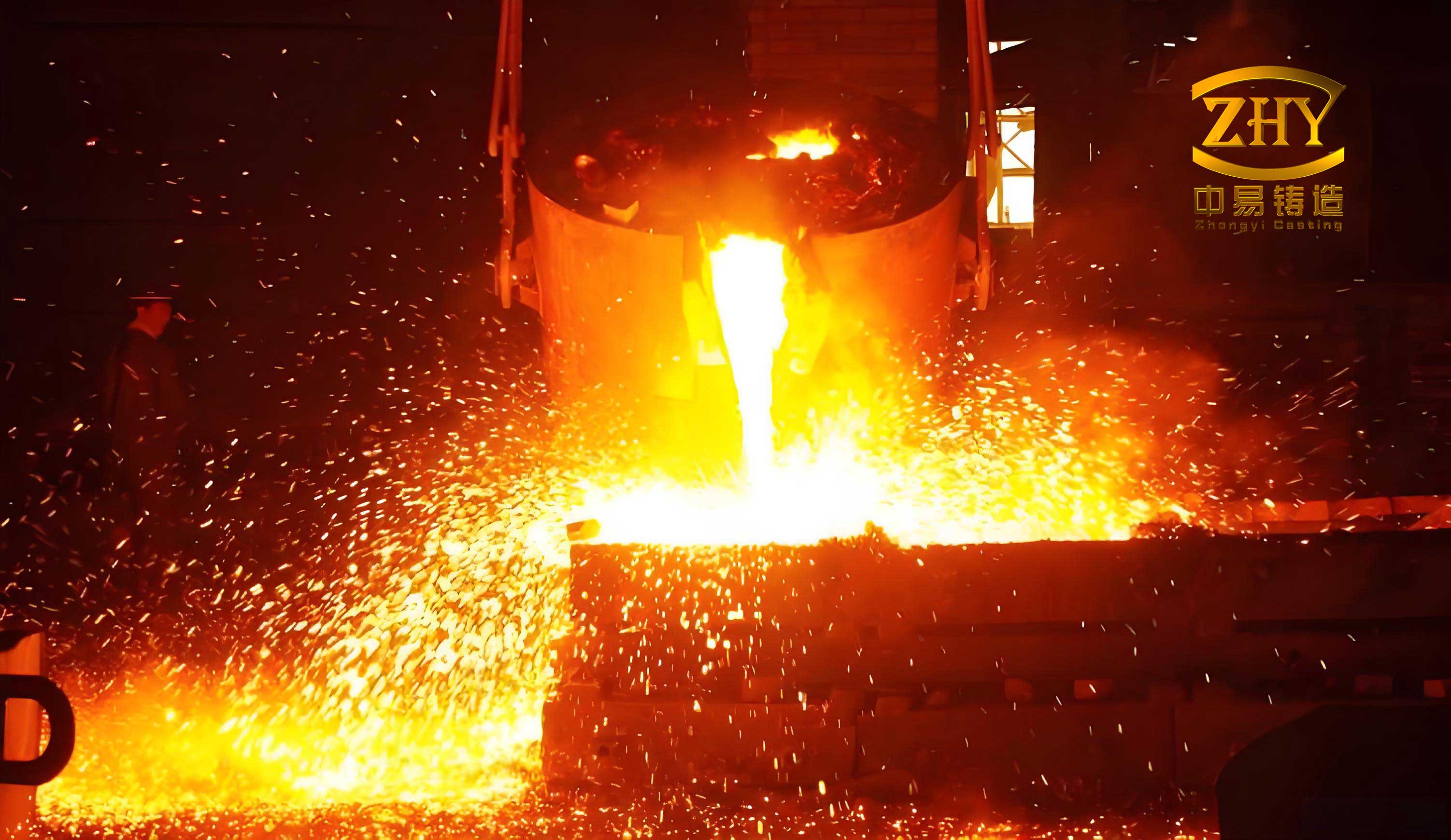
For the melting experiments, I used high-purity pig iron, ferromanganese, and ferrosilicon as raw materials. The charge was melted in a 5 kg medium-frequency induction furnace at a temperature of 1550°C. In the ladle, I added 1.2 wt% rare-earth magnesium alloy as a nodularizer and covered it with 0.5 wt% 75-ferrosilicon as an inoculant. The TiC-modified powder, amounting to 0.1 wt% of the total melt, was placed between the nodularizer and inoculant. The melt was then treated using a covered ladle method and poured into resin-bonded sand molds to produce Y-block specimens. A control sample of ductile iron casting without TiC addition was also prepared under identical conditions. Chemical composition analysis was performed using an ARL4460 direct reading spectrometer on samples cast into metal molds. The results indicated that the Ti content increased from 0.006% in the control to 0.022% in the TiC-added ductile iron casting, corresponding to an approximate TiC addition of 0.02 wt% and an absorption rate of about 20% due to losses during the vigorous nodulation reaction.
The specimens for microstructure examination and mechanical testing were extracted from the same location at the bottom of the castings. Metallographic samples were prepared by grinding and polishing, followed by etching with a 4% nitric acid alcohol solution. Microstructural analysis was conducted using optical microscopy (OM) and SEM, coupled with EDS for elemental mapping. Graphite parameters such as nodule count, size, spheroidization rate, and matrix phase fractions were quantified using Image Pro Plus (IPP) software according to standard guidelines. Tensile tests were performed on a WAW-200 tensile testing machine at a strain rate of 0.0167 mm/s, while Charpy V-notch impact tests at room temperature and low temperature (-20°C) were carried out on a JBW-300B impact tester, adhering to relevant standards. The data collected allowed for a comprehensive evaluation of how TiC particles affect the ductile iron casting.
My analysis revealed that the addition of TiC particles significantly improved the graphite morphology in the ductile iron casting. The TiC-added sample exhibited a higher number of graphite nodules per unit area, smaller average nodule diameter, and increased spheroidization rate compared to the control. Specifically, the nodule count increased by 40.5%, from 42.5 to 59.7 nodules per mm², while the spheroidization rate improved by 9.1 percentage points. This enhancement can be attributed to the role of TiC as a heterogeneous nucleation site for graphite. According to Bramfitt’s planar lattice disregistry theory, the interfacial energy between two phases is minimized when their crystal planes have low mismatch. For TiC, the (111) plane and graphite’s (0001) plane have a two-dimensional mismatch (δ) calculated as:
$$ \delta = \frac{|d_{TiC(111)} – d_{graphite(0001)}|}{d_{graphite(0001)}} \times 100\% $$
Given that the lattice parameters yield a mismatch of 8.33%, which is below the 12% threshold for effective nucleation, TiC particles can serve as potent substrates for graphite formation. This promoted nucleation led to finer and more numerous graphite spheres in the ductile iron casting. Additionally, the increased graphite count reduced the diffusion distance for carbon atoms, accelerating ferrite growth during solid-state transformation and resulting in a higher ferrite content. The ferrite fraction rose from 61.5% in the control to 66.0% in the TiC-added ductile iron casting. Moreover, the higher nucleation rate likely reduced the undercooling (ΔT) at the solidification front, slowing graphite growth and decreasing the probability of distortion, thereby enhancing spheroidization.
The influence of TiC particles on the matrix organization of ductile iron casting was equally profound. In the TiC-added sample, I observed that some TiC particles were incorporated into the matrix, where they altered the morphology of surrounding phases and affected grain boundaries. For instance, TiC particles located at prior austenite grain boundaries or within pearlite colonies led to the formation of unique microstructural features. In some areas, TiC particles acted as boundaries for “pearlite colonies,” creating regions with distinct pearlite orientations and even promoting the formation of granular cementite instead of lamellar forms. This can be explained by the heterogeneous nucleation of cementite on TiC particles. The mismatch between TiC’s (001) plane and cementite’s (001) plane is approximately 9.54%, allowing TiC to serve as a nucleation site for cementite during the eutectoid transformation. As a result, cementite grew preferentially on specific crystallographic planes of TiC, leading to altered morphologies such as short rod-like or granular cementite, which differ from the typical lamellar structure in pearlite.
Furthermore, TiC particles hindered the movement of grain boundaries, contributing to the refinement of ferrite grains in the ductile iron casting. Using the three-circle intercept method per standard procedures, I measured the ferrite grain size and found that the TiC-added sample had a higher grain size number, indicating finer grains. The control sample had a ferrite grain size rating of 8.17, while the TiC-added sample reached 8.62, corresponding to an increase of 740 to 1147 grains per square millimeter. This refinement can be expressed in terms of grain diameter (d) using the relation:
$$ d = \frac{1}{\sqrt{N}} $$
where N is the number of grains per unit area. The presence of TiC particles pinned grain boundaries during solid-state phase transformations, effectively reducing grain growth and enhancing the matrix’s mechanical properties through Hall-Petch strengthening mechanisms. The combination of refined graphite, increased ferrite content, and modified pearlite morphology collectively influenced the mechanical behavior of the ductile iron casting.
To quantify the mechanical improvements, I conducted tensile and impact tests on both the control and TiC-added ductile iron casting samples. The tensile curves showed that the TiC-added specimen achieved a higher total elongation without significant loss in yield or tensile strength. Specifically, the fracture elongation increased from 14.1% to 16.8%, an improvement of 19.1%. The impact toughness also saw substantial gains: at room temperature, it rose from 8.36 J/cm² to 10.96 J/cm² (a 31.1% increase), and at -20°C, it improved from 7.65 J/cm² to 9.32 J/cm² (a 21.8% increase). These enhancements underscore the beneficial role of TiC particles in boosting the plasticity and toughness of ductile iron casting. The following table summarizes the key mechanical properties:
| Property | Control Ductile Iron Casting | TiC-Added Ductile Iron Casting | Improvement |
|---|---|---|---|
| Fracture Elongation (%) | 14.1 | 16.8 | +19.1% |
| Room Temperature Impact Toughness (J/cm²) | 8.36 | 10.96 | +31.1% |
| Low Temperature (-20°C) Impact Toughness (J/cm²) | 7.65 | 9.32 | +21.8% |
| Yield Strength (MPa) | ~300 (approximate) | ~300 (approximate) | Negligible change |
| Tensile Strength (MPa) | ~450 (approximate) | ~450 (approximate) | Negligible change |
The microstructural changes driven by TiC addition directly correlate with these mechanical outcomes. The increased graphite nodule count and improved spheroidization in the ductile iron casting分散 stress concentrations more effectively during deformation, allowing for greater plastic strain before fracture. The refined ferrite grains enhance ductility through grain boundary strengthening, while the modified pearlite morphology, with less brittle cementite interfaces, facilitates dislocation motion and reduces crack initiation sites. In impact tests, the finer and more uniform microstructure of the TiC-added ductile iron casting leads to higher energy absorption, as evidenced by the increased impact toughness values. Fractography via SEM revealed that the control sample exhibited more cleavage facets and river patterns, indicative of brittle fracture, whereas the TiC-added sample showed deeper and more numerous dimples, signaling enhanced ductile fracture mechanisms. The presence of microvoids around TiC particles further absorbed energy during crack propagation, contributing to the improved toughness.
From a theoretical perspective, the effects of TiC on ductile iron casting can be modeled using various equations. For instance, the relationship between grain size and yield strength (σ_y) can be described by the Hall-Petch equation:
$$ \sigma_y = \sigma_0 + k_y \cdot d^{-1/2} $$
where σ_0 is the friction stress, k_y is the strengthening coefficient, and d is the grain diameter. Although the yield strength did not change significantly in this study, the refinement in ferrite grain size likely contributed to maintaining strength while improving ductility. Additionally, the nucleation potency of TiC for graphite can be analyzed through interfacial energy models. The critical nucleation radius (r*) for graphite on a TiC substrate under undercooling ΔT is given by:
$$ r^* = \frac{2 \gamma_{sl}}{\Delta G_v} $$
where γ_{sl} is the solid-liquid interfacial energy and ΔG_v is the volumetric Gibbs free energy change. With TiC reducing the effective γ_{sl} due to low disregistry, r* decreases, promoting more nucleation events in the ductile iron casting melt. This aligns with the observed increase in nodule count. Moreover, the impact toughness improvement can be linked to fracture mechanics principles, where the stress intensity factor (K) and energy release rate (G) are influenced by microstructural features. For ductile iron casting with TiC additions, the crack propagation resistance increases due to particle-induced crack bridging and deflection, as described by:
$$ G_c = G_m + \psi \cdot V_p \cdot \sigma_p \cdot \epsilon_p $$
where G_c is the composite fracture energy, G_m is the matrix fracture energy, ψ is a geometric factor, V_p is the particle volume fraction, and σ_p and ε_p are the particle stress and strain at fracture. Although the TiC content is low (0.02 wt%), its uniform distribution and strong interfacial bonding enhance the overall toughness of the ductile iron casting.
In practice, the addition of TiC particles to ductile iron casting offers a viable route for producing high-performance as-cast components without expensive alloying or heat treatments. The process is relatively straightforward: modify the TiC powder via ball milling, incorporate it during the nodulation and inoculation stages, and cast as usual. This method leverages the inherent solidification characteristics of ductile iron casting, such as糊状凝固 (mushy solidification) and divorced eutectic reactions, to integrate TiC into the microstructure. The resulting ductile iron casting exhibits a balanced combination of strength, ductility, and toughness, making it suitable for demanding applications like automotive parts, machinery components, and infrastructure elements. Furthermore, the use of TiC could reduce reliance on critical raw materials, aligning with sustainability goals in the casting industry.
To further elucidate the microstructural statistics, I present a table summarizing the graphite and matrix parameters for both samples:
| Parameter | Control Ductile Iron Casting | TiC-Added Ductile Iron Casting | Change |
|---|---|---|---|
| Spheroidization Rate (%) | 70.2 | 79.3 | +9.1% |
| Graphite Nodules per mm² | 42.5 | 59.7 | +40.5% |
| Graphite Area Fraction (%) | 9.30 | 11.39 | +2.09% |
| Average Nodule Diameter (μm) | ~25 (estimated) | ~20 (estimated) | Reduced |
| Ferrite Content (%) | 61.5 | 66.0 | +4.5% |
| Pearlite Content (%) | 38.5 | 34.0 | -4.5% |
| Ferrite Grain Size Number | 8.17 | 8.62 | +0.45 |
These data highlight the comprehensive improvements in the ductile iron casting microstructure due to TiC addition. The enhanced graphite characteristics contribute directly to the mechanical properties, as graphite nodules act as stress relievers during deformation. The increased ferrite content, coupled with grain refinement, boosts ductility and impact resistance. Notably, the pearlite morphology alteration—from lamellar to more granular forms—reduces brittleness, further aiding toughness. This multifaceted enhancement demonstrates the potential of ceramic particle reinforcement in ductile iron casting.
In conclusion, my study demonstrates that the external addition of a small amount of TiC particles, after proper modification via high-energy ball milling, can significantly improve the microstructure and mechanical properties of as-cast ductile iron casting. The TiC particles serve as effective heterogeneous nucleation sites for graphite, increasing nodule count, refining nodule size, and raising spheroidization rate. They also integrate into the matrix, where they modify pearlite morphology, refine ferrite grains, and enhance interfacial interactions. Mechanically, the ductile iron casting with TiC exhibits higher elongation and impact toughness at both room and low temperatures, without compromising strength. These findings advocate for the adoption of TiC reinforcement as a cost-effective strategy to produce high-quality ductile iron casting components, paving the way for advanced applications in various industries. Future work could explore optimal TiC concentrations, alternative particle treatments, and long-term performance under fatigue or wear conditions, further solidifying the role of ceramic additives in the evolution of ductile iron casting technology.
The success of this approach hinges on understanding the solidification dynamics of ductile iron casting. During cooling, the melt undergoes a protracted eutectic solidification, allowing TiC particles to interact with growing phases. The particles that do not nucleate graphite become embedded in the austenite dendrites, later influencing the eutectoid transformation. This process can be modeled using phase-field simulations or analytical equations that account for particle-matrix interactions. For example, the growth velocity of graphite (v) in the presence of TiC particles might be expressed as:
$$ v = \frac{D_c \cdot \Delta C}{\delta \cdot \rho} $$
where D_c is the diffusion coefficient of carbon, ΔC is the concentration gradient, δ is the boundary layer thickness, and ρ is the density. With TiC promoting nucleation, ΔC increases locally, potentially altering v and leading to finer graphite in the ductile iron casting. Similarly, the effect on pearlite formation can be described by the Johnson-Mehl-Avrami-Kolmogorov (JMAK) equation for transformation kinetics:
$$ f = 1 – \exp(-k \cdot t^n) $$
where f is the transformed fraction, k is a rate constant, t is time, and n is the Avrami exponent. TiC particles may modify k and n by providing additional nucleation sites, thus changing the pearlite morphology in the ductile iron casting. These theoretical considerations enrich the practical insights gained from this study.
Moreover, the economic implications of using TiC in ductile iron casting are noteworthy. By reducing the need for costly alloying elements like copper or nickel, manufacturers can lower production costs while achieving superior properties. The ball milling pretreatment, though an extra step, is scalable and can be integrated into existing foundry processes. The overall cost-benefit analysis would likely favor TiC addition for high-value applications where performance is critical. Additionally, the environmental impact of ductile iron casting could be mitigated through improved durability and longevity of components, reducing waste and resource consumption.
In summary, the incorporation of TiC particles into ductile iron casting represents a promising advancement in metallurgical engineering. Through meticulous experimentation and analysis, I have shown that even a minor addition of 0.02 wt% TiC can lead to substantial improvements in graphite morphology, matrix refinement, and mechanical performance. The ductile iron casting produced in this manner exhibits enhanced plasticity and toughness, making it suitable for a wider range of applications. As research continues, I anticipate further optimizations and discoveries that will solidify the position of ductile iron casting as a versatile and high-performance material in the modern industrial landscape.