
In this study, we investigate the impact of water toughening treatments on the microstructure and mechanical properties of ZGMn13 high-manganese steel and ZGMn17 ultra-high-manganese steel liners manufactured through lost foam casting. Lost foam casting is a sophisticated process that enables the production of complex geometries with minimal post-processing requirements, making it ideal for components like mill liners subjected to abrasive environments. The objective is to optimize the water toughening parameters—specifically temperature and holding time—to achieve a homogeneous austenitic structure devoid of detrimental carbides, thereby enhancing wear resistance and impact toughness. We employ optical microscopy and microhardness testing to analyze microstructural evolution and property changes, with a focus on the dissolution of network carbides and the formation of single-phase austenite. Our findings provide critical insights into tailoring heat treatment processes for improved performance in industrial applications.
The lost foam casting process involves creating a foam pattern of the desired component, coating it with a refractory material, and embedding it in unbonded sand. Molten metal is then poured into the mold, vaporizing the foam and replicating the pattern precisely. This method offers advantages such as reduced machining needs and excellent dimensional accuracy. For high-manganese steel liners used in rod mills, the as-cast structure often contains coarse austenite grains and network carbides at grain boundaries, which compromise ductility and toughness. Water toughening, a solution heat treatment followed by rapid quenching, aims to dissolve these carbides into the austenite matrix, resulting in a supersaturated solid solution that enhances work-hardening capability under impact. We explore various water toughening conditions to identify the optimal balance between hardness and toughness, leveraging the benefits of lost foam casting for consistent quality.
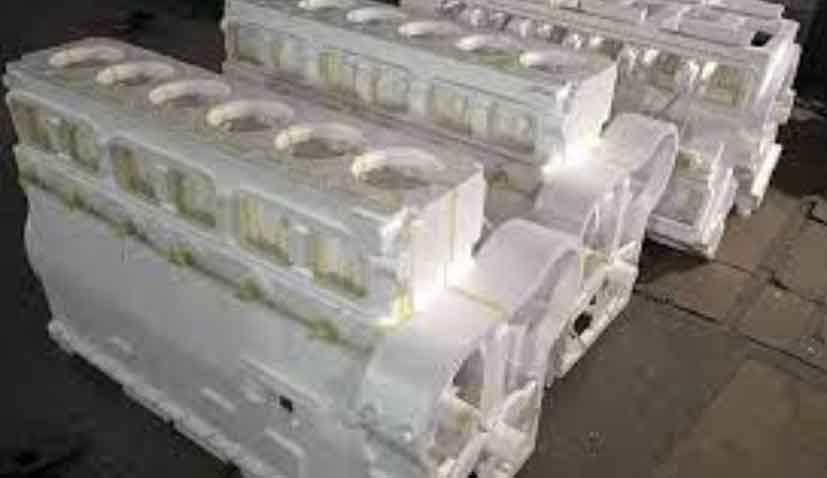
Our experimental setup involved preparing ZGMn13 and ZGMn17 liner samples using lost foam casting, with chemical compositions detailed in Table 1. The cast liners were subjected to water toughening treatments at temperatures of 1,050°C, 1,080°C, and 1,130°C, each with holding times of 1 hour and 2 hours, followed by rapid quenching in an industrial NaCl solution. This quenching medium ensures fast cooling to prevent carbide reprecipitation. Microstructural analysis was performed on polished and etched specimens using optical microscopy, while microhardness measurements were taken with a load of 2 N and a dwell time of 10 seconds, averaging three readings per sample. The focus was on characterizing changes in carbide morphology and austenite grain size, as these directly influence mechanical properties in lost foam casting components.
| Alloy | C | Mn | Si | S | P | Fe |
|---|---|---|---|---|---|---|
| ZGMn13 | 0.90–1.20 | 13.00 | 0.30–0.80 | ≤0.05 | ≤0.05 | Bal. |
| ZGMn17 | 0.90–1.50 | 17.00 | 0.30–1.00 | ≤0.05 | ≤0.05 | Bal. |
In the as-cast condition, both ZGMn13 and ZGMn17 liners produced by lost foam casting exhibited coarse austenitic grains with extensive network carbides, primarily (Fe, Mn)3C, at grain boundaries. These carbides form due to non-equilibrium cooling during solidification, leading to reduced toughness and increased brittleness. The ZGMn17 alloy showed higher carbide content and larger grain sizes compared to ZGMn13, attributed to its elevated manganese concentration, which promotes carbide precipitation. Microstructural observations revealed that carbides were predominantly needle-like or networked, weakening grain boundary cohesion and facilitating crack initiation under stress. This underscores the necessity of water toughening to dissolve these carbides and achieve a uniform austenitic structure, which is critical for components manufactured via lost foam casting that endure cyclic impacts in mill applications.
After water toughening, significant microstructural changes were observed. For ZGMn13, treatment at 1,050°C for 1 hour resulted in partial dissolution of network carbides, but some remnants persisted along grain boundaries. Extending the holding time to 2 hours at this temperature led to grain coarsening and increased carbide agglomeration, degrading mechanical properties. At 1,080°C for 1 hour, a nearly single-phase austenite structure was achieved, with carbides fully dissolved and grains uniformly distributed. However, at 1,130°C, overheating occurred, manifesting as exaggerated grain growth and the formation of martensitic phases, which reduced austenite content. Similarly, for ZGMn17, holding for 1 hour at 1,080°C produced the most homogeneous microstructure, while longer durations or higher temperatures caused carbide reprecipitation and grain boundary weakening. These trends highlight the sensitivity of lost foam casting microstructures to heat treatment parameters.
The hardness results, summarized in Table 2, demonstrate that water toughening generally reduces hardness compared to the as-cast state due to carbide dissolution. For ZGMn13, the highest hardness of 213 HB was recorded after treatment at 1,050°C for 1 hour, where residual carbides contributed to strengthening. At 1,080°C for 1 hour, hardness decreased to 210 HB as carbides dissolved, but this condition offered a better balance of toughness and strength. ZGMn17 exhibited a similar pattern, with peak hardness of 223 HB at 1,050°C for 1 hour, dropping to 220 HB at 1,080°C for 1 hour. Prolonged holding or higher temperatures further reduced hardness, coinciding with microstructural deterioration. The relationship between carbide content and hardness can be expressed by the empirical formula: $$H = H_0 + k_c \cdot C_c$$ where \(H\) is hardness, \(H_0\) is the base hardness of austenite, \(k_c\) is a proportionality constant, and \(C_c\) is carbide volume fraction. This equation illustrates how carbide dissolution during water toughening in lost foam casting components lowers hardness but improves overall ductility.
| Treatment | ZGMn13 Hardness (HB) | ZGMn17 Hardness (HB) |
|---|---|---|
| As-cast | 230 | 245.7 |
| 1,050°C × 1 h | 213 | 223 |
| 1,050°C × 2 h | 205 | 215 |
| 1,080°C × 1 h | 210 | 220 |
| 1,080°C × 2 h | 198 | 208 |
| 1,130°C × 1 h | 195 | 200 |
| 1,130°C × 2 h | 185 | 190 |
Discussion of the results emphasizes the critical role of water toughening temperature and time in optimizing the microstructure of lost foam casting products. The dissolution kinetics of carbides can be modeled using the Arrhenius equation: $$k = A \exp\left(-\frac{E_a}{RT}\right)$$ where \(k\) is the rate constant, \(A\) is the pre-exponential factor, \(E_a\) is activation energy, \(R\) is the gas constant, and \(T\) is temperature. At lower temperatures like 1,050°C, insufficient thermal energy slows carbide dissolution, leaving remnants that harden but embrittle the material. At 1,080°C, the process reaches an optimal point, achieving complete dissolution without excessive grain growth. However, at 1,130°C, accelerated diffusion leads to decarburization reactions, such as \(\text{Fe}_3\text{C} + 2\text{H}_2 \rightarrow 3\text{Fe} + \text{CH}_4\), which deplete carbon and form porosity, further reducing hardness and toughness. This decarburization is exacerbated in lost foam casting due to the refractory coating interactions, highlighting the need for precise control in industrial settings.
The Hall-Petch relationship, $$\sigma_y = \sigma_0 + k d^{-1/2}$$ where \(\sigma_y\) is yield strength, \(\sigma_0\) is friction stress, \(k\) is a material constant, and \(d\) is grain diameter, explains the mechanical behavior post-water toughening. Finer grains after treatment at 1,080°C for 1 hour enhance strength and toughness, whereas coarse grains at higher temperatures diminish these properties. For lost foam casting applications, this grain refinement is vital to withstand impact loads in rod mills. Additionally, the work-hardening capacity of high-manganese steels, derived from deformation-induced martensite transformation, is maximized in a carbide-free austenite matrix. Our data show that ZGMn17, with higher manganese content, requires stricter control to avoid carbide networks, but when properly treated, it offers superior wear resistance. The integration of lost foam casting with optimized water toughening thus enables the production of liners with extended service life in abrasive environments.
In conclusion, we have demonstrated that water toughening significantly alters the microstructure and properties of ZGMn13 and ZGMn17 liners fabricated by lost foam casting. The optimal treatment condition is heating to 1,080°C with a 1-hour hold followed by rapid water quenching, which produces a homogeneous austenitic structure free of network carbides. This results in a favorable combination of hardness and toughness, with values of 210 HB and 220 HB for ZGMn13 and ZGMn17, respectively. Higher temperatures or extended times lead to grain coarsening and property degradation. The lost foam casting process, combined with tailored heat treatment, ensures consistent performance for mill liners under high-impact conditions. Future work could explore the effects of alloy modifications or alternative quenching media to further enhance the benefits of lost foam casting in industrial applications.