
In my extensive visits and evaluations of numerous foundries across various regions, I have consistently observed that small and medium sand casting manufacturers face a unique set of challenges. These enterprises, which form the backbone of the casting industry in many areas, often operate with limited resources, rudimentary conditions, and inadequate management systems. The consequences are evident: low production yields, inconsistent quality, high scrap rates, elevated material consumption, poor working environments, and ultimately, reduced profitability. The competitive landscape is fierce, and survival, let alone growth, demands a fundamental shift towards systematic and scientific management. This article, drawn from my firsthand experiences and discussions with industry stakeholders, aims to delineate a comprehensive management framework tailored for small and medium sand casting manufacturers. The goal is to provide actionable insights that can transform these operations from struggling entities into efficient, competitive, and sustainable businesses.
The journey begins with a fundamental realization: management is not a luxury but a necessity. Many operators of small foundries, particularly those in rural or semi-urban settings, hold the misconception that formal management is irrelevant for a “small shop.” They believe that simply producing castings and generating sales is sufficient. This perspective is profoundly detrimental. In today’s market, which is as unforgiving as a battlefield, complacency and ad-hoc operations are a direct path to failure. Management is the engine that drives improvement, efficiency, and consistency. For sand casting manufacturers, whose processes are inherently complex and variable, the absence of structured management almost guarantees underperformance. Therefore, the first step is to cultivate a mindset that values and prioritizes management. It is not an arcane science; it is the practical discipline of organizing resources, processes, and people to achieve defined objectives. Improvement does not happen overnight. It requires a deliberate, step-by-step approach—starting with the most basic controls and gradually building a more sophisticated system. The very act of beginning to manage, to measure, and to record is transformative.
The core of foundry operations revolves around transforming raw materials into saleable castings. Management, therefore, must quantitatively capture every aspect of this cycle to provide owners and managers with the data needed for decision-making. For sand casting manufacturers, this involves several interconnected domains: material management, operations management, technical management, financial management, and overall plant management. Each is critical and must be addressed with specificity.
Raw Material Management
Sand casting manufacturers utilize a diverse range of raw materials: pig iron, scrap steel, coke, molding sand, binders, and additives. Each material represents a significant cost component, and its mismanagement leads directly to financial waste and quality issues. A systematic approach is non-negotiable.
Take pig iron as a primary example. It must never be stored outdoors exposed to rain or moisture, as this severely compromises its metallurgical properties and the quality of the molten metal. Management here involves rigorous tracking:
- Inventory: Maintain an accurate, real-time ledger of stock quantities.
- Incoming Materials: All purchased materials must be weighed upon receipt, and the data recorded.
- Outgoing Materials (Castings): Finished castings, by type and batch, must be weighed individually, and their weights logged meticulously.
A key performance indicator is the Material Consumption or Loss Rate. This can be calculated monthly using the following formula:
$$ \text{Pig Iron Used (kg)} = \text{Opening Stock} + \text{Purchases} – \text{Closing Stock} $$
$$ \text{Pig Iron Loss (kg)} = \text{Pig Iron Used} – \text{Total Weight of Castings Produced} $$
$$ \text{Loss Rate (\%)} = \frac{\text{Pig Iron Loss}}{\text{Total Weight of Castings Produced}} \times 100\% $$
For instance, if the opening stock is 1000 kg, purchases are 500 kg, closing stock is 1200 kg, and castings produced weigh 800 kg, then:
Pig Iron Used = 1000 + 500 – 1200 = 300 kg.
Pig Iron Loss = 300 – 800 = -500 kg? This indicates an error in recording, as loss cannot be negative. A correct example: Opening stock 1000 kg, purchases 500 kg, closing stock 300 kg, castings 800 kg. Then:
Pig Iron Used = 1000+500-300=1200 kg. Loss = 1200-800=400 kg. Loss Rate = (400/800)*100% = 50%. This would be alarmingly high.
A well-managed sand casting facility should aim for a loss rate consistently below 5%. Significant monthly fluctuations (e.g., >2-3%) or a sudden spike are red flags indicating potential issues like theft, measurement inaccuracies, or quality problems with incoming material. The same disciplined accounting must be applied to all other materials.
| Material | Storage Requirement | Key Metrics to Track | Target Loss Rate |
|---|---|---|---|
| Pig Iron | Covered, dry storage | Stock level, purchase weight, usage weight | < 5% |
| Scrap Steel | Sorted, clean, dry storage | Composition, contamination level, weight | < 3% (melting loss) |
| Coke | Dry, covered storage | Fixed carbon content, size, weight | Consumption per ton of iron |
| Molding Sand (New & Reclaimed) | Segregated, moisture-controlled | AFS fineness, clay content, moisture % | Sand-to-casting ratio |
| Binders (Clay, Resin, etc.) | Sealed containers, temperature control | Addition rate per sand mix, shelf life | As per technical spec |
Operations Management
The purpose of operations management is to assign appropriate tasks to workers, standardize their procedures, and create an environment where their skills are fully utilized. Combined with quality materials and sound工艺, this ensures the production of reliable castings.
1. Workforce Management
In sand casting manufacturers, molders often constitute about half of the direct labor force. They are pivotal. A skilled molder, especially in green sand casting, is invaluable. Compensation should be performance-linked, with a sensible base-plus-incentive structure. Management must assign workloads based on individual capability and track productivity. A crucial metric is the daily output per molder, measured in kilograms of good castings poured. This allows for the calculation of labor productivity:
$$ \text{Daily Productivity per Molder (kg)} = \frac{\text{Total Weight of Castings from Molder’s Molds}}{\text{Number of Molders}} $$
Similar tracking should be established for coremakers, melters, fettlers, and other personnel, with clear definitions of tasks and responsibilities aligned with production targets.
2. Molding Sand Management
After the molder’s skill, sand quality is the most critical factor for mold integrity. For green sand, this starts with raw material quality—sand, bentonite, and additives must meet specifications. The mixing process must be controlled precisely. Relying on “feel” is a recipe for inconsistency. Every mix should have recorded parameters:
| Mix Batch # | Return Sand (kg) | New Sand (kg) | Bentonite (kg) | Water (kg) | Mixing Time (s) | Resulting Properties |
|---|---|---|---|---|---|---|
| 101 | 850 | 150 | 15 | 20 | 120 | Strength: 180 kPa, Moisture: 3.5% |
| 102 | 830 | 170 | 16 | 22 | 125 | Strength: 185 kPa, Moisture: 3.7% |
Regular testing of sand properties—compressive strength, moisture content, permeability, and compactibility—is mandatory. For chemical-bonded sands like resin sand, loss on ignition (LOI) must be monitored; for silicate sand, Na₂O content is key. Since approximately 50% of casting defects originate from sand-related issues, neglect in this area is catastrophic for any sand casting manufacturer.
3. Melting Management
Melting dictates the final metallurgy of the casting. The mantra is “good, clean, dry charge materials.” Storage practices matter immensely. A melting log is an essential management tool. Key parameters to record include:
- Charge makeup (weights of pig iron, scrap, alloys)
- Coke bed height and quality
- Blast initiation time and pressure/flow rate
- Tap times and temperatures
- Slag conditions
Mathematically, key melting efficiency indicators can be tracked:
$$ \text{Melting Rate (kg/hr)} = \frac{\text{Total Metal Tap Weight}}{\text{Active Blast Time}} $$
$$ \text{Coke Ratio} = \frac{\text{Weight of Coke Consumed}}{\text{Weight of Metal Produced}} $$
Regular chemical analysis, microstructure examination, and mechanical testing of cast samples provide the feedback needed to adjust charge composition and melting practice, ensuring consistent铁液 quality.
4. Process and Tooling Management
Every step—molding, coring, coating, closing—must follow written工艺 procedures. Supervisory checks are vital. Tooling management is equally critical for sand casting manufacturers, who often handle multiple patterns. Patterns, core boxes, flasks, and core irons must have designated storage locations with a proper tracking system. A pattern register should detail:
| Pattern ID | Part Name | Storage Location | Last Used Date | Condition | Maintenance Record |
|---|---|---|---|---|---|
| P-2023-001 | Gear Blank | Rack A-12 | 2023-10-26 | Good | Minor repair on 2023-09-15 |
Immediate repair of damaged tooling prevents future errors and production delays.
5. Finished Product and Scrap Management
Final inspection is a common weakness. Every casting must be checked for dimensions, surface finish, and, where possible, integrity (via non-destructive testing if needed). Defective pieces must be scrapped and recorded. The true scrap rate is a vital metric:
$$ \text{Scrap Rate (\%)} = \frac{\text{Weight of Scrap Castings}}{\text{Total Weight of Castings Produced}} \times 100\% $$
Ignoring scrap by simply reverting it to the melting furnace without analysis hides the true cost, as all prior labor and energy have been expended. Daily scrap analysis, correlating defects with process records from sand, melting, and molding, is the only way to identify root causes and drive improvement. Reducing the scrap rate is perhaps the most direct lever for improving profitability for a sand casting manufacturer.
Technical Management
Casting is intensely technical. Therefore, technical management forms the intellectual backbone of a competitive sand casting manufacturer.
1. Process Documentation
Every casting part should have a documented工艺 card detailing the molding method, gating and risering system, core assembly, pouring temperature range, and cooling time. Sand mixing parameters and melting schedules for different iron grades must be standardized. These documents ensure consistency and provide a baseline for troubleshooting.
2. Technical Data Management
All drawings,工艺 cards, lab reports (chemical analysis, mechanical tests), inspection records, and scrap analysis reports must be archived systematically. This ensures traceability, facilitates continuous improvement, and builds valuable institutional knowledge. A simple database or even well-organized physical files can achieve this.
Financial Management
Sound financial stewardship separates thriving sand casting manufacturers from those perpetually struggling.
- Budgeted Spending: Operate on a cash-flow basis. Plan expenditures against income. Avoid impulsive capital spending without clear ROI analysis.
- Invest in Talent and Technology: Allocate funds for competitive salaries to attract skilled technicians and managers. Invest in new工艺 technologies (e.g., improved sand reclamation, energy-efficient melting) that enhance quality and reduce long-term costs. The formula for return on such investment can be conceptualized as:
$$ \text{ROI on Technology} = \frac{\text{Annual Savings from Improved Yield/Efficiency}}{\text{Investment Cost}} $$
A high ROI justifies the expenditure. - Reject Substandard Materials: While cheaper upfront, poor materials increase scrap rates dramatically. The economic loss follows a multiplier effect. Let `C_m` be the cost of good material, `C_s` be the cost of substandard material, `S_g` be the scrap rate with good material, and `S_s` be the scrap rate with substandard material. The effective cost per good casting can be modeled as:
$$ \text{Effective Cost} = \frac{\text{Material Cost per Casting Attempt}}{1 – \text{Scrap Rate}} $$
Using substandard material often increases this effective cost despite a lower `C_s`. - Avoid Frivolous Expenses: Scrutinize every outflow for its contribution to operational goals.
- Optimize Cash Flow: Accelerate accounts receivable collection, manage inventory leanly, and minimize idle cash. The cash conversion cycle should be as short as possible.
- Prudent Borrowing: Use debt sparingly for strategic growth or bridging temporary gaps, not for covering operational inefficiencies. The cost of debt erodes margins.
Comprehensive Plant Management
This integrates all previous elements and adds critical dimensions of safety, environment, and discipline.
1. Safety Management
Foundries are hazardous. A proactive safety culture is imperative. Implement and enforce standard operating procedures (SOPs) for all high-risk activities: melting, pouring, lifting, and grinding. Regular safety audits, personal protective equipment (PPE) mandates, and clear marking of hazards are essential. The cost of an accident far exceeds preventive measures.
2. Environmental and Workplace Management
The operational environment profoundly impacts worker morale, productivity, and company image. For sand casting manufacturers, addressing this is a strategic imperative.
- Dust Control: Install effective dust collection systems at major emission points: melting furnaces (cupolas), shakeout stations, sand mixers, and shot blasting units. Centralized bag-filter systems are highly recommended. Sand reclamation not only reduces waste but also curtails dust generation.
- Noise Reduction: Select equipment with lower noise ratings. Enclose noisy machinery like compressors or pneumatic vibrators. This protects worker hearing and is a good neighbor policy.
- Greening and Beautification: Plant trees and maintain greenspaces. A pleasant exterior signals care and professionalism.
- Painting and Marking: Apply fresh, color-coded paint to buildings, equipment, and floors. Define clear walkways and work zones. This low-cost intervention dramatically improves perception and order.
- Adequate Lighting: Ensure all work areas, especially inspection zones and pathways, are well-lit. This enhances safety, quality control, and morale.
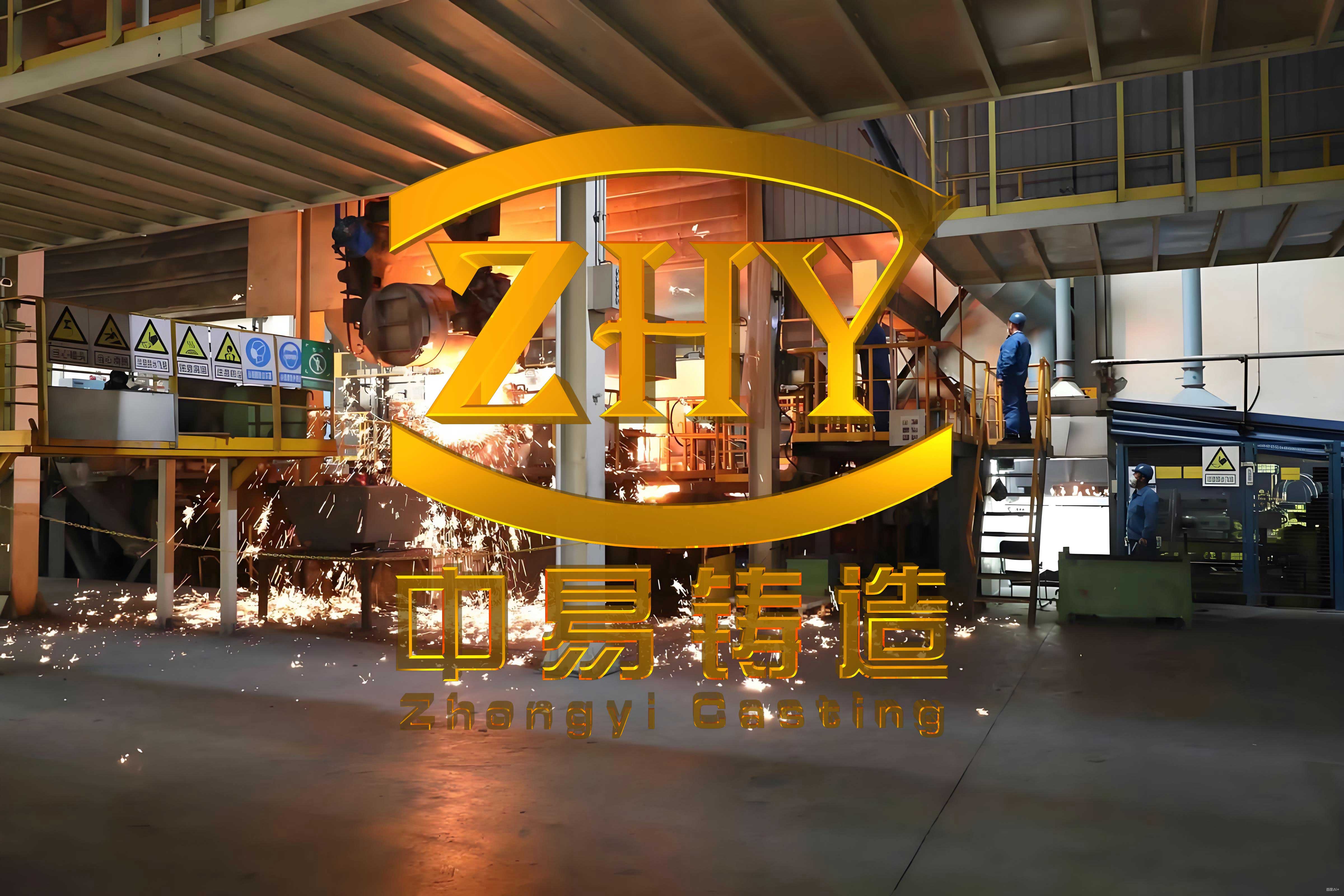
As illustrated, a clean, organized, and modern facility is not just aesthetically pleasing; it directly correlates with operational discipline and product quality. When clients or partners visit, such an environment builds immediate confidence in your capabilities as a sand casting manufacturer.
- Unobstructed Flow: Design the plant layout for smooth material and personnel flow. Avoid cluttered aisles. The process should follow a logical sequence from raw material to finished goods storage.
- 5S Methodology (Sort, Set in order, Shine, Standardize, Sustain): Implement this lean tool to ensure every item has a place, and everything is in its place. This applies to patterns, ladles, tools, and even documentation.
3. Discipline and Record-Keeping
Ultimately, management relies on rules and records. Develop a practical set of company rules covering attendance, work procedures, quality standards, and safety. The rules must be enforced fairly and consistently. Crucially, as emphasized throughout, no management is possible without records. Data from logs, weigh slips, test reports, and production tallies are the lifeblood of informed decision-making. They turn intuition into analysis and guesswork into control.
In conclusion, the path to excellence for small and medium sand casting manufacturers is paved with deliberate, systematic management. It begins with a commitment to move beyond informal operation. By establishing control over materials, standardizing and measuring operations, leveraging technical knowledge, exercising financial prudence, and fostering a safe, orderly, and continuous-improvement culture, these enterprises can dramatically elevate their performance. The competitive pressures will only intensify, and the market will increasingly reward those sand casting manufacturers who master the art and science of management. The framework outlined here provides a foundational blueprint. Start with one area, document processes, measure results, analyze deviations, and iterate. Over time, these practices will become ingrained, transforming challenges into opportunities for growth and securing a sustainable future in the demanding world of metal casting.