
In my extensive experience with foundry practices, I have observed that gray iron casting is a remarkably complex multi-component alloy. Beyond the primary elements—carbon, silicon, manganese, phosphorus, and sulfur—which are intentionally controlled, gray iron casting often contains a myriad of trace or impurity elements. These impurities, such as lead, arsenic, tin, aluminum, antimony, bismuth, boron, chromium, and others, are frequently introduced through raw materials like pig iron, scrap steel, recycled iron, and various additives. Their presence, even in minute quantities, can profoundly influence the nucleation and growth characteristics during solidification, thereby dictating the graphite morphology, matrix transformation, and ultimately, the mechanical and physical properties of gray iron casting. Unexpected defects like pinholes, chilling tendencies, cracking, and failure to meet hardness or strength specifications in otherwise normal production processes often trace back to these hidden culprits. Given the significant proportion of gray iron casting components in machinery—such as frames and bases in woodworking equipment—a deep understanding and control of impurity elements is paramount for ensuring product quality and reliability.
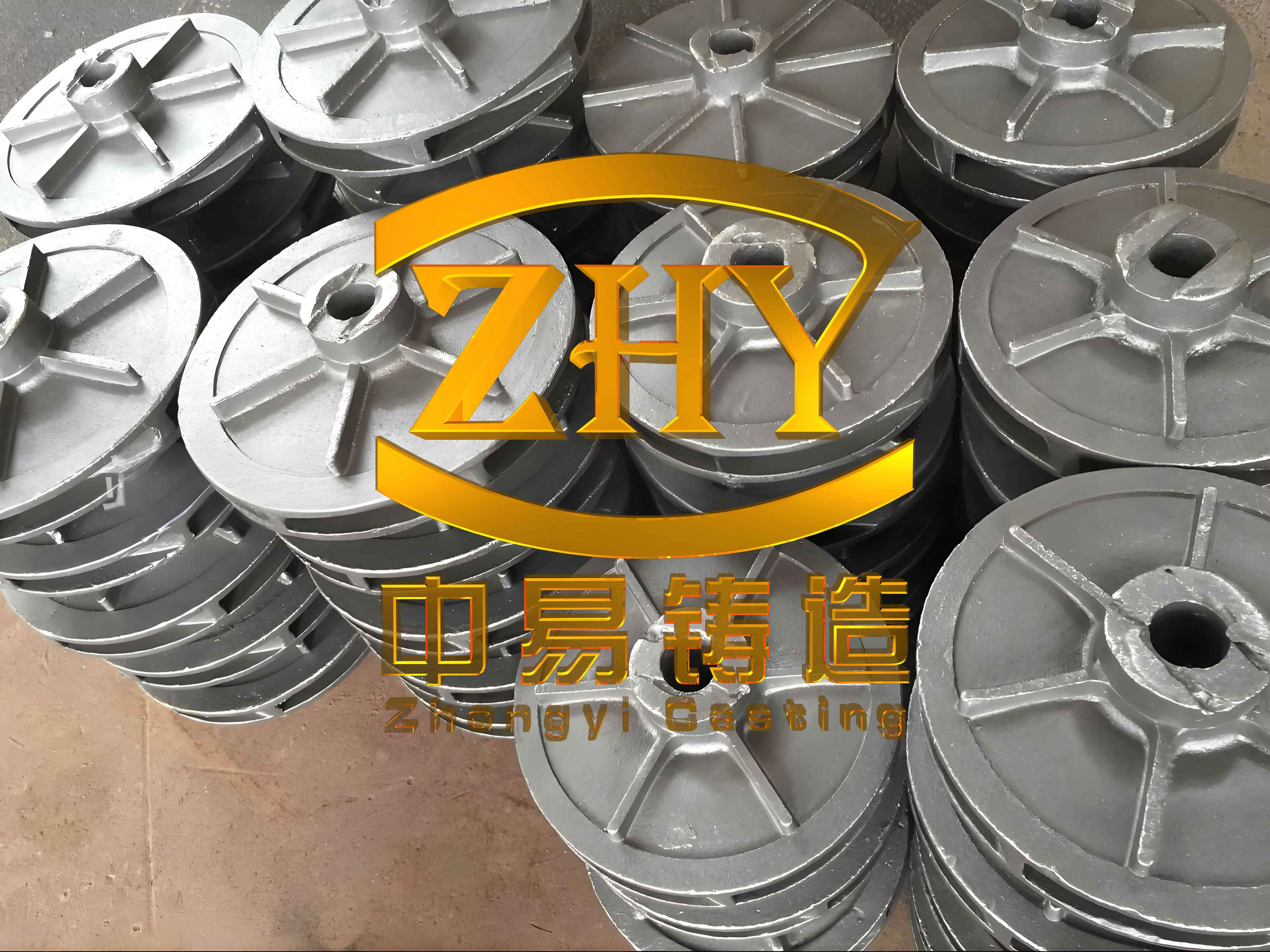
The influence of individual impurity elements on gray iron casting is multifaceted. To systematically address this, I will detail the effects, sources, and typical concentrations of key impurities, often summarizing data in tables for clarity. Furthermore, I will introduce quantitative approaches, including formulas, to assess their combined impact.
Detailed Analysis of Key Impurity Elements
Each impurity element interacts uniquely with the gray iron casting matrix. Below, I discuss several critical elements based on industrial observations and research.
| Element | Primary Sources | Typical Content (wt.%) | Effects on Structure & Properties |
|---|---|---|---|
| Lead (Pb) | Pig iron, scrap steel, non-ferrous metals, fluorite, copper alloys, lead-coated steel scrap. | 0.0005 – 0.01 | Promotes irregular graphite forms (e.g., “bayonet”, “claw”, Widmanstätten, intergranular, network, stellate, pointed). Increases chill depth, reduces tensile and bending strength, lowers deflection, raises hardness. Inhibits eutectic cell growth. Risks catastrophic failure in thick sections. |
| Arsenic (As) | Scrap steel, impurities in copper alloys, arsenic-bearing pig iron. | 0.02 – 0.1 | Promotes undercooled graphite (Type D). Leads to chrysanthemum graphite (Type B) and directional graphite. Stabilizes pearlite entirely even at low levels. Above ~0.08%, increases phosphide networks, reduces mechanical properties, and promotes cracking in complex castings. |
| Tin (Sn) | Ladle additions, alloying element in scrap steel, chill coatings. | 0.02 – 0.1 | Causes graphite curvature, forming spider-web graphite clusters. Strong pearlite stabilizer; effect depends on carbon equivalent. Can increase tensile strength but raises hardness. Deteriorates metallurgical quality index. |
| Aluminum (Al) | Ferroalloys, introduction via scrap. | 0.01 – 0.1 | Enhances graphitization, reduces chill tendency. Can improve strength and machinability. However, often causes pinhole porosity and slag inclusions, especially above 0.01-0.02% or in presence of titanium. |
| Antimony (Sb) | Impurity in scrap steel, uncleaned enameled scrap, alloy additions. | 0.002 – 0.02 | Refines graphite but can form abnormal graphite. Potent pearlite stabilizer; 0.02-0.05% yields fully pearlitic matrix without significant chill. May increase tensile strength at low levels but reduces it at higher contents. |
| Bismuth (Bi) | Common ladle addition. | 0.001 – 0.01 | Inhibits eutectic cell growth, increases undercooling, promotes Type D and network graphite, significantly increases chill tendency. |
| Boron (B) | Additions, found in pig iron and enameled scrap. | 0.001 – 0.01 | Increases eutectic cell count; larger amounts promote dendritic austenite. Strong chilling effect; 0.01-0.02% increases chill depth. Can form massive carbides. In nitrogen-saturated iron, may aid nucleation via BN formation. |
| Chromium (Cr) | Alloying element in scrap, ladle additions. | 0.05 – 0.5 | Suppresses ferrite, ensures pearlite formation, improves tensile strength, hardness, wear resistance, and heat resistance. Strong carbide stabilizer; excess leads to chill layers, impairing machinability. |
| Phosphorus (P) | Certain pig irons, scrap iron/steel. | 0.02 – 0.5 | Forms phosphide eutectic, dissolves in ferrite, increasing matrix hardness and strength. Improves fluidity but increases brittleness at higher levels. |
| Sulfur (S) | Coke, carburizers, scrap iron. | 0.02 – 0.15+ | Small amounts produce coarse Type A graphite and increase eutectic cell count via MnS nucleation. High levels inhibit eutectic growth and increase chill. Above ~0.12%, stabilizes pearlite. |
| Tellurium (Te) | Ladle additions, alloy element in scrap. | 0.0005 – 0.005 | Markedly increases undercooling and chill tendency. Strongly inhibits eutectic cell growth, promotes Type D and network graphite. Even 0.001% can cause fully chilled structure, drastically reducing strength and machinability. |
| Selenium (Se) | Introduced via scrap steel/iron. | Trace amounts | Similar to S and Te; increases undercooling and eutectic cell count. Coarsens graphite, promotes compacted graphite forms. Effect exacerbated by Ce presence. |
| Titanium (Ti) | Present in some pig irons. | 0.01 – 0.1 | Above 0.025% promotes graphitization; above 0.1% increases chill, reduces eutectic cell count, promotes Type D graphite. Residual 0.01-0.02% can enhance inoculation. |
| Vanadium (V) | Pig iron, scrap steel, returns. | 0.05 – 0.3 | Hinders graphitization, strong carbide stabilizer. Indirectly stabilizes pearlite, refines eutectic grains, homogenizes graphite distribution. |
| Zinc (Zn) | Introduced via scrap. | 0.001 – 0.01 | No significant effect on graphite size/shape/distribution. Promotes ferrite formation. |
| Calcium (Ca) | Present in ferroalloys. | 0.001 – 0.005 | Increases eutectic cell count; higher amounts increase chill depth. Enhances inoculating effect of late silicon additions. |
| Copper (Cu) | Non-ferrous metals in scrap, ladle additions. | 0.1 – 1.0 | Promotes pearlite, reduces free ferrite, increases tensile strength, hardness, wear resistance. Reduces chill risk in thin sections (about 1/4 the effect of Si). |
| Molybdenum (Mo) | Alloy element in scrap. | 0.1 – 0.5 | Stabilizes pearlite, increases hardness, slightly promotes carbide formation. |
| Nitrogen (N) | Arc furnace melting, exposure to air. | 0.004 – 0.015 | Stabilizes carbides, slightly increases chill depth. High levels suppress ferrite, cause fully pearlitic matrix. Above ~0.01%, may promote compacted graphite in heavy sections. Increases nucleation and eutectic cell count. Excessive N leads to porosity, blowholes, cracks. |
| Hydrogen (H) | Melting/ holding exposure, moist linings. | 0.0001 – 0.0005 | Increases chill tendency and causes pinhole porosity. |
The quantitative influence of many elements on chill tendency or pearlite stability can be modeled. For instance, the chilling power of an element can be expressed relative to silicon (set as -1 for graphitizing effect). A simplified relationship for the net chilling tendency (CT) in gray iron casting might be:
$$ CT = k_1 \cdot [\%Si] + k_2 \cdot [\%C] + \sum_{i} (m_i \cdot [\%El_i]) $$
where $[\%El_i]$ is the concentration of impurity element $i$, and $m_i$ is its specific chilling coefficient (positive for carbide stabilizers, negative for graphitizers). Similarly, the pearlite stability factor (PSF) can be approximated as:
$$ PSF = \sum_{j} (n_j \cdot [\%El_j]) $$
where $n_j$ is the potency factor for pearlite-stabilizing elements like Sn, Sb, Cu, Cr, etc. For example, tin’s effect on pearlite content ($P_{\%}$) relative to carbon equivalent (CE) can be described empirically. If CE = %C + 0.33(%Si + %P), then for near-eutectic gray iron casting:
$$ P_{\%} \approx 80 + \alpha \cdot [\%Sn] \quad \text{(for CE ≈ 4.3)} $$
while for hypereutectic compositions, a more complex relation holds:
$$ P_{\%} \approx 50 + \beta \cdot [\%Sn] – \gamma \cdot (CE – 4.3)^2 $$
where $\alpha$, $\beta$, $\gamma$ are constants derived from experimental data. Such formulas help in predicting the matrix microstructure of gray iron casting when impurity levels vary.
Synergistic and Combined Effects of Impurities
In practical gray iron casting production, multiple impurity elements coexist, and their interactions can be additive, synergistic, or antagonistic. To assess the overall impurity burden, I often calculate the total impurity element concentration, denoted as $\sum TE$. More insightfully, impurities can be grouped by their functional roles:
- Graphitizing Elements (GE): Elements that promote graphite formation, e.g., Al, Ti (at certain levels), Cu (mildly). Their combined effect is $\sum GE = [\%Al] + f_{Ti} \cdot [\%Ti] + \dots$
- Carbide-Stabilizing (Chilling) Elements (HE): Elements that promote cementite, e.g., Cr, V, Te, Bi, B. $\sum HE = [\%Cr] + g_V \cdot [\%V] + g_{Te} \cdot [\%Te] + \dots$
- Graphite Nucleation/Refinement Elements (NE): Elements that increase eutectic cell count, e.g., Ca, certain levels of S, N. $\sum NE = h_{Ca} \cdot [\%Ca] + h_S \cdot [\%S] + \dots$
- Graphite Coarsening Elements (CE): Elements that lead to coarse or abnormal graphite, e.g., Pb, As at high levels. $\sum CE = [\%Pb] + j_{As} \cdot [\%As] + \dots$
- Pearlite Stabilizing Elements (PE): Elements that suppress ferrite, e.g., Sn, Sb, Cu, Mo, As, Cr. $\sum PE = [\%Sn] + k_{Sb} \cdot [\%Sb] + k_{Cu} \cdot [\%Cu] + \dots$
The overall behavior of a gray iron casting can then be estimated from ratios such as $\frac{\sum PE}{\sum TE}$ or $\frac{\sum HE}{\sum TE}$. A high $\sum TE$ often correlates with increased hardness and tensile strength, primarily if $\sum PE$ is also high relative to $\sum TE$. For instance, the tendency for undercooled graphite (Type D) increases with the net undercooling power $U$:
$$ U = \sum HE – \lambda \cdot \sum GE + \mu \cdot \sum CE $$
where $\lambda$ and $\mu$ are weighting factors. The mechanical properties, like tensile strength ($TS$), might be modeled as a function of base composition and impurity indices:
$$ TS (MPa) = a + b \cdot (CE) + c \cdot (\sum PE) – d \cdot (\sum CE) – e \cdot (U) $$
where $a, b, c, d, e$ are constants specific to the casting process and section size. This multifaceted influence underscores why controlling impurity elements is critical for consistent gray iron casting quality.
Preventive Measures and Mitigation Strategies
Based on my practice, several effective methods can minimize or eliminate the detrimental effects of impurity elements in gray iron casting.
1. Strict Control of Charge Materials: This is the first line of defense. I recommend:
- Knowing the source and characteristics of pig iron; selecting grades with low inherent impurities.
- Classifying scrap steel by origin to predict potential contaminants.
- Regular chemical analysis of returns (gates, risers, scrap castings) to monitor impurity accumulation.
- Extreme caution with non-standard scrap, such as bundled turnings, mixed non-ferrous scrap, or enameled materials, which may harbor unknown elements.
- Dilution: Using charges with known low impurity content to dilute the overall melt chemistry, keeping harmful elements below threshold levels. Thresholds vary but, for example, I aim to keep Pb below 0.003%, As below 0.08%, Te below 0.001% for critical castings.
2. Melt Superheating and Holding: Appropriately raising the superheating temperature and allowing a holding time at high temperature can volatilize low-boiling-point impurities like lead (Pb boils at 1749°C). Similarly, remelting impurity-rich pig iron before use can reduce some volatile impurities. The effectiveness can be approximated by a volatilization rate equation:
$$ \frac{d[\%El]}{dt} = -k_v \cdot A \cdot (P_{vap}(El) – P_{atm}) $$
where $k_v$ is a rate constant, $A$ is melt surface area, $P_{vap}$ is the vapor pressure of the impurity element at melt temperature, and $P_{atm}$ is atmospheric pressure. Thus, for elements with high $P_{vap}$, superheating aids removal.
3. Treatment with Rare Earth Silicon Alloys: Adding rare earth silicide (e.g., FeSiRE) is highly effective in neutralizing the harmful effects of elements like lead and arsenic, particularly their tendency to cause cracking. The rare earths (Ce, La) form stable, high-melting-point compounds with these impurities, altering their distribution. The required addition ($W_{RE}$ in %) can be estimated from the impurity level:
$$ W_{RE} \approx \zeta \cdot ([\%Pb] + [\%As] + [\%Bi]) $$
where $\zeta$ is a factor typically between 0.5 and 2, depending on base composition. This treatment is especially beneficial for high-carbon-equivalent gray iron casting where impurity-induced graphite distortions are more pronounced.
4. Inoculation Practices: Strategic inoculation can counteract specific impurities. For instance:
- Tellurium’s chilling effect can be offset by powerful inoculants like FeSi containing Sr, Zr, or Ba.
- Inoculants with barium (e.g., FeSiBa) or zirconium (FeSiZr) show efficacy in mitigating the effects of lead and arsenic, improving graphite morphology and reducing undercooling.
- The inoculation process itself increases eutectic cell count, which can dilute the local concentration of harmful impurities at the solidification front. The resultant improvement in graphite structure enhances the mechanical properties of gray iron casting.
A generalized inoculation effect can be modeled by the increase in eutectic cell count ($N$ cells/cm²):
$$ N = N_0 + \Delta N_{inh} \cdot (1 – \exp(-\eta \cdot [\%Inoc])) $$
where $N_0$ is the base count, $\Delta N_{inh}$ is the maximum possible increase, $[\%Inoc]$ is the inoculant addition, and $\eta$ is an efficiency factor that decreases in the presence of certain impurities like Ti or high N. Therefore, compensating for impurities may require adjusted inoculation practices.
Comprehensive Quality Assurance Framework
To ensure robust gray iron casting production, I advocate for an integrated quality assurance system that includes:
| Impurity Element | Suggested Maximum Limit (wt.%) for General Engineering Castings | Primary Countermeasure if Exceeded |
|---|---|---|
| Lead (Pb) | 0.003 | Superheating; FeSiRE treatment; Use Ba/Zr-containing inoculants. |
| Arsenic (As) | 0.08 | Dilution; FeSiRE treatment; Increased inoculation. |
| Tin (Sn) | 0.1 | Control addition if used intentionally; Adjust CE to compensate for pearlite stabilization. |
| Tellurium (Te) | 0.0005 | Avoid contamination; Use strong inoculants (Sr, Ba). |
| Bismuth (Bi) | 0.005 | Similar to Pb/Te; Ensure effective inoculation. |
| Titanium (Ti) | 0.1 | Balance with inoculation; Keep residual 0.01-0.02% for beneficial effect. |
| Nitrogen (N) | 0.012 | Control charge materials; Avoid excessive arc furnace melting; Use Ti/Al to tie up N if needed. |
Furthermore, implementing statistical process control (SPC) for melt chemistry is vital. Tracking the impurity indices $\sum TE$, $\sum PE$, and $\sum HE$ over time can predict shifts in gray iron casting properties. For example, a control chart for $\frac{\sum PE}{\sum TE}$ can warn of increasing pearlite stability variability.
Advanced Considerations and Future Outlook
The complexity of gray iron casting is such that even minor impurities can have outsized effects. Ongoing research focuses on understanding the nanoscale mechanisms—how elements like Pb or As adsorb at graphite growth fronts, altering interfacial energy. Computational thermodynamics using CALPHAD methods can now predict phase stability in multi-component systems, aiding in defining safe impurity windows for gray iron casting.
Moreover, the rise of recycled steel usage increases impurity loading in melts. Thus, developing more robust inoculation technologies and real-time melt monitoring (e.g., using optical emission spectroscopy or thermal analysis to detect impurity effects on cooling curves) is crucial. The cooling curve parameters, like undercooling ($\Delta T$), can be linked to impurity content:
$$ \Delta T = \Delta T_0 + \theta \cdot (\sum HE – \xi \cdot \sum GE) $$
where $\Delta T_0$ is the base undercooling, and $\theta, \xi$ are coefficients. Monitoring $\Delta T$ provides immediate feedback for corrective actions.
In summary, mastering the influence of impurity elements is not merely about avoidance but about active management through understanding, measurement, and targeted treatment. Gray iron casting, with its unique combination of castability, machinability, and performance, remains indispensable. By rigorously controlling these trace elements, we can consistently produce high-integrity castings that meet the demanding specifications of modern machinery, ensuring durability and reliability in applications ranging from automotive components to heavy machine tool bases. The journey with gray iron casting is one of continuous learning and adaptation, where each melt teaches us more about the delicate balance of chemistry and process.