
In the field of manufacturing, sand castings are widely used due to their flexibility in producing complex geometries and large components. Aluminum alloy sand castings, in particular, are favored in aerospace and automotive industries for their lightweight and good mechanical properties. However, defects such as porosity, shrinkage, and cold shuts are common in sand castings, which can compromise their integrity. Repair welding, often using techniques like argon arc welding, is a common practice to salvage defective sand castings. In this study, we investigate the impact of repair welding on the tensile and fatigue properties of ZL114A aluminum alloy sand castings. Our goal is to provide insights into how welding repairs affect the performance of sand castings, with a focus on microstructure and defect formation.
Sand castings are produced by pouring molten metal into a mold made of sand, which allows for intricate shapes but can introduce inherent defects. The ZL114A alloy, an Al-Si-Mg system, is commonly used for sand castings due to its excellent castability and strength. When defects are detected, repair welding is employed, but its effects on mechanical properties are not fully understood. We conducted a series of experiments to evaluate these effects, emphasizing the role of welding parameters and microstructure changes. Throughout this article, we will frequently refer to sand castings to underscore their importance in industrial applications.
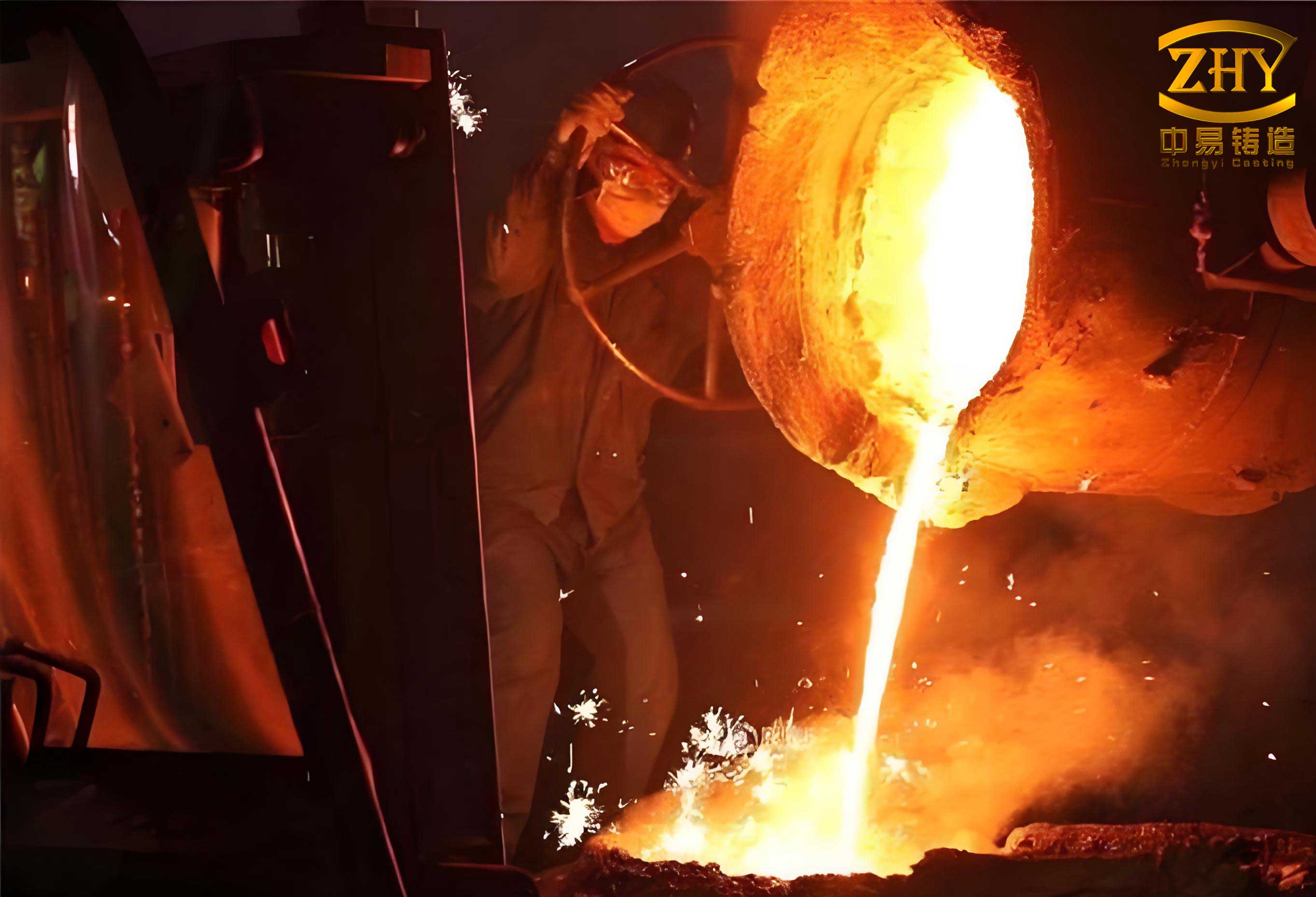
The sand casting process involves several steps, including pattern making, mold preparation, melting, pouring, and finishing. For aluminum alloy sand castings, control of cooling rates and solidification is critical to minimize defects. In our study, we used ZL114A alloy with the composition shown in Table 1. The alloy was melted in a resistance furnace, refined using a rotating spray method, and modified with Al-Sr master alloy. The castings were produced in sand molds with dimensions of 300 mm × 150 mm × 25 mm, ensuring they met Class I casting standards according to relevant specifications.
| Element | Si | Mg | Ti | Fe | Al |
|---|---|---|---|---|---|
| Content | 6.5–7.5 | 0.45–0.75 | 0.08–0.25 | ≤0.20 | Balance |
After casting, the sand castings were inspected for internal quality. Defective areas were identified and subjected to repair welding using argon arc welding. The welding parameters are summarized in Table 2. We employed two welding schemes: Scheme 1 (partial welding), where a pit was machined directly into the casting for welding, and Scheme 2 (full welding), where the casting surface was machined to remove one-quarter of the wall thickness before welding. These schemes were designed to simulate different repair scenarios in sand castings.
| Parameter | Value |
|---|---|
| Welding Current | 1000 A |
| Welding Voltage | 15–30 V |
| Shielding Gas | Argon |
| Electrode Diameter | 5 mm |
| Preheat Temperature | 100–300°C |
Following welding, the sand castings underwent T6 heat treatment: solution treatment at 545°C for 12 hours, quenching in water at 30–40°C, natural aging for 12–24 hours, and artificial aging at 160°C for 8 hours. Tensile and fatigue specimens were then machined from the welded and unwelded regions, as illustrated in the sampling diagrams. Tensile tests were performed according to standard methods, and fatigue tests were conducted with a stress ratio R = -1, covering both high and low stress conditions. The focus was on understanding how repair welding alters the properties of aluminum alloy sand castings.
In sand castings, the as-cast microstructure often contains dendritic structures and micro-porosity, which can affect mechanical behavior. After welding, the heat-affected zone (HAZ) and weld metal exhibit different microstructural features. We used optical microscopy and scanning electron microscopy (SEM) to analyze these changes. The unwelded regions showed typical dendritic Al-Si eutectic with some porosity, while the welded regions displayed fine, equiaxed grains due to rapid solidification. This difference is crucial for interpreting the mechanical test results.
The tensile properties of the sand castings are summarized in Table 3. Compared to unwelded sand castings, both welding schemes resulted in a decrease in tensile strength, yield strength, and elongation. Specifically, tensile and yield strengths decreased by approximately 5%, while elongation decreased by about 15%. These reductions are significant for sand castings used in load-bearing applications. We attribute this to magnesium loss during welding, which reduces the Mg2Si strengthening phase. The high temperatures in argon arc welding, reaching up to 2000°C, cause Mg to vaporize, as shown by chemical analysis in Table 4.
| Sample Type | Tensile Strength (MPa) | Yield Strength (MPa) | Elongation (%) |
|---|---|---|---|
| Unwelded Sand Castings | 348.5 | 299.3 | 5.43 |
| Scheme 1 (Partial Welding) | 332.2 | 284.7 | 4.69 |
| Scheme 2 (Full Welding) | 336.7 | 286.2 | 4.55 |
The loss of Mg can be quantified using the following relation for strengthening phase volume fraction: $$ V_{Mg_2Si} = k \cdot [Mg]^2 $$ where $V_{Mg_2Si}$ is the volume fraction of Mg2Si, $[Mg]$ is the magnesium concentration, and $k$ is a constant dependent on alloy composition. For sand castings, this reduction directly impacts strength. Additionally, the Hall-Petch equation describes the relationship between grain size and yield strength: $$ \sigma_y = \sigma_0 + k_y d^{-1/2} $$ where $\sigma_y$ is the yield strength, $\sigma_0$ is the friction stress, $k_y$ is the strengthening coefficient, and $d$ is the average grain diameter. In welded sand castings, although the weld zone has finer grains, the loss of Mg2Si outweighs the grain refinement benefit, leading to lower strength.
| Element | Unwelded Region | Scheme 1 Weld Zone | Scheme 2 Weld Zone |
|---|---|---|---|
| Si | 6.95–7.03 | 7.00–7.06 | 7.01–7.03 |
| Mg | 0.64–0.65 | 0.55–0.57 | 0.51–0.53 |
| Ti | 0.19–0.20 | 0.19–0.20 | 0.17–0.18 |
| Fe | 0.06–0.07 | 0.05–0.06 | 0.06–0.07 |
Porosity in sand castings also plays a critical role. Unwelded sand castings contain irregular pores from solidification shrinkage, while welded regions may have round gas pores due to trapped gases during welding. The shape and size of these pores affect fatigue performance. We conducted fatigue tests at various stress levels, and the results are plotted in S-N curves. The fatigue life $N_f$ can be modeled using the Basquin equation: $$ N_f = C \sigma_a^{-m} $$ where $\sigma_a$ is the stress amplitude, and $C$ and $m$ are material constants. For sand castings, this relationship varies with welding condition.
Table 5 summarizes the fatigue life data for different types of sand castings under high and low stress conditions. At high stress (200 MPa), fully welded sand castings showed the lowest fatigue life, while partially welded and unwelded sand castings had similar lives. At low stress (50 MPa), partially welded sand castings exhibited significantly higher fatigue life than both unwelded and fully welded sand castings. This behavior is linked to pore geometry: round pores in welded zones are less detrimental under low stress, whereas irregular pores in unwelded sand castings become critical under high stress.
| Sample Type | High Stress (200 MPa) Cycles to Failure | Low Stress (50 MPa) Cycles to Failure |
|---|---|---|
| Unwelded Sand Castings | 1.2 × 10^5 | 2.5 × 10^6 |
| Scheme 1 (Partial Welding) | 1.3 × 10^5 | 3.8 × 10^6 |
| Scheme 2 (Full Welding) | 8.5 × 10^4 | 1.9 × 10^6 |
To further analyze fatigue in sand castings, we consider the stress concentration factor $K_t$ for pores: $$ K_t = 1 + 2\sqrt{\frac{a}{\rho}} $$ where $a$ is the pore diameter and $\rho$ is the radius of curvature at the pore tip. For irregular pores in unwelded sand castings, $\rho$ is small, leading to high $K_t$ and early crack initiation. In welded sand castings, round pores have larger $\rho$, reducing $K_t$ under low stress. This explains the superior fatigue performance of partially welded sand castings at low stress levels.
Microstructural examination of fatigue fracture surfaces revealed that cracks typically initiated at pores near the surface. In unwelded sand castings, cracks started at shrinkage porosity, while in welded sand castings, they originated at gas pores. The crack growth rate $da/dN$ can be described by the Paris law: $$ \frac{da}{dN} = C (\Delta K)^m $$ where $\Delta K$ is the stress intensity factor range, and $C$ and $m$ are material constants. For sand castings, welding alters these constants due to changes in microstructure and residual stress.
Residual stresses from welding also impact the performance of sand castings. The welding process introduces tensile residual stresses in the HAZ, which can promote crack propagation. We estimated residual stress $\sigma_{res}$ using a simplified model: $$ \sigma_{res} = E \alpha \Delta T $$ where $E$ is Young’s modulus, $\alpha$ is the coefficient of thermal expansion, and $\Delta T$ is the temperature difference during cooling. For aluminum alloy sand castings, this can be significant and should be considered in design.
In terms of applications, sand castings are often used in aerospace components where fatigue life is critical. Our findings suggest that repair welding can be acceptable for sand castings under low-stress conditions, but caution is needed for high-stress applications. To optimize welding for sand castings, we recommend controlling heat input to minimize Mg loss and using post-weld heat treatment to relieve residual stresses. Additionally, non-destructive testing should be employed to inspect welded sand castings for defects.
We also explored the effect of welding on other properties of sand castings, such as hardness and corrosion resistance. Hardness tests showed a slight decrease in the weld zone due to Mg loss, consistent with tensile results. Corrosion tests indicated that welded sand castings may be more susceptible to localized corrosion due to microstructural heterogeneity. These factors are important for the long-term durability of sand castings in harsh environments.
To summarize, repair welding has a measurable impact on aluminum alloy sand castings. The key points are: (1) Tensile and yield strengths decrease by about 5%, and elongation decreases by about 15% due to Mg loss and porosity changes. (2) Fatigue life varies with stress level, with partially welded sand castings performing better under low stress. (3) Microstructural differences between welded and unwelded regions drive these changes. For engineers working with sand castings, these insights can guide repair decisions and quality control.
In conclusion, our study highlights the complex interplay between welding, microstructure, and mechanical properties in sand castings. We emphasize that sand castings are versatile but sensitive to repair processes. Future work could focus on developing optimized welding techniques for sand castings, such as laser welding or friction stir welding, to reduce Mg loss and improve performance. By understanding these effects, manufacturers can enhance the reliability of aluminum alloy sand castings in critical applications.