
In my extensive experience with grey iron casting, I have consistently observed that industrial cast iron is an incredibly complex multi-component alloy. Beyond the primary elements—carbon, silicon, manganese, phosphorus, and sulfur—which are deliberately controlled, the melt invariably contains a host of other elements. These include lead, arsenic, tin, aluminum, antimony, bismuth, boron, chromium, tellurium, selenium, titanium, vanadium, zinc, calcium, copper, molybdenum, nitrogen, and hydrogen. When not intentionally added, these are classified as tramp or impurity elements. Their presence, often overlooked, can decisively influence nucleation and growth characteristics during solidification, thereby altering graphite morphology and the subsequent austenite transformation. This ultimately governs the final microstructure and properties of the grey iron casting. A sudden onset of defects like pinholes, excessive chill, cracking, or failure to meet mechanical specifications under normal operating conditions frequently traces back to the inadvertent introduction of these elements. In applications such as machine tool beds and frames for woodworking machinery, where grey iron casting is predominant, controlling these impurities is as critical as managing the primary composition.
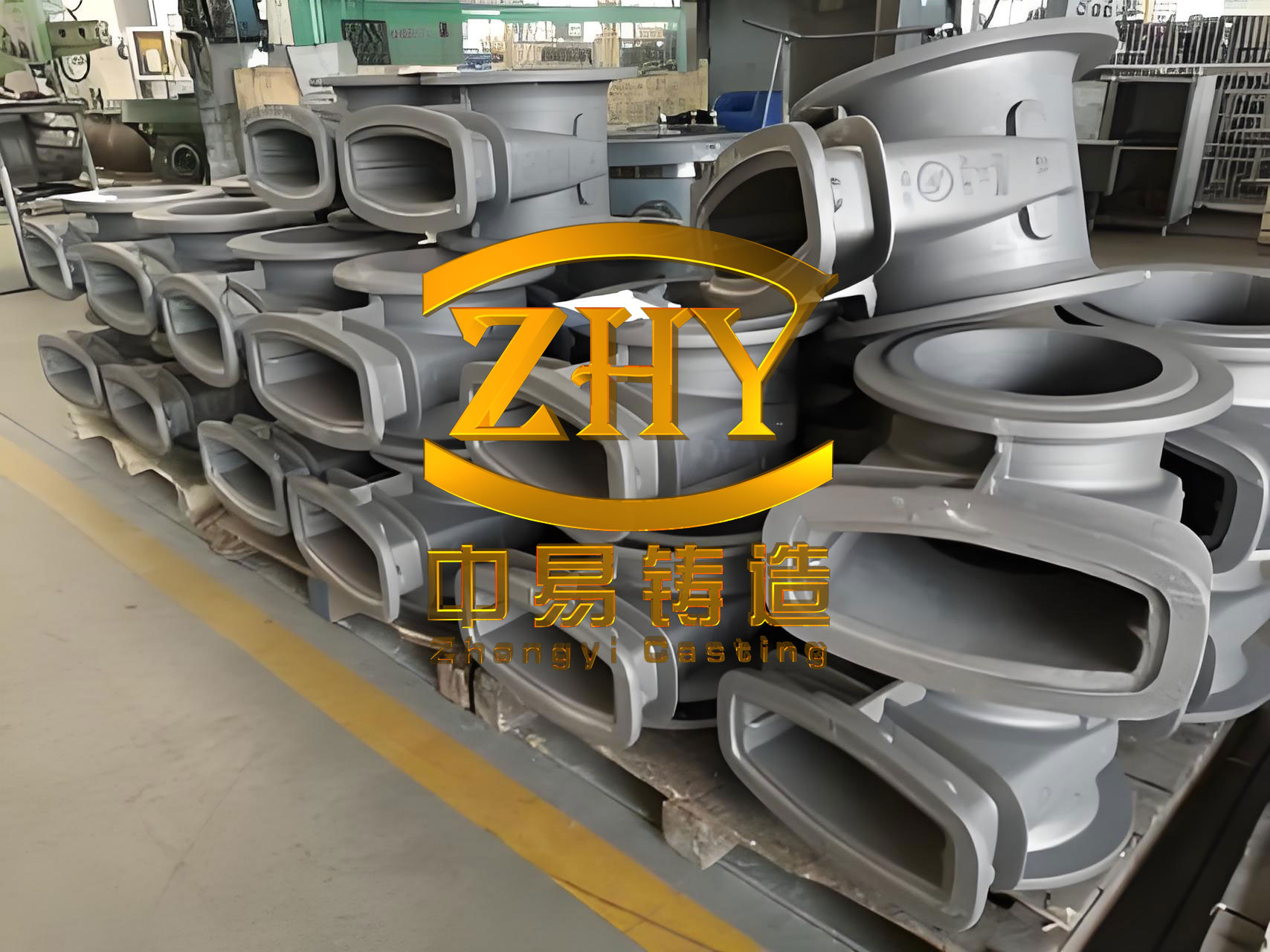
The influence of individual tramp elements on grey iron casting is multifaceted and can be profoundly detrimental. To provide a systematic overview, I have compiled their effects, sources, and typical concentrations in the following table. This synthesis is based on both foundry practice and metallurgical analysis.
| Element | Main Sources | Typical Content (wt.%) | Key Effects on Microstructure & Properties |
|---|---|---|---|
| Lead (Pb) | Pig iron, scrap steel, non-ferrous residues, fluorite, copper alloys. | 0.001 – 0.01 | Promotes highly irregular graphite forms (e.g., bayonet, claw, Widmanstätten). Increases chill depth dramatically. Suppresses eutectic cell growth. Lowers tensile strength, bending strength, and deflection while increasing hardness. Poses a severe risk of catastrophic failure in heavy sections. |
| Arsenic (As) | Contaminated scrap steel, pig iron, copper alloys. | 0.01 – 0.1 | Promotes undercooled graphite (Type D). Stabilizes pearlite completely at very low levels. Above ~0.1%, leads to network structures, increased phosphide eutectic, and a significant drop in mechanical properties, especially the quality index. Strongly associated with cracking in complex castings. |
| Tin (Sn) | Ladle additions, alloyed scrap, chill coatings. | 0.01 – 0.1 | Causes graphite curdling and spider-web formation. A potent pearlite stabilizer; its effect is interdependent with carbon equivalent. Can increase tensile strength and hardness at low levels (<0.1%) but degrades the metallurgical quality factor. |
| Aluminum (Al) | Ferroalloys, contaminated scrap. | 0.01 – 0.1 | Strong graphitizer, reduces chill. Can increase strength and decrease hardness. However, it is a notorious cause of pinhole porosity, with as little as 0.01% being problematic, especially in the presence of titanium. |
| Antimony (Sb) | Trace in scrap, impurities in enameling alloys. | 0.001 – 0.01 | Refines graphite but can promote aberrant forms. An extremely strong pearlite stabilizer (0.02-0.05% gives full pearlite). Increases tensile strength at low levels but reduces it at higher concentrations. |
| Bismuth (Bi) | Common ladle addition. | 0.001 – 0.01 | Inhibits eutectic cell growth, increases undercooling, promotes Type D and network graphite. Sharply increases chill tendency. |
| Boron (B) | Intentional additions, pig iron, enameled scrap. | 0.001 – 0.01 | Increases eutectic cell count. A powerful chill promoter; >0.01% increases chill depth. Can lead to massive carbides. In nitrogen-saturated melts, it may aid nucleation via BN formation. |
| Chromium (Cr) | Alloyed scrap, ladle additions. | 0.05 – 0.5 | Suppresses ferrite, ensures pearlite, increases strength, hardness, and wear resistance. Has a strong chill tendency; excess leads to carbides at edges, impairing machinability. |
| Phosphorus (P) | Certain pig irons, scrap. | 0.02 – 0.5 | Forms phosphide eutectic, increases hardness and brittleness, improves fluidity. |
| Sulfur (S) | Coke, carburizers, scrap iron. | 0.02 – 0.15 | In low amounts, increases cell count via MnS nuclei. High levels suppress cell growth and increase chill. Above ~0.12%, stabilizes pearlite. |
| Tellurium (Te) | Ladle additions, alloyed scrap. | 0.0005 – 0.005 | Severely inhibits eutectic cell growth, promotes undercooling, Type D, and network graphite. Intensely increases chill; 0.01% can produce a fully white iron casting. Greatly reduces strength and machinability. |
| Selenium (Se) | Carried in by scrap. | Trace | Similar to S and Te: increases undercooling and cell count. Coarsens graphite and promotes compacted flakes. Effect is aggravated by the presence of Bi. |
| Titanium (Ti) | Present in some pig irons. | 0.01 – 0.1 | >0.025% promotes graphitization, but >0.15% increases chill. Reduces cell count, promotes Type D graphite. At 0.05-0.15%, can enhance the efficacy of inoculation. |
| Vanadium (V) | Pig iron, scrap, returns. | 0.05 – 0.3 | Powerful carbide stabilizer, impedes graphitization. Indirectly stabilizes pearlite, refines eutectic grains, and homogenizes graphite distribution. |
| Zinc (Zn) | Carried in by scrap. | 0.001 – 0.01 | No significant effect on graphite morphology. Promotes ferrite formation. |
| Calcium (Ca) | Present in ferroalloys. | Trace | Increases eutectic cell count. In larger amounts, increases chill depth and enhances the effect of final silicon-based inoculation. |
| Copper (Cu) | Non-ferrous contamination, ladle additions. | 0.1 – 1.0 | Pearlite promoter, reduces ferrite. Increases tensile strength, hardness, and wear resistance. Reduces chill risk in thin sections (about 1/4 the effect of Si). |
| Molybdenum (Mo) | Alloying element in scrap. | 0.1 – 0.5 | Stabilizes pearlite, increases hardness, and mildly promotes carbide formation. |
| Nitrogen (N) | Air exposure in electric arc melting. | 0.004 – 0.015 | Stabilizes carbides, slightly increases chill. Inhibits ferrite, promotes full pearlite. High levels can promote compacted graphite in slowly cooled castings. Increases nucleation and cell count. Excess causes porosity, pinholes, and cracks. |
| Hydrogen (H2) | Moisture in linings, air exposure. | 0.0001 – 0.0005 | Increases chill tendency and is a primary cause of pinhole porosity. |
The quantitative interplay of these elements in a grey iron casting can be modeled to predict overall behavior. I often employ a conceptual framework based on the weighted sum of concentrations for elements grouped by their dominant effect. Let the total concentration of all relevant tramp elements be defined as:
$$ \Sigma T = \sum_{i} C_i $$
where $C_i$ is the concentration of an individual tramp element. We can then define several functional sums:
Graphitizing Elements ($\Sigma G$): Elements like Al, Cu (weakly), and, within limits, Ti.
$$ \Sigma G = k_{G1}C_{Al} + k_{G2}C_{Cu} + … $$
Anti-graphitizing (Chill-Promoting) Elements ($\Sigma AG$): Elements like Cr, V, Te, Bi, B.
$$ \Sigma AG = k_{AG1}C_{Cr} + k_{AG2}C_{V} + k_{AG3}C_{Te} + … $$
Graphite Eutectic Refining Elements ($\Sigma GE$): Elements that promote undercooling and fine graphite, such as S (in low amounts), Ca, N.
$$ \Sigma GE = k_{GE1}C_{S} + k_{GE2}C_{Ca} + k_{GE3}C_{N} + … $$
Graphite Coarsening/Destabilizing Elements ($\Sigma GC$): Elements leading to irregular forms, like Pb, As, Sn.
$$ \Sigma GC = k_{GC1}C_{Pb} + k_{GC2}C_{As} + k_{GC3}C_{Sn} + … $$
Pearlite Stabilizing Elements ($\Sigma PS$): Elements like Sn, Sb, As, Cu, Cr, Mo.
$$ \Sigma PS = k_{PS1}C_{Sn} + k_{PS2}C_{Sb} + k_{PS3}C_{As} + k_{PS4}C_{Cu} + … $$
The coefficients $k$ are empirical factors representing the relative potency of each element. The quality and performance of a grey iron casting can often be correlated with ratios of these sums. For instance, a high value of $\Sigma PS / \Sigma T$ typically correlates with high hardness and tensile strength but may reduce ductility. A high $\Sigma AG / \Sigma T$ ratio predicts severe chill problems. The formation of undesirable graphite shapes is strongly linked to the magnitude of $\Sigma GC$. Therefore, monitoring and controlling these cumulative parameters is crucial for consistent production of high-quality grey iron casting.
The mechanical properties, particularly the tensile strength ($\sigma_t$), can be semi-empirically related to base composition and these impurity sums. A modified form of the classic relationship might be:
$$ \sigma_t (MPa) = A \cdot (\%C.E.)^{-1} + B \cdot (\Sigma PS) – C \cdot (\Sigma GC) – D \cdot (\Sigma AG) + E $$
where $A, B, C, D, E$ are constants, and $\%C.E.$ is the carbon equivalent. This underscores how tramp elements directly modulate the fundamental properties of grey iron casting.
Given the significant risks, implementing robust countermeasures is essential in grey iron casting operations. Based on my practice, the following methods are effective in mitigating or eliminating the hazards posed by tramp elements.
| Method | Procedure & Rationale | Effectiveness Against Elements |
|---|---|---|
| Strict Charge Control | Meticulously source and classify all raw materials. Use pig iron from known origins with low tramp element levels. Segregate scrap by source to predict potential contaminants. Perform regular chemical analysis on returns to monitor accumulation. Avoid using baled turnings or mixed non-ferrous scrap without thorough inspection. | Universal prevention. Particularly crucial for Pb, As, Sn, Cu, Cr, Mo. |
| Dilution with Clean Charge | When tramp element levels are elevated, blend the charge with known clean, high-purity base iron or steel scrap to reduce the concentration below the harmful threshold. | Universal. A fundamental method for controlling all tramp elements. |
| Elevated Superheating & Holding | Increase the melt temperature significantly above the pouring temperature and hold for a period. This facilitates the volatilization of low-boiling-point elements like Lead (Pb) and Zinc (Zn). Remelting of contaminated pig iron can also help remove some volatiles. | Highly effective for Pb, Zn. Partially effective for others. |
| Treatment with Rare Earth Silicon Alloys | Additions of rare earth-containing ferrosilicon (e.g., FeSiRE) to the ladle. Rare earths form stable, high-melting-point compounds with elements like Pb, As, and Bi, neutralizing their harmful effects on graphite morphology and reducing cracking tendency. This is especially potent in high carbon equivalent grey iron casting. | Very effective for Pb, As, Bi, and related crack-promoters. |
| Inoculation Practice | Employ powerful inoculants. Standard FeSi inoculation can mitigate some effects. Specific inoculants are more targeted:
|
Te (via Bi-FeSi). Pb, As (via Zr/Ba-FeSi). General improvement in graphite structure counters the effects of many undercooling promoters. |
| Atmosphere & Moisture Control | Ensure dry furnace and ladle linings. Minimize exposure of molten metal to humid air. Use dry, preheated charge materials. This directly reduces hydrogen pick-up, preventing associated pinholes and chill. | Essential for controlling H2. |
In conclusion, the successful production of reliable grey iron casting hinges on a deep understanding of tramp element metallurgy. These elements are not mere contaminants but active participants in the solidification and transformation processes, capable of overriding the effects of primary element adjustments. A proactive, two-pronged strategy is indispensable: first, rigorous prevention through charge control and process hygiene to minimize their introduction; second, the ready application of corrective metallurgical treatments like rare earth addition or specialized inoculation when they are inevitably present. By quantifying their combined effects through parameters like $\Sigma T$ and its derivative ratios, and by implementing the mitigation measures outlined, foundries can consistently produce grey iron casting with predictable microstructure, superior mechanical properties, and freedom from catastrophic defects. This level of control is non-negotiable for critical applications where the integrity of the grey iron casting is paramount to safety and performance.