
In my extensive experience within the foundry industry, addressing casting defects in lead bronze bimetallic bushings has been a critical focus. Lead bronze is an exceptional wear-resistant material, ideal for high-speed, high-load, and high-temperature applications, such as in aircraft engines and other power units. Its unique property—where lead melts during lubrication failure to provide emergency lubrication—prevents machine breakdowns. However, due to the low strength of copper-lead alloys, they must be cast onto a steel base using bimetallic methods, which introduces significant complexities and historically led to high rejection rates, often around 50%. Through systematic improvements, we have enhanced process stability, reducing defects like lead segregation, gas pores, and slag inclusions. This article delves into these casting defects, offering detailed analyses and solutions from a first-person perspective, with an emphasis on practical measures and technical insights.
Casting defects are pervasive challenges in metallurgy, and for lead bronze bushings, they manifest primarily as lead segregation, gas porosity, and slag inclusion. These defects compromise mechanical integrity, wear resistance, and overall component reliability. Our approach involved rigorous experimentation and process optimization, leveraging data-driven methods to mitigate these issues. Below, I explore each defect category, incorporating tables and formulas to summarize key parameters and relationships, ensuring a comprehensive understanding of defect elimination strategies.
Lead Segregation Problem
Lead segregation is a fundamental casting defect in copper-lead alloys, arising from the immiscible nature of lead in copper. Lead does not form compounds or solid solutions with copper; instead, it exists as a mechanical mixture. During solidification, lead’s higher density (11.34 g/cm³ compared to copper’s 8.96 g/cm³) and lower melting point (327°C vs. 1085°C for copper) cause it to precipitate as coarse particles, leading to non-uniform distribution. This segregation defect severely impacts wear performance and structural homogeneity. We identified two main issues: unstable chemical composition and coarse lead particle formation.
Initially, our alloy compositions fluctuated, with lead content often exceeding the intended range. For standard lead bronze, the target was 25-30% lead, but analysis showed averages up to 35%, prompting adjustments. We stabilized compositions by reducing lead charge to 20-25% and implementing controlled melting practices. The inverse relationship between melting losses and segregation can be expressed via a mass balance equation: $$ \Delta [Pb] = [Pb]_{\text{initial}} – [Pb]_{\text{final}} = k \cdot t \cdot e^{-E_a/(RT)} $$ where $\Delta [Pb]$ is the change in lead content, $k$ is a rate constant, $t$ is melting time, $E_a$ is activation energy, $R$ is the gas constant, and $T$ is temperature. This highlights how prolonged melting increases lead enrichment due to copper oxidation.
To combat coarse lead particles, we adopted multiple strategies. First, we produced intermediate alloy ingots with rapid cooling. The cooling rate $\frac{dT}{dt}$ is critical, and we achieved rates exceeding 100°C/s using dual-sided water quenching. The solidification time $t_s$ can be estimated using Chvorinov’s rule: $$ t_s = C \left( \frac{V}{A} \right)^2 $$ where $C$ is a mold constant, $V$ is volume, and $A$ is surface area. By using small ingot molds (50 mm × 100 mm × 100 mm), we minimized $V/A$, reducing $t_s$ to under 10 seconds, effectively suppressing lead coalescence.
Second, we optimized mold design to enhance cooling. For bushings under 100 mm diameter, we shifted from solid top-pouring to hollow side-pouring with iron sleeves, while larger bushings used graphite core bottom-pouring. This altered thermal gradients, promoting directional solidification. The temperature distribution $T(x,t)$ during cooling can be modeled with the heat equation: $$ \frac{\partial T}{\partial t} = \alpha \nabla^2 T $$ where $\alpha$ is thermal diffusivity. Spray cooling parameters were refined: nozzle diameter increased to 5 mm, distance reduced to 400 mm, water pressure set at 0.5-1.0 atm, and air pressure at 4-5 atm. This generated fine mist, cooling large bushings from 1000°C to room temperature in 20 seconds, versus 60 seconds previously.
Third, we standardized stirring: for melts under 50 kg at 1200°C, stirring at 200 revolutions per 30 seconds yielded optimal homogeneity. The stirring effectiveness $E_s$ relates to shear rate $\gamma$: $$ E_s \propto \gamma \cdot t_s^{1/2} $$ ensuring lead dispersion before solidification.
Fourth, adding third elements like silver (1.0-1.5%) refined microstructure. Silver forms fine Cu-Ag phases that pin lead particles, described by the Zener pinning model: $$ r = \frac{4\gamma}{3G} $$ where $r$ is particle radius, $\gamma$ is interfacial energy, and $G$ is grain boundary energy. This yielded uniform lead distribution, as verified metallographically.
Key parameters for lead segregation control are summarized in Table 1.
| Parameter | Original Value | Optimized Value | Impact on Casting Defects |
|---|---|---|---|
| Lead Charge (%) | 25-30 | 20-25 | Reduces over-enrichment defect |
| Ingot Cooling Rate (°C/s) | 10-20 | >100 | Minimizes segregation defect |
| Spray Cooling Time (s) | 60 | 20 | Enhances solidification rate |
| Stirring Speed (rpm) | 100 | 400 | Improves lead dispersion |
| Silver Addition (%) | 0 | 1.0-1.5 | Refines microstructure, reduces defects |
These measures collectively reduced lead segregation defects to negligible levels, with rejection rates dropping from 30% to under 5%.
Gas Porosity Problem
Gas porosity is a prevalent casting defect in lead bronze, primarily due to hydrogen and oxygen absorption during melting and pouring. Hydrogen solubility in copper increases with temperature, following Sieverts’ law: $$ C_H = k_H \sqrt{P_{H_2}} \cdot e^{-\frac{\Delta H}{RT}} $$ where $C_H$ is hydrogen concentration, $k_H$ is a constant, $P_{H_2}$ is hydrogen partial pressure, $\Delta H$ is enthalpy of solution, $R$ is the gas constant, and $T$ is temperature. Conversely, oxygen content inversely affects hydrogen, as shown in equilibrium diagrams: $$ [H] \cdot [O] = K \cdot e^{-Q/(RT)} $$ where $K$ and $Q$ are constants. This interplay leads to steam reaction defects: $$ \text{Cu}_2\text{O} + \text{H}_2 \rightarrow 2\text{Cu} + \text{H}_2\text{O} \uparrow $$ generating water vapor pores.
We observed two pore types: macro-pores (1-5 mm diameter, smooth surface) and micro-porosity clusters (visible in radiography). To eliminate these casting defects, we implemented five core strategies.
First, raw material cleanliness was enforced. Electrolytic copper, often contaminated with hydrated copper sulfate, was sandblasted to remove oxides and moisture. The moisture content $M$ must satisfy: $$ M < 0.01\% $$ to prevent hydrogen sources.
Second, graphite crucibles and tools were thoroughly dried. Preheating at 200°C proved insufficient; we adopted high-temperature preheating at 800°C followed by molten copper washing. The dehydration reaction: $$ \text{H}_2\text{O (bound)} \rightarrow \text{H}_2 \uparrow + \frac{1}{2}\text{O}_2 \uparrow $$ occurs above 500°C, eliminating hidden moisture.
Third, cover agents like charcoal were used correctly. Charcoal, a neutral cover, prevents oxidation but can absorb moisture. We pre-roasted charcoal at 800°C until red-hot, ensuring carbon activity $a_C > 0.9$ to maintain reducing atmosphere: $$ \text{C} + \text{O}_2 \rightarrow \text{CO}_2 $$ $$ \text{CO}_2 + \text{C} \rightarrow 2\text{CO} $$
Fourth, deoxidation with phosphor copper (8-10% P) was optimized. Phosphorus reacts vigorously with oxygen: $$ 5\text{Cu}_2\text{O} + 2\text{P} \rightarrow 10\text{Cu} + \text{P}_2\text{O}_5 \uparrow $$ We added 0.05-0.10% P based on alloy weight, split into two stages (after melting and before pouring). The residual phosphorus $[P]_{\text{res}}$ is controlled: $$ [P]_{\text{res}} = [P]_{\text{added}} – \frac{2}{5}[O]_{\text{initial}} $$ keeping it below 0.1% to avoid brittleness.
Fifth, we adopted fast melting and low-temperature pouring. Previously, melting in silicon carbide furnaces took over 60 minutes; we switched to high-temperature batch cycling at 1300°C, reducing melt time to 5-10 minutes per crucible. The hydrogen pickup rate $\frac{dC_H}{dt}$ is proportional to melt time: $$ \frac{dC_H}{dt} = A \cdot e^{-B/T} $$ so shorter times minimized gas defects. Pouring temperature was kept at 1050-1100°C, below the critical 1200°C where hydrogen solubility spikes.
Table 2 summarizes gas porosity mitigation parameters.
| Factor | Previous Condition | Improved Condition | Effect on Casting Defects |
|---|---|---|---|
| Melting Time (min) | >60 | 5-10 | Reduces hydrogen absorption defect |
| Pouring Temperature (°C) | 1150-1200 | 1050-1100 | Lowers gas solubility |
| Crucible Preheating (°C) | 200 | 800 | Eliminates moisture-related defects |
| Charcoal Treatment | As-received | Pre-roasted at 800°C | Prevents oxidation and gas generation |
| Phosphorus Addition (%) | 0.1-0.2 | 0.05-0.10 | Controls deoxidation without over-treatment |
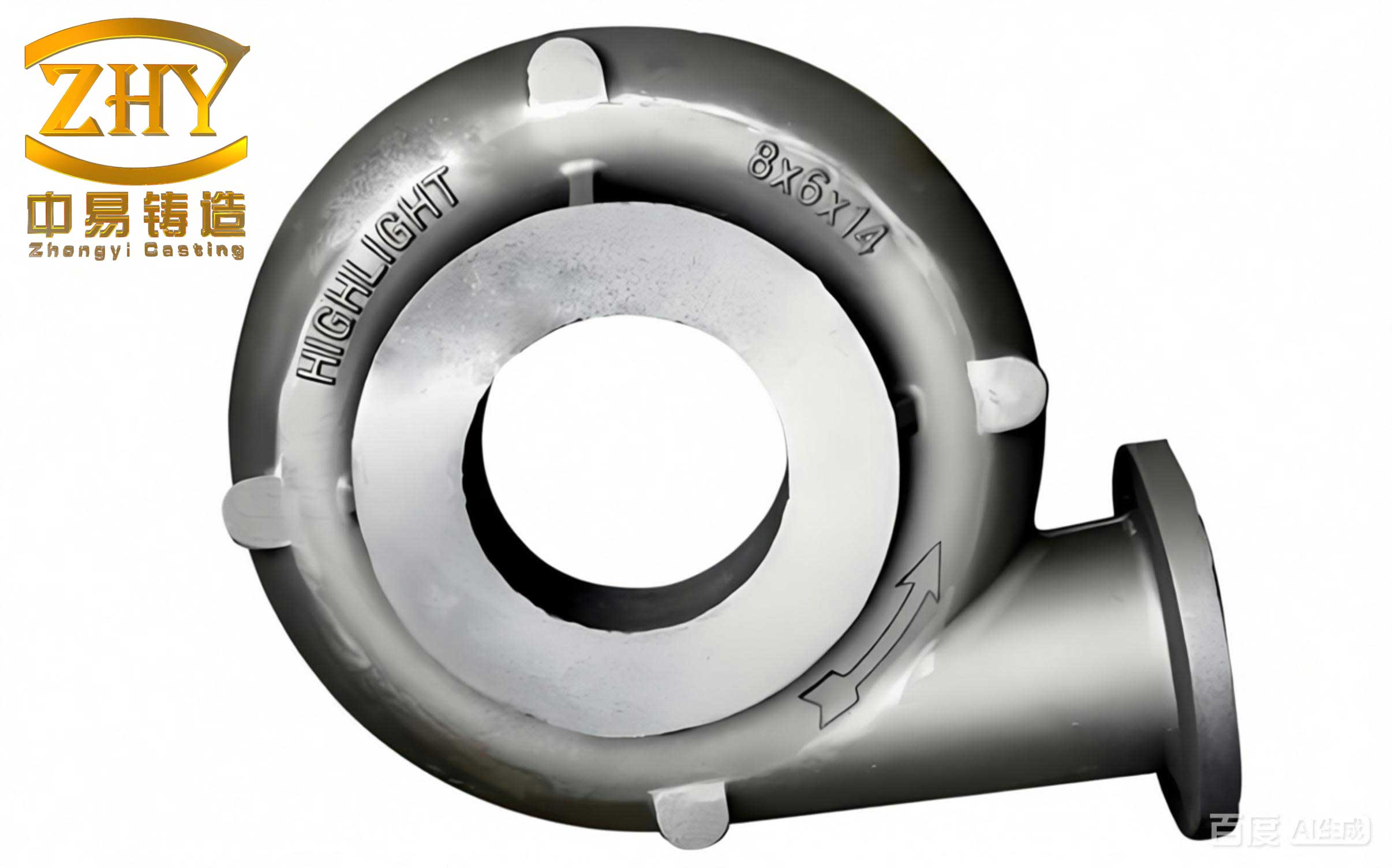
These steps slashed gas porosity defects, raising yield from 70% to over 95%. The image below illustrates typical gas pore manifestations in casting defects, emphasizing the need for stringent process control.
Slag Inclusion Problem
Slag inclusion, another critical casting defect, involves entrapment of non-metallic materials like flux residues, oxides, or foreign particles. In lead bronze bushings, slag defects often appear as black patches at the copper-steel interface, visible in radiography and metallography. We categorized slag sources: flux slag (from borax coatings), oxidation slag (from steel base oxidation), and foreign object slag.
Flux slag resulted from borax coating spallation during preheating. Borax (Na₂B₄O₇) decomposes at high temperatures: $$ \text{Na}_2\text{B}_4\text{O}_7 \cdot 10\text{H}_2\text{O} \rightarrow \text{Na}_2\text{B}_4\text{O}_7 + 10\text{H}_2\text{O} \uparrow $$ If coating peels, exposed steel oxidizes, and residual borax gets trapped. We addressed this by enhancing cleaning: steel bushings were degreased and washed to remove oils, and borax solution concentration was controlled to 30-40% for uniform thin coatings. The coating thickness $d$ should satisfy: $$ d < 0.1 \text{ mm} $$ to prevent flaking.
Oxidation slag arose from localized steel oxidation due to uneven heating. We adjusted preheating in induction furnaces, maintaining a distance over 200 mm from heating elements to avoid hotspots. The oxidation rate follows a parabolic law: $$ \frac{dx}{dt} = k_p \cdot e^{-E_p/(RT)} $$ where $x$ is oxide thickness, and $k_p$ and $E_p$ are constants. By keeping preheating temperature at 900-950°C with uniform airflow, we minimized oxidation.
Foreign object slag was prevented through rigorous housekeeping: sealed storage of materials, filtered ladles, and clean molding areas. The probability of inclusion $P_{\text{inc}}$ relates to particle count $N$: $$ P_{\text{inc}} = 1 – e^{-\lambda N} $$ where $\lambda$ is a contamination rate; we reduced $N$ via clean protocols.
Key measures for slag defect reduction are in Table 3.
| Slag Type | Root Cause | Corrective Action | Impact on Casting Defects |
|---|---|---|---|
| Flux Slag | Borax coating spallation | Controlled coating thickness and adhesion | Eliminates flux entrapment defect |
| Oxidation Slag | Steel base oxidation | Uniform preheating, reduced hotspots | Minimizes oxide inclusion defect |
| Foreign Object Slag | Contamination during handling | Enhanced cleanliness and filtration | Prevents external particle defects |
After implementation, slag inclusion defects became rare, contributing to overall quality stability.
Comprehensive Process Integration
To sustainably eliminate casting defects, we integrated all improvements into a cohesive process framework. The interaction between parameters can be modeled using multivariate analysis. For instance, the overall defect probability $P_{\text{defect}}$ can be expressed as: $$ P_{\text{defect}} = f(T, t, C, S) = \alpha \cdot e^{-\beta T} + \gamma \cdot t + \delta \cdot \Delta C + \epsilon \cdot S^{-1} $$ where $T$ is temperature, $t$ is time, $C$ is composition variance, $S$ is stirring intensity, and $\alpha, \beta, \gamma, \delta, \epsilon$ are coefficients. By optimizing these variables, we achieved a robust process.
We also developed real-time monitoring for key metrics like cooling rate and hydrogen content. The use of thermal sensors and gas analyzers allowed feedback control, ensuring consistency. For example, the critical cooling rate $R_c$ to avoid lead segregation is: $$ R_c = \frac{T_l – T_s}{t_c} $$ where $T_l$ is liquidus temperature (950°C for lead bronze), $T_s$ is solidus temperature (900°C), and $t_c$ is critical time (5 seconds). Our spray system exceeded $R_c = 10°C/s$, guaranteeing fine microstructure.
Furthermore, we conducted statistical process control (SPC) to track defect trends. Control charts for lead content and pore counts showed stable processes within specification limits. The process capability index $C_pk$ improved from 0.8 to 1.5, indicating reduced variability in casting defects.
Conclusion and Future Outlook
Through systematic addressing of casting defects, we have transformed the production of lead bronze bimetallic bushings. Lead segregation, gas porosity, and slag inclusion—once major sources of rejection—are now well-controlled, with overall defect rates plummeting from 50% to below 5%. Our approach combined fundamental metallurgical principles with practical innovations, such as rapid cooling, optimized melting, and additive engineering.
Looking ahead, continuous improvement is essential. Emerging techniques like computational fluid dynamics (CFD) for mold filling simulation and advanced non-destructive testing can further refine defect detection. The general equation for defect minimization in casting processes can be extended: $$ \text{Defect Score} = \sum_{i=1}^{n} w_i \cdot X_i $$ where $w_i$ are weights for factors like temperature control, material purity, and cooling efficiency, and $X_i$ are normalized parameter values. By leveraging such models, we aim to push defect rates near zero.
In summary, the battle against casting defects is ongoing, but with diligent process optimization and data-driven strategies, high-quality lead bronze bushings are achievable. Our experience underscores that understanding material behavior, controlling environmental variables, and embracing technological aids are key to eliminating these pervasive casting defects.