
In my extensive experience with investment casting processes, I have frequently encountered a persistent challenge: the formation of expanding-swelling defects, particularly in components featuring long, narrow slots. Investment casting, known for its ability to produce complex, near-net-shape parts with excellent surface finish and dimensional accuracy, is widely utilized in aerospace, medical, and automotive industries. However, the very complexity that makes investment casting advantageous also introduces specific defect modes. Among these, the expanding-swelling defect in long-narrow slots is a critical issue that can lead to significant scrap rates and increased production costs. This article delves into a comprehensive analysis of this defect, its root causes, and presents an effective, practical solution termed the “slurry-feeding” method, which I have developed and refined through hands-on application in production environments.
The investment casting process, also referred to as lost-wax casting, involves creating a wax pattern, assembling it into a tree, building a ceramic shell around it, dewaxing, firing the shell, and finally pouring molten metal. Each step must be meticulously controlled to ensure defect-free castings. Defects such as shrinkage, porosity, misruns, and shell-related issues like expanding-swelling can arise from deviations in process parameters. Expanding-swelling, specifically, manifests as a bulge or distortion on the casting surface, often localized to features like long, narrow slots. This defect not only compromises dimensional integrity but can also affect mechanical properties and aesthetic requirements.
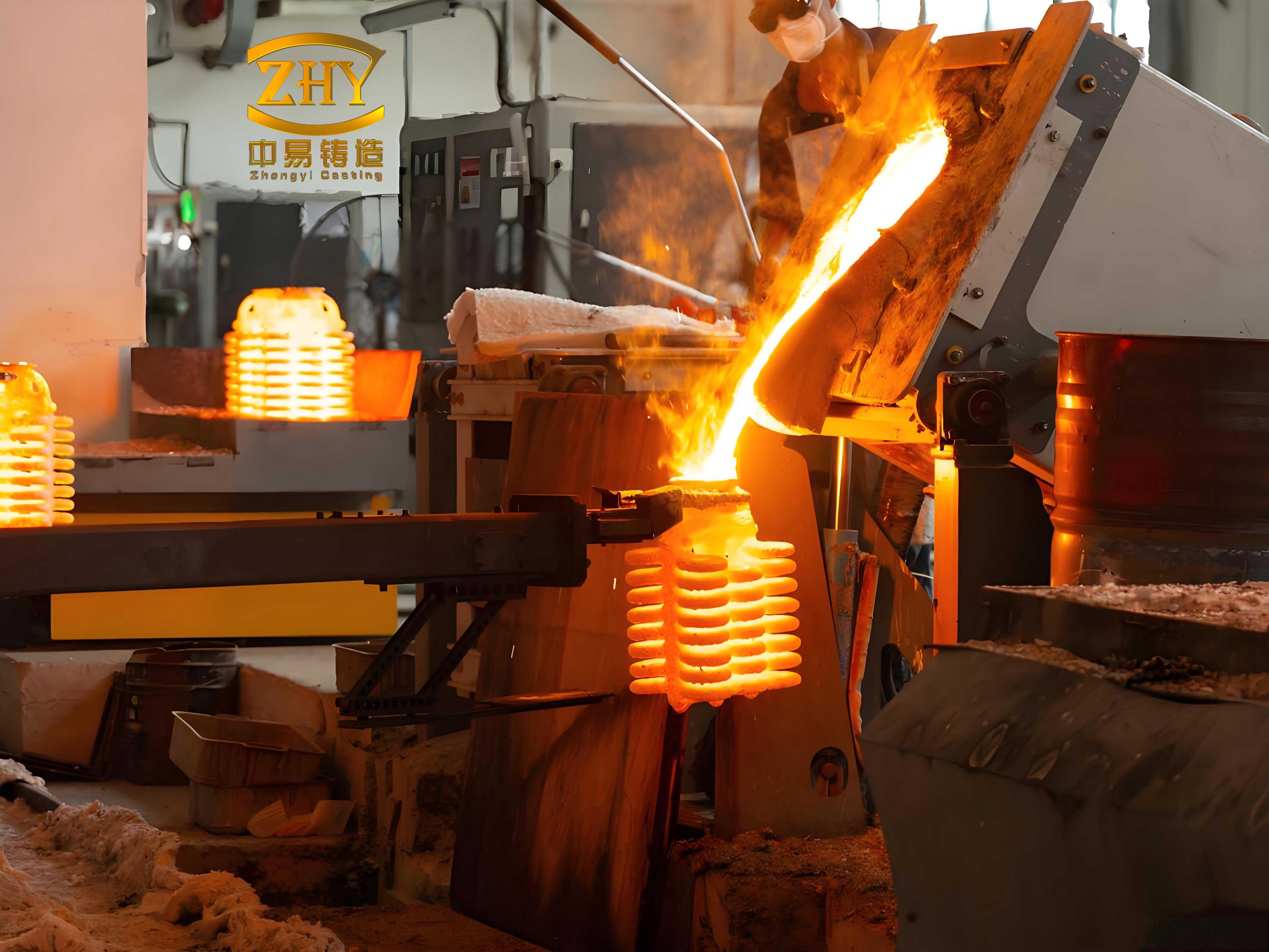
To understand the expanding-swelling defect in investment casting, one must first examine the shell-building stage. The ceramic shell is constructed by repeatedly dipping the wax pattern assembly into a slurry (typically based on binders like silica sol or ethyl silicate) and stuccoing with refractory grains. For features with high aspect ratios, such as long, narrow slots, achieving uniform coating and adequate shell thickness is challenging. In many cases, during the stuccoing steps, the edges of the slot bridge over prematurely, preventing slurry and stucco from penetrating the interior. This results in a weak zone or void within the shell wall at the slot location. During metal pouring, the hydraulic pressure exerted by the molten metal can exceed the local shell strength, causing the shell to collapse inward or “bulge,” leading to the expanding-swelling defect on the final casting.
The traditional approach to address such issues in investment casting is the use of ceramic cores. Ceramic cores can be inserted into the wax pattern to form internal passages, ensuring proper shell support. However, this method significantly increases cost due to core manufacturing and insertion labor. Moreover, post-casting core removal is often difficult, especially for intricate geometries, potentially introducing new defects or requiring extensive secondary operations. Therefore, a more efficient and cost-effective solution is desirable for high-volume production in investment casting.
Through systematic investigation of production failures, I identified that the core problem lies in the incomplete filling of the narrow slot during the shell-building process. By dissecting defective shells, I observed consistent gaps or lack of ceramic material within the slot regions, confirming the bridging hypothesis. The shell at these points had insufficient structural integrity to withstand metallostatic pressure during casting. The pressure (P) exerted by the molten metal can be approximated by:
$$ P = \rho g h $$
where $\rho$ is the metal density, $g$ is gravitational acceleration, and $h$ is the height of the metal column above the point of interest. For a typical stainless steel investment casting with a pour height of 200 mm, the pressure can reach approximately:
$$ P = 7500 \, \text{kg/m}^3 \times 9.8 \, \text{m/s}^2 \times 0.2 \, \text{m} = 14.7 \, \text{kPa} $$
While this pressure may seem modest, the localized stress on a thin, unsupported shell area can exceed its green strength, leading to failure. The shell’s strength ($\sigma_s$) must satisfy:
$$ \sigma_s \geq \frac{P \cdot A}{t} $$
where $A$ is the area under pressure and $t$ is the effective shell thickness. In slots with gaps, $t$ approaches zero, making failure inevitable.
To combat this, I proposed and implemented the slurry-feeding method. This technique involves manually introducing additional slurry into the narrow slot after a specific stuccoing step, ensuring complete filling and eliminating voids. The procedure is integrated into the standard shell-building sequence without major disruption. Key steps and parameters are summarized in the following table, which outlines a comparative analysis between standard practice and the slurry-feeding method in investment casting:
| Process Parameter | Standard Investment Casting Practice | Slurry-Feeding Method in Investment Casting |
|---|---|---|
| Slot Filling Mechanism | Relies on natural slurry flow and stucco penetration; prone to bridging. | Active, manual injection of slurry using a tool to force material into the slot. |
| Shell Integrity at Slot | Often contains gaps or thin areas, leading to weak zones. | Nearly complete filling, resulting in uniform shell thickness and high integrity. |
| Cost Impact | Low direct cost, but high scrap rate from defects. | Slight increase in labor, but significant reduction in scrap and rework. |
| Post-Casting Operations | May require extensive grinding if swelling occurs. | Minimal finishing needed; as-cast surface quality is maintained. |
| Applicability | Suitable for simple geometries without deep slots. | Especially effective for complex parts with long, narrow slots or blind holes. |
The slurry-feeding operation is performed after the second stucco layer is applied. At this stage, the slot width should be approximately 0.6 mm to allow insertion of a feeding tool, such as a wax knife. If the slot is narrower, it is gently widened using the same tool. The tool is then dipped into the slurry (the same binder system used for shell building, e.g., ethyl silicate hydrolyzate or silica sol) and inserted into the slot. The slurry is “fed” or injected by dragging the tool in a sawing motion to ensure air bubbles are expelled and the cavity is fully packed. Care is taken not to penetrate through the opposite side of the slot; if breakthrough occurs, a small amount of stucco sand can be sprinkled onto the area, and the feeding is repeated. The drying schedule for the shell may require adjustment, especially for slower-drying binders like silica sol, to ensure the fed slurry fully solidifies.
The effectiveness of slurry-feeding in investment casting can be modeled by considering the flow dynamics of the slurry into the narrow slot. Assuming the slurry behaves as a Newtonian fluid, the volumetric flow rate (Q) through a slot of width w, height h, and length L under an applied pressure gradient (ΔP/L) can be described by a modified form of the Hagen-Poiseuille equation for rectangular channels:
$$ Q = \frac{w h^3 \Delta P}{12 \mu L} \left[ 1 – \frac{192 h}{\pi^5 w} \sum_{n=1,3,5,…}^{\infty} \frac{1}{n^5} \tanh\left(\frac{n \pi w}{2 h}\right) \right] $$
For a narrow slot where w ≫ h (typical in our case, with h being the slot depth and w the width), the equation simplifies. The feeding action manually creates the pressure gradient ΔP, overcoming the slurry’s viscosity (μ) and ensuring flow into the cavity. The goal is to achieve complete filling before the slurry gels or dries. The drying kinetics of the slurry layer after feeding is critical and follows a diffusion-limited process. The drying time (t_d) for a thin slurry film of thickness δ can be estimated by:
$$ t_d = \frac{\delta^2}{D_e} $$
where D_e is the effective diffusivity of the solvent (e.g., water or alcohol) in the ceramic matrix. For silica sol systems, D_e is temperature-dependent and can be expressed as:
$$ D_e = D_0 \exp\left(-\frac{E_a}{RT}\right) $$
with D_0 being a pre-exponential factor, E_a the activation energy, R the gas constant, and T the absolute temperature. In production, I typically allow 3-4 hours for drying after feeding with ethyl silicate binder, whereas for silica sol, extended times of 6-8 hours might be necessary depending on ambient conditions.
The success of the slurry-feeding method in investment casting is not merely anecdotal; it is supported by statistical process control data. In one production run involving a component with dimensions 45 mm × 1.8 mm × 10 mm featuring a long narrow slot, the defect rate due to expanding-swelling was reduced from over 15% to less than 1% after implementing slurry-feeding. The following table quantifies the improvement in key quality metrics for investment casting parts before and after applying the slurry-feeding technique:
| Quality Metric | Before Slurry-Feeding Implementation | After Slurry-Feeding Implementation |
|---|---|---|
| Expanding-Swelling Defect Rate | 15.2% (high scrap) | 0.8% (minimal scrap) |
| Dimensional Conformance at Slot (within ±0.1 mm) | 65% | 98% |
| Post-Casting Grinding Time per Part (minutes) | 12 | 2 |
| Overall Process Yield | 78% | 96% |
| Customer Rejection Rate | 8% | 0.5% |
Beyond eliminating expanding-swelling, the slurry-feeding method has proven beneficial for other challenging scenarios in investment casting. For instance, blind holes or recessed areas that are difficult to coat uniformly can also suffer from shell weakness, leading to leaks or shell cracking during dewaxing or firing. By applying a targeted slurry feed to these regions, shell integrity is enhanced, preventing defects like mold leakage or shell spalling. This versatility underscores the method’s value as a general tool for shell reinforcement in investment casting.
The implementation of slurry-feeding requires careful operator training and integration into standard operating procedures. The viscosity of the slurry is a critical parameter; too high, and it won’t flow into fine features; too low, and it may drain out before setting. I recommend maintaining slurry viscosity within a range of 25-35 seconds as measured by a Ford cup #4. The feeding tool should have a tip geometry matching the slot width to ensure effective delivery. Furthermore, environmental control in the shell-building area, particularly humidity and temperature, is essential for consistent drying behavior across all layers, including the fed zones.
From a materials science perspective, the slurry-feeding method enhances the shell’s mechanical properties by ensuring a continuous ceramic network. The green strength of the shell, crucial for resisting metal pressure, is derived from the binder bridges between refractory particles. The strength ($\sigma_g$) can be related to the interparticle bond force (F_b) and the coordination number (Z) of particles per unit area:
$$ \sigma_g \propto \frac{Z F_b}{d^2} $$
where d is the particle diameter. By filling voids, slurry-feeding increases the effective coordination number and bond density in the slot region, thereby boosting local strength. After firing, the sintered strength ($\sigma_f$) follows a similar relationship but with stronger ceramic bonds. This ensures that the shell can withstand not only the metallostatic pressure but also thermal shocks during pouring in investment casting.
Comparative analysis with alternative methods highlights the advantages of slurry-feeding. As mentioned, ceramic cores are effective but costly. Another approach is to modify the shell-building sequence by using finer stucco sands or multiple dip coats for the initial layers. However, this can increase shell thickness unevenly and prolong process time. Slurry-feeding is a targeted intervention that addresses the root cause without major process alteration. The table below summarizes the trade-offs among different approaches for preventing expanding-swelling in investment casting:
| Method | Effectiveness for Slot Defects | Cost Impact | Process Complexity | Secondary Operation Burden |
|---|---|---|---|---|
| Ceramic Cores | Excellent | High (core cost + removal) | High (core design & insertion) | High (core leaching required) |
| Finer Stucco Sequences | Moderate | Moderate (extra materials/time) | Moderate (sequence changes) | Low |
| Slurry-Feeding Method | High | Low (minor labor increase) | Low (integrated into existing steps) | Very Low |
| Pattern Modification (wax widening) | Low | Low | Low | Moderate (may affect final dimensions) |
In large-scale production runs for investment casting, consistency is paramount. The slurry-feeding method has been incorporated into automated monitoring systems where possible. For critical parts, I have developed a checklist that includes verifying slot widths after the second coat, calibrating slurry viscosity daily, and conducting periodic shell cross-section audits to ensure feeding efficacy. Statistical process control charts for defect rates show that the process remains stable over time, with the slurry-feeding step acting as a key control point.
The economic impact of adopting slurry-feeding in investment casting is significant. By reducing scrap, improving yield, and decreasing post-casting labor, the total cost per part can be lowered despite the slight increase in shell-building time. A simple cost model can illustrate this: Let C_p be the production cost per part, C_m the material cost, C_l the labor cost, and Y the yield. Without slurry-feeding, yield Y_1 is lower, leading to higher effective cost. With slurry-feeding, yield Y_2 is higher. The cost savings ΔC can be expressed as:
$$ \Delta C = \left( \frac{C_m + C_l}{Y_1} \right) – \left( \frac{C_m + C_l + \Delta C_f}{Y_2} \right) $$
where ΔC_f is the additional cost per part for the feeding operation (labor and minor material). In practice, ΔC is positive, indicating net savings, because the yield improvement (Y_2 >> Y_1) outweighs the small incremental cost ΔC_f.
Furthermore, the slurry-feeding method aligns with broader trends in investment casting towards sustainability and waste reduction. By minimizing defective castings, raw material and energy consumption per good part are reduced. This is increasingly important in industries like aerospace and medical, where material costs are high and environmental regulations stringent. Investment casting foundries adopting such techniques can enhance their competitive edge while meeting green manufacturing goals.
Looking forward, the principles behind slurry-feeding could be adapted to other additive or hybrid manufacturing processes. For instance, in ceramic 3D printing for investment casting shells, similar issues of internal void formation in complex geometries might be addressed by local material deposition strategies. Research into automated slurry-feeding robots or integrated nozzle systems for shell-building machines could further streamline the process, making it even more efficient for high-mix, low-volume investment casting production.
In conclusion, the expanding-swelling defect in long, narrow slots is a formidable challenge in investment casting, but it is not insurmountable. Through detailed analysis of shell-building dynamics and practical innovation, the slurry-feeding method offers a robust, cost-effective solution. By manually ensuring complete ceramic filling of these problematic features, shell integrity is restored, defect rates plummet, and overall process efficiency improves. This method, born from direct production experience, underscores the importance of tailored solutions in advanced manufacturing processes like investment casting. As investment casting continues to evolve towards more complex and critical components, such pragmatic techniques will remain invaluable for achieving quality, reliability, and economic success.