
As a leading player among sand casting manufacturers, our organization has long recognized that the casting process is inherently energy-intensive, characterized by high input, high consumption, high cost, and relatively low output. Factors such as small economic scale, low specialization, outdated production processes and technical equipment, poor foundational conditions, backward process design levels, lack of scientific management, and unreasonable equipment configuration with low utilization rates have been primary contributors to the elevated energy consumption in our industry. In recent years, while undergoing product structure adjustments, we have strengthened energy management, actively applied new technologies and equipment, and engaged in energy-saving technological transformations. These efforts have yielded significant economic benefits and positioned us as a benchmark for sustainable practices among sand casting manufacturers.
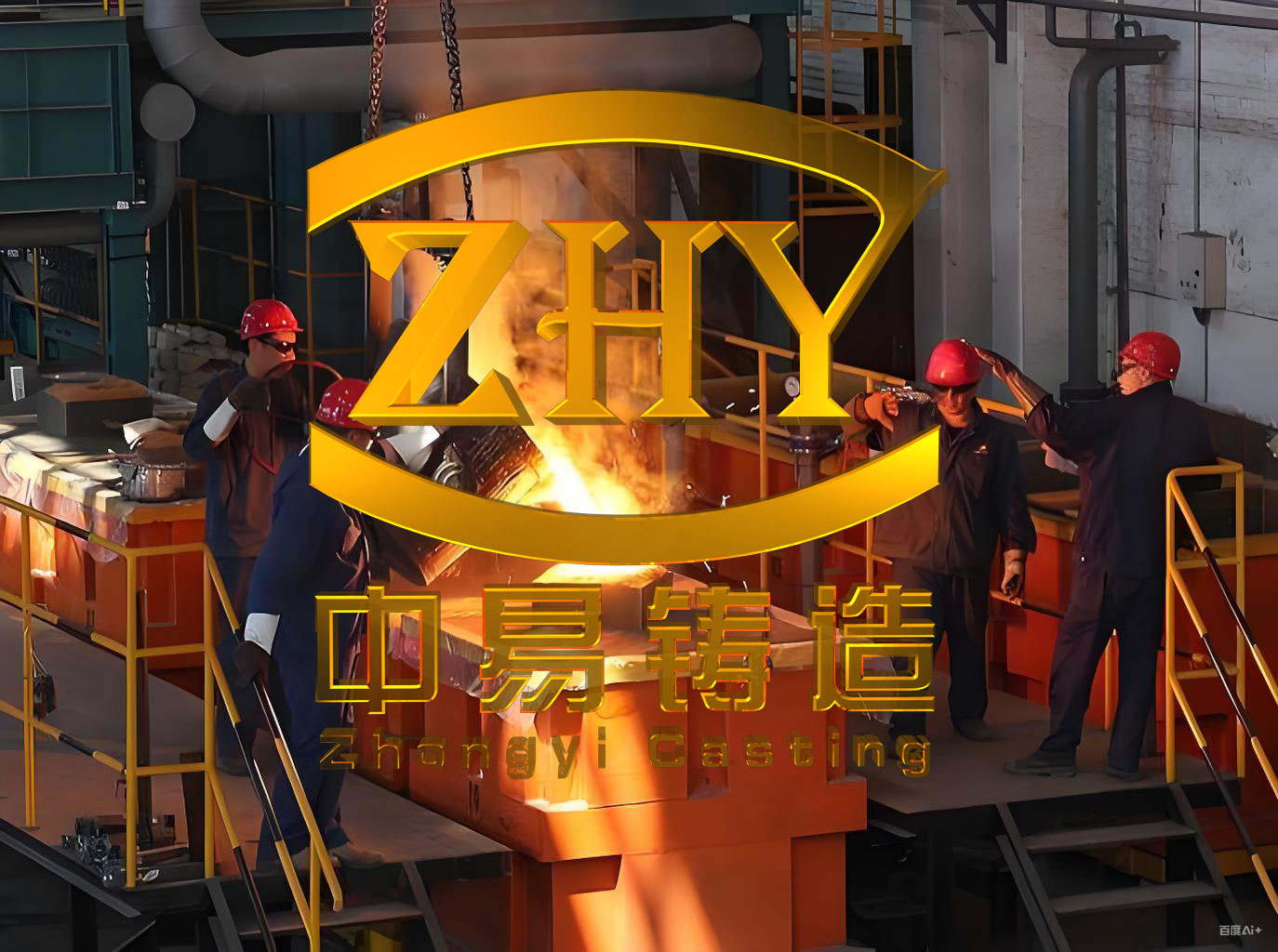
The journey toward energy efficiency is critical for sand casting manufacturers globally, as energy costs constitute a substantial portion of operational expenses. For us, the initial state was one of disorganized energy management: an incomplete energy management system, insufficient energy statistics, an imperfect metering network, and low配备率 of measuring instruments. This made accurate product-wise or production-line-wise statistical analysis impossible. When energy-using units failed to meet budget indicators, identifying root causes was challenging. Energy management was in a crude, extensive stage. To transition to精细化 energy management, we focused our efforts on several key areas, which are essential for any sand casting manufacturers aiming to reduce their carbon footprint and operational costs.
Energy Management System Overhaul
For sand casting manufacturers, establishing a robust energy management framework is the cornerstone of节能 efforts. We aligned our practices with national standards, such as those outlined in国务院’s “Decision on Strengthening Energy Conservation Work” (State Council Document [2006] No. 28), to完善 our energy management system and mechanisms. A three-tier energy management network—”factory-workshop-team”—was established, coupled with strict energy-saving regulations and effective incentive schemes to encourage continuous employee participation in节能改善 activities. This structured approach is vital for sand casting manufacturers to systematically address energy waste.
To quantify and monitor energy flows, we enhanced我们的计量 management. By improving the配备率 of metering devices and perfecting the energy计量 network, especially at the third-tier level (equipment or process level), we laid the groundwork for detailed能耗统计分析. We implemented a real-time energy consumption monitoring system that enables全方位 analysis of energy status, replacing manual reporting that was often delayed. Our management personnel深入现场 to understand the energy consumption status, usage levels,节能潜力, and energy-saving effects of each unit, thereby collecting foundational data for energy management. This data-driven approach is a game-changer for sand casting manufacturers seeking to optimize energy use.
We also developed an energy management evaluation standard, emphasizing目标管理 and强化责任落实. Based on national energy management standards, we诊断 and evaluated our factory and workshops across six dimensions: energy management system, energy foundation management,能耗管理, rational energy use, on-site management, and节能技术进步. This evaluation facilitated gradual improvements in our energy management水平. Through daily tracking, weekly analysis, monthly inspections, reviews, and目标责任考核, we effectively controlled energy consumption across all units. This disciplined framework is recommended for all sand casting manufacturers to ensure accountability.
Focusing on critical areas is another strategy we adopted. We intensified on-site inspections and assessments to eliminate浪费现象 such as leaks, spills, dripping, and poor insulation of melting equipment. Particularly for key energy-consuming units and equipment, we implemented重点监控 to strengthen energy consumption process management. This targeted approach helps sand casting manufacturers prioritize resources where the impact is greatest.
Integrating energy management with Total Productive Maintenance (TPM) has been highly effective. By promoting TPM activities, we improved overall equipment efficiency (OEE). Equipment operators and production managers now consider maximizing equipment load rates during production, minimizing energy waste from idle operation. During low-production periods, we schedule集中生产 and utilize off-peak electricity hours, yielding significant economic and节能效果. This synergy between maintenance and energy management is a best practice for sand casting manufacturers.
Lastly, we emphasized节能宣传 and training to elevate全员节能意识. Energy conservation in sand casting manufacturers is a systemic project that must start with enhancing employee awareness. Through广播,板报, seminars, posters, and标语牌, we conducted persistent节能宣传教育. Activities like energy-saving演讲 and知识竞赛 helped全体员工 recognize the importance of节能. Specialized training for operators of key equipment, such as熔化工, on operational skills and节能方法, further boosted their energy consciousness. Annual节能成果发表会 allowed contributors to share successes, fostering a culture of continuous improvement. This human-centric approach is indispensable for sand casting manufacturers to achieve lasting energy savings.
| Initiative | Key Actions | Expected Impact |
|---|---|---|
| System Establishment | Create three-tier management network; implement strict regulations and incentives. | Improved accountability and structured节能 efforts. |
| Metering Enhancement | Upgrade metering devices; deploy real-time monitoring systems. | Accurate data collection and timely analysis. |
| Evaluation Standards | Develop six-dimension evaluation criteria; conduct regular assessments. | Continuous improvement in management水平. |
| Focus on Critical Units | Intensify inspections; monitor key equipment closely. | Reduction in浪费现象 and optimized energy use. |
| TPM Integration | Promote全员生产性维修; optimize equipment load scheduling. | Higher equipment efficiency and reduced idle energy waste. |
| Awareness Campaigns | Conduct training, workshops, and recognition programs. | Enhanced employee engagement and节能意识. |
Application of Energy-Saving Technologies
Technical节能 is a powerful means for sand casting manufacturers to achieve energy reduction and consumption lowering. By applying “new technologies, new processes, new materials, and new equipment” in节能技术改造, we have continuously decreased our energy consumption. Since 2002, we have implemented several key projects that brought tangible节能效果.
First, we改造了 the heating supply network’s return water system to minimize heat loss. Second, we established a centralized control system for the compressed air network, optimizing pressure levels and reducing compressor energy use. Third, we applied layered combustion technology in boiler coal-saving transformations, improving combustion efficiency. Fourth, we implemented a green lighting project across workshops, promoting the use of energy-efficient lamps. Fifth, we adopted water-saving fixtures to reduce water consumption. Sixth, in the sand processing department, we applied reactive power compensation technology to enhance power factor. Seventh, we utilized variable frequency drive (VFD) technology in ventilation, dust removal equipment, and pump stations to adjust motor speeds according to demand.
These projects were highly targeted and yielded明显的节能效果. For example, in the sand processing department, power factor monitoring revealed values between 0.65 and 0.78, below the required standard. After implementing就地补偿改造, the power factor improved to 0.91–0.94. The energy savings can be calculated using the formula for reactive power compensation savings:
$$ \Delta P = P \times \left( \frac{1}{\cos \phi_1} – \frac{1}{\cos \phi_2} \right) $$
where \( \Delta P \) is the reduction in apparent power demand, \( P \) is the active power, \( \cos \phi_1 \) is the initial power factor, and \( \cos \phi_2 \) is the improved power factor. Assuming an active power load of 1000 kW, with \( \cos \phi_1 = 0.70 \) and \( \cos \phi_2 = 0.93 \), the savings in apparent power are:
$$ \Delta P = 1000 \times \left( \frac{1}{0.70} – \frac{1}{0.93} \right) \approx 1000 \times (1.4286 – 1.0753) \approx 353.3 \text{ kVA} $$
This translates to reduced electricity fees, saving us approximately 130,000 CNY annually. Such technical interventions are crucial for sand casting manufacturers to lower operational costs.
Moreover, with product structure adjustments, our initially configured power equipment became outdated, with some areas having design loads exceeding production needs. Based on电力负荷测算, we报废及更新 multiple transformers, adjusted配电线路负荷, and改造配电所. We reduced the number of transformers by 10 units and decreased total transformer capacity by 22,000 kVA, leading to annual energy cost savings of 5.8 million CNY. These projects not only cut costs but also contributed to our社会责任 in节能减排. This demonstrates how sand casting manufacturers can align economic and environmental goals through strategic upgrades.
| Technology | Application Area | Energy Savings Formula | Annual Savings (Estimated) |
|---|---|---|---|
| Reactive Power Compensation | Sand Processing Department | $$ \Delta E = P \times t \times \left( \frac{1}{\cos \phi_1} – \frac{1}{\cos \phi_2} \right) \times \text{tariff} $$ | 130,000 CNY |
| VFD for Motors | Ventilation and Pumps | $$ E_{\text{savings}} = P_{\text{rated}} \times \left(1 – \left(\frac{f_{\text{new}}}{f_{\text{old}}}\right)^3\right) \times \text{hours} $$ | 200,000 CNY |
| Layered Combustion | Boilers | $$ \eta_{\text{improvement}} = \frac{\eta_{\text{new}} – \eta_{\text{old}}}{\eta_{\text{old}}} \times 100\% $$ | 15% coal reduction |
| Green Lighting | Workshop Lighting | $$ \text{Savings} = (P_{\text{old}} – P_{\text{new}}) \times \text{hours} \times \text{tariff} $$ | 50,000 CNY |
| Transformer Optimization | Power Distribution | $$ \text{No-load loss reduction} = \sum (P_0_{\text{old}} – P_0_{\text{new}}) $$ | 5.8 million CNY |
Focus on Melting Process Energy Conservation
For sand casting manufacturers, the melting process is a major energy consumer, often accounting for a significant portion of total energy use. In our facility, the melting department’s能耗约占全厂总能耗的75%, and melting-related defects contribute highly to scrap rates. Therefore, adopting advanced melting equipment and processes, coupled with stringent energy management, is a primary measure for节能.
We promoted the application of as-cast ductile iron technology. This process eliminates the need for annealing or normalizing treatments, avoiding defects like deformation and oxidation from high-temperature processing, thereby saving energy. In recent years, while adjusting product structures, we improved the application level of as-cast ductile iron工艺 and increased its production比例. Our as-cast rate stabilized above 95%, allowing us to封停4台退火炉 and 4台变压器. Just from变压器封停, we save over 1.9 million CNY annually in energy costs. The energy savings can be expressed as:
$$ E_{\text{saved}} = N_{\text{furnaces}} \times P_{\text{furnace}} \times t_{\text{operation}} \times C_{\text{electricity}} $$
where \( N_{\text{furnaces}} \) is the number of封停 furnaces, \( P_{\text{furnace}} \) is the power rating, \( t_{\text{operation}} \) is the annual operating hours, and \( C_{\text{electricity}} \) is the electricity cost per kWh. This highlights how process innovations can drastically reduce energy needs for sand casting manufacturers.
We also invested nearly 30 million CNY in melting equipment upgrades since 2001. We replaced污染严重, low-efficiency 3-ton and 5-ton electric arc furnaces and 15-ton工频炉 with high-power-density, high-thermal-efficiency, and high-quality molten metal-producing 3-ton and 6-ton medium-frequency induction furnaces. This not only boosted melting efficiency but also improved the working environment. Additionally, we updated melting department equipment such as配料称量装置,铁水称量装置, and temperature measurement tools to enhance铁水一次合格率, thereby lowering energy consumption per unit of output.
In terms of electricity management for melting, we developed a key energy-consuming equipment monitoring system to achieve精细化,数据化, and及时化 management. This system monitors 21 key energy-consuming devices (including 10工频炉, 8 medium-frequency furnaces, and 3 annealing furnaces) and 17 power transformers across our facility. It collects real-time data on active power, reactive power, voltage, current, energy consumption, power factor, etc., and synchronously tracks the operational status of eight casting automatic lines, recording production data. The computer processes this information to generate曲线报表 and dynamic monitoring graphics shared on our intranet for use by production, equipment, energy management personnel, and technicians.
The system serves multiple purposes essential for sand casting manufacturers:
- By aggregating electricity consumption of furnaces by time period and shift, we identify the most economical operating times, enabling peak shaving and valley filling to reduce energy costs.
- After manually inputting melted iron tonnage, it compares electricity consumption per unit and cost per unit across furnaces, identifying causes of差异 and facilitating corrective actions.
- It tracks and records transformer loads, serving as a basis for transformer resource integration and更新 designs.
- By monitoring automatic line status, it及时了解设备运转状态及其对单耗、总耗的影响程度.
- It monitors grid line loads to provide early限电预警, preventing outages that could cause equipment failures and energy waste.
- Using historical data, it helps formulate reasonable assessment schemes for加强各车间、班组、直至单台设备的能源管理工作, such as per-unit consumption考核 and power factor考核.
- Its remote meter-reading function enables accurate and timely能耗数据 collection, shortening经营分析 cycles.
The impact of these measures is evident in our data: over the past three years, while casting output increased by 6%, total energy consumption decreased, per-unit consumption dropped by 5.8%, and comprehensive energy consumption per 10,000 CNY of output value (in standard coal equivalent) fell by 13.5%. Water consumption in production has declined annually, indicating a良性循环 in energy consumption and resource utilization. We have successfully met the上级部门 target of reducing万元产值综合能耗 by 4% annually. These achievements underscore the potential for sand casting manufacturers to decouple production growth from energy use through integrated approaches.
To quantify the benefits, consider the overall energy intensity improvement. Let \( E \) be total energy consumption, \( Y \) be output value, and \( I = E/Y \) be energy intensity. The reduction rate can be modeled as:
$$ \frac{I_{\text{final}}}{I_{\text{initial}}} = e^{-rt} $$
where \( r \) is the annual reduction rate and \( t \) is the time period. With a 13.5% decrease over three years, we have:
$$ \frac{I_{\text{final}}}{I_{\text{initial}}} = 1 – 0.135 = 0.865 $$
Assuming constant \( r \), we solve for \( r \):
$$ 0.865 = e^{-3r} \implies r = -\frac{\ln(0.865)}{3} \approx 0.048 \text{ or } 4.8\% $$
This略高于 the 4% target, demonstrating effective energy management.
| Metric | Baseline (Before Initiatives) | Current Status | Improvement |
|---|---|---|---|
| Casting Output (tons/year) | 100,000 | 106,000 | +6% |
| Total Energy Consumption (GWh/year) | 120 | 112 | -6.7% |
| Energy per Unit Output (kWh/ton) | 1200 | 1057 | -5.8% |
| Energy Intensity (tce/104 CNY output) | 1.0 | 0.865 | -13.5% |
| Water Consumption (m³/year) | 500,000 | 450,000 | -10% |
| As-Cast Ductile Iron Rate | 70% | 95% | +25 percentage points |
Concluding Remarks
In summary, energy issues have risen to national strategic importance, and持续的能源价格上涨加剧了铸造企业成本压力. For sand casting manufacturers, energy consumption levels reflect the advancement of products, processes, and innovation capabilities, forming part of core competitiveness. Energy management in casting enterprises, due to industry-specific characteristics, presents significant practical challenges. However, by tailoring节能技术改造 efforts to the铸造行业特点 and strengthening management, sand casting manufacturers can overcome these challenges. Our experience shows that a combination of systematic energy management, technological upgrades, and employee engagement can lead to substantial energy savings and cost reductions. As sand casting manufacturers, we must continue to innovate and collaborate to push energy management to new heights, contributing to both economic sustainability and environmental stewardship. The journey is ongoing, but the benefits—financial, operational, and ecological—are undeniable for forward-thinking sand casting manufacturers globally.
To further illustrate the technical aspects, consider the energy balance in a melting furnace. The theoretical energy required to melt iron can be expressed as:
$$ Q_{\text{theoretical}} = m \times [c_s \times (T_m – T_0) + L_f + c_l \times (T_p – T_m)] $$
where \( m \) is the mass of iron, \( c_s \) is the specific heat of solid iron, \( T_0 \) is initial temperature, \( T_m \) is melting point, \( L_f \) is latent heat of fusion, \( c_l \) is specific heat of liquid iron, and \( T_p \) is pouring temperature. Actual energy consumption \( Q_{\text{actual}} \) is higher due to losses. The thermal efficiency \( \eta \) is:
$$ \eta = \frac{Q_{\text{theoretical}}}{Q_{\text{actual}}} \times 100\% $$
By improving furnace design and operation, sand casting manufacturers can increase \( \eta \), reducing \( Q_{\text{actual}} \) and thus energy costs. For instance, switching from arc furnaces to medium-frequency induction furnaces can boost \( \eta \) from around 50% to over 70%, yielding significant savings. This technical depth underscores the importance of continuous innovation for sand casting manufacturers in their pursuit of energy efficiency.