
In my extensive involvement with the production of textile machinery components, I have repeatedly encountered the persistent challenge of manufacturing high-quality sleeve-type aluminum alloy parts through sand casting processes. These components, essential for various mechanisms within cotton textile equipment, historically suffered from unacceptably high rejection rates, often ranging between 15% and 30%, with some defects only becoming apparent during subsequent machining operations. This issue represented a significant economic and technical hurdle. The core of the problem, I discovered, lay not in the material itself but in the fundamental design of the gating system used to introduce molten metal into the sand mold. This narrative details my firsthand journey from grappling with conventional methods to developing and implementing a novel, effective solution—the stepped or buffered gating system—which drastically improved the quality and yield of our aluminum sand castings.
The initial and widely adopted practice in our foundry for these sleeve-type sand castings was the use of an unpressurized or open gating system. This system is characterized by a specific ratio of cross-sectional areas: the sprue (down-sprue), the runner (horizontal channel), and the ingates (in-gates). The typical ratio employed was expressed as $$F_{sprue} : F_{runner} : F_{ingate} = 1 : (2 \sim 3) : (3 \sim 5)$$, where $F$ denotes the cross-sectional area. The principle behind this open system is to reduce the velocity of the molten metal, thereby minimizing turbulence and splash during mold filling. While theoretically sound, the practical outcomes for our specific geometry—a cylindrical sleeve—were consistently poor. Defects such as gas pores, sand inclusions, and dross entrapment were commonplace, particularly at specific locations on the castings. This indicated that mere area ratios were insufficient for the controlled filling required for this family of sand castings.
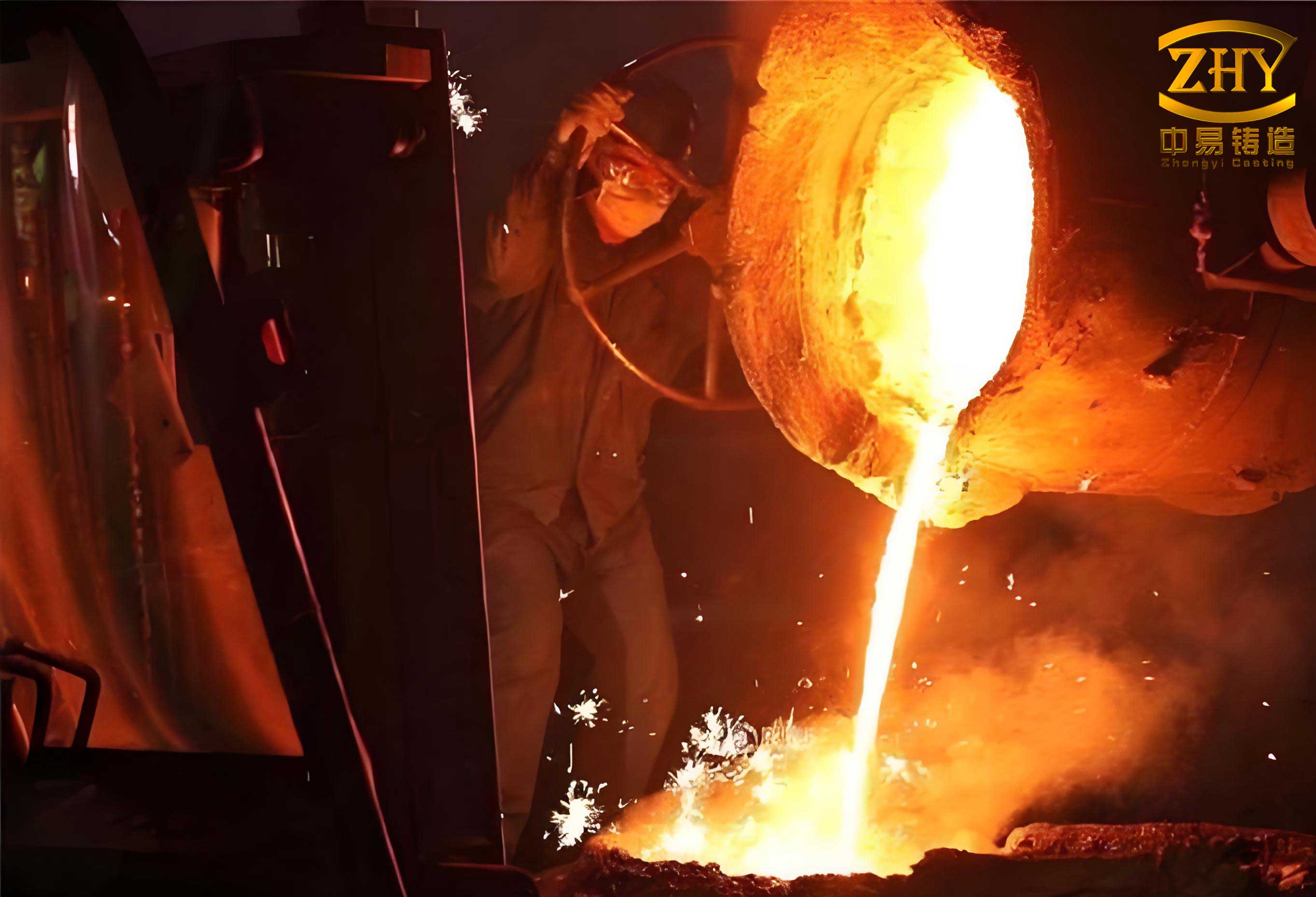
The geometry of sleeve-type sand castings presents unique challenges. The molten aluminum alloy must fill a relatively thin-walled cylindrical cavity uniformly, without creating cold shuts or mistruns, while also allowing for effective venting of air and gases from the sand mold and ensuring proper directional solidification to avoid shrinkage porosity. The traditional open gating system, with flat ingates introducing metal at one side, failed to achieve this balance. The metal stream, despite the area ratios, could still exhibit localized turbulence, entrapping air and oxides. Furthermore, the thermal dynamics often led to isolated hot spots, resulting in shrinkage defects. Attempts to modify this system by incorporating a semi-pressurized design (where $F_{sprue} < F_{runner} > F_{ingate}$) and adding filtering media in the pouring basin did not yield the desired improvement. While shrinkage was somewhat mitigated with the addition of necks and risers, the pervasive issue of gas and slag-related defects persisted, proving that a more radical rethinking of the gating philosophy for these sand castings was necessary.
The breakthrough came from focusing on the concept of controlled, laminar flow within the runner system itself. Instead of relying solely on cross-sectional area to reduce velocity, I proposed introducing intentional flow resistance and directional changes within the horizontal runner network. This led to the design of what I term a “buffered” or “stepped” gating system. The core idea is to create a runner path that is not straight but incorporates vertical steps or undulations. This design forces the molten metal to change direction multiple times, dissipating kinetic energy, promoting slag separation through buoyancy in the enlarged sections, and ensuring a quieter, more uniform rise of metal into the mold cavity for these critical sand castings. The design principle can be partially described by modifying the standard fluid flow energy equation to account for energy loss due to sudden enlargements and directional changes, akin to the concept of head loss in pipe flow: $$H_{loss} = \sum K \frac{v^2}{2g}$$ where $H_{loss}$ is the total head loss, $K$ is the loss coefficient for each bend or enlargement, $v$ is the flow velocity, and $g$ is gravitational acceleration. By designing the runner with specific features to increase $\sum K$, we effectively reduce the net velocity $v$ of the metal entering the cavity.
The implementation of this buffered gating system required meticulous calculation and layout. For a representative sleeve casting made of ZL101 aluminum alloy (similar to A356), the key dimensions and ratios were recalibrated. The system became a hybrid, leaning towards a semi-pressurized design but with the critical addition of the buffering runner. The total cross-sectional area of the ingates was set at 9 cm². The runner was divided into distinct sections with calculated enlargements. The primary runner section had an area of 21 cm², and a secondary buffering section was designed with an area of 18 cm². The length of the runner was maintained at approximately four times its height to allow sufficient time for slag flotation. Crucially, the height ratio between the ingate and the adjacent runner section was set at 1:5, ensuring a significant pressure drop and flow calming at the point of entry into the mold cavity. Furthermore, the system was complemented by strategic venting and feeding: a generous vent/riser was placed at the top of one end (the non-gated end) of the sleeve to exhaust air and provide feeding, and a separate feeding riser was placed at the top of the opposite end to manage solidification shrinkage. The casting was also tilted at a slight angle (around 15 degrees) to promote directional solidification towards the riser.
To elucidate the quantitative differences between the old and new approaches for aluminum sand castings, the following table summarizes the key design parameters and their intended functions:
| Gating System Type | Sprue:Runner:Ingate Area Ratio | Runner Design Feature | Primary Mechanism for Defect Reduction | Typical Defects Observed |
|---|---|---|---|---|
| Open (Traditional) | 1 : 2.5 : 4 (approx.) | Straight, flat runner | Velocity reduction via area increase | Gas pores, dross, sand inclusions, shrinkage |
| Semi-Pressurized (Intermediate) | 1 : 2.2 : 1.8 (example) | Straight runner with filter | Slag filtration and slight pressurization | Reduced shrinkage, persistent gas/slag defects |
| Buffered Stepped (Proposed) | 1 : (2.3) : (2.0)* | Stepped, enlarged sections with directional changes | Energy dissipation, laminar flow promotion, enhanced slag flotation | Minimal gas/slag, controlled shrinkage |
*Note: The ratio for the buffered system is less defining than its geometry; areas are tailored, and the ratio is not strictly adhered to in the conventional sense.
The effectiveness of this system can be further analyzed through fluid dynamics principles relevant to sand castings. The critical Reynolds number ($Re$) indicates the transition from laminar to turbulent flow: $$Re = \frac{\rho v D_h}{\mu}$$ where $\rho$ is the density of molten aluminum (~2500 kg/m³), $v$ is velocity, $D_h$ is the hydraulic diameter of the channel, and $\mu$ is the dynamic viscosity (~0.0013 Pa·s near pouring temperature). Turbulent flow ($Re > 4000$) promotes oxide entrainment. The design goal of the buffered runner is to maintain $Re$ in the ingates and cavity below this threshold. By calculating the velocity reduction achieved through the stepped runner’s head loss, we can estimate the final $Re$. If the initial velocity from the sprue base is $v_s$, the velocity in the main runner $v_r$ is lower due to area increase ($v_r = v_s (A_s/A_r)$). Each step or enlargement causes a further loss. For a sudden enlargement, the loss coefficient $K$ is approximately $(1 – A_1/A_2)^2$, where $A_1$ and $A_2$ are the smaller and larger areas, respectively. The velocity after $n$ such features can be iteratively approximated, showing a significant drop. For instance, with two enlargements having area ratios of 1.2 and 1.15, the combined loss factor can reduce the effective kinetic energy by over 30%, directly lowering $v$ and thus $Re$ in the final stages of flow into the sand casting cavity.
The practical implementation of this design for our range of sleeve-type sand castings yielded transformative results. The rejection rate, which once plagued production at 15-30%, plummeted to a consistent 2-3%. Machining workshops reported a near-complete elimination of subsurface defects that previously caused tool breakage and part scrappage during processing. The internal soundness of the sand castings was verified through radiographic inspection, showing a dense, homogeneous structure free from gross porosity and inclusions. The table below contrasts the performance metrics before and after the adoption of the buffered gating system for a batch of 500 identical sleeve sand castings:
| Performance Metric | Open Gating System | Buffered Stepped Gating System |
|---|---|---|
| Overall Rejection Rate (%) | 28 | 2.5 |
| Defect Breakdown (% of total castings): | ||
| – Gas Porosity | 15 | 0.8 |
| – Shrinkage Porosity/Cavities | 8 | 1.0 |
| – Dross/Sand Inclusions | 5 | 0.7 |
| – Mistruns/Cold Shuts | 3 | 0.0 |
| Average Metal Yield (Useful Casting Weight / Poured Weight) | 0.65 | 0.72 |
| Consistency of Mechanical Properties (Tensile Strength Std. Dev., MPa) | ±18 | ±6 |
The improvement in metal yield, though modest, is significant as it indicates less reliance on massive feeders; the controlled filling and improved thermal gradients allow smaller, more efficient risers to function effectively. The consistency in mechanical properties underscores the enhanced internal integrity achieved in these aluminum sand castings. The success of this system hinges on its ability to address the multiple requirements of sand casting simultaneously: smooth filling, effective slag trapping, and promotion of favorable temperature gradients. The stepped runner acts as a passive flow regulator and slag buoyancy chamber. As the metal enters an enlarged section, its velocity drops sharply. According to Stokes’ law, the terminal velocity $v_t$ of a spherical slag particle rising through the molten metal is given by $$v_t = \frac{2}{9} \frac{(\rho_m – \rho_s) g r^2}{\mu}$$ where $\rho_m$ and $\rho_s$ are the densities of the metal and slag particle, $g$ is gravity, $r$ is the particle radius, and $\mu$ is viscosity. The reduced downward flow velocity in the enlarged runner section allows even smaller slag particles ($r$ small) sufficient residence time ($t = h / v_t$, where $h$ is runner height) to float to the top and be trapped, preventing their entry into the casting cavity of the sand castings.
In conclusion, the journey from chronic high rejections to reliable, high-quality production of sleeve-type aluminum components taught me a vital lesson: successful sand casting, especially for intricate geometries, demands gating systems tailored not just to general ratios but to the specific fluid dynamics and thermal demands of the part. The buffered or stepped gating system represents a pragmatic synthesis of flow control principles. It moves beyond the simplistic open/closed dichotomy by architecting the runner pathway itself as a key functional element for calming and cleaning the metal stream. This approach has proven exceptionally effective for the family of sleeve-type sand castings I dealt with, reducing defects by an order of magnitude. The principles—controlled energy dissipation, promoted laminar flow, and enhanced slag separation—are universally applicable to other challenging sand casting geometries prone to turbulence-related defects. The economic impact was substantial, converting a major cost center into a reliable, efficient process. This experience underscores that innovation in foundry practice, particularly for aluminum sand castings, often lies in a deep, physics-based understanding of molten metal behavior and the creative adaptation of basic design elements to harness that understanding for superior results.