
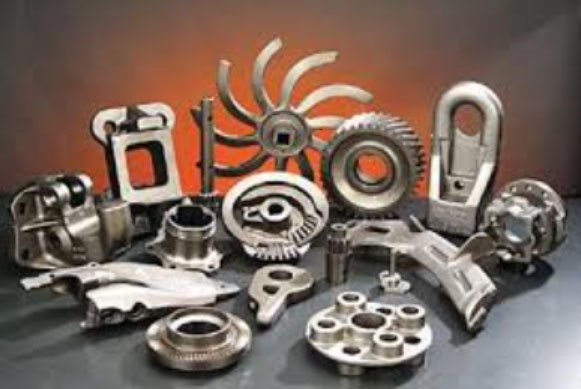
Ductile iron casting has emerged as a superior material solution for heavy-duty applications due to its unique combination of strength and wear resistance. This study investigates the synergistic effects of centrifugal casting and austempering processes on the tribological properties of ductile iron components, particularly focusing on excavator sleeves subjected to extreme operational stresses.
1. Material Design and Processing
The chemical composition of the ductile iron casting was optimized for austempering compatibility:
| Element | C | Si | Mn | Cu | S | P | Fe |
|---|---|---|---|---|---|---|---|
| wt% | 3.5 | 1.9 | 0.9 | 0.5 | <0.04 | <0.04 | Bal. |
The centrifugal casting process was governed by the following parameters:
$$ v = \frac{2\pi rN}{60} $$
Where v represents mold surface velocity (m/s), r is mold radius (m), and N denotes rotational speed (RPM). Optimal casting parameters included:
- Pouring temperature: 1,420°C
- Mold rotation speed: 1,000 RPM
- Cooling rate: 15°C/s
2. Microstructural Evolution
The austempering process produced a unique microstructure characterized by:
| Phase | Content (%) | Hardness (HV) |
|---|---|---|
| Lower Bainite | 65-75 | 380-420 |
| Retained Austenite | 25-30 | 280-320 |
| Graphite Nodules | 8-12 | 80-100 |
The graphite nodule density followed the relationship:
$$ N_g = \frac{4}{\pi d^2} $$
Where Ng represents nodule count per mm² and d is average nodule diameter (μm).
3. Tribological Performance
Wear resistance testing revealed significant advantages of ductile iron casting over conventional materials:
| Condition | Material | Friction Coefficient | Wear Rate (mm³/Nm) |
|---|---|---|---|
| Dry | ADI | 0.38 | 2.1 × 10⁻⁶ |
| 45 Steel | 0.58 | 12.4 × 10⁻⁶ | |
| Lubricated | ADI | 0.12 | 0.4 × 10⁻⁶ |
| 45 Steel | 0.31 | 4.8 × 10⁻⁶ |
The wear mechanism transition can be modeled using:
$$ W = k\frac{P}{H} $$
Where W is wear volume, k the wear coefficient, P applied load, and H material hardness.
4. Industrial Implementation
Field tests of ductile iron casting components demonstrated:
- 300% increase in service life compared to forged steel
- Reduced maintenance frequency from 90 to 360 days
- 25% decrease in total ownership costs
The success of ductile iron casting in excavator applications stems from its unique self-lubricating properties derived from graphite nodules acting as solid lubricant reservoirs. This characteristic becomes particularly advantageous in boundary lubrication regimes common in construction machinery.
5. Future Developments
Emerging research directions in ductile iron casting technology include:
$$ \sigma_y = \sigma_0 + k_y d^{-1/2} $$
Where σy is yield strength, σ0 lattice friction stress, and ky the strengthening coefficient. Current efforts focus on achieving ultra-fine bainitic structures (< 100 nm) through controlled cooling strategies.
The continued advancement of ductile iron casting processes promises to revolutionize wear component manufacturing across multiple industries, particularly where combined requirements for high strength and exceptional wear resistance exist.