
The relentless pursuit of higher performance, efficiency, and compactness in internal combustion engines has placed unprecedented demands on their core components. Among these, the cylinder head stands out as one of the most critical and geometrically complex casting parts within the engine assembly. Its function is paramount, forming the upper closure of the combustion chamber, housing the valvetrain, and integrating intricate coolant and oil galleries. Consequently, the dimensional accuracy and consistency of these casting parts directly and profoundly influence engine performance metrics such as compression ratio, volumetric efficiency, cooling homogeneity, and overall mechanical integrity. This discussion, drawn from extensive foundry experience, delves into the multifaceted challenge of achieving and maintaining high dimensional precision in large-format, integral cylinder head casting parts, outlining systematic approaches and key learnings.
The evolution of cylinder head design has significantly increased manufacturing complexity. Modern designs often integrate components like inlet manifolds and camshaft bearings directly into the casting, leading to highly intricate thin-walled structures with deep recesses and critical internal passages. For multi-cylinder engines, the choice between a single, monolithic “integral” casting covering all cylinders versus modular “block” or “individual” designs carries major implications for dimensional control. While integral casting parts offer advantages in structural rigidity, reduced engine length, and simplified assembly, they present formidable challenges in foundry engineering. The large projected area and complex geometry exacerbate tendencies for distortion, dimensional variation, and core shift during the metal casting process, making the consistent achievement of tight tolerances a central focus of process development.
The imperative for high-precision casting parts extends far beyond merely meeting drawing specifications. It is a driver for cost reduction, performance enhancement, and design innovation across the entire product lifecycle. The benefits are quantifiable and substantial, as summarized below:
| Benefit Area | Mechanism & Impact |
|---|---|
| Machining Cost Reduction | Precise casting datum features enable direct, reliable fixturing on machining centers. This allows for a reduction in machining allowances, especially for expensive or difficult-to-machine alloys, minimizing tool wear and cycle time. The economic equation is clear: remove less metal, save more cost. |
| Assembly Cost Reduction | Improved accuracy of mating surfaces and locators reduces hand-fitting and shimming during engine assembly. In some cases, what was previously an assembly of several smaller casting parts can be consolidated into a single, more complex but dimensionally precise casting, eliminating assembly steps entirely. |
| Weight Reduction | Tighter dimensional control, particularly on wall thickness, allows designers to reduce safety margins. This enables the production of reliable, thinner-walled casting parts, directly contributing to engine lightweighting—a critical factor for fuel efficiency and emissions. |
| Foundry Cost Reduction | The capability to cast stable, thin-walled sections consistently reduces the total metal poured per part. For high-volume production, this leads to significant savings in raw material (metal and sand) costs and energy consumption per casting. |
| Improved Aesthetics & Marketability | Dimensional consistency enhances the visual quality of visible surfaces, whether painted or not. This improves the perceived quality of the final product, strengthening its competitive position in the market. |
| Enabling Compact Design | Design engineers gain confidence to specify more ambitious, space-efficient packaging when they can rely on the dimensional fidelity of the casting parts. This drives innovation towards more compact and integrated engine architectures. |
The path to achieving this level of precision is not linear but requires a systemic understanding of the numerous variables at play. The dimensional outcome of a sand-cast cylinder head is the final product of a chain of interdependent processes, each introducing potential variation. From personal observation and systematic investigation, the primary influencing factors can be categorized as follows:
| Category | Specific Factors & Their Effect |
|---|---|
| Process & Tooling Design |
|
| Metallurgy |
|
| Sand Cores & Molds |
|
| Equipment & Process Stability |
|
| Product Design |
|
The complexity inherent in these large, integral cylinder head casting parts is best visualized. They are not simple blocks but intricate, three-dimensional puzzles of internal passages and thin walls.
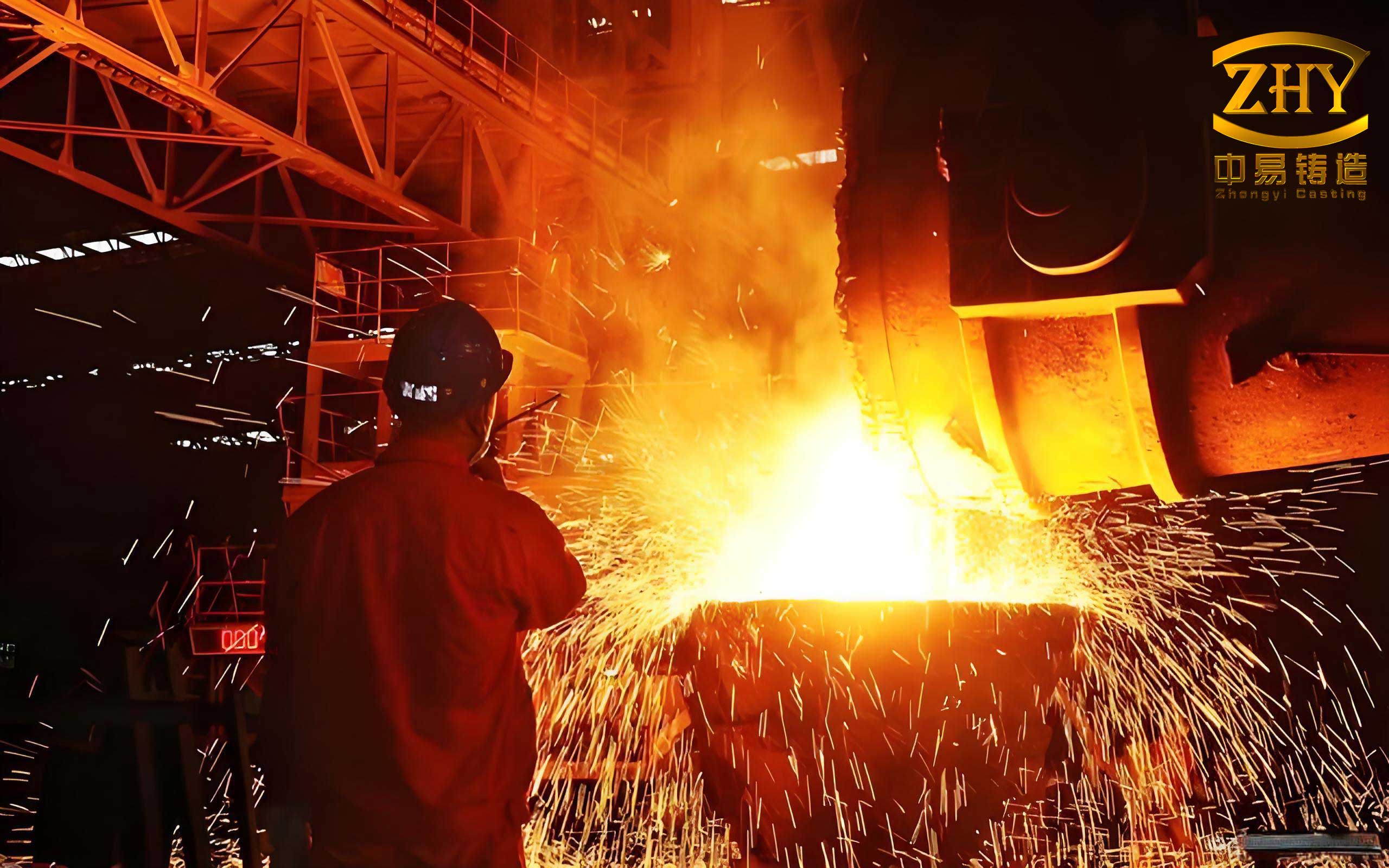
Two representative case studies from experience with large six-cylinder integral heads highlight how these factors manifest and can be addressed. The first involved a gray iron (HT280) head without integrated manifolds. Early samples revealed significant dimensional non-conformances: misaligned water jacket core openings (up to 1.5 mm deviation), width variation (up to 1.5 mm), and critically thin local walls at the interface between the water jacket and intake port, measured as low as 2.5 mm against a nominal 3.8 mm.
A root-cause analysis combining traditional layout inspection and modern 3D scanning compared the castings to their nominal CAD model. The investigation pointed to foundational tooling design parameters. The initial pattern allowance (shrinkage factor) was found to be non-optimal for the specific geometry and alloy. Furthermore, the thermal expansion coefficient applied in the design of the large, monolithic upper water jacket core box (a hot-box process) was inaccurate. The corrective action was twofold and fundamental:
- The global pattern allowance was re-evaluated based on statistical analysis of casting measurements and solidified as 1.1% for this product family.
- The thermal expansion factor for such large hot-box cores was refined to 0.1%.
This required new tooling for the entire set of core boxes and patterns—a significant investment but necessary for a stable process. Additionally, the support systems for cores were redesigned; nesting trays and drying boards were fitted with additional strategic support blocks to prevent sagging and distortion of large cores during handling and storage, thereby improving the consistency of the casting parts.
The mathematical basis for these corrections is straightforward but critical. The pattern dimension (L_pattern) is derived from the nominal part dimension (L_part) and the total expected linear shrinkage (ε_L), often expressed as a percentage “shrinkage allowance”:
$$ L_{pattern} = L_{part} \times (1 + \epsilon_L) $$
For the hot-box core, the core box cavity dimension at room temperature (L_cavity_room) must be sized to account for its growth at operating temperature (ΔT) and the material’s coefficient of thermal expansion (α_tool):
$$ L_{cavity\_room} = \frac{L_{core\_nominal}}{1 + (\alpha_{tool} \cdot \Delta T)} $$
Where L_core_nominal is the desired core size at room temperature after curing. Getting these foundational calculations right is the first and most crucial step.
The second case involved a larger gray iron (HT300) head with an integrated inlet manifold. A batch was identified where the overall casting length had contracted significantly more than expected—by up to 1.7 mm. 3D scanning confirmed a uniform but excessive shortening. While tooling factors were initially checked, metallurgical investigation revealed a pivotal factor: the intentional addition of Tin (Sn). Tin is a potent pearlite stabilizer in gray iron, but its effect on dimensional stability is profound.
A controlled experiment was conducted, casting heads from melts with and without the standard Sn addition, while keeping other variables as constant as possible. The results were conclusive, as shown in the following summary table comparing the total length contraction from the pattern dimension:
| Melt Chemistry | Sample ID | Tooling Set Used | Measured Contraction (mm) |
|---|---|---|---|
| With Sn Addition | A1 | Set 6, 3, 3 | 1.7 |
| A2 | Set 6, 1, 2 | 1.5 | |
| A3 | Set 8, 1, 1 | 1.1 | |
| A4 | Set 8, 3, 3 | 1.3 | |
| Without Sn Addition | B1 | Set 5, 3, 2 | 0.6 |
| B2 | Set 5, 1, 2 | 0.2 | |
| B3 | Set 5, 3, 1 | 0.6 | |
| B4 | Set 5, 3, 1 | 0.5 |
The data clearly indicates that the Sn-added melts consistently produced casting parts with approximately 1.0 to 1.7 mm more contraction than those without Sn (0.2 to 0.6 mm), even with tooling set variation. This highlighted that the net shrinkage is not a fixed property of the alloy grade (HT300) but is dynamically influenced by specific alloying elements. The mechanism is linked to Sn’s role in suppressing ferrite formation, promoting a fully pearlitic matrix which has a higher density and thus undergoes greater overall contraction during cooling. The solution involved recalibrating the pattern allowance to match the actual metallurgical process and establishing strict controls and monitoring protocols for all alloying elements and trace elements known to affect shrinkage behavior. This case underscores that dimensional control of casting parts is as much a metallurgical science as it is a geometric one.
Beyond these specific cases, general principles for managing dimensional variation in such complex casting parts have been consolidated. A robust approach involves:
- Comprehensive Digital Validation: Using 3D scanning and statistical analysis (like Compare-to-CAD) not just for first-article inspection but as a routine process monitoring tool to detect drift in critical dimensions.
- Systematic Gating & Risering: Designing feeding systems that ensure directional solidification towards risers minimizes internal stresses that can cause distortion upon shakeout. Simulation software is indispensable for optimizing this.
- Enhanced Core Package Rigidity: Designing interlocking core geometries, robust core prints, and using core assembly fixtures that provide positive location and clamping during mold assembly to prevent core shift.
- Controlled Cooling & Stress Relieving: Implementing controlled cooling cycles in the mold or immediately after shakeout, sometimes followed by a stress-relief heat treatment, to allow for the uniform release of residual stresses before final machining.
In conclusion, achieving high and consistent dimensional accuracy in large-format integral cylinder head casting parts is a multidisciplinary challenge that sits at the intersection of design, tooling engineering, metallurgy, and process control. There is no single “silver bullet.” It requires getting the foundational parameters correct—the pattern allowance and thermal expansion coefficients—which are specific to the part geometry, alloy system, and foundry process. It demands recognition of the powerful influence of metallurgy, where elements like Tin can alter shrinkage significantly. Furthermore, it necessitates attention to the entire process chain, from the design of core supports to the control of cooling. The pursuit of precision in these critical engine casting parts is a continuous, data-driven effort, where each problem resolved adds to a foundational understanding that enables the production of more advanced, reliable, and efficient engines. The lessons learned in controlling dimensions for these complex casting parts form a scalable knowledge base applicable to other demanding cast components across industries.