
In my years of engagement with the manufacturing sector, particularly with sand casting manufacturers, I have observed a critical gap between traditional practices and modern management needs. The foundry industry, which forms the backbone of many machinery and equipment supply chains, often struggles with inefficient information flow, leading to delayed decisions, production bottlenecks, and reduced competitiveness. This article delves into the strategic planning of Management Information Systems (MIS) for foundries, integrating insights from both practical implementations and educational frameworks, such as those from German higher education in casting. The goal is to provide a comprehensive guide for sand casting manufacturers aiming to leverage technology for improved operational efficiency and market resilience.
The foundation of any successful MIS lies in a thorough understanding of the current system. For sand casting manufacturers, the existing management structures are typically manual, involving departments like production, quality control, sales, and supply chain. These systems, while historically effective under planned economies, now face challenges due to market dynamics and technological advancements. A common issue is the sluggish information transmission, which hampers decision-making and production control. For instance, in many sand casting manufacturers, order processing, inventory management, and quality tracking are done through paper-based records, leading to errors and delays. This not only affects customer satisfaction but also increases costs due to inefficiencies. To address this, a systematic investigation is essential, covering organizational structure, workflow processes, and information pathways. Such an analysis reveals that sand casting manufacturers often lack integrated systems, resulting in data silos and poor coordination between departments.
Based on my experience, the current management system in foundries can be summarized through a functional tree. The table below outlines key components and their interrelationships:
| Department | Primary Functions | Information Flow Issues |
|---|---|---|
| Production Planning | Scheduling, resource allocation | Delays in updating production status |
| Quality Control | Inspection, defect analysis | Manual recording leading to data loss |
| Sales and Marketing | Order handling, customer service | Slow response to inquiries and quotes |
| Inventory Management | Stock monitoring, procurement | Lack of real-time visibility into inventory levels |
| Finance and Accounting | Costing, budgeting | Inaccurate data affecting financial reports |
This analysis highlights that sand casting manufacturers need to transition from isolated operations to a connected ecosystem. The inefficiencies are particularly pronounced in environments where multiple production types—such as one-off, batch, and mass production—coexist, as is common in sand casting manufacturers serving diverse markets. Without timely information, balancing production cycles with customer demands becomes a constant challenge, often leading to missed opportunities and increased waste.
To overcome these limitations, a new MIS must be designed with clear objectives. For sand casting manufacturers, the system should aim to: (1) enable rapid data storage and transmission to eliminate information bottlenecks; (2) provide decision-makers with real-time insights for strategic planning; (3) incorporate advanced management philosophies like MRP II for dynamic production control; and (4) enhance subsystems such as sales, procurement, and quality management through computerization. The technical goals include adopting open-system architectures, modular software design, and reliable network infrastructures. From an economic perspective, the MIS should boost responsiveness, optimize production schedules, and reduce scrap rates, directly benefiting sand casting manufacturers in competitive markets.
The proposed MIS can be divided into several interconnected subsystems, each catering to specific managerial functions. The following table details these subsystems and their core capabilities:
| Subsystem | Key Functions | Benefits for Sand Casting Manufacturers |
|---|---|---|
| Decision Support System | Forecasting, optimization, expert knowledge integration | Improves strategic planning and market adaptation |
| Operations Management | Production scheduling, inventory control, cost tracking | Enhances efficiency and reduces lead times |
| Sales and Service Management | Quote generation, contract management, customer analytics | Increases sales accuracy and customer retention |
| Human Resources and Payroll | Employee records, labor management, wage calculation | Streamlines administrative tasks and supports workforce planning |
| Equipment Maintenance | Asset tracking, repair scheduling, spare parts management | Minimizes downtime and extends machinery life |
| Supply Chain Management | Procurement planning, vendor evaluation, order monitoring | Optimizes material flow and reduces costs |
Among these, the Decision Support System is crucial for sand casting manufacturers, as it employs predictive models to aid in forecasting demand and making informed decisions. For example, weighted average and regression analysis can be used to predict market trends. The weighted average formula is expressed as:
$$ \bar{y} = \frac{\sum_{i=1}^{n} w_i x_i}{\sum_{i=1}^{n} w_i} $$
where \( \bar{y} \) is the forecasted value, \( x_i \) represents historical data points, and \( w_i \) are weights assigned based on relevance. Similarly, linear regression helps in understanding relationships between variables, such as production volume and sales, with the equation:
$$ y = \beta_0 + \beta_1 x + \epsilon $$
Here, \( y \) is the dependent variable (e.g., demand), \( x \) is the independent variable (e.g., time), \( \beta_0 \) and \( \beta_1 \) are coefficients, and \( \epsilon \) denotes error. By integrating such mathematical tools, sand casting manufacturers can transition from reactive to proactive management, aligning production with market signals.
The implementation of an MIS requires careful planning of resources and infrastructure. For sand casting manufacturers, a phased approach is advisable to minimize disruption and ensure gradual adoption. The hardware configuration typically involves servers, workstations, and networking components, as summarized below:
| Component | Specification | Estimated Cost (in currency units) |
|---|---|---|
| Workstations (e.g., PCs) | 16 units with modern processors | 12,800 |
| Printers | 4 units for reporting | 1,800 |
| Network Server | High-performance server for data handling | 3,000 |
| Networking Gear | Switches, cables, and accessories | 3,180 |
| Software Licenses | Operating systems, database management | 7,050 |
| Development and Training | Custom software and staff upskilling | 12,000 |
The total investment for such a system can range around 56,100 currency units, but the returns justify the cost. For sand casting manufacturers, quantifiable benefits include faster quote generation—reducing time by up to 70%—and improved accuracy in pricing. Additionally, enhanced sales systems can increase order volumes by at least 1,000 tons annually, yielding significant profit margins. Moreover, by lowering manufacturing costs by 12% and reducing scrap rates by 2 percentage points, sand casting manufacturers can achieve annual savings of over 100,000 currency units. These figures underscore the economic viability of MIS projects, making them essential for long-term sustainability in the foundry sector.
Beyond financial gains, the intangible advantages are equally important. An MIS fosters a culture of data-driven decision-making, improves interdepartmental collaboration, and enhances overall agility. For sand casting manufacturers, this means better adaptability to market fluctuations and stronger customer relationships. To visualize the modern foundry environment enabled by such systems, consider the following representation of a steel casting facility, which parallels the advancements relevant to sand casting manufacturers:
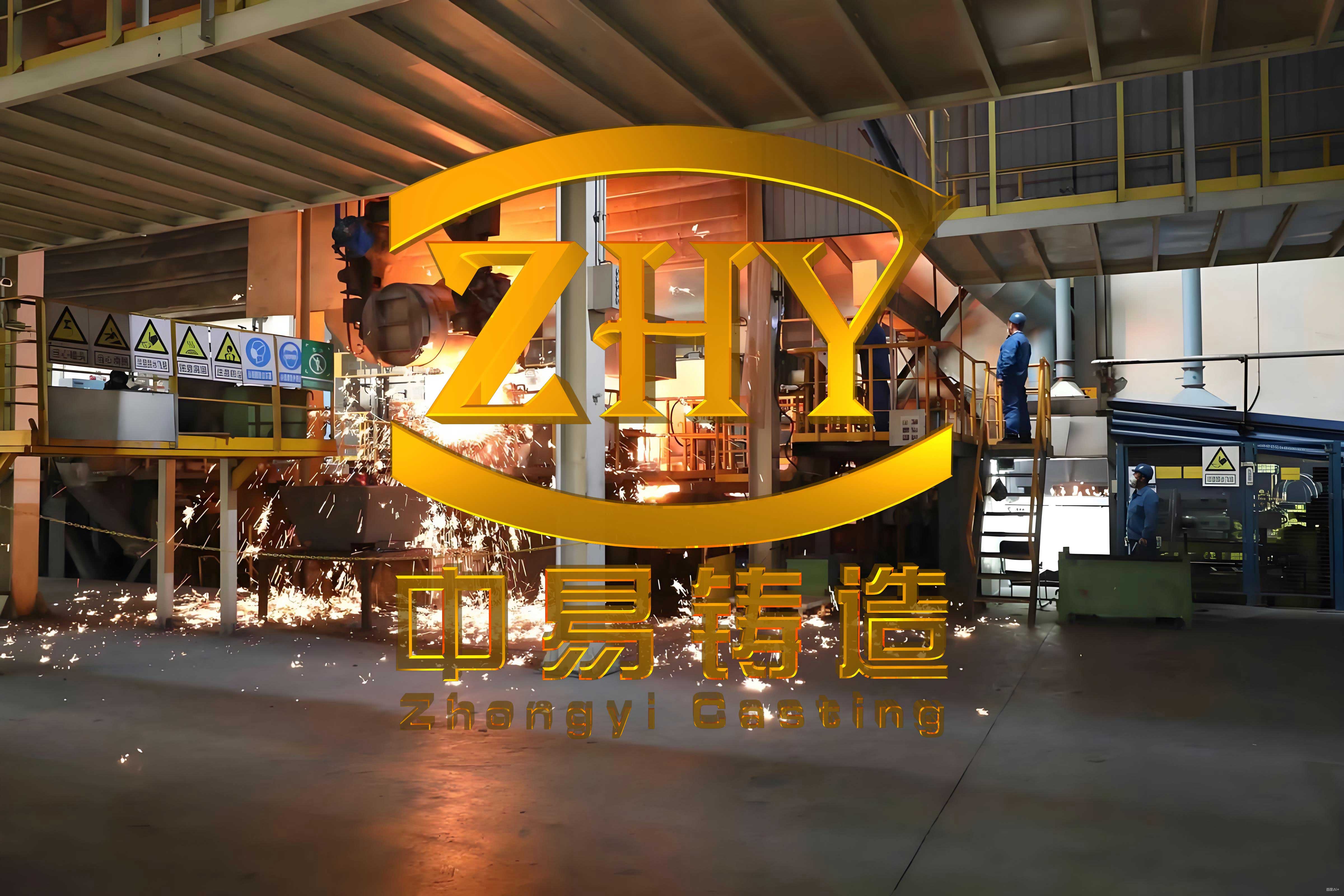
This image symbolizes the integration of technology in casting processes, highlighting how digital tools can transform traditional workshops into efficient production hubs. For sand casting manufacturers, embracing similar innovations is key to remaining competitive in a globalized economy.
The successful deployment of an MIS also hinges on human capital, which brings me to insights from German higher education in casting. In institutions like RWTH Aachen, the curriculum for casting engineers emphasizes a blend of theoretical knowledge and practical skills. This approach is highly relevant for sand casting manufacturers, as it prepares professionals who can effectively manage and optimize information systems. The education plan spans multiple phases, from foundational courses to specialized research, ensuring comprehensive competency development. The table below outlines a typical structure:
| Phase | Duration (Semesters) | Key Subjects | Focus Areas for Sand Casting Manufacturers |
|---|---|---|---|
| Basic Studies | 4-6 | Mathematics, Physics, Materials Science | Building a strong technical foundation |
| Specialized Studies | 4-6 | Casting Technology, Metallurgy, Quality Control | Direct application to foundry processes |
| Practical Training | 2-3 | Internships, Laboratory Work | Hands-on experience in real-world settings |
| Thesis Research | 2-3 | Project-based investigations | Innovation and problem-solving in casting |
This educational model underscores the importance of engineering practice over mere theory. For sand casting manufacturers, hiring graduates with such backgrounds means gaining employees who can swiftly adapt to MIS environments, troubleshoot technical issues, and contribute to continuous improvement. The German system also integrates courses on management and information technology, aligning well with the needs of modern foundries. By contrast, many educational programs elsewhere may overemphasize scientific aspects, neglecting the practical nuances essential for sand casting manufacturers. Therefore, adopting a similar balanced approach in curricula worldwide could significantly enhance the readiness of future engineers to leverage MIS effectively.
In reflecting on these elements, I propose several recommendations for sand casting manufacturers embarking on MIS journeys. First, conduct a holistic survey that encompasses both top-down and bottom-up perspectives, engaging stakeholders from leadership to floor operators. This ensures the system addresses real pain points, such as delayed order processing or inventory shortages common in sand casting manufacturers. Second, adopt a modular implementation strategy, starting with critical modules like production scheduling or sales management to demonstrate quick wins. Third, invest in continuous training, leveraging insights from educational best practices to upskill staff in both technical and managerial aspects. Finally, foster a culture of data literacy, where information is valued as a strategic asset—a mindset that can be cultivated through partnerships with academic institutions.
To further illustrate the potential of MIS in optimizing operations, consider the application of optimization models for production planning. For sand casting manufacturers, minimizing costs while meeting demand constraints is a classic problem. This can be formulated as a linear programming model:
$$ \text{Minimize } Z = \sum_{j=1}^{m} c_j x_j $$
subject to:
$$ \sum_{j=1}^{m} a_{ij} x_j \geq b_i \quad \text{for } i = 1, 2, \dots, n $$
$$ x_j \geq 0 \quad \text{for all } j $$
Here, \( Z \) represents total cost, \( x_j \) are decision variables (e.g., production quantities), \( c_j \) denote unit costs, \( a_{ij} \) are technological coefficients, and \( b_i \) are demand requirements. By solving such models within an MIS, sand casting manufacturers can achieve optimal resource allocation, reducing waste and improving profitability.
In conclusion, the integration of Management Information Systems in foundries is not merely a technological upgrade but a strategic imperative. For sand casting manufacturers, it offers a pathway to overcome inefficiencies, enhance decision-making, and secure a competitive edge. Coupled with robust educational frameworks that emphasize practical engineering skills, as seen in German higher education, the industry can cultivate a workforce capable of driving these innovations forward. As the global market for cast products evolves, sand casting manufacturers that embrace such holistic approaches will be better positioned to thrive. The journey requires commitment and investment, but the rewards—in terms of operational excellence and sustained growth—are well worth the effort. By learning from both managerial and educational paradigms, we can shape a future where foundries operate as agile, data-informed enterprises, ready to meet the challenges of tomorrow.