
In my extensive experience within the foundry industry, particularly focusing on high-performance machine tool castings, I have encountered numerous challenges related to achieving consistent and superior mechanical properties. The development of the TKG6920 high-speed milling and boring machine bed casting, a critical component requiring a hardness of 180–230 HB on its guideways, presented a significant technical hurdle. This narrative details our systematic approach to overcoming the initial deficiencies in hardness uniformity and stability, leveraging metallurgical principles and process innovations. The term “machine tool castings” will be central to our discussion, as these components form the backbone of precision manufacturing equipment.
The initial production phase for these machine tool castings revealed persistent issues. Utilizing a continuous water-cooled cupola furnace and furan resin no-bake sand molding, the castings, designated as HT300 gray iron, exhibited unsatisfactory performance. The primary concern was the inconsistent hardness across the guideway’s sliding surface, both before and after machining, and between thick and thin sections. This inconsistency threatened the dimensional stability, wear resistance, and ultimately the precision of the final machine tool. Our analysis began with a thorough examination of the historical production data.
The chemical composition of previously produced beds was statistically analyzed, as summarized in Table 1. A key observation was the consistently high carbon content and low silicon content, often at or beyond the specification limits. This was attributed to the inherent carbon pick-up tendency of cupola melting when aiming for the low carbon equivalent (CE) required for high-grade gray iron like HT300. While increasing scrap steel charge was a standard method to reduce carbon and increase chill tendency for hardness, it adversely affected fluidity, shrinkage propensity, and ultimately, hardness uniformity.
| Sample ID | C | Si | Mn | P | S | CE* |
|---|---|---|---|---|---|---|
| Bed 1 | 3.20 | 1.10 | 1.12 | 0.074 | 0.11 | 3.63 |
| Bed 2 | 3.12 | 1.45 | 1.23 | 0.065 | 0.10 | 3.72 |
| Bed 3 | 3.14 | 1.49 | 1.18 | 0.061 | 0.078 | 3.78 |
| Bed 4 | 3.00 | 0.94 | 1.10 | 0.063 | 0.081 | 3.34 |
| Bed 5 | 3.00 | 1.20 | 1.36 | 0.073 | 0.080 | 3.45 |
| Average | 3.09 | 1.29 | 1.20 | 0.067 | 0.090 | 3.58 |
| Specification | 2.8-3.2 | 1.3-1.8 | 0.8-1.2 | <0.12 | ≤0.12 | ~3.4-3.8 |
*Carbon Equivalent (CE) calculated as: $$CE = \%C + \frac{\%Si + \%P}{3}$$
The hardness data from these suboptimal machine tool castings was even more telling, as shown in Table 2. The significant variation between pre- and post-machining hardness, sometimes exceeding 50 HB, indicated a pronounced skin effect or microstructural gradient beneath the casting surface. Furthermore, the hardness difference between thick (e.g., 130 mm guide) and thin (40 mm average wall) sections pointed towards solidification-related inconsistencies. This is a critical flaw for machine tool castings where uniform wear resistance is paramount.
| Casting ID | Hardness Before Machining (HB) | Hardness After Machining (HB) | Max Δ (HB) | ||||
|---|---|---|---|---|---|---|---|
| Point A | Point B | Point C | Point A | Point B | Point C | ||
| #1 | 180 | 182 | 224 | 165 | 178 | 207 | 48 |
| #2 | 182 | 195 | 197 | 162 | 176 | 180 | 35 |
| #3 | 165 | 192 | 241 | 156 | 177 | 187 | 85 |
The hardness drop after machining, often represented by a factor, can be modeled as: $$ H_{post} = H_{pre} – \Delta H_{gradient} $$ where $\Delta H_{gradient}$ is a function of the microstructural gradient depth and the depth of cut.
Faced with this challenge, we formulated and executed a multi-pronged strategy targeting the fundamental metallurgical and processing factors governing hardness in gray iron machine tool castings. Our goal was not merely to hit a hardness number but to achieve homogeneity and stability throughout the casting volume.
1. Elevating Tap-Out Temperature: The Foundation of Microstructure Control
We recognized that superheating the iron melt is a powerful tool for enhancing hardness and homogeneity. The relationship between tap temperature and hardness can be empirically expressed. Literature suggests an increase of approximately 19 HB for every 100°C rise in superheating temperature above a certain threshold. The underlying mechanism involves the dissolution of heterogeneous nuclei, reduction of oxide inclusions, and overall purification of the melt, leading to a finer and more uniform graphite structure upon solidification.
To achieve this, we implemented several modifications to our cupola operation. The furnace geometry was altered by reducing the well depth and introducing a waist (卡腰形) at the tuyere zone. This design change aimed to intensify combustion in the coke bed and increase the superheating zone temperature while minimizing contact time between coke and metal to curb carbon pickup. Mathematically, the thermal efficiency $\eta$ can be related to the modified furnace parameters. The theoretical heat transfer to the metal can be approximated by: $$ Q_{metal} = \dot{m}_{air} \cdot C_{p,air} \cdot (T_{blast} – T_{ambient}) \cdot \eta_{comb} \cdot \eta_{ht} $$ where $\dot{m}_{air}$ is the blast air mass flow rate, enhanced by upgrading our blower system. The final result was a consistent increase in tap temperature from 1380-1400°C to 1420-1465°C. This higher temperature regime was crucial for all subsequent treatment steps for our machine tool castings.
2. Grain Refinement through Intensive Inoculation
Hardness and strength in gray iron are profoundly influenced by grain size. The Hall-Petch relationship, while originally for metals, has analogs in cast iron, where yield strength and hardness increase with decreasing dendrite arm spacing or graphite cell size. We adopted a robust inoculation practice to maximize nucleation sites for graphite precipitation, thereby refining the matrix. The inoculation effect on undercooling $\Delta T$ can be described by: $$ \Delta T_{inoc} = \frac{\gamma_{SL} T_m}{\Delta H_f \cdot r^*} $$ where $r^*$ is the critical radius of a nucleus, effectively reduced by potent inoculant particles.
We selected fine-grade 75% ferrosilicon as our inoculant. The total addition was maintained at 0.4–0.5%, but it was strategically deployed. Primary inoculation was performed in the transfer ladle. Crucially, we added a secondary, instantaneous inoculation step during the pouring process itself. This late inoculation compensates for fading—the loss of nucleation potency over time—ensuring effective grain refinement even in the last metal to solidify. For complex machine tool castings with varying section sizes, this dual-inoculation strategy was key to minimizing hardness differentials between thick and thin sections.
3. Alloying for Solid Solution and Pearlite Stabilization
While manganese was already at the upper specification limit (1.2%), its effect on hardness plateaued. We needed an element that could strongly promote pearlite formation, increase tensile strength, and resist ferrite formation, especially in slower-cooling heavy sections. After evaluating several options like copper and chromium, we selected tin (Sn). Tin is a potent pearlite stabilizer with a low melting point (231.5°C), allowing for minimal loss when added to the ladle. The effect of tin on suppressing the ferrite-austenite transformation temperature can be conceptually framed using a simplified phase diagram adjustment. The hardening contribution $\Delta H_{Sn}$ from a small Sn addition is disproportionate to its weight percentage due to its strong partitioning behavior.
Initial trials involved adding Sn to the entire melt. The results, as seen in Table 3, demonstrated a marked improvement. The hardness values were higher and, more importantly, the spread between max and min values, both before and after machining, was significantly reduced. This confirmed that alloying was effective in creating a more homogeneous and stable microstructure throughout the machine tool casting.
| Casting ID | Hardness Before Machining (HB) | Hardness After Machining (HB) | Max Δ (Pre) | Max Δ (Post) | ||||
|---|---|---|---|---|---|---|---|---|
| Loc 1 | Loc 2 | Loc 3 | Loc 1 | Loc 2 | Loc 3 | |||
| #A1 | 229 | 210 | 229 | 194 | 182 | 194 | 19 | 12 |
| #A2 | 228 | 207 | 246 | 191 | 185 | 198 | 39 | 13 |
| #A3 | 229 | 207 | 216 | 200 | 181 | 191 | 22 | 19 |
| #A4 | 225 | 210 | 220 | 195 | 185 | 188 | 15 | 10 |
The hardness difference between pre- and post-machining, $\Delta H_{mach}$, was also reduced, indicating a shallower hardness gradient. This can be modeled as: $$ \Delta H_{mach} = k \cdot \frac{dC}{dx} $$ where $\frac{dC}{dx}$ is the micro-segregation gradient of pearlite-promoting elements like Sn near the surface, which was minimized by our improved solidification conditions and alloying.
4. Casting Process Optimization for Cost-Effective Production
While Sn alloying yielded excellent results, its cost was a concern for large-scale production of heavy machine tool castings. We turned to gating system design to achieve targeted alloying. The original design used a simultaneous two-side gating system, requiring the entire melt (25 tons) to be treated with Sn. We redesigned it into a two-side stepped or sequential gating system.
In the new design, the first ladle (10 tons) filled the critical guideway sections first, while the second ladle (15 tons) filled the rest of the bed. This allowed us to add Sn only to the first, guideway-dedicated ladle, reducing Sn consumption by approximately 60% for each machine tool casting. The fluid dynamics of this sequential filling promote directional solidification towards the risers for the guideway, further reducing shrinkage risks. The modified gating ratio was carefully calculated to maintain non-turbulent filling. The continuity and Bernoulli equations guided our design: $$ A_1 v_1 = A_2 v_2 $$ $$ P + \frac{1}{2} \rho v^2 + \rho g h = \text{constant} $$ ensuring the metal front advanced smoothly to minimize oxidation and slag entrapment.
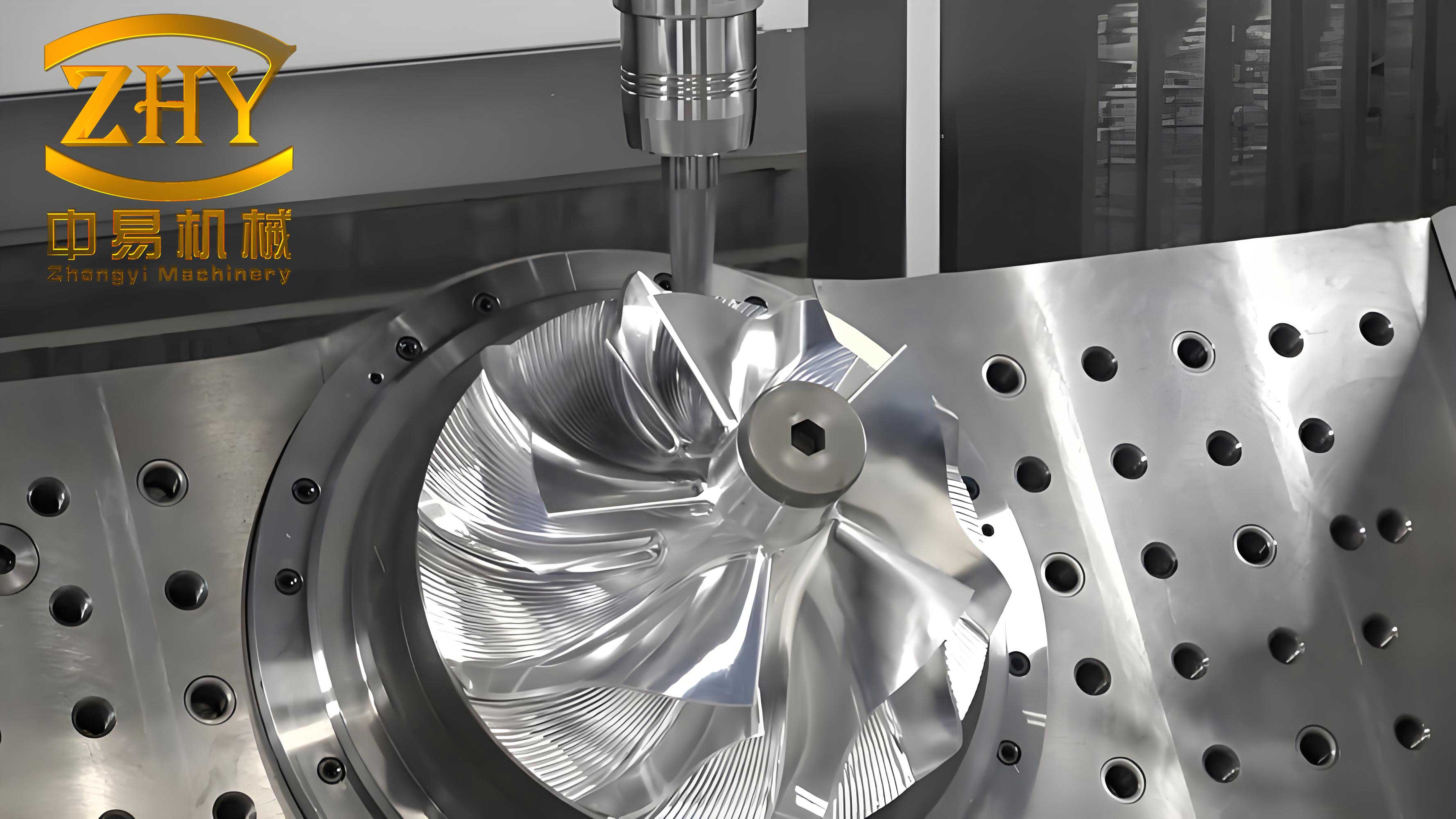
The image above illustrates the substantial size and complex geometry typical of such high-value machine tool castings, underscoring the importance of precise process control.
5. Production Validation and Results for TKG6920 Bed Castings
After validating the combined approach on prototype beds, we proceeded with the full-scale production of the TKG6920 machine tool castings. Adhering strictly to the optimized parameters—high tap temperature, intensive inoculation, selective Sn alloying in the first ladle, and the sequential gating system—we produced multiple beds. The results were exceptional.
The mechanical properties, including tensile strength, met the HT300 specification. The paramount achievement was the hardness profile of the guideways. As presented in Table 4, the hardness after rough machining was consistently within the target 180-230 HB range and showed minimal variation across the 6000 mm length. After semi-finishing, the hardness remained stable, with a very small drop, confirming the elimination of the severe skin effect.
| Casting Serial | Hardness After Rough Machining (HB) | Hardness After Semi-Finish Machining (HB) | Average Hardness (Rough) | Average Hardness (Semi-Finish) | ||||
|---|---|---|---|---|---|---|---|---|
| Front | Middle | Rear | Front | Middle | Rear | |||
| TKG-01 | 201 | 201 | 215 | 190 | 183 | 196 | 205.7 | 189.7 |
| TKG-02 | 206 | 200 | 198 | 196 | 185 | 181 | 201.3 | 187.3 |
The standard deviation $\sigma$ for hardness across all measurement points on a single guideway was calculated to be less than 10 HB, demonstrating remarkable uniformity. The process capability index $C_{pk}$ for hardness, relative to our specification limits (180, 230 HB), exceeded 1.33, indicating a highly capable and stable process for manufacturing these precision machine tool castings.
The success can be summarized by a conceptual performance equation combining our key variables: $$ \text{Hardness Homogeneity} \propto \frac{(T_{tap} – T_{threshold}) \cdot I_{eff} \cdot [Sn]_{opt}}{t_{contact} \cdot \Delta T_{solid}} $$ where $I_{eff}$ is inoculation effectiveness, $[Sn]_{opt}$ is the optimized tin addition, $t_{contact}$ is metal-coke contact time (minimized by furnace mods), and $\Delta T_{solid}$ is the section-dependent solidification time difference (mitigated by gating design).
6. Concluding Synthesis and Broader Implications
This project reaffirmed that producing high-integrity machine tool castings is a multivariate optimization challenge. It is not sufficient to adjust composition alone; the interplay between melting, metallurgical treatment, and casting mechanics is decisive. By systematically addressing superheating, nucleation, alloying, and feeding, we transformed the production outcome.
The high and uniform hardness directly translates to improved wear resistance, reduced bedding-in time, and sustained machining accuracy over the lifecycle of the machine tool. The reduction in hardness gradient also means less distortion during machining and under service loads, a critical factor for large machine tool castings. The principles established—prioritizing melt quality, employing multi-stage inoculation, using targeted micro-alloying, and designing gating for property localization—are broadly applicable to other grades of gray and ductile iron castings demanding stringent property consistency.
In conclusion, the journey to perfecting the TKG6920 bed casting was a testament to integrated foundry engineering. It highlighted that every aspect, from the cupola blast to the final gating design, contributes to the final quality of machine tool castings. The knowledge gained continues to inform our approach to manufacturing other critical cast components, ensuring they meet the ever-increasing demands of the precision machine tool industry. The consistent repetition of the term “machine tool castings” throughout this discussion underscores their unique requirements and the specialized techniques needed for their production. Future work may involve modeling the thermal history and microstructure evolution using finite element analysis to further refine the process for even more complex geometries in machine tool castings.