
From the perspective of an engineer directly involved in the project, the decision to implement a new production facility was driven by the need to modernize operations, improve product quality, and enhance working conditions. The core of this modernization was the adoption of a furan resin sand casting process. While the initial capital investment was significant, the long-term benefits in consistency, precision, and environmental control were deemed essential for competitiveness. The production line was designed for an annual output of 6000 tonnes of iron castings, utilizing a mix of imported key equipment and domestically sourced ancillary systems within an existing factory building.
The choice of resin sand casting over traditional clay-bonded sand was strategic. Our product mix consisted of many varieties with small batch sizes, demanding high dimensional accuracy and superior surface finish. The self-setting nature of the furan resin system allows for precise mold replication without the need for extensive drying, which is ideal for complex and high-quality castings. A critical comparative factor, often overlooked, is the total operational cost. The energy consumption of the new line was not significantly higher than the old coal-fired furnaces. Furthermore, hidden costs from the previous process—such as expenses for repeated normalizing of substandard castings and the salaries for four additional production workers—were eliminated. Most importantly, the working environment saw dramatic improvement, and product quality was substantially elevated.
The overall layout was constrained by the existing 3576 m² workshop. The principle of logical material flow governed the design. The melting department was placed in a southern annex, while the core mold assembly and pouring area, acting as the logistical nexus connecting molten metal, cores, and molds, was strategically positioned in the eastern part of the main hall’s north bay. To contain pollution, the pouring and shakeout areas were consolidated and isolated from other work sections. A key feature was the use of long-distance pneumatic sand conveying, which minimized dust dispersion and contributed to maintaining sand quality.
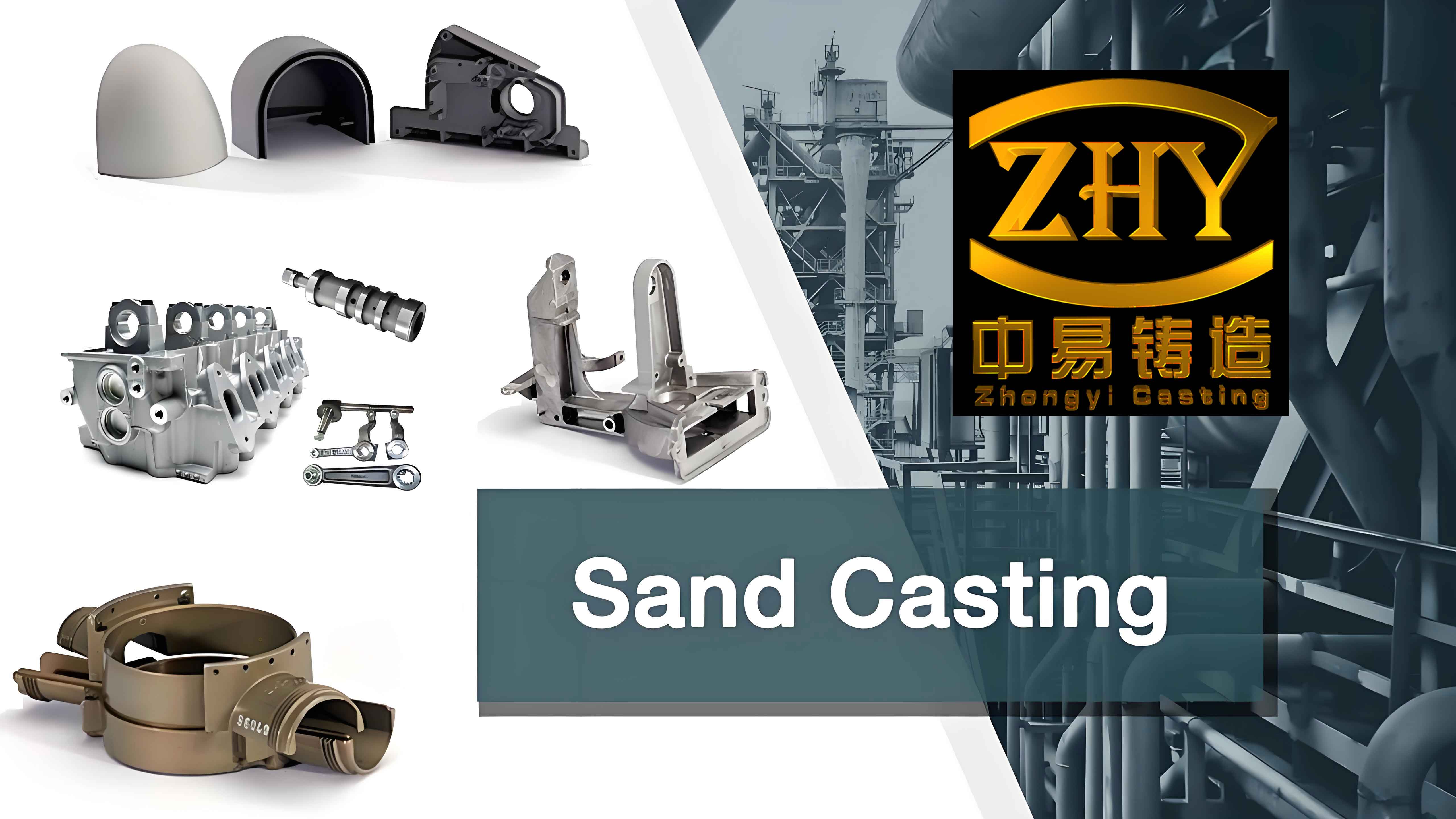
The equipment selection was based on rigorous calculation to balance capacity, investment, and operational flexibility. The core sand preparation and reclamation systems, along with the electrical control units, were imported due to their critical impact on process stability and reclaimed sand quality. The following calculations outline the basis for our equipment sizing.
The annual sand requirement, \( Q \), is fundamental for sizing the reclamation system and is derived from the production target, sand-to-metal ratio, and various loss factors:
$$ Q = C \cdot \theta \cdot (1 + \alpha) \cdot (1 + \beta) \cdot (1 + \gamma) $$
Where:
| Symbol | Meaning | Value |
|---|---|---|
| \( C \) | Annual production target | 6000 t |
| \( \theta \) | Average sand-to-metal ratio | 3.0 |
| \( \alpha \) | Casting rejection rate | 3% (0.03) |
| \( \beta \) | Mold waste rate | 5% (0.05) |
| \( \gamma \) | Sand loss rate | 5% (0.05) |
Thus, \( Q = 6000 \times 3.0 \times (1.03) \times (1.05) \times (1.05) \approx 20440 \) tonnes/year.
The annual available operating time for machinery, \( T \), considering single-shift work, is:
$$ T = 8 \cdot (1 – \delta) \cdot T_g $$
With \( \delta \) (time loss rate) = 4% and \( T_g \) (working days) = 254, we find \( T \approx 1951 \) hours/year.
The required capacity for the sand reclamation unit, \( P_{reclaim} \), is then:
$$ P_{reclaim} = \frac{Q \cdot \phi}{T} $$
Where \( \phi \) is the sand reclamation rate (90%). This gives \( P_{reclaim} \approx 9.43 \) t/h. Selecting a 15 t/h unit results in a load factor, \( \eta_{reclaim} \):
$$ \eta_{reclaim} = \frac{9.43}{15} \times 100\% \approx 63\% $$
The nominal hourly sand mixing requirement, \( P_{h\_nom} \), is \( Q/T \approx 10.5 \) t/h. However, the critical constraint in resin sand casting is the “work time” of the sand. The mixer capacity must satisfy the condition for the largest mold:
$$ P_m \ge \frac{W_{max}}{t} $$
Where \( P_m \) is mixer capacity (t/h), \( W_{max} \) is the weight of the largest mold (3 t), and \( t \) is the usable sand time (e.g., 0.133 hours or 8 minutes). Therefore, \( P_m \ge 3 / 0.133 \approx 22.5 \) t/h. We selected two 25 t/h mixers, leading to a very low nominal load factor but ensuring technical feasibility for large molds.
The molten metal demand drives furnace sizing. The annual required molten metal, \( N \), accounting for yield (\( \psi = 95\% \)), is:
$$ N = \frac{C \cdot (1 + \alpha)}{\psi} = \frac{6000 \times 1.03}{0.95} \approx 6516 \text{ tonnes} $$
With melting scheduled on 127 days per year, the required melting rate \( M \) is:
$$ M = \frac{N}{8 \cdot 127} \approx 6.41 \text{ t/h} $$
Two 5 t/h cupolas were installed, giving a load factor \( \eta_{cupola} \approx 64.1\% \). A 3 t/h induction furnace was added for superheating and duplexing.
| Equipment | Selected Capacity | Calculated Demand | Load Factor (η) | Primary Selection Driver |
|---|---|---|---|---|
| Sand Reclaimer | 15 t/h | 9.43 t/h | ~63% | Annual sand volume, reclamation rate |
| Sand Mixer (each) | 25 t/h | 10.5 t/h (total) | ~21% (each) | Maximum mold weight & sand work time |
| Cupola Melter (each) | 5 t/h | 6.41 t/h (total) | ~64% (each) | Annual metal tonnage, operating days |
The core of the resin sand casting line is the molding and sand reclamation departments. Two 25 t/h continuous mixers are deployed, each serving a dedicated molding area. A patented feature of these mixers is an integrated cleaning chamber with a fluidized bed and separator blades. This system actively removes spent resin films and fines during mixing, reportedly reducing binder demand by up to 20% and significantly improving reclaimed sand quality, which is crucial for a closed-loop resin sand casting process.
The sand reclamation system is a three-stage process. First, sand lumps from shakeout are pre-conditioned via vibration and scrubbing. The core secondary regeneration is achieved through aerodynamic acceleration: sand grains are propelled at high speed (≈15 m/s) against impact plates, effectively removing residual binder coatings via kinetic energy. This is followed by wind classification and temperature conditioning. Due to space constraints, this entire reclamation tower was constructed externally with insulation, a practical solution for northern climates.
Stringent process control is the backbone of successful resin sand casting. The parameters are meticulously managed.
| Material/Process | Parameter | Control Target | Purpose/Rationale |
|---|---|---|---|
| Base Sand | Moisture Content | < 0.02% | Prevent reaction with acidic catalyst, ensure binder effectiveness. |
| Clay Content | < 0.3% | ||
| Acid Demand Value | < 5% | ||
| Reclaimed Sand | Loss on Ignition (LOI) | < 3.0% | Control build-up of combustible residues affecting gas evolution and casting defects. |
| Fine Content (<0.063mm) | < 0.5% | ||
| Sand Mixture | Resin Addition | 1.0% of sand weight | Achieve necessary mold strength while minimizing cost and gas generation. |
| Catalyst Addition | 30% – 50% of resin weight (seasonally adjusted) | ||
| Mold Properties | Strip Time / 24h Tensile Strength | 20-30 min / 0.6-0.8 MPa | Ensure safe demolding and adequate handling strength. |
| Casting Process | Sand-to-Metal Ratio | 2.5 – 3.0 | Reduce sand consumption, improve thermal management during solidification. |
After over a year of operation, the performance metrics of the resin sand casting line have been validated.
| Metric | Previous Process (Clay Sand) | Current Resin Sand Casting Line | Improvement / Achievement |
|---|---|---|---|
| Dimensional Tolerance | CT11-12 | CT9 | Significantly closer to nominal dimensions. |
| Surface Roughness, \( R_a \) | > 100 μm | < 50 μm | Much smoother as-cast surface. |
| Overall Rejection Rate | ~8-10% | < 3% | More than 60% reduction in scrap. |
| First-Pass Machining Yield | ~80% | > 95% | Reduced rework and machining costs. |
| Sand Reclamation Rate | Not applicable (mostly disposal) | 90% | Major reduction in new sand purchase and waste disposal. |
| Environmental Dust | High | Below national standard (<100 mg/m³) | Improved worker health and safety. |
However, several challenges emerged, highlighting areas for future improvement in resin sand casting operations. The sand cooler lacked direct water-chilling capability, leading to high sand temperatures in summer that compromised mold stripability. The 3 t/h induction furnace sometimes created a bottleneck for metal treatment compared to the cupola output. A significant learning curve was related to the distinct behavior of resin sand molds; initial high scrap rates were mitigated by redesigning gating systems for faster filling and superior venting to accommodate the lower high-temperature strength and higher gas evolution of resin sand casting molds. Finally, the dependency on imported spare parts for critical components remains a logistical and cost challenge, underscoring the need for accelerated localization of these items.
From a financial standpoint, the investment transcends simple equipment costs. The analysis must consider total cost of ownership and value generated.
| Cost Factor | Consideration in Resin Sand Casting Context |
|---|---|
| Capital Investment | High initial outlay for imported core systems (mixers, reclaimer, controls). Partially offset by using existing building and domestic ancillary equipment. |
| Direct Operating Costs | Binder and catalyst costs are significant but partially counterbalanced by ~20% binder savings from advanced mixer technology and 90% sand reclamation. |
| Energy Consumption | Not significantly higher than previous coal-fired operations. Eliminated costs for repeated heat treatment of defective castings. |
| Labor Costs | Eliminated salaries for four production workers from the old process. Improved productivity per worker. |
| Quality & Scrap Costs | Major reduction in scrap rate (<3%) and increase in first-pass machining yield (>95%) translate directly to substantial cost savings and higher throughput. |
| Environmental & Social Costs | Dramatically improved working environment reduces health risks. Compliance with emission standards avoids potential fines. |
In conclusion, the implementation of this dedicated resin sand casting production line has been transformative. The technical objectives of achieving high-dimensional accuracy, excellent surface finish, and low scrap rates have been met or exceeded. The operational benefits of sand reclamation and improved workflow have enhanced sustainability and efficiency. While challenges such as thermal management of reclaimed sand and spare part supply persist, the overall outcome validates the strategic shift to modern resin sand casting technology. The line has not only elevated the technical capability to contemporary industry standards but has also strengthened the foundational quality systems, proving essential for competing in broader markets. The experience underscores that success in resin sand casting relies equally on precise equipment, rigorous process control, and deep understanding of the unique material behaviors involved.