
Aluminum and magnesium alloys have been widely adopted in automotive, aerospace, electrical, and electronic industries because of their excellent corrosion resistance, high specific strength, high stiffness, and outstanding vibration damping. As the demand for lightweight and precise components grows, traditional casting methods often fail to meet the stringent quality requirements. Lost foam casting, despite its advantages in producing complex geometries, frequently introduces defects such as gas pores and slag inclusions due to the decomposition of the polymeric foam pattern. To overcome these limitations, the expendable pattern shell casting process, which combines the features of lost foam casting and investment casting, has been developed. In this review, we focus on the recent research progress of the expendable pattern shell lost foam casting process for aluminum and magnesium alloys, covering foam pattern preparation, shell coating systems, shell fabrication, dewaxing and firing, and metal forming parameters. We also discuss the current applications, remaining challenges, and future directions of this technology, while emphasizing the role of lost foam castings in precision manufacturing.
The expendable pattern shell casting process, often abbreviated as EPSC, is a novel hybrid casting technology. In this process, a foam pattern that has the same geometry as the final casting is first prepared. After assembling the gating system, a refractory shell is applied onto the foam pattern surface. Once the coating is dried and hardened, the entire pattern cluster is placed in a high-temperature furnace where the foam pattern is burned off. The resulting shell is then fired at high temperature to achieve sufficient strength and permeability. Finally, the shell is embedded in dry sand and poured under vibration and vacuum conditions. This approach retains the benefit of producing large complex precision castings without any parting surface, while eliminating most defects associated with the decomposition gases and residues of the foam pattern. Compared to conventional lost foam castings, the expendable pattern shell process demonstrates significantly improved surface quality and dimensional accuracy. The research status of this process for aluminum and magnesium alloys is systematically summarized below, with emphasis on the critical process variables and their influence on the final casting quality.
Foam Pattern Preparation
The foam pattern is the core of the expendable pattern shell process. Its dimensional stability, surface roughness, and structural complexity directly affect the quality of the resulting casting. To produce a qualified foam pattern, careful selection of raw material and strict control of pre-expansion, molding, and aging parameters are essential. Most studies in this area concentrate on two aspects: the optimization of molding parameters to achieve adequate stiffness and dimensional accuracy, and the surface finishing treatment to eliminate the bead marks on the foam surface.
Polystyrene beads are commonly used to produce foam patterns. The bead size distribution and pre-expansion time influence the bulk density and expansion capability. Experimental results indicate that the bulk density of the molded pattern is mainly determined by the pre-expansion time rather than the bead diameter. A longer pre-expansion time yields a lower bulk density. Larger beads retain more blowing agent and show stronger expansion ability, but they also tend to lose the blowing agent more rapidly after pre-expansion, which reduces their subsequent expandability. Therefore, a balance must be established among bead size, pre-expansion time, and aging conditions.
For the EPS foam pattern used in the expendable pattern shell process, the recommended pre-expansion temperature is around 100–102 °C, and the pre-expansion time is typically 2–3 minutes. The drying and aging temperature is usually 50 °C, and the aging time should be longer than 12 hours. Forced air circulation can accelerate the drying process. When beads with diameters between 0.4 mm and 1.2 mm are used, the mold cavity should be filled as densely as possible, and a steam pressure of 0.12–0.16 MPa with a foaming time of 2–4 minutes is recommended for obtaining an ideal pattern. The molding time must be increased for larger patterns. The density of the EPS pattern strongly influences the casting quality. Higher pattern density leads to a smoother casting surface; however, it increases the amount of gas generated during burnout and raises the risk of shell cracking. Thus, a reasonable density range of 0.050–0.065 g/cm³ is often suggested for EPS patterns in lost foam castings.
Because bead packing inevitably leaves gaps on the pattern surface, the resulting foam pattern exhibits a network of shallow grooves that can be transferred to the final casting. Several surface treatment methods have been proposed to improve the surface finish. Surface smoothing agents, such as nitrocellulose, polyvinyl acetate, and polyvinyl butyral, have been compared. Nitrocellulose displays good film-forming ability and moderate film thickness, effectively filling the inter-bead grooves. Another method involves brushing or dipping a thin-leveling layer onto the foam pattern. In dipping, a mixture of paraffin wax and stearic acid in a 1:1 ratio reduces the melting point to about 46.5 °C, improving fluidity. Dipping at 55–60 °C for 4–6 seconds reduces the shell surface roughness from about 17.54 μm to 6.04 μm. In the brushing method, a paste composed of emulsified wax, stearic acid, polyethylene glycol, methyl cellulose, and methyl silicone oil in the ratio 73:15:7:3:2 provides excellent smoothing. After treatment, the shell surface roughness decreases from 15.54 μm to 4.84 μm. These techniques greatly improve the surface quality of the foam pattern and, consequently, that of the final metal casting.
| Parameter | Recommended range | Effect on pattern quality |
|---|---|---|
| Pre-expansion temperature | 100–102 °C | Controls bead density |
| Pre-expansion time | 2–3 min | Determines bulk density |
| Aging temperature | 50 °C | Stabilizes shape |
| Aging time | >12 h | Allows blowing agent diffusion |
| Steam pressure | 0.12–0.16 MPa | Ensures fusion of beads |
| Foaming time | 2–4 min | Affects expansion |
| Pattern density | 0.050–0.065 g/cm³ | Balances surface finish and gas evolution |
In the context of lost foam castings, the foam pattern is not merely a disposable model but also a sacrificial core that will be removed before pouring. Therefore, its thermal degradation behavior is critical. The density of the foam pattern can be expressed as:
$$\rho_{\text{EPS}} = \frac{m_{\text{EPS}}}{V_{\text{EPS}}}$$
where \(m_{\text{EPS}}\) is the mass of the foam pattern and \(V_{\text{EPS}}\) is its volume. The surface area of the pattern also affects the coating thickness and the shell weight. A larger surface area may require a thicker coating to maintain mechanical integrity. The coating thickness can be estimated from the mass of the coating applied \(m_c\), the coating density \(\rho_c\), and the pattern surface area \(A\):
$$\delta = \frac{m_c}{\rho_c A}$$
During the burnout process, the foam pattern expands before it decomposes. The thermal expansion stress developed in the shell can be approximated by:
$$\sigma = E \alpha \Delta T$$
where \(E\) is the elastic modulus of the shell, \(\alpha\) is the thermal expansion coefficient of the foam, and \(\Delta T\) is the temperature increase. This stress may cause cracking if the shell strength is insufficient.
Shell Coating and Shell Making
The shell coating is the most critical component of the expendable pattern shell lost foam casting process. The shell must possess high strength, good permeability, proper surface finish, and easy collapsibility. During pouring, the molten metal directly contacts the shell, and the metal solidifies inside the cavity. Thus, the shell quality determines the dimensional accuracy and surface integrity of the final casting. In early developments, three binders were mainly used for shell production: water glass, ethyl silicate, and silica sol. Water glass allows rapid chemical hardening and shortens the hardening cycle, but the resulting shell has poor surface finish and low strength after firing. Ethyl silicate releases ethanol during drying, which is an environmental hazard. Consequently, silica sol is now preferred because it offers high high-temperature strength, low surface roughness, and convenient operation.
Typical shell coating formulations consist of a refractory aggregate and a binder. For aluminum and magnesium alloys, alumina-silicate refractories such as bauxite, mullite, and fused alumina are commonly employed. With silica sol as the binder and bauxite as the aggregate, the face-coat powder-to-liquid ratio is approximately 2.4:1, while the backup-coat ratio is around 1.6:1. A five-layer shell can achieve a high-temperature flexural strength of up to 12 MPa. Systematic studies have shown that the type of binder and aggregate, as well as the powder-to-liquid ratio, significantly influence the room-temperature strength, fired strength, and residual strength. Shells made from bauxite and silica sol exhibit high strength at both room temperature and high temperature. At a powder-to-liquid ratio of 2.2:1, the room-temperature and high-temperature strengths are 1.60 MPa and 2.92 MPa, respectively.
For magnesium alloys, fused corundum is often selected as the refractory aggregate because of its chemical inertness. A coating using fused corundum and silica sol with a powder-to-liquid ratio of 3.2:1 and a firing temperature of 1200 °C yields a shell strength of 4.3 MPa. The strength enhancement is attributed to the formation of mullite from the reaction between Al₂O₃ and SiO₂ during sintering. The reaction can be represented as:
$$3\text{Al}_2\text{O}_3 + 2\text{SiO}_2 \rightarrow 3\text{Al}_2\text{O}_3 \cdot 2\text{SiO}_2$$
This mullite phase binds the refractory particles together and improves the high-temperature mechanical performance.
To further improve the coating performance, various additives have been explored. The addition of starch and aluminum dihydrogen phosphate to a bauxite-based shell coating has been studied. Starch, when added at levels below 2.5%, forms a film that surrounds the silica sol particles and refractory aggregates, promoting sintering. Aluminum dihydrogen phosphate is effective in the range of 5–9% by mass; upon firing, it decomposes to aluminum phosphate, which acts as a binder. Low-melting-point glass, when added at 2.5% along with 0.75% fused alumina powder, can fill the micro-cracks generated during high-temperature sintering, increasing the post-firing strength by about 30%. Boron compounds, such as boric acid, can also be added to the coating to impart flame-retarding properties when casting magnesium alloys. The boric acid transforms to boric anhydride at high temperatures, which reacts with magnesium oxide to form a protective glassy film of 3MgO·B₂O₃, effectively preventing oxidation during pouring.
One of the major bottlenecks in shell making is the lengthy drying time between layers. Traditional silica sol shells require several hours of drying per layer. Researchers have introduced super absorbent polymers into the stucco particles to accelerate drying. By mixing high water-absorbing resin particles with the stucco sand, the free water in the coating is absorbed rapidly, reducing the drying time significantly. A resin content of 3% in the stucco reduces the face-coat drying time from 10 hours to approximately 3 hours. Similarly, the addition of polyvinyl alcohol to the stucco sand decreases the average interlayer drying time from 5 hours to 3–4 hours. These innovations considerably shorten the total shell production cycle.
Another approach to improve shell properties is the use of fiber reinforcements. Nylon fibers about 20 μm in diameter and 1 mm in length added to a zircon-silica-aluminosilicate coating are burned out during firing, leaving a porous network that greatly increases the shell permeability. Hybrid ceramic and nylon fibers added to a white corundum silica sol coating enhance both the wet strength and the high-temperature strength due to fiber bridging. The permeability of the shell can be evaluated using the apparent gas permeability coefficient \(K\), defined by Darcy’s law for gas flow through the porous shell:
$$K = \frac{Q \mu L}{A \Delta P}$$
where \(Q\) is the volumetric flow rate, \(\mu\) is the gas viscosity, \(L\) is the shell thickness, \(A\) is the cross-sectional area, and \(\Delta P\) is the pressure difference across the shell. A higher \(K\) value is favorable for venting the gases generated during pouring, which reduces the occurrence of gas defects in lost foam castings.
| Coating system | Binder | Refractory aggregate | Key additive | Shell strength | Remarks |
|---|---|---|---|---|---|
| Bauxite + silica sol | Silica sol | Bauxite | — | 2.92 MPa (high T) | Face coat 2.4:1 |
| Corundum + silica sol | Silica sol | Fused corundum | — | 4.3 MPa | For Mg alloys |
| Bauxite + silica sol + starch | Silica sol + starch | Bauxite | Starch ≤2.5% | Improved sintering | Film formation |
| Bauxite + silica sol + Al(H₂PO₄)₃ | Silica sol + phosphate | Bauxite | 5–9% phosphate | Improved bond | PVA also added |
| Bauxite + silica sol + glass | Silica sol | Bauxite | 2.5% low-melting glass | +30% strength | Heals micro-cracks |
| Magnesium coating | Silica sol | Fused corundum | Boric acid | Flame retardant | Forms 3MgO·B₂O₃ |
Dewaxing and Firing Processes
The dewaxing process removes the foam pattern from the shell, and the firing process densifies the shell and builds up its final strength. The key issue is to control the heating temperature so that the foam pattern can decompose completely without causing the shell to crack. In the expendable pattern shell process, the foam pattern expands when heated before it melts and vaporizes. This expansion exerts pressure on the internal surface of the shell, and if the pressure exceeds the shell strength, cracking occurs.
Studies on EPS patterns with a density of about 0.016 g/cm³ have shown that if the dewaxing temperature is too low, the foam expands excessively and causes concavity or stress cracking at corners and other weak areas. A recommended procedure is to heat the shell to 600 °C in a furnace, hold it for 60 minutes, and then fire at 800 °C for 1 hour. Alternatively, a combined dewaxing and firing process can be employed. For example, the shell is heated to 250 °C and held for 30 minutes to melt the EPS, then heated to 500 °C and held for 30 minutes to vaporize the melted residues, and finally heated to 800 °C and held for 1 hour for sintering. This stepwise heating schedule reduces the risk of shell cracking by allowing the foam to melt and drain out before the vigorous decomposition starts.
Another reported dewaxing approach uses a solvent, such as dichloromethane, to dissolve the EPS pattern at room temperature, followed by a firing step at 800 °C for 1 hour. This method eliminates thermal expansion stresses entirely and yields a shell with a smooth internal cavity and high strength. However, the use of organic solvents introduces environmental and safety concerns, so thermal dewaxing remains the more common approach in industrial practice.
The firing temperature is critical for achieving the desired shell strength. During firing, the silica sol particles undergo dehydration and condensation, forming a silica network that bonds the refractory aggregate. Higher firing temperatures promote more complete sintering and mullite formation, which improves strength. However, excessive firing temperatures may cause over-sintering, leading to a reduction in permeability and an increase in residual strength that complicates shell removal after casting. For most silica sol-based shells, a firing temperature of 800–1000 °C and a holding time of 1–2 hours are appropriate.
The minimum dewaxing temperature for EPS patterns increases with the density and size of the pattern. The specific temperature-time profile must be optimized for each geometry. The volume expansion ratio of the foam pattern can be expressed as:
$$\frac{V_f}{V_0} = 1 + \beta (T – T_0)$$
where \(V_f\) is the final volume, \(V_0\) is the initial volume, \(\beta\) is the volumetric thermal expansion coefficient, and \(T – T_0\) is the temperature rise. This relationship underlines the need to control the heating rate carefully.
Metal Forming and Solidification
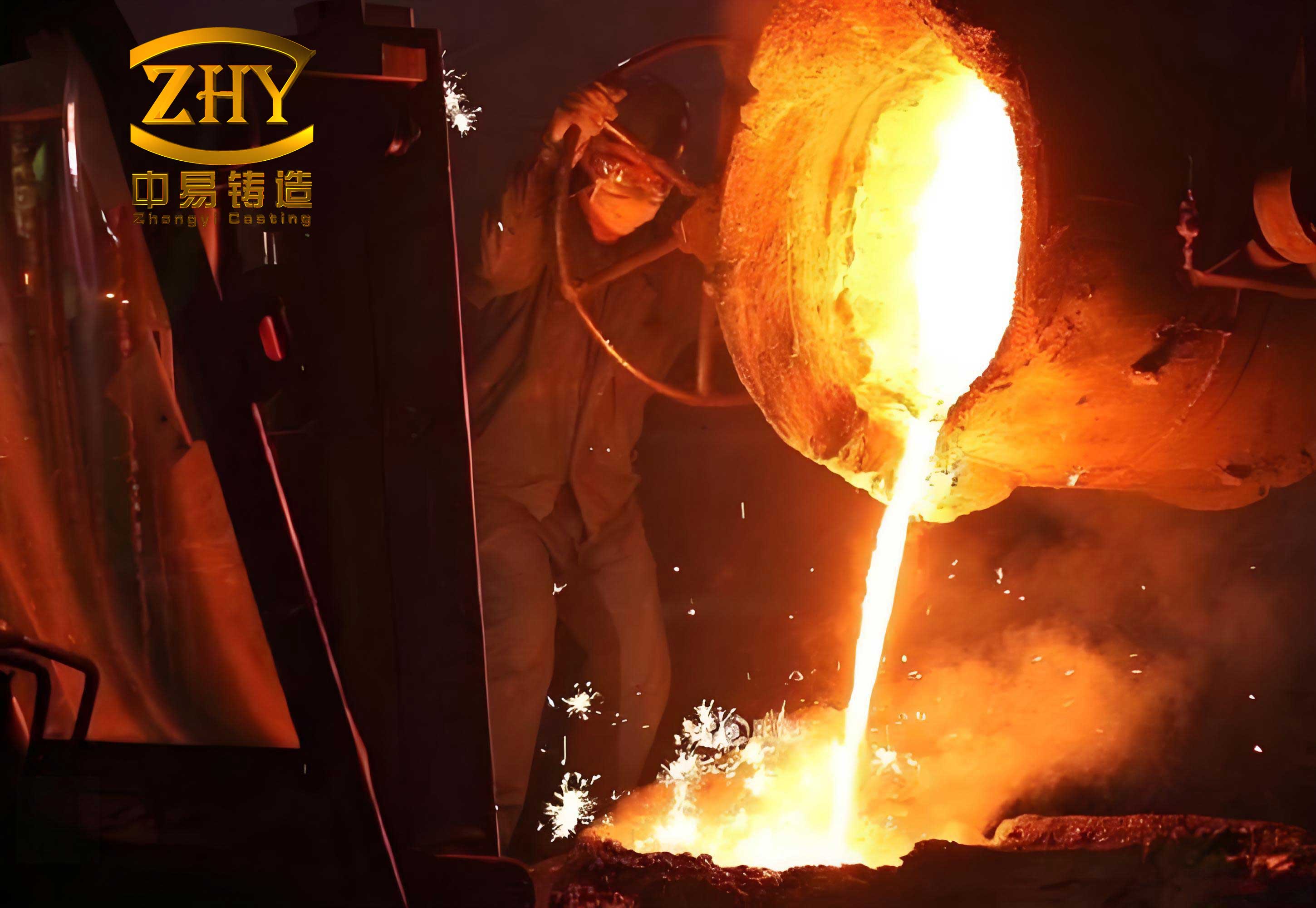
The final step in the expendable pattern shell lost foam casting process involves placing the fired shell in dry sand and pouring the molten metal under vacuum and mechanical vibration. The vibration promotes filling of thin sections and refines the solidification structure. The pouring temperature, vibration frequency, amplitude, and vacuum level all influence the microstructure and mechanical properties of the resulting casting.
For AZ91D magnesium alloy, the mechanical properties of the casting generally decrease with increasing wall thickness and pouring temperature. This degradation is caused by the coarse dendrites and the network-like distribution of the brittle β-Al₁₂Mg₁₇ phase resulting from slow cooling. When pouring is conducted under vacuum, the β-phase becomes more dispersed and the mechanical properties are better than those of gravity-poured samples. In another study on AZ91D, the application of mechanical vibration during pouring refines the dendritic structure. At a pouring temperature of 730 °C, the structure becomes equiaxed. Increasing the vibration frequency to 100 Hz produces a relatively fine microstructure with uniform primary α and β phases. Increasing the vibration amplitude to 1.0 mm yields the finest and most rounded grains. The grain refinement is attributed to the fragmentation of dendrites by the mechanical agitation of the solidifying slurry.
For AZ31 magnesium alloy, vibration frequency also affects the filling ability. At a frequency of 100 Hz, the alloy exhibits the best fluidity, finest microstructure, and highest mechanical properties. This improvement is related to the enhanced dendrite fragmentation and the reduced viscosity of the semi-solid slurry.
For ZL101A aluminum alloy, the influence of wall thickness has been investigated using stepped castings with thicknesses from 10 mm to 40 mm. Without vibration, the microstructure becomes coarse with increasing wall thickness. However, under the same vibration frequency, the grain size and morphology are greatly improved as the wall thickness increases. At a wall thickness of 40 mm, the hardness, ultimate tensile strength, and elongation increase by 8.6%, 35%, and 59.7%, respectively, compared to the non-vibrated samples. The applied vibration effectively compensates for the slower cooling rate in thicker sections.
The effect of vibration amplitude on ZL101A has also been studied. Without vibration, the primary α phase appears dendritic, and the eutectic silicon appears as long needles, leading to poor mechanical properties. As the amplitude increases to 0.7 mm and then 1.0 mm, the primary α phase becomes fine equiaxed grains and the eutectic silicon transforms into short rods or particles. At an amplitude of 1.0 mm, the best combination of strength and ductility is achieved. The relationship between the secondary dendrite arm spacing (SDAS) and the local solidification time can be expressed as:
$$\lambda = A \cdot t_s^{n}$$
where \(\lambda\) is the secondary dendrite arm spacing, \(A\) and \(n\) are material-dependent constants, and \(t_s\) is the local solidification time. Mechanical vibration reduces the effective solidification time and promotes grain multiplication, thereby decreasing the SDAS and improving the microstructure.
Pouring temperature has a pronounced effect on the microstructure of ZL101A alloy produced by expendable pattern shell casting. Higher pouring temperatures coarsen the microstructure and reduce the tensile strength, yield strength, elongation, and hardness. Therefore, the pouring temperature should be kept as low as possible while still ensuring complete filling of the mold. A lower pouring temperature also reduces the risk of oxidation and porosity in aluminum and magnesium lost foam castings.
| Alloy | Parameter investigated | Optimal value | Observed effect |
|---|---|---|---|
| AZ91D | Pouring temperature | 730 °C | Equiaxed structure |
| AZ91D | Vibration frequency | 100 Hz | Fine and uniform microstructure |
| AZ91D | Vibration amplitude | 1.0 mm | Finest and roundest grains |
| AZ31 | Vibration frequency | 100 Hz | Best filling and finest structure |
| ZL101A | Wall thickness + vibration | 40 mm | Improved hardness, UTS, elongation |
| ZL101A | Vibration amplitude | 1.0 mm | Equiaxed α and modified eutectic Si |
| ZL101A | Pouring temperature | Lower is better | Finer structure and better properties |
The cooling rate of the casting can be estimated from the difference between the pouring temperature \(T_p\) and the mold temperature \(T_m\) divided by the solidification time \(t\):
$$\dot{T} = \frac{T_p – T_m}{t}$$
Higher cooling rates generally lead to finer microstructures. In the expendable pattern shell process, the shell has a relatively low thermal conductivity compared to a conventional sand mold, which may slow the cooling rate. However, the application of vibration and vacuum can mitigate this by promoting forced convection and improving the contact between the metal and the shell.
Applications and Remaining Challenges
The expendable pattern shell lost foam casting process has been successfully used to produce a variety of high-quality castings. It has been particularly effective for steel castings, where it prevents carbon pickup and slag inclusions. In the aluminum and magnesium industry, this process has found applications in automotive components, such as intake manifolds and structural parts. Components produced by this process show much better internal integrity than those produced by conventional lost foam castings, because the foam pattern is completely removed before pouring, eliminating the gas generation and residue contamination that plague the standard lost foam process.
Despite these advantages, there are several limitations that hinder the widespread adoption of the process for light alloys. First, most domestic research and applications focus on ferrous alloys, while aluminum and magnesium alloy studies remain largely at the laboratory stage. Aluminum and magnesium alloys have high solidification shrinkage, wide crystallization temperature ranges, and well-developed dendrites. If the pouring temperature is too high, defects such as pinholes and oxide inclusions may occur. If the pouring temperature is lowered to avoid these problems, thin-walled complex castings may suffer from cold shuts and misruns. Therefore, the process parameters for large thin-wall aluminum and magnesium alloy castings require further systematic investigation.
Second, the shell coatings currently used in the EPSC process are often borrowed from investment casting. These coating systems are designed for relatively small castings and require thick shell builds and long drying times. The resulting shell is heavy and difficult to handle, and its permeability is often insufficient for large castings. These factors severely restrict the ability to produce large components and limit the economic competitiveness of the process.
Third, the dewaxing and firing steps add complexity and energy consumption. The high temperature required to burn out the foam may cause thermal stresses in the shell, leading to cracking. Although solvent-based dewaxing avoids thermal expansion, it introduces environmental concerns. Optimizing the heating schedule and developing new low-temperature burnout methods remain important research topics.
Finally, the interaction between the shell and the molten metal during pouring is not fully understood for aluminum and magnesium alloys. The chemical reactions at the metal-shell interface can influence the surface quality and the formation of inclusions. Future work should focus on understanding these interfacial phenomena and developing shell materials that are chemically inert and thermally stable for light alloys.
Future Outlook
As the demand for lightweight materials continues to grow in the automotive and aerospace sectors, the expendable pattern shell lost foam casting process is expected to play an increasingly important role. This process combines the near-net-shape capability of lost foam casting with the superior surface finish and dimensional accuracy of investment casting, while eliminating many defects that are common in traditional lost foam castings. The ability to produce large complex parts with minimal post-processing is particularly valuable.
Future research directions will likely include the following areas:
1. Development of advanced shell coating materials specifically designed for aluminum and magnesium alloys. The use of multi-component binders, nano-additives, and functional fillers will enhance the shell strength and permeability while reducing the drying time. Composite coatings that combine organic and inorganic binders may offer the best balance of properties.
2. Optimization of the dewaxing and firing processes. The use of microwave heating, induction heating, or other rapid heating technologies could reduce the thermal stress and shorten the cycle time. In-situ monitoring of the shell temperature and gas evolution during burnout will help in designing safer and more efficient heating profiles.
3. Expansion of the process to large thin-wall castings. The relationship among shell thickness, pattern size, and casting dimensions must be established. Numerical simulation of the mold filling and solidification processes will be essential to identify the optimal casting conditions and to predict defect formation. The use of mechanical vibration and electromagnetic stirring can further improve the filling capability and microstructure of large castings.
4. Establishment of a robust database of processing parameters for different alloys and geometries. Because the properties of aluminum and magnesium alloys vary significantly with composition, heat treatment, and casting conditions, a comprehensive database will enable rapid process design and reduce the trial-and-error approach.
5. Exploration of the combination of the expendable pattern shell process with other advanced manufacturing technologies. For example, 3D printing can be used to produce foam patterns with intricate internal channels that are difficult to create by conventional molding. Additive manufacturing of the shell itself may also be possible, allowing for rapid prototyping and small-batch production.
In summary, the expendable pattern shell lost foam casting process holds great promise for producing high-quality aluminum and magnesium alloy castings. With continued research and development, this process has the potential to become one of the leading manufacturing technologies for lightweight precision components. The key to unlocking this potential lies in the development of high-performance shell materials, optimized process control, and a deeper understanding of the solidification behavior under vibration and vacuum. As these challenges are overcome, the application of this process will undoubtedly expand, further enhancing the quality and reliability of lost foam castings.