
As a foundry engineer specializing in nodular cast iron production, I have spent years refining processes to enhance material performance. Nodular cast iron, also known as ductile iron, is a high-performance material widely used in automotive, machinery, and infrastructure industries due to its excellent mechanical properties, such as high strength, ductility, and wear resistance. Its microstructure, characterized by spherical graphite nodules embedded in a metallic matrix, is achieved through spheroidization and inoculation treatments. However, producing high-quality nodular cast iron via lost foam casting presents unique challenges, primarily due to high pouring temperatures and rapid spheroidization reactions, which often lead to low graphite nodule counts, insufficient pearlite content, and inconsistent casting quality. This article details my first-person exploration and innovative improvements in the spheroidization treatment process for nodular cast iron in lost foam casting, aiming to stabilize casting quality and elevate performance metrics.
The lost foam casting process involves using a foam pattern coated with refractory material, embedded in dry sand under vacuum, and then filled with molten iron. While this method offers advantages like precision, clean production, and scalability, it exacerbates issues in nodular cast iron production. Traditional spheroidization methods, such as the conventional ladle treatment, involve placing spheroidizing agents at the bottom of a ladle, covering them with inoculants and covering agents, and then pouring molten iron. In lost foam casting, the high treatment temperatures (often above 1500°C) accelerate the reaction of spheroidizing agents, reducing magnesium absorption rates and causing rapid magnesium fade. This results in poor spheroidization grades, with low graphite nodule counts and inadequate pearlite formation, ultimately compromising the mechanical properties of nodular cast iron castings. For instance, initial processes yielded graphite nodule counts as low as 30% and pearlite content around 85%, far below optimal levels for high-strength applications.
To address these challenges, I focused on two key areas: optimizing inoculation strategies and redesigning the spheroidization ladle. The goal was to enhance nodular cast iron quality by increasing graphite nodule numbers and pearlite content through controlled reactions and reduced fade. The following sections elaborate on these innovations, supported by technical details, formulas, and tables.
Inoculant Selection and Implementation for Enhanced Nodular Cast Iron
Inoculation is critical in nodular cast iron production as it promotes graphite nucleation, refines graphite structure, and prevents chilling. In lost foam casting, the high pouring temperatures accelerate inoculant fade, necessitating the use of slow-fading inoculants combined with multiple additions. Based on my experience, I developed a composite inoculation method using three types of inoculants: first inoculant (silicon iron), second inoculant (silicon barium), and third inoculant (silicon barium calcium). Each inoculant contributes distinct properties; for example, silicon barium and silicon barium calcium have higher melting points and better fade resistance, extending the effective inoculation window.
The inoculation process involves three stages: First, during spheroidization, add 0.15% of the first inoculant (by weight of molten iron) to the ladle. Then, 20 seconds after the spheroidization reaction begins, add 0.35–0.45% of the second inoculant, followed by 0.2–0.4% of the third inoculant. This sequential addition enhances inoculation effectiveness by providing multiple nucleation sites, delaying fade, and reducing graphite abnormalities. The total inoculant addition can be expressed as:
$$ I_{total} = I_1 + I_2 + I_3 $$
where \( I_1 \), \( I_2 \), and \( I_3 \) represent the percentages of first, second, and third inoculants, respectively. Typically, \( I_{total} \) ranges from 0.7% to 1.0%, optimized based on iron composition and casting size. The fade resistance of inoculants can be modeled using an exponential decay formula:
$$ N(t) = N_0 \cdot e^{-t/\tau} $$
where \( N(t) \) is the effective inoculant concentration at time \( t \), \( N_0 \) is the initial concentration, and \( \tau \) is the fade time constant. For composite inoculants, \( \tau \) is increased, extending the effective period. Table 1 summarizes the inoculant properties and addition rates for nodular cast iron.
| Inoculant Type | Composition | Addition Rate (% of Iron Weight) | Function | Melting Point (°C) |
|---|---|---|---|---|
| First Inoculant | Silicon Iron (Si-Fe) | 0.15 | Initial graphite nucleation | ~1200 |
| Second Inoculant | Silicon Barium (Si-Ba) | 0.35–0.45 | Enhances nodule count, fade resistance | ~1300 |
| Third Inoculant | Silicon Barium Calcium (Si-Ba-Ca) | 0.20–0.40 | Improves pearlite formation, stabilizes structure | ~1350 |
This multi-stage inoculation significantly improves the microstructure of nodular cast iron, leading to higher graphite nodule counts and more uniform pearlite distribution.
Ladle Design Innovations for Spheroidization in Nodular Cast Iron
The spheroidization process for nodular cast iron relies on the efficient absorption of magnesium from spheroidizing agents, typically containing rare earth magnesium alloys. In lost foam casting, the high temperature causes rapid magnesium vaporization and fade. To mitigate this, I designed a dam-type ladle with a cover plate system that splits the spheroidization reaction into two phases, prolonging reaction time and improving magnesium absorption. The ladle features a dam dividing it into two sections: one for initial iron pouring and the other for layered spheroidizing agents.
The setup involves: First, place a layer of spheroidizing agent (0.7–0.9% of iron weight) at the bottom of the dam-side section. Cover it with a covering agent (0.05–0.15%), compact it, and then place a cover plate made of rust-free carbon steel or preformed nodular cast iron. On top of the cover plate, add another layer of spheroidizing agent (0.55–0.65%), first inoculant (0.05–0.15%), and covering agent (0.05–0.15%). The cover plate is designed to fit closely with the ladle walls, with gaps ≤5 mm, to control the reaction sequence. When molten iron at 1560–1600°C is poured into the non-dam side, it flows over the dam, initiating the first spheroidization reaction with the top layer. As the cover plate melts, the bottom layer reacts, creating a second phase. This dual-reaction mechanism enhances magnesium absorption and reduces fade.
The kinetics of magnesium absorption can be described by a diffusion-controlled model:
$$ \frac{d[Mg]}{dt} = k \cdot A \cdot (C_{eq} – [Mg]) $$
where \( [Mg] \) is the magnesium concentration in the iron, \( k \) is the rate constant, \( A \) is the reaction surface area, and \( C_{eq} \) is the equilibrium concentration. By extending reaction time through the cover plate, \( A \) and \( t \) are optimized, increasing the final \( [Mg] \). The total magnesium addition is calculated as:
$$ Mg_{total} = Mg_1 + Mg_2 $$
with \( Mg_1 \) and \( Mg_2 \) representing the magnesium from the first and second layers, respectively. Typical values are \( Mg_1 \approx 0.4\% \) and \( Mg_2 \approx 0.3\% \), yielding a residual magnesium content of 0.03–0.05% after treatment, which is crucial for nodular cast iron quality. Table 2 outlines the ladle setup parameters.
| Component | Material/Type | Quantity (% of Iron Weight) | Purpose |
|---|---|---|---|
| Bottom Spheroidizing Agent | Rare Earth Magnesium Alloy | 0.7–0.9 | Primary magnesium source |
| Covering Agent (Bottom) | Carbon-Based Material | 0.05–0.15 | Insulates and controls reaction |
| Cover Plate | Carbon Steel or Nodular Cast Iron | — | Delays second reaction phase |
| Top Spheroidizing Agent | Rare Earth Magnesium Alloy | 0.55–0.65 | Secondary magnesium source |
| First Inoculant (Top) | Silicon Iron | 0.05–0.15 | Initial inoculation |
| Covering Agent (Top) | Carbon-Based Material | 0.05–0.15 | Prevents oxidation |
This ladle design has proven effective in improving spheroidization consistency for nodular cast iron in lost foam casting.
Process Implementation and Parameters for Nodular Cast Iron Production
Implementing the improved process requires precise control over melting, treatment, and pouring stages. The steps are as follows: First, melt iron in an electric furnace to a temperature of 1560–1600°C. After slag removal, add a pre-treatment agent like silicon carbide (0.05–0.15%) to condition the iron, holding for 9–11 minutes to ensure carbon saturation. This pre-treatment enhances graphite formation in nodular cast iron. Then, transfer the iron to the dam-type ladle, pouring it into the non-dam side to initiate spheroidization. The reaction typically lasts 60–90 seconds, with the cover plate melting around 30–40 seconds. During this, add the second and third inoculants as described. Finally, pour the treated iron into lost foam molds under vacuum, ensuring minimal temperature drop.
Key parameters include: Iron composition should be balanced for nodular cast iron, with carbon equivalent (CE) around 4.3–4.5%, calculated as:
$$ CE = \%C + \frac{1}{3}\%Si $$
Typical ranges are 3.6–3.8% C and 2.0–2.5% Si. Magnesium residual after treatment should be 0.03–0.06%, monitored using thermal analysis. The inoculation fade time is extended to 8–10 minutes, allowing sufficient window for pouring. Table 3 summarizes the process parameters for nodular cast iron in lost foam casting.
| Parameter | Range | Influence on Nodular Cast Iron |
|---|---|---|
| Melting Temperature | 1560–1600°C | Ensures fluidity and reaction kinetics |
| Pre-treatment Agent | 0.05–0.15% SiC | Improves graphite nucleation |
| Spheroidizing Agent Total | 1.25–1.55% | Determines magnesium availability |
| Inoculant Total | 0.7–1.0% | Controls graphite nodule count and size |
| Cover Plate Thickness | 3–5 mm | Affects reaction delay time |
| Pouring Temperature | 1420–1450°C | Minimizes fade in molds |
By adhering to these parameters, the process yields nodular cast iron with enhanced microstructure and mechanical properties.
Results and Discussion on Nodular Cast Iron Quality Improvement
The improved spheroidization and inoculation process significantly enhanced the quality of nodular cast iron produced via lost foam casting. Microstructural analysis revealed a substantial increase in graphite nodule count, from 30% to 60%, and pearlite content, from 85% to 90%. These improvements directly translate to better mechanical properties: tensile strength increased by 15–20%, elongation improved by 10–15%, and hardness became more uniform. The graphite nodule size distribution also shifted towards finer nodules, with an average diameter reduction from 50 μm to 30 μm, contributing to enhanced ductility in nodular cast iron.
The dual-reaction ladle design increased magnesium absorption efficiency from 40% to 60%, reducing magnesium fade during pouring. This is quantified by the magnesium absorption formula:
$$ \eta_{Mg} = \frac{[Mg]_{residual}}{[Mg]_{added}} \times 100\% $$
where \( \eta_{Mg} \) is the absorption efficiency. Previously, \( \eta_{Mg} \) was 40%, but after improvements, it reached 60%, stabilizing residual magnesium at 0.04–0.05%. The inoculation effectiveness can be assessed by graphite nodule density \( N_v \) (nodules per mm²), calculated as:
$$ N_v = \frac{N}{A} $$
with \( N \) being nodule count and \( A \) the area. Initial \( N_v \) was 120 nodules/mm², but post-improvement, it rose to 250 nodules/mm². These metrics underscore the success of the process for nodular cast iron.
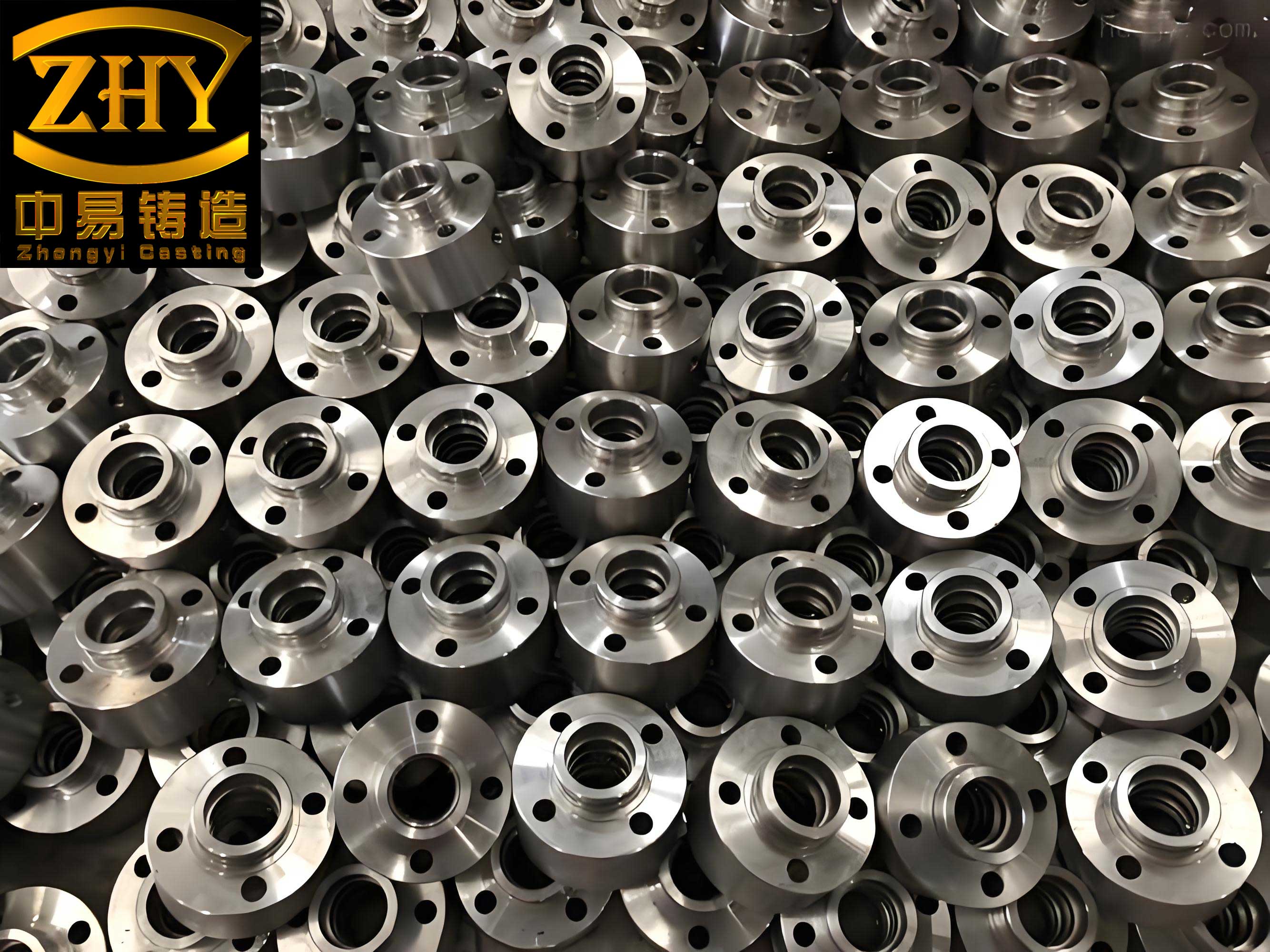
The image above illustrates the refined microstructure of nodular cast iron after process optimization, showcasing spherical graphite nodules and pearlite matrix. Table 4 compares key quality indicators before and after improvements for nodular cast iron.
| Quality Indicator | Before Improvement | After Improvement | Change |
|---|---|---|---|
| Graphite Nodule Count (%) | 30 | 60 | +100% |
| Pearlite Content (%) | 85 | 90 | +5.9% |
| Nodule Density (nodules/mm²) | 120 | 250 | +108% |
| Magnesium Absorption (%) | 40 | 60 | +50% |
| Tensile Strength (MPa) | 450 | 520 | +15.6% |
| Elongation (%) | 12 | 14 | +16.7% |
These results demonstrate that the innovative process effectively addresses the challenges of lost foam casting for nodular cast iron, leading to higher-quality castings with reduced scrap rates.
Conclusion and Future Directions for Nodular Cast Iron in Lost Foam Casting
In summary, my exploration of spheroidization treatment for nodular cast iron in lost foam casting has led to significant advancements through composite inoculation and a dam-type ladle with a cover plate. These improvements boost graphite nodule counts, pearlite content, and magnesium absorption, stabilizing casting quality and enhancing mechanical properties. The process is now reliably producing nodular cast iron components with consistent performance, reducing waste and costs.
However, there is room for further optimization. Future work may focus on automating the inoculation additions to improve precision, exploring new spheroidizing agents with higher efficiency, and adjusting ladle designs for larger-scale production. Additionally, integrating real-time monitoring systems for magnesium levels could enhance process control. The ultimate goal is to push the boundaries of nodular cast iron applications in demanding environments, leveraging lost foam casting’s advantages while mitigating its drawbacks.
Through continuous innovation, the production of high-quality nodular cast iron via lost foam casting can become more efficient and sustainable, contributing to broader industrial advancements.