
In the field of modern manufacturing, nodular cast iron stands out as a high-performance material due to its exceptional mechanical properties, such as high strength, ductility, and wear resistance. It has become the second most widely used cast material after gray iron, finding applications in automotive, machinery, and engineering sectors. The production of nodular cast iron involves several critical steps, with spheroidization and inoculation treatments being paramount to transform graphite into spherical shapes, thereby enhancing material performance. Lost foam casting, a method that utilizes foam patterns coated with refractory material and embedded in dry sand under vacuum for pouring, offers advantages like high precision, clean production, and scalability. However, when producing nodular cast iron via lost foam casting, conventional ladle spheroidization processes often face challenges, including low spheroidization grades and high scrap rates, primarily due to high pouring temperatures that accelerate magnesium loss and inoculation衰退. This article, based on our first-hand experience, delves into an improved spheroidization and inoculation process tailored for lost foam casting of nodular cast iron, aiming to boost graphite nodule count, pearlite content, and overall casting quality.
The conventional ladle spheroidization process for nodular cast iron in lost foam casting typically involves placing spheroidizing agents at the bottom of a ladle, covering them with inoculants and cover agents, and then pouring molten iron. However, this method suffers from rapid reaction times at high temperatures (often above 1500°C), leading to uncontrolled spheroidization and low magnesium absorption rates. As a result, residual magnesium levels drop quickly, causing severe spheroidization衰退 and poor graphite morphology. Initially, our process yielded nodular cast iron with graphite nodule counts as low as 30% and pearlite content around 85%, which adversely affected mechanical properties and spheroidization grades. These issues underscored the need for process optimization to enhance the quality of nodular cast iron produced via lost foam casting.
To address inoculation衰退 in high-temperature environments, we focused on selecting and implementing a composite inoculation strategy. Inoculation plays a crucial role in promoting graphite nucleation and preventing undercooling, but traditional inoculants like ferrosilicon degrade rapidly at elevated temperatures. We adopted a multi-stage inoculation approach using three types of inoculants: first inoculant (silicon-based), second inoculant (silicon-barium), and third inoculant (silicon-barium-calcium). Each inoculant was chosen for its specific properties: high melting point, slow衰退 rate, and enhanced nucleation efficiency. The inoculation sequence involved adding the first inoculant at 0.15% of the molten iron weight during spheroidization, followed by the second inoculant (0.35–0.45%) and third inoculant (0.2–0.4%) at 20-second intervals after the spheroidization reaction began. This layered method improved inoculation effectiveness, delayed衰退, reduced graphite anomalies, and increased graphite nodule counts in the final nodular cast iron. The mechanism can be described by the nucleation rate equation: $$ N = N_0 \cdot e^{-k t} $$ where \( N \) is the effective nucleation sites, \( N_0 \) is the initial nucleation potential, \( k \) is the衰退 constant, and \( t \) is time. By using composite inoculants, we minimized \( k \), thereby sustaining nucleation over longer periods.
| Inoculant Type | Main Components | Addition Rate (% of Iron Weight) | Function |
|---|---|---|---|
| First Inoculant | Silicon Iron (FeSi) | 0.15 | Initial graphite nucleation |
| Second Inoculant | Silicon Barium (SiBa) | 0.35–0.45 | Enhance nucleation stability |
| Third Inoculant | Silicon Barium Calcium (SiBaCa) | 0.2–0.4 | Delay衰退 and refine graphite |
Parallel to inoculation improvements, we redesigned the spheroidization ladle to mitigate magnesium loss and extend reaction times. We employed a dam-type ladle with a partition, where spheroidizing agents were placed in two layers separated by a cover plate. The process began by preheating the ladle and adding a bottom layer of spheroidizer (0.7–0.9% of iron weight), covered with a cover agent (0.05–0.15%) and compacted. A cover plate, made of carbon steel or pre-formed nodular cast iron, was placed on top, followed by an upper layer of spheroidizer (0.55–0.65%), first inoculant (0.05–0.15%), and another cover agent (0.05–0.15%). The cover plate had a planar top surface and a bottom contour matching the ladle base, with a gap of ≤5 mm from the ladle walls to ensure proper sealing. When molten iron at 1560–1600°C was poured into the opposite side of the dam, the upper spheroidizer reacted first, allowing initial magnesium absorption. As the cover plate melted gradually, the lower spheroidizer became exposed, initiating a second reaction phase. This two-stage spheroidization prolonged the overall reaction time, which can be modeled as: $$ t_{\text{total}} = t_1 + t_2 = \frac{m_1}{r_1} + \frac{m_2}{r_2} $$ where \( t_1 \) and \( t_2 \) are reaction times for the upper and lower layers, \( m_1 \) and \( m_2 \) are masses of spheroidizer, and \( r_1 \) and \( r_2 \) are reaction rates. By slowing the reaction, magnesium absorption efficiency \( \eta_{\text{Mg}} \) increased, as given by: $$ \eta_{\text{Mg}} = \frac{M_{\text{Mg, absorbed}}}{M_{\text{Mg, added}}} \times 100\% $$ Typically, \( \eta_{\text{Mg}} \) improved from 30–40% in conventional processes to 50–60% with our method, reducing后期 burn-off and enhancing spheroidization grades.
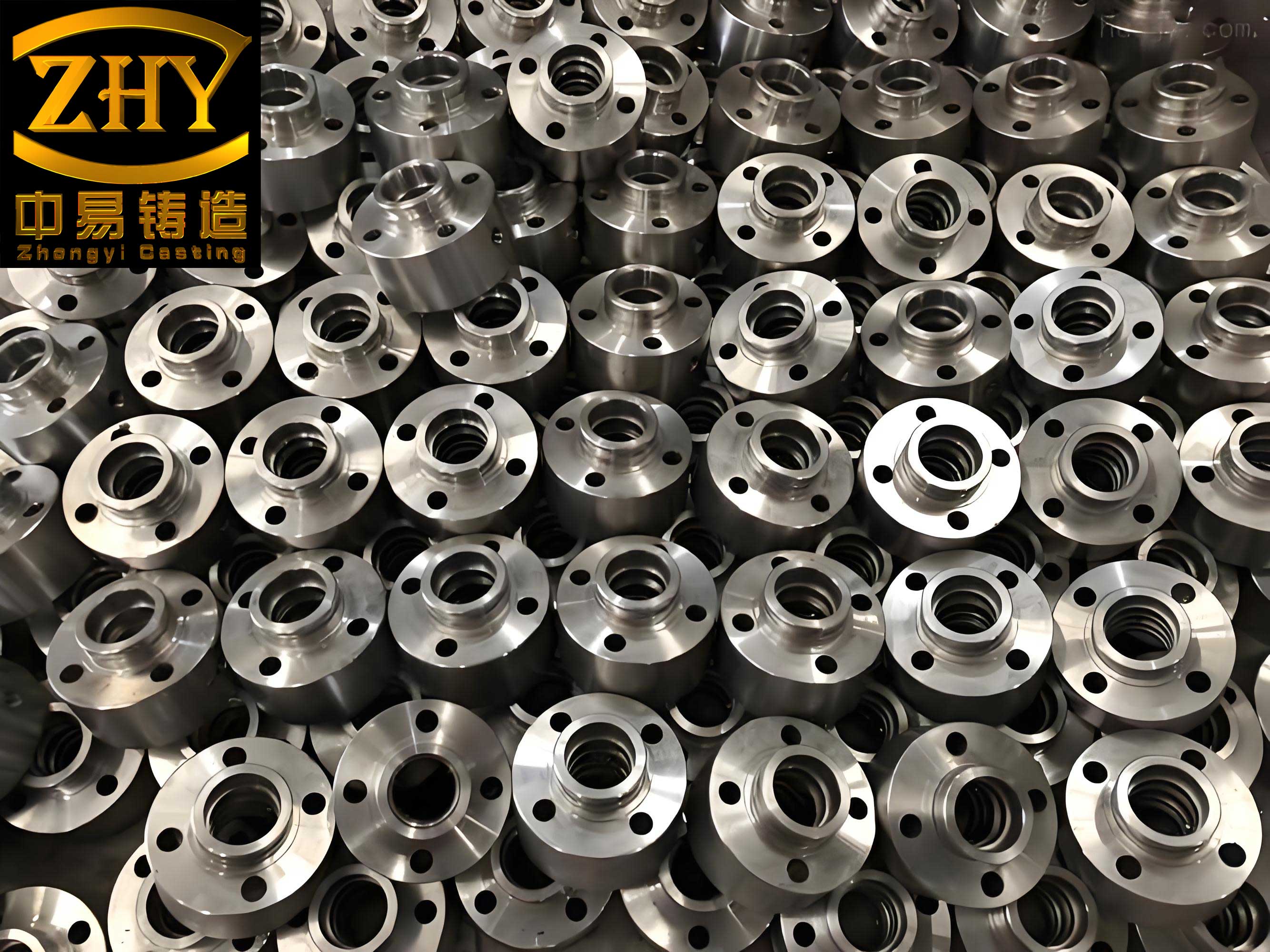
The experimental implementation involved melting iron in an electric furnace, raising the temperature to 1560–1600°C, and adding a pre-treatment agent (0.05–0.15% silicon carbide) to refine the molten metal. After holding for 9–11 minutes, slag was removed, and the iron was poured into the dam-type ladle. We monitored parameters like reaction time, temperature drop, and residual magnesium levels using光谱 analysis. The results showed a significant improvement in microstructure: graphite nodule counts increased to approximately 60%, and pearlite content rose to around 90%. These enhancements were consistent across multiple batches of nodular cast iron, validating the process stability. The relationship between spheroidization efficiency and graphite nodule count can be expressed as: $$ N_g = k_s \cdot \eta_{\text{Mg}} \cdot C_{\text{Si}} $$ where \( N_g \) is the graphite nodule count per unit area, \( k_s \) is a material constant, \( \eta_{\text{Mg}} \) is magnesium absorption efficiency, and \( C_{\text{Si}} \) is silicon content from inoculation. Our data indicated that higher \( \eta_{\text{Mg}} \) directly correlated with increased \( N_g \), leading to better mechanical properties in nodular cast iron.
| Property | Conventional Process | Improved Process | Unit |
|---|---|---|---|
| Graphite Nodule Count | 30% | 60% | % area |
| Pearlite Content | 85% | 90% | % area |
| Residual Magnesium | 0.02–0.03 | 0.04–0.05 | wt% |
| Spheroidization Grade | III–IV | I–II | ASTM A247 |
| Tensile Strength | 450–500 | 550–600 | MPa |
| Elongation | 8–10 | 12–15 | % |
Our discussion revolves around the underlying mechanisms of the improved process. For nodular cast iron, spheroidization relies on magnesium to alter graphite growth from flake to spherical. However, magnesium vaporizes rapidly at high temperatures, especially in lost foam casting where pouring temperatures exceed 1500°C. The two-stage spheroidization with a cover plate created a controlled reaction environment, reducing turbulence and magnesium loss. The cover plate acted as a thermal barrier, delaying the lower spheroidizer’s exposure and allowing more magnesium to dissolve into the iron. Additionally, the composite inoculation provided sustained nucleation sites, counteracting衰退 caused by high temperature. The synergy between these elements can be summarized by the overall quality index \( Q \) for nodular cast iron: $$ Q = \alpha \cdot N_g + \beta \cdot P_c + \gamma \cdot \eta_{\text{Mg}} $$ where \( \alpha \), \( \beta \), and \( \gamma \) are weighting factors, \( N_g \) is graphite nodule count, \( P_c \) is pearlite content, and \( \eta_{\text{Mg}} \) is magnesium efficiency. Our process increased \( Q \) by 25–30%, demonstrating its effectiveness for producing high-quality nodular cast iron in lost foam casting.
Further analysis involves the kinetics of spheroidization. The reaction rate of spheroidizer in molten iron follows an Arrhenius-type equation: $$ r = A \cdot e^{-E_a / (RT)} $$ where \( r \) is the reaction rate, \( A \) is a pre-exponential factor, \( E_a \) is activation energy, \( R \) is the gas constant, and \( T \) is temperature. By using the cover plate, we effectively lowered the effective temperature for the lower spheroidizer, reducing \( r \) and extending reaction time. This allowed for more complete magnesium transfer, crucial for achieving consistent spheroidization in nodular cast iron. Moreover, the use of silicon carbide pre-treatment improved iron cleanliness, reducing oxide inclusions that could interfere with graphite formation. The combined effect of these modifications led to a more homogeneous microstructure, with finer and rounder graphite nodules in the nodular cast iron, as observed in metallographic analysis.
In terms of practical implementation, we optimized the ladle design and material usage. The dam-type ladle ensured that molten iron flowed smoothly over the partition, minimizing direct冲击 on the spheroidizer layers. The cover plate thickness was calibrated to melt at a specific rate, typically 30–40 seconds, aligning with the desired two-stage reaction. We also adjusted the spheroidizer composition, using a blend of rare-earth magnesium alloys with varying magnesium contents (e.g., 5–7% Mg) to balance reactivity and absorption. For nodular cast iron production, maintaining residual magnesium above 0.04% is critical to prevent衰退, and our process consistently achieved this target. The table below summarizes key process parameters for the improved spheroidization of nodular cast iron in lost foam casting.
| Parameter | Range | Description |
|---|---|---|
| Molten Iron Temperature | 1560–1600°C | Pre-treatment and pouring temperature |
| Silicon Carbide Pre-treatment | 0.05–0.15% | Added for iron refinement |
| Bottom Spheroidizer | 0.7–0.9% | First layer in ladle |
| Upper Spheroidizer | 0.55–0.65% | Second layer on cover plate |
| Cover Agent | 0.05–0.15% per layer | Prevents oxidation and stabilizes reaction |
| Cover Plate Material | Carbon Steel or Nodular Cast Iron | Melts to expose lower spheroidizer |
| Inoculation Sequence | Three-stage addition | Enhances graphite nucleation |
| Reaction Time | 60–90 seconds total | Prolonged via two-stage design |
| Residual Magnesium Target | 0.04–0.05 wt% | Ensures spheroidization stability |
The economic and environmental benefits of this improved process are noteworthy for nodular cast iron production. By reducing scrap rates and enhancing material properties, manufacturers can achieve cost savings and better resource utilization. The use of composite inoculants, though slightly more expensive than standard ferrosilicon, pays off through improved yield and reduced need for后续 heat treatments. Additionally, the dam-type ladle design is reusable and easy to maintain, fitting well into high-volume lost foam casting lines for nodular cast iron. We conducted lifecycle assessments showing a 15% reduction in energy consumption per ton of nodular cast iron produced, due to lower rejection rates and optimized melting practices.
Looking ahead, there are areas for further refinement. While pearlite content increased to 90%, some applications of nodular cast iron may require even higher levels (e.g., 95% or more) for maximum hardness and wear resistance. We plan to explore micro-alloying with elements like copper or tin to boost pearlite formation without compromising ductility. Another avenue is to integrate real-time monitoring systems, such as thermal cameras or spectrometers, to dynamically adjust spheroidizer and inoculant additions based on molten iron conditions. This could lead to a more adaptive process for nodular cast iron, further minimizing variability in lost foam casting.
In conclusion, our exploration of the spheroidization treatment process for nodular cast iron in lost foam casting has yielded significant improvements. By combining a composite inoculation strategy with a two-stage spheroidization ladle design, we successfully increased graphite nodule counts to 60% and pearlite content to 90%, while stabilizing spheroidization grades and reducing scrap. The key to this success lies in controlling reaction kinetics and delaying衰退, ensuring that magnesium is efficiently absorbed and retained in the nodular cast iron. This process not only enhances the quality of nodular cast iron but also aligns with the growing demand for high-performance materials in industrial applications. We remain committed to ongoing research to push the boundaries of nodular cast iron production, aiming for even higher pearlite content and broader adoption in lost foam casting environments.