
In the automotive industry, transmission shift forks are critical components that facilitate gear changes. Among various materials used, such as stamped steel or die-cast aluminum, steel castings are often preferred for their superior comprehensive mechanical properties, design flexibility, and cost-effectiveness, especially for complex and hollow structures. However, during the initial development phase of a transmission shift fork made from steel castings, specifically ZG310-570 grade, we encountered a fracture at the fork mouth during shifting operations. This prompted a comprehensive failure analysis to identify the root cause and implement corrective measures. The investigation involved visual inspection, non-destructive testing, fractography, material analysis, process review, and computer-aided engineering (CAE) simulations. Our findings revealed that the failure originated from casting defects, exacerbated by operational stresses. This article details our methodology, results, and solutions, emphasizing the importance of quality control in steel castings production.
Steel castings are widely used in demanding applications due to their excellent strength and toughness. The shift fork in question features a hollow design with intricate geometry, making it susceptible to casting defects like inclusions, porosity, shrinkage, and cracks. The fracture occurred at the fork mouth, which is also a high-frequency induction hardening zone. To systematically analyze the failure, we conducted a series of tests and evaluations, all aimed at understanding the interplay between material properties, manufacturing processes, and service conditions. The goal was not only to address this specific issue but also to enhance the overall reliability of steel castings in transmission systems.
Our first step was a thorough visual and non-destructive inspection. The fork mouth area, labeled as region A, undergoes high-frequency hardening, while the crack was observed at location B. Initial magnetic particle inspection of batch samples did not reveal any cracks. However, subsequent X-ray inspection uncovered internal casting porosity in some parts. Upon closer visual examination of these porous components, surface cracks were detected at the bottom of the fork mouth. Re-cleaning the parts with kerosene and re-conducting magnetic particle inspection with a 90-degree rotation allowed for the identification of crack defects. Sensitivity tests using A1 shims showed that the inspection equipment had a detection rate of only 70–80%, indicating limitations in defect recognition. This highlighted the need for improved inspection protocols for steel castings.
| Element | Required Range | Measured Value | Conclusion |
|---|---|---|---|
| C | 0.42–0.52% | 0.45% | OK |
| Si | 0.20–0.45% | 0.32% | OK |
| Mn | 0.50–0.80% | 0.69% | OK |
| S | ≤0.035% | 0.027% | OK |
| P | ≤0.035% | 0.020% | OK |
The chemical composition of the steel castings was within specified limits, as shown in Table 1, ruling out material grade issues. Hardness tests were also conducted to assess the base material and hardened layer. The results, summarized in Table 2, met the requirements, indicating that heat treatment processes were appropriately executed.
| Test Area | Requirement | Sample 1 | Sample 2 | Conclusion |
|---|---|---|---|---|
| Base Hardness | 190–240 HB | 201 HB | 219 HB | OK |
| Hardened Layer (A) | 53–58 HRC | 56.3 HRC | 58.0 HRC | OK |
| Hardened Depth (A) | 1–3 mm | 2.0 mm | 2.5 mm | OK |
Fracture surface analysis using scanning electron microscopy (SEM) revealed critical insights. The crack initiation zone exhibited a porous region measuring approximately 2.37 mm × 1.894 mm, characterized by dendritic structures and voids. The fracture mode was predominantly intergranular, with evidence of original casting defects, such as shrinkage and micro-porosity. Energy-dispersive X-ray spectroscopy (EDS) was performed on the fracture surface, and the results indicated elevated oxygen content in the porous areas, as summarized in Table 3. This suggests that the crack surfaces were exposed to high temperatures after formation, likely during the high-frequency hardening process, confirming that the defects were present prior to heat treatment.
| Spectrum | C | O | Si | S | Mn | Fe | Total |
|---|---|---|---|---|---|---|---|
| 1 | 8.63 | 5.27 | 0.38 | 0.73 | – | 84.99 | 100.00 |
| 2 | 12.76 | 11.38 | 0.32 | 0.23 | 0.93 | 74.37 | 100.00 |
| 3 | 6.82 | 1.98 | 0.38 | 0.86 | – | 89.97 | 100.00 |
| 4 | 8.78 | 2.06 | 0.39 | 0.31 | 0.64 | 87.82 | 100.00 |
| 5 | 6.63 | 0.40 | 0.37 | 0.95 | – | 91.65 | 100.00 |
| 6 | 5.39 | 0.33 | – | 0.76 | – | 93.82 | 100.00 |
Based on the fractography and EDS data, we concluded that the crack was a casting hot crack. Hot cracks in steel castings typically form during solidification due to thermal stresses and shrinkage restraint. The intergranular nature and presence of oxides align with this failure mode. The original casting defects acted as stress concentrators, leading to crack propagation under operational loads.
To assess the structural integrity under service conditions, we performed CAE simulations. A static strength analysis was conducted by applying a force of 2400 N, simulating the shift force. The maximum tensile stress was calculated using the von Mises criterion. The stress distribution can be expressed as:
$$ \sigma_{vm} = \sqrt{\frac{(\sigma_1 – \sigma_2)^2 + (\sigma_2 – \sigma_3)^2 + (\sigma_3 – \sigma_1)^2}{2}} $$
where $\sigma_1$, $\sigma_2$, and $\sigma_3$ are the principal stresses. The analysis yielded a maximum stress of 274 MPa, which is below the yield strength of ZG310-570 steel castings (310 MPa). This indicates that under ideal conditions, the design is adequate. However, the presence of defects alters the stress state locally.
Fatigue analysis was also performed to evaluate durability under cyclic loading. The loading spectrum included high, medium, and low amplitude forces, as detailed in Table 4. The fatigue damage was calculated using Miner’s rule:
$$ D = \sum_{i=1}^{k} \frac{n_i}{N_i} $$
where $n_i$ is the number of cycles at stress level $i$, and $N_i$ is the fatigue life at that level. The maximum damage value obtained was 0.72, which is less than 1, suggesting that the part should not fail under normal fatigue conditions. However, this analysis assumes defect-free material; casting defects significantly reduce fatigue strength.
| Load Level | Cycles (n) | Force (N) |
|---|---|---|
| High | 10,000 | 2400 |
| Medium | 35,000 | 1800 |
| Low | 1,000,000 | 900 |
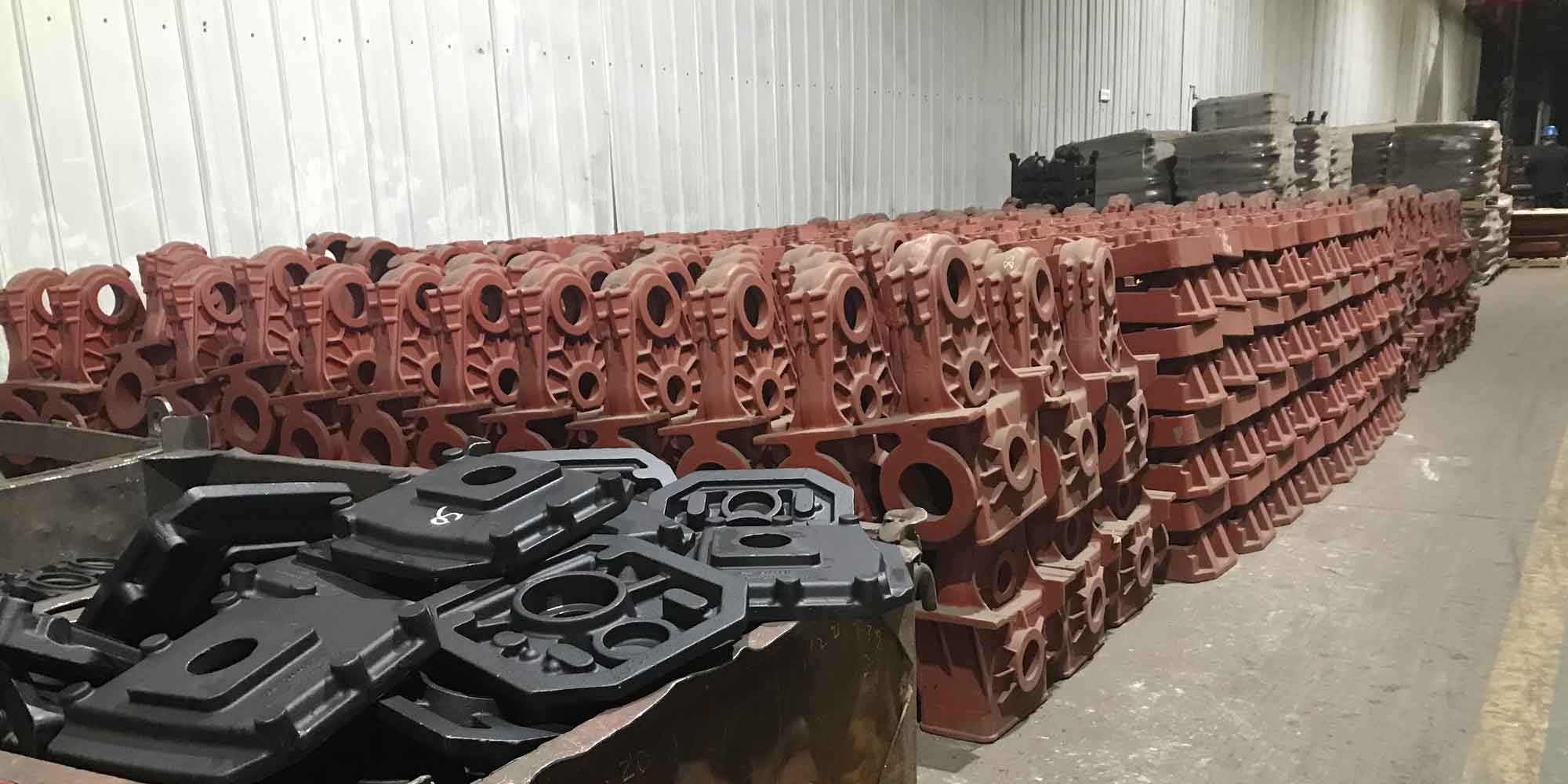
The manufacturing process for these steel castings involves several steps: wax pattern molding, assembly, shell molding, dewaxing, mold shell baking, pouring, machining, high-frequency hardening, inspection, and final checking. During our process review, we identified issues in the mold shell baking stage. The baking furnace, originally using coal gas, suffered from pipe blockages due to tar buildup, leading to uneven and insufficient baking of mold shells. This resulted in incomplete combustion and poor shell quality, contributing to casting defects like hot tears and porosity. Additionally, the gating system design was suboptimal; the ingate位置 was improperly placed, causing poor venting and inadequate feeding during solidification. The complex geometry of the steel castings exacerbated these problems, as thin and thick sections cooled at different rates, inducing thermal stresses.
The inspection process also had shortcomings. The magnetic particle inspection equipment had limited sensitivity, particularly for cracks oriented perpendicular to the conveyor direction. Moreover, parts were not properly cleaned or positioned during inspection, reducing defect detectability. For steel castings with irregular shapes, the detection rate was only 70–80%, allowing defective parts to enter service.
Based on our analysis, the root causes of the fracture are multifaceted. Primarily, the casting process for these steel castings was flawed due to poor gating design and inadequate mold shell baking. The hot cracks formed during solidification because of shrinkage restraint and thermal gradients. These defects then served as initiation sites for fracture under cyclic shift forces. The inspection system failed to identify these defects due to equipment limitations and procedural non-compliance.
To address these issues, we implemented several corrective actions. First, we modified the gating design by relocating the ingate to the cross-section of the main hole and changing the part from hollow to solid in that region. This improved feeding and reduced turbulence during pouring. Second, we switched from coal gas to biomass pellets for the baking furnace. Biomass pellets burn cleaner and more consistently, with temperature monitoring ensuring the mold shells are baked at 780–850°C. This change resulted in uniformly white shells with better integrity. Third, we upgraded the inspection system to a clamping-type magnetic particle inspection device with higher sensitivity. We standardized procedures for part placement, layering, and daily calibration using A1 shims to ensure a detection rate near 100%.
Validation trials were conducted with the modified process. Two sets of mold shells (28 wax patterns) were produced using biomass pellets. X-ray inspection of the solid rough castings showed no internal porosity, and magnetic particle inspection detected no cracks at the fork mouth. These results confirm the effectiveness of our improvements for steel castings quality.
In conclusion, the fracture of the transmission shift fork made from steel castings was caused by casting hot cracks originating from process deficiencies. The complex geometry, poor gating design, and inadequate mold shell baking led to defects that went undetected due to inspection limitations. Our comprehensive analysis, combining experimental testing and CAE simulations, pinpointed these issues. By optimizing the casting process and enhancing inspection protocols, we have mitigated the risk of such failures. This case underscores the critical importance of robust manufacturing and quality control for steel castings in high-stress applications. Future work will focus on continuous monitoring and advanced non-destructive testing techniques to further improve the reliability of steel castings components.