
As a design professional specializing in industrial architecture, I have extensively studied the intricacies of foundry plant design, particularly focusing on fire safety for both production facilities and finished casting warehouses. The casting industry, encompassing various scales from large to small enterprises, is a cornerstone of metal processing, and its design must adhere to stringent standards to ensure safety and efficiency. In this analysis, I will delve into the fundamental requirements, layout considerations, structural relationships, and critical fire safety measures, with an emphasis on how these elements interplay in modern foundry operations. Throughout this discussion, I will frequently reference sand casting manufacturers, as they represent a significant segment of the industry and their practices often set benchmarks for design. The goal is to provide a comprehensive guide that integrates practical design principles with advanced safety protocols, utilizing tables and formulas to summarize key points for clarity and depth.
Foundry plant design is not merely about erecting structures; it involves a holistic approach that balances production needs, environmental controls, and safety imperatives. From my perspective, the design process begins with understanding the core requirements of casting operations, which vary based on the type of manufacturing, such as those seen in sand casting manufacturers who handle high-volume production with specific material flows. The following sections break down these aspects systematically, starting with the basic design requirements for foundry buildings.
Basic Design Requirements for Foundry Plants
In my design practice, I prioritize several fundamental requirements that ensure a foundry plant is both functional and safe. These requirements are derived from industrial building codes and tailored to the unique demands of casting processes, including those prevalent among sand casting manufacturers. Below, I summarize these requirements in a table to highlight their interdependencies.
| Requirement Category | Key Elements | Design Implications |
|---|---|---|
| Production Processing | Must accommodate flexible manufacturing, use of recycled metals, and operations like melting and heat treatment. | Designs should prioritize dust, fire, and explosion prevention, with safety as the foremost concern. |
| Structural Form | Choice between reinforced concrete and steel structures based on durability, cost, and fire resistance. | Reinforced concrete offers high durability and防火, while steel is ideal for large spaces; both reduce investment and accelerate construction. |
| Production Environment | Lighting, ventilation, noise control, and special conditions like temperature or humidity control. | Artificial lighting is preferred to avoid natural light interference; ventilation systems must expel heat and fumes; noise reduction may require隔音间. |
| Layout Planning | Integration of administrative and auxiliary spaces with production lines, unlike residential layouts. | Layouts should follow process flows, considering site location and environmental impacts to minimize pollution. |
| Overall Plan Design | Based on process flows, site selection, and utility configurations, addressing internal and external environmental issues. | Plans must be adaptable to real-world conditions, ensuring efficient production and safety compliance. |
These requirements form the backbone of any foundry design, particularly for sand casting manufacturers who often deal with high-temperature processes and large-scale operations. For instance, the production environment must account for heat dissipation, which can be quantified using ventilation formulas. In general, the required ventilation rate \( Q \) can be estimated using the formula:
$$ Q = \frac{H}{\rho \cdot c_p \cdot \Delta T} $$
where \( H \) is the heat load from casting processes, \( \rho \) is air density, \( c_p \) is specific heat capacity, and \( \Delta T \) is the temperature difference. This ensures that余热 and烟尘 are effectively removed, a critical aspect for foundries including those focused on sand casting.
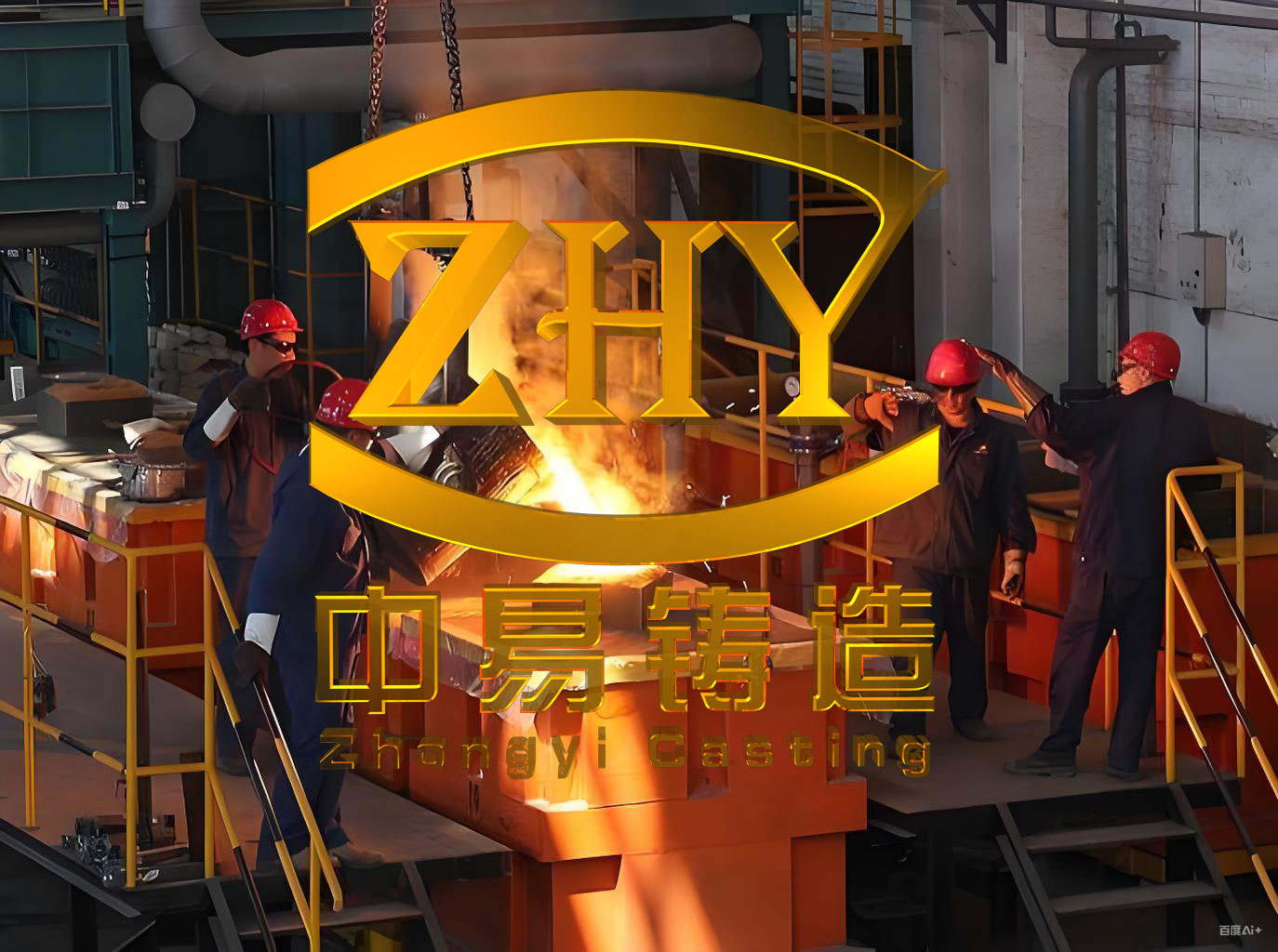
As seen in the image above, modern foundries, especially among sand casting manufacturers, integrate advanced design elements to optimize production and safety. This visual underscores the importance of thoughtful layout and structural choices in real-world applications.
Considerations for Foundry Plant Layout Planning
Based on my experience, layout planning is a dynamic process that must evolve with industry trends. The rapid growth of casting enterprises, including many sand casting manufacturers, over the past 5-10 years has necessitated more谨慎的设计 approaches. A well-planned layout not only enhances internal efficiency but also harmonizes with external environments. Key considerations include adapting to new factory规划需求, optimizing production environments to avoid delays, and addressing client-specific challenges. For sand casting manufacturers, this often means designing for high-volume output and material handling. I summarize these considerations in the following table to provide a clear framework.
| Consideration Area | Details | Impact on Sand Casting Manufacturers |
|---|---|---|
| New Factory Planning | Align with enterprise-provided规划需求 and细则, ensuring scalability and flexibility. | Enables sand casting manufacturers to expand production lines without major redesigns. |
| Production Environment | Ensure optimal conditions for casting processes to maintain order batches and流程. | Poor environments can lead to defects and inefficiencies, critical for high-output sand casting operations. |
| Design Optimization | Address client困惑 and困难 through iterative整改升级, focusing on practical solutions. | Helps sand casting manufacturers reduce costs and improve safety through tailored designs. |
These points highlight how layout planning directly influences operational success, particularly for sand casting manufacturers who rely on streamlined workflows. The relationship between design and construction is pivotal here, as I will explore next.
Relationship Between Civil Engineering and Foundry Plant Design
From my viewpoint, design serves as the blueprint for civil engineering, translating conceptual layouts into tangible structures. In foundry plants, this interaction is crucial due to the complexity of施工. The design phase involves creating 3D models based on client site requirements, which then guide the use of materials like reinforced concrete or steel. For sand casting manufacturers, whose facilities often involve extensive frameworks, this process is more繁琐 and工期长 than residential projects. The classification of厂房施工 into single-layer, multi-layer, and mixed-layer types further complicates承重构造, which I summarize below with relevant formulas for structural integrity.
| Construction Type | 承重构造 | Common Use in Sand Casting Manufacturers |
|---|---|---|
| Single-Layer厂房 | 排架结构 or钢架结构, suitable for spacious layouts. | Often used by sand casting manufacturers for large melting and molding areas. |
| Multi-Layer厂房 | Space structures for vertical integration. | Ideal for facilities with limited footprint, though less common in traditional sand casting. |
| Mixed-Layer厂房 | Combines elements for flexibility. | Seen in diversified foundries that include sand casting alongside other processes. |
The structural design must account for loads from equipment and stored materials. For example, the allowable stress \( \sigma_{allow} \) in a steel beam can be calculated using:
$$ \sigma_{allow} = \frac{F}{A} \leq \sigma_{yield} / SF $$
where \( F \) is the applied force, \( A \) is the cross-sectional area, \( \sigma_{yield} \) is the yield strength, and \( SF \) is a safety factor. This ensures durability, especially for sand casting manufacturers dealing with heavy machinery. Thus, design and civil engineering are inseparable, with design acting as the前提条件 for施工.
Role of Finished Casting Warehouses in Foundry Operations
In my analysis, finished casting warehouses are integral to foundry functionality, serving as storage hubs for metal objects produced through various casting methods. For sand casting manufacturers, these warehouses must accommodate large volumes of成品, often requiring dedicated spaces within or adjacent to production厂房. The relationship is symbiotic: without efficient storage, production outputs can be compromised. Castings, defined as metal objects formed by pouring molten metal into molds and cooling, come in diverse shapes and sizes, necessitating organized storage solutions. This interdependence is critical for sand casting manufacturers who handle批量 production, as it ensures that合格成品 are readily available for dispatch, minimizing delays and maximizing利益.
To quantify storage needs, consider the inventory turnover rate \( ITR \), which for sand casting manufacturers can be expressed as:
$$ ITR = \frac{\text{Cost of Goods Sold}}{\text{Average Inventory}} $$
A high \( ITR \) indicates efficient storage management, reducing积压 and costs. This leads to the importance of inventory systems, which I will discuss next.
Application of Inventory Management Systems in Foundry Plants
From my perspective, implementing an inventory management system is essential for modern foundries, including sand casting manufacturers. These systems provide信息化 databases that track production, sales, and库存, ensuring optimal stock levels. In casting plants, they help manage the inflow and outflow of finished castings, preventing overstocking or shortages. The benefits are manifold: by maintaining accurate counts, sand casting manufacturers can reduce库存压力 and unnecessary expenses, while enabling timely ordering and shipping. Below, I outline key functions of such systems in a table, emphasizing their relevance to sand casting operations.
| System Function | Description | Benefit for Sand Casting Manufacturers |
|---|---|---|
| 入库管理 | Tracks incoming finished castings, updating库存数量 automatically. | Ensures real-time visibility for high-volume sand casting production. |
| 出库管理 | Manages outgoing shipments, reducing errors in订单 fulfillment. | Improves customer satisfaction for sand casting manufacturers by加速 delivery. |
| 资料管理 | Stores product details, facilitating盘点 and analysis. | Helps sand casting manufacturers optimize storage layouts and reduce waste. |
Effective inventory management relies on mathematical models, such as the Economic Order Quantity (EOQ) formula, which is crucial for sand casting manufacturers to minimize costs:
$$ EOQ = \sqrt{\frac{2DS}{H}} $$
where \( D \) is annual demand, \( S \) is ordering cost, and \( H \) is holding cost per unit. By applying this, sand casting manufacturers can balance库存 levels, avoiding资金占用 that could hinder企业运转. This seamlessly ties into specific storage methods for finished castings.
Storage Methods for Finished Casting Inventories
In my design work, I have developed various storage methods tailored to casting warehouses, particularly for sand casting manufacturers who must handle bulky and sensitive products. These methods prioritize safety, efficiency, and accessibility, as summarized in the table below.
| Storage Method | Implementation | Advantage for Sand Casting Manufacturers |
|---|---|---|
| Channel Storage | Place castings in通风管道 to avoid moisture and heat, keeping them dry. | Protects sand-cast products from environmental damage, ensuring quality. |
| High-Stacking | Utilize vertical space by stacking castings safely to increase保管效率. | Maximizes storage area for sand casting manufacturers with limited space. |
| Location by Frequency | Position high-turnover items near搬运 points, updating seasonally. | Reduces handling time for popular sand-cast items, boosting productivity. |
| Unified Storage | Keep identical castings together,分类 for easy management. | Simplifies inventory control for sand casting manufacturers, improving accuracy. |
| Weight-Based Placement | Store heavier items lower, following安全第一 principles. | Prevents accidents and facilitates运输 for dense sand-cast products. |
These methods require careful design, as细节问题 can impact overall efficiency. For sand casting manufacturers, implementing such strategies enhances开源节流 by reducing labor costs and minimizing product damage. The design complexity here underscores the need for high专业素养 among designers, who must balance practicality with safety standards. This naturally leads to the core issue of fire safety design, which is paramount in casting environments.
Analysis of Fire Safety Design in Finished Casting Warehouses
From my extensive experience, fire safety design is a critical component of foundry planning, especially for finished casting warehouses where火灾 risks are elevated due to the nature of casting processes. Sand casting manufacturers, in particular, involve heat-intensive operations like melting, which increase the likelihood of燃爆事件. As the saying goes, “fire is merciless,” and neglecting防火设计 can lead to catastrophic losses in both personnel and assets. Therefore, I advocate for integrating fire safety from the outset,参照国家防火规范 to develop robust设计方案. Below, I present a table summarizing key fire safety considerations for casting warehouses, with a focus on sand casting manufacturers.
| Fire Safety Aspect | Design Requirement | Application to Sand Casting Manufacturers |
|---|---|---|
| Fire Load Assessment | Calculate potential fuel loads from stored castings and materials. | Sand casting manufacturers must account for金属物件 that may contribute to fire spread. |
| Detection Systems | Install smoke and heat detectors aligned with工业标准. | Early warning is vital for sand casting facilities to prevent小火 from escalating. |
| Suppression Systems | Design sprinkler or foam systems based on risk levels. | Critical for warehouses storing finished sand castings, which may be combustible. |
| Egress Planning | Ensure clear exit routes and signage for rapid evacuation. | Protects workers in sand casting plants during emergencies. |
| Structural Fire Resistance | Use防火 materials like reinforced concrete to compartmentalize fires. | Enhances survival chances for sand casting manufacturers’ assets and infrastructure. |
To quantify fire risks, I often use formulas such as the Fire Load Density \( q_f \), which is essential for sand casting manufacturers:
$$ q_f = \frac{\sum (m_i \cdot \Delta H_c_i)}{A} $$
where \( m_i \) is the mass of combustible material \( i \), \( \Delta H_c_i \) is its heat of combustion, and \( A \) is the floor area. This helps in designing adequate suppression systems. Additionally, the required water flow rate for消防栓 in foundries can be derived from:
$$ Q_{fire} = k \cdot \sqrt{P} $$
where \( k \) is a coefficient based on nozzle design and \( P \) is pressure, ensuring that systems meet the minimum of 10 L/s as per standards for industrial buildings. For sand casting manufacturers, these calculations are not just theoretical but practical necessities born from past incidents, emphasizing that生产安全 is paramount for sustainable growth.
Normative Standards for Fire Safety in Foundry Plant Design
In my practice, adhering to规范性 standards is non-negotiable for foundry fire safety. These standards, derived from historical教训, ensure that designs are技术先进,质量过关, and cost-effective. For sand casting manufacturers, compliance involves specific measures that go beyond普通住宅楼 requirements. I summarize these normative points in a table to highlight their importance.
| Normative Principle | Implementation Guideline | Relevance to Sand Casting Manufacturers |
|---|---|---|
| Regulatory Compliance | Follow national防火规范, focusing on先进 design and开源节流. | Ensures sand casting manufacturers avoid legal issues and optimize investments. |
| Hydrant System Design | Exceed basic standards with tailored水枪喷嘴 and出水量 for厂房类型. | Customized systems are crucial for sand casting plants due to higher fire risks. |
| Safety Prioritization | Place security above economic gains, integrating防火 into every design phase. | Protects both personnel and expensive equipment in sand casting operations. |
| Continuous Improvement | 提出并解决问题 during construction to ensure验收顺利. | Helps sand casting manufacturers achieve安全生产 certifications. |
The rationale behind these strict norms is clear: they prevent disasters that could halt production for sand casting manufacturers. By incorporating fire safety into the very fabric of design, we can create facilities that are not only efficient but also resilient. This aligns with the broader goal of enhancing经济效率 while safeguarding assets.
In conclusion, my analysis underscores that foundry plant design, particularly for sand casting manufacturers, is a multifaceted endeavor requiring a balance of production efficiency, environmental control, and rigorous fire safety. From basic requirements to inventory management and normative standards, every element must coalesce into a coherent plan. By leveraging tables and formulas, I have aimed to provide a detailed roadmap that designers can use to craft safe and effective foundries. The integration of fire safety in both厂房 and finished casting warehouses is not an option but a necessity, ensuring that sand casting manufacturers can thrive without compromising on security. Ultimately, a well-designed foundry, built on these principles, offers a sustainable path forward for the casting industry, supporting everything from large-scale enterprises to small workshops in their pursuit of excellence and safety.