
In my extensive involvement with the piston ring manufacturing sector, I have closely studied and analyzed the primary casting methodologies employed internationally for producing piston rings made from spheroidal graphite cast iron. This material, renowned for its excellent mechanical properties such as high strength, good wear resistance, and superior fatigue endurance, has become indispensable in modern internal combustion engines for automotive, agricultural machinery, and motorcycle applications. The evolution of casting techniques for spheroidal graphite cast iron components is a critical factor in achieving cost-effectiveness, dimensional precision, and consistent metallurgical quality. This article delves into the key foreign casting processes, offering a detailed comparative assessment from a first-hand perspective, supplemented with technical data, formulas, and tables to encapsulate the core principles.
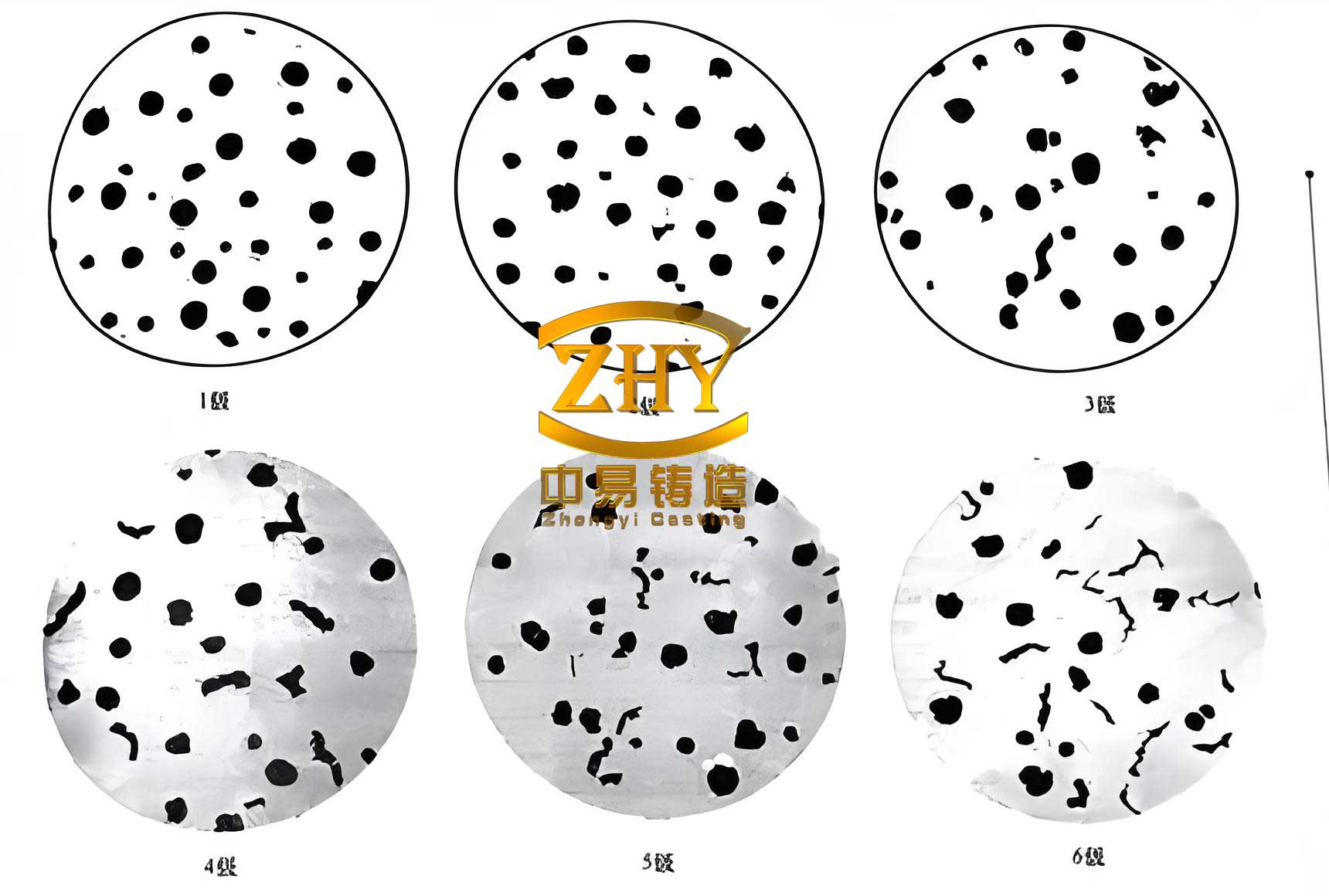
The global landscape for manufacturing spheroidal graphite cast iron piston rings is dominated by several advanced casting processes, each with distinct advantages and limitations. These methods have been developed and refined by leading industrial nations, including Germany, Japan, Russia, and South Korea, to meet the escalating demands for high-volume production and stringent quality standards. My observations, based on technical exchanges and evaluations, indicate that the choice of casting technology profoundly impacts parameters such as yield rate, production efficiency, equipment investment, and final product integrity. The fundamental goal is to optimize the solidification behavior of spheroidal graphite cast iron to prevent defects like shrinkage porosity, gas holes, and undesirable graphite morphology, which can compromise the ring’s performance in service.
One of the most prevalent and historically significant techniques is the double-piece elliptical casting process. Originating from German engineering expertise, this method involves creating two piston ring blanks connected as a pair within a single mold cavity. The mold is typically designed with an elliptical shape to approximate the free-state shape of the finished ring, reducing subsequent machining distortion. The process utilizes high-pressure molding machines, often semi-automatic or fully automatic, with rectangular steel flask boxes. A key advantage is its exceptional adaptability to a wide range of bore diameters, from small motorcycle engines to large diesel engines. The design inherently promotes directional solidification towards the feeding risers, minimizing central shrinkage in the spheroidal graphite cast iron. The gating system and riser placement are crucial; the yield of molten metal, defined as the ratio of usable casting weight to total poured weight, can be expressed as: $$ Y = \frac{W_c}{W_p} \times 100\% $$ where \( Y \) is the yield percentage, \( W_c \) is the weight of the sound castings, and \( W_p \) is the weight of the poured molten spheroidal graphite cast iron. For the double-piece process, yields typically range from 40% to 50%, which is considered efficient for this product form.
Building upon the double-piece concept, a more advanced variant is the quadruple-piece elliptical short-sleeve casting process. This innovation, also pioneered in Germany, stacks four ring blanks vertically within a taller mold. This drastically increases the productivity per molding cycle. The mold height is increased, but the same automatic molding lines and flask boxes can be used. The mathematical relation for productivity gain is straightforward: if a double-piece mold produces \( n \) pairs per box, a quadruple-piece mold with the same footprint produces approximately \( 2n \) pieces per box, effectively doubling the output rate for spheroidal graphite cast iron components. However, this necessitates precise control of cooling rates through the increased height. The thermal gradient \( G \) must be managed to avoid unsoundness. The Chvorinov’s rule can be adapted to consider the modulus of the casting: $$ t_s = k \left( \frac{V}{A} \right)^2 $$ where \( t_s \) is the solidification time, \( k \) is a mold constant, \( V \) is the volume of the casting, and \( A \) is its surface area. For a taller, multi-piece casting, the volume-to-surface area ratio changes, requiring adjustments in molding sand properties and pouring temperature to ensure sound spheroidal graphite cast iron blanks.
Another prominent technology is the elliptical short-sleeve or barrel casting process, prominently adopted in Japan and Russia. This method employs vertical parting line, flaskless molding machines (such as those from Japanese manufacturers) to produce cylindrical sleeves containing multiple ring blanks arranged around the circumference. Each “sleeve” is then sliced into individual rings using specialized high-speed cutting machines. This approach is the epitome of high-volume mass production. The number of rings per sleeve \( N \) can be calculated based on the sleeve diameter \( D_s \) and ring diameter \( D_r \): $$ N \approx \frac{\pi D_s}{D_r + c} $$ where \( c \) is a clearance factor for cutting kerf and spacing. This process achieves extremely high molding rates, often exceeding 500 molds per hour, leading to unparalleled output of spheroidal graphite cast iron rough castings. The metallurgical challenge lies in achieving uniform cooling and graphite spheroidization throughout the thick-walled sleeve, which sometimes leads to microstructural variations compared to thinner double-piece castings.
The single-piece casting process, though less common, is used for very small batches or specific small-diameter rings. It involves casting each spheroidal graphite cast iron piston ring individually, often with multiple large risers attached to compensate for shrinkage. The major drawback is the extremely low metal yield, frequently falling between 10% and 15%. The economic viability depends entirely on the ability to recycle the large amount of spheroidal graphite cast iron returns into other product lines, such as alloy iron castings. The solidification modeling for such a geometry must account for the small thermal mass of the ring itself relative to the risers.
Expanded lost foam casting (EPC) has been experimented with, particularly for motorcycle spheroidal graphite cast iron rings. While simplifying pattern making, it introduces risks of carbon pickup and porosity due to the decomposition of the foam pattern. The process requires meticulous control of foam density, coating permeability, and pouring parameters to ensure the integrity of the spheroidal graphite cast iron matrix.
To systematically compare these foreign casting technologies for spheroidal graphite cast iron piston rings, I have compiled the following comprehensive table based on operational data and technical assessments.
| Process Method | Typical Molding Equipment | Key Process Characteristics | Typical Metal Yield (Y) | Relative Productivity Index | Primary Application Scope |
|---|---|---|---|---|---|
| Double-Piece Elliptical | Semi/Fully Automatic High-Pressure Molding Machines (Rectangular Flask) | Excellent adaptability to various diameters; simple slicing; good directional solidification control for spheroidal graphite cast iron. | 40% – 50% | 1.0 (Baseline) | Broad range, from small to large bore diameters; high-volume standard production. |
| Quadruple-Piece Elliptical Short-Sleeve | Fully Automatic High-Pressure Molding Machines (Rectangular Flask) | High output per mold; reduces molding sand and cleaning workload; requires advanced slicing machines for spheroidal graphite cast iron. | 45% – 55% | ~1.8 – 2.0 | High-volume production of medium to large bore rings where slicing capacity exists. |
| Elliptical Short-Sleeve (Barrel) | Vertical Parting Flaskless Automatic Molding Lines | Extremely high molding efficiency; excellent mold accuracy; demands sophisticated multi-wire slicing systems for spheroidal graphite cast iron. | 50% – 60% | ~3.0 – 4.0 | Mass production of specific, high-volume ring sizes (typically ø50mm – ø140mm). |
| Single-Piece Elliptical | Conventional or Semi-Automatic Molding Machines | Simplest pattern making; very low metal yield; high proportion of returns from spheroidal graphite cast iron. | 10% – 15% | ~0.3 – 0.4 | Low-volume production, prototypes, or very small diameter rings (e.g., for motorcycles). |
| Expanded Polystyrene (EPC) Lost Foam | Specialized Flaskless Systems with Vacuum Assistance | Near-net-shape potential; eliminates cores; risk of pyrolysis-related defects in spheroidal graphite cast iron. | 60% – 70% (theoretical) | ~1.2 – 1.5 (highly variable) | Limited to certain geometries and lower-duty applications; not widely adopted for critical rings. |
The metallurgical quality of spheroidal graphite cast iron is paramount. The graphite nodule count, shape, and matrix structure (ferritic, pearlitic, or austempered) are influenced by the cooling rate inherent to each casting process. For instance, the double-piece method, with its relatively thin section, promotes faster cooling, which can be beneficial for achieving a fine pearlitic matrix with a high nodule count. In contrast, the thick-walled sleeve method may result in a slower cooling rate, potentially leading to larger graphite nodules and a higher risk of intercellular carbides or shrinkage if not properly managed through alloy design and inoculation practice. The cooling rate \( \dot{T} \) can be approximated for a simple geometry: $$ \dot{T} \propto \frac{T_p – T_m}{\sqrt{\alpha t}} $$ where \( T_p \) is the pouring temperature of the spheroidal graphite cast iron, \( T_m \) is the mold temperature, \( \alpha \) is the thermal diffusivity of the mold material, and \( t \) is time. Process selection must align with the desired microstructure for the final application.
From an economic and operational standpoint, the choice of technology involves a multi-variable optimization. Let’s define a simple cost function \( C_{total} \) per thousand pieces of spheroidal graphite cast iron rings: $$ C_{total} = C_{metal} + C_{molding} + C_{machining} + C_{tooling} $$ where \( C_{metal} = \frac{W_{metal} \times P_{iron}}{Y} \), with \( W_{metal} \) being the net weight per ring, \( P_{iron} \) the cost per kg of molten spheroidal graphite cast iron, and \( Y \) the process yield. \( C_{molding} \) includes labor, energy, and sand costs per piece, inversely related to productivity. \( C_{machining} \) covers slicing and grinding; processes requiring complex slicing see higher costs here. \( C_{tooling} \) is the amortized cost of pattern plates and specialized equipment. The quadruple-piece and sleeve processes often score well on \( C_{molding} \) but may have higher \( C_{machining} \) and \( C_{tooling} \).
My evaluation of the foreign practices indicates that the double-piece method remains the workhorse due to its robustness and lower barrier to entry. However, the relentless drive for efficiency is pushing adoption of multi-piece and sleeve methods. A critical bottleneck for the latter is the availability of reliable, high-speed slicing technology. I have noted that Russian implementations sometimes employ simpler, more efficient slicing machine designs compared to their Japanese counterparts, offering a potential area for technological cross-pollination. The successful implementation of any high-productivity process for spheroidal graphite cast iron hinges on solving this post-casting machining challenge.
Looking forward, the evolution of casting technologies for spheroidal graphite cast iron piston rings will likely focus on further integration of automation, real-process monitoring, and adaptive control. Concepts like Industry 4.0 could be applied to dynamically adjust pouring parameters based on thermal imaging of the mold, optimizing the solidification of spheroidal graphite cast iron in real-time. Furthermore, the development of new binder systems for molding sands that reduce environmental impact while maintaining high strength and thermal stability will be crucial for all these processes. The goal is to produce spheroidal graphite cast iron components with ever-greater consistency, lower cost, and minimized ecological footprint.
In conclusion, the foreign landscape of casting technologies for spheroidal graphite cast iron piston rings is characterized by a triad of mature processes: the versatile double-piece, the productive quadruple-piece, and the ultra-efficient sleeve methods. Each represents a different point on the spectrum of capital intensity, flexibility, and output rate. The selection must be made after careful consideration of production volume, product mix, available technical expertise, and investment capacity. The constant in this equation is the material itself—spheroidal graphite cast iron—whose superior properties continue to drive innovation in the ways we shape it into the critical sealing components that modern engines rely upon. The future will belong to those who can master not just one, but a synergistic combination of these casting strategies, leveraging their respective strengths to achieve manufacturing excellence for spheroidal graphite cast iron piston rings.