
The relentless evolution of internal combustion engine technology, driving towards higher speeds, greater power densities, elevated firing pressures, and stringent emission standards, imposes ever-increasing demands on core components. Among these, the cylinder liner stands as a critical element. Its inner bore surface serves as the primary working interface for piston ring contact, enduring extreme conditions of friction, heat, and cyclical mechanical stress. Consequently, the liner’s material integrity, reliability, and ultimate service life are paramount to the overall durability and performance of the engine. Ductile cast iron, also known as nodular or spheroidal graphite iron, has emerged as a material of choice for high-performance applications due to its superior combination of high strength, good thermal conductivity, excellent wear resistance, and notable cavitation erosion resistance. Its microstructure, characterized by graphite nodules embedded in a ferritic or pearlitic matrix, provides a favorable balance of properties that meet the rigorous demands of modern engine design.
However, the production of high-integrity ductile cast iron castings, particularly via specialized processes like centrifugal casting, presents unique challenges. One such insidious defect is inverse chill, or “anti-chill,” a phenomenon where metastable carbides (cementite) form in the last-to-solidify regions within the wall thickness of a ductile iron casting, instead of the desired stable graphite structure. This defect is often subsurface and not immediately visible, manifesting only during machining as hard spots that severely degrade tool life and pose a risk to the final part’s structural integrity and machined surface quality. The formation of inverse chill in ductile cast iron is a complex interplay of several factors, including but not limited to: segregation of carbide-promoting elements (like manganese, chromium) during solidification; ineffective or faded inoculation leading to insufficient graphite nucleation; and, critically, specific local solidification conditions that can cause the final liquid pools to cool at a rate high enough to suppress graphite formation in favor of carbides. Addressing this defect requires a deep understanding of the thermal history and solidification sequence of the casting.
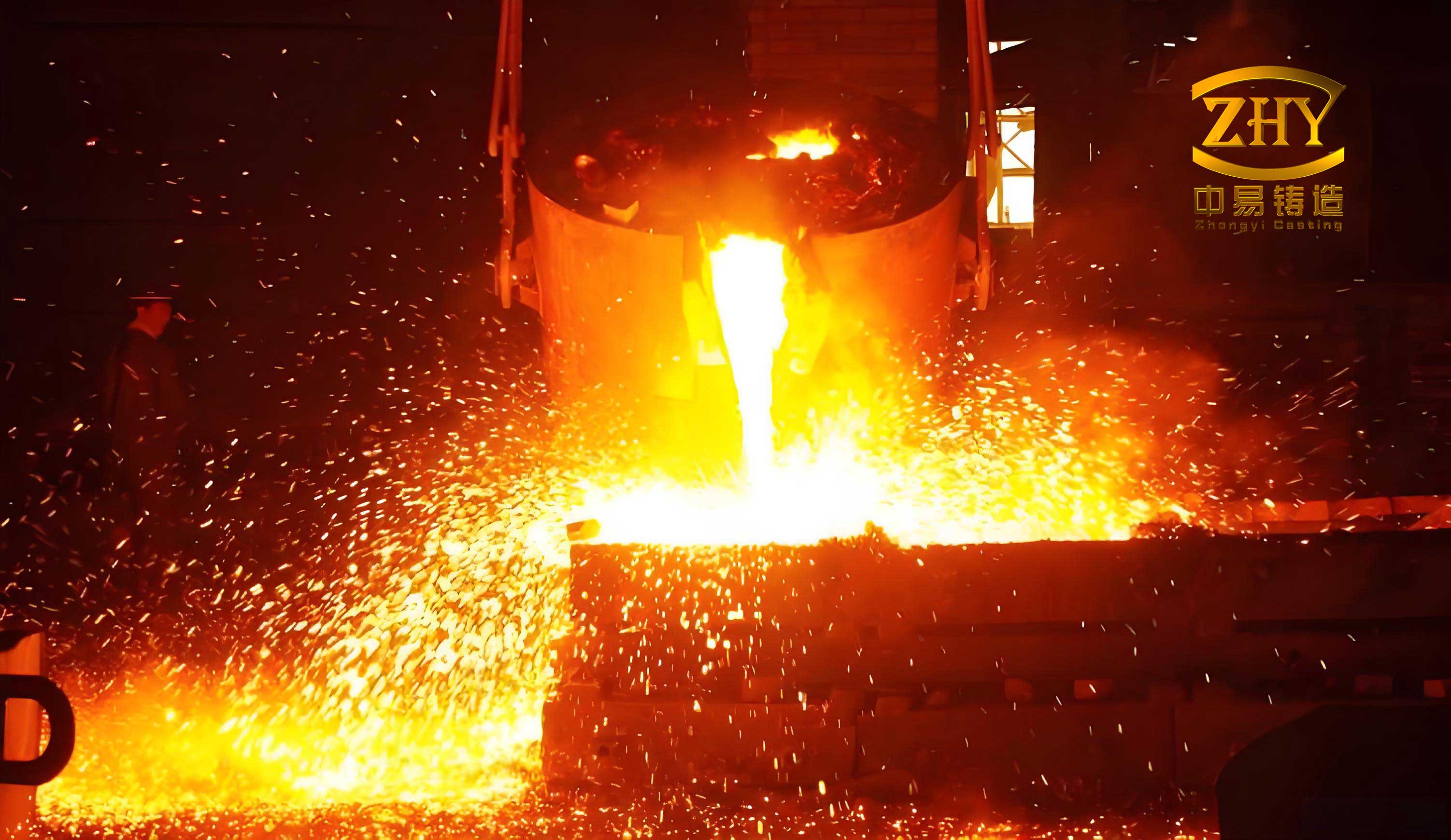
Traditionally, foundry process development relied heavily on empirical knowledge and iterative physical trials—a time-consuming and costly approach. The advent and maturation of computational numerical simulation technology have revolutionized this paradigm. While the simulation of horizontal centrifugal casting processes, with its complex interplay of rotational forces, free surface flows, and rapid heat extraction, remains a challenging frontier and may not perfectly mirror reality, it offers an invaluable tool for the process engineer. It provides a virtual sandbox to explore filling patterns, predict solidification behavior, and visualize potential defect sites with unprecedented detail. The ability to rapidly test “what-if” scenarios by adjusting process parameters digitally drastically shortens development cycles, reduces material waste, and lowers the cost of product and process optimization. This article delves into a comprehensive simulation-led methodology for optimizing the horizontal centrifugal casting process for a ductile cast iron cylinder liner, specifically targeting the elimination of inverse chill defects through a fundamental reassessment of the thermal management strategy.
1. Mathematical and Numerical Modeling Foundations
To accurately simulate the centrifugal casting process, one must model two primary coupled physical phenomena: the fluid flow during mold filling and the heat transfer during solidification. The filling phase in horizontal centrifugal casting involves a free-surface, viscous, incompressible, and non-steady state flow of molten metal under a strong rotational body force (centrifugal acceleration). This flow is governed by the fundamental laws of fluid mechanics.
1.1 Governing Equations for Fluid Flow
The motion of the liquid metal must satisfy the conservation of mass (continuity equation) and conservation of momentum (Navier-Stokes equations). For an incompressible fluid, these are expressed as follows.
Continuity Equation:
$$ \frac{\partial u}{\partial x} + \frac{\partial v}{\partial y} + \frac{\partial w}{\partial z} = 0 $$
Where \( u, v, w \) are the velocity components in the \( x, y, z \) directions, respectively. In the rotating frame of the mold, these equations are typically modified to include centrifugal and Coriolis acceleration terms as source terms.
Navier-Stokes Equation (in a rotating frame):
$$ \rho \left( \frac{\partial \vec{V}}{\partial t} + (\vec{V} \cdot \nabla) \vec{V} \right) = -\nabla p + \mu \nabla^2 \vec{V} + \rho \vec{g} + \rho \vec{\omega} \times (\vec{\omega} \times \vec{r}) + 2\rho (\vec{V} \times \vec{\omega}) $$
Where:
\( \rho \) = fluid density,
\( \vec{V} \) = velocity vector,
\( t \) = time,
\( p \) = pressure,
\( \mu \) = dynamic viscosity,
\( \vec{g} \) = gravitational acceleration vector,
\( \vec{\omega} \) = angular velocity vector of rotation,
\( \vec{r} \) = position vector from the axis of rotation.
The term \( \rho \vec{\omega} \times (\vec{\omega} \times \vec{r}) \) represents the centrifugal force, and \( 2\rho (\vec{V} \times \vec{\omega}) \) represents the Coriolis force. For many industrial simulations, simplified approaches treating the filling as an instantaneous or quasi-instantaneous event relative to solidification are used, focusing computational effort on the thermal analysis.
1.2 Governing Equation for Heat Transfer and Solidification
The thermal history, which is critical for predicting microstructure and defects like inverse chill in ductile cast iron, is governed by the transient heat conduction equation with phase change enthalpy:
$$ \rho c_{eff} \frac{\partial T}{\partial t} = \nabla \cdot (k \nabla T) + \dot{Q} $$
Where:
\( T \) = temperature,
\( c_{eff} \) = effective specific heat (incorporating the latent heat of fusion),
\( k \) = thermal conductivity,
\( \dot{Q} \) = internal heat source term (often zero for pure conduction).
The effective specific heat method is commonly used to account for the latent heat release during the liquid-solid transformation of ductile cast iron, a complex alloy with a mushy zone. The thermal properties (\( \rho, k, c \)) are typically functions of temperature and phase (liquid, solid).
2. Initial Casting Process: Model Setup and Simulation Analysis
The subject of this study is a cylinder liner cast from a pearlitic grade of ductile cast iron. The target chemical composition range for this high-performance ductile cast iron is summarized in the table below.
| Element | Content (wt.%) |
|---|---|
| Carbon (C) | 3.4 – 3.9 |
| Silicon (Si) | 2.4 – 2.9 |
| Manganese (Mn) | ≤ 0.5 |
| Copper (Cu) | 1.0 – 1.3 |
| Nickel (Ni) | 0.1 – 0.3 |
| Magnesium (Mg) | ≥ 0.035 |
| Cerium (Ce) | < 0.04 |
| Sulfur (S) | < 0.02 |
2.1 Physical Model and Geometry
The CAD assembly consists of the ductile cast iron liner casting, the metal mold (die), end plates (chills), and the interfacial insulating coating applied to the mold bore. The casting has a maximum outer diameter of 140 mm, a length of 298 mm, and a maximum wall thickness of 19 mm. Significant machining allowances are planned: 7-9 mm on the inner diameter (bore), 40 mm on the pouring end, and 20 mm on the tail end. These allowances are crucial as they define the initial “rough” geometry whose solidification behavior is simulated, and they directly relate to where a subsurface defect like inverse chill might be located relative to the final machined surface.
2.2 Mesh Generation
A hybrid, non-conformal meshing strategy is employed to balance accuracy and computational efficiency. The casting and the thin insulating coating layer are discretized with a fine tetrahedral mesh to accurately resolve temperature gradients. The mold and end plates, which act primarily as heat sinks, are meshed with a coarser tetrahedral mesh. The final mesh assembly comprised approximately 720,000 volume elements and 100,000 surface elements. The pouring gate is defined on the inner surface of the casting’s bore.
2.3 Initial Process Parameters and Boundary Conditions
The process is a multi-station, water-cooled horizontal centrifugal casting. The mold rotational speed is a critical parameter. It is commonly determined using Konstantinov’s empirical formula, which ensures sufficient centrifugal pressure to form a sound casting:
$$ n = \frac{29.9}{\sqrt{r}} \sqrt{G} $$
Where:
\( n \) = mold rotational speed (rpm),
\( r \) = inner radius of the casting (m),
\( G \) = gravitational coefficient (G-factor), typically between 40 and 110 for such castings.
For the given liner geometry, this yields a theoretical speed range of 840 to 1380 rpm. Based on practical foundry experience, an initial speed of 1200 rpm was selected. Other key initial process parameters and boundary conditions are listed in the following table.
| Parameter | Value / Range |
|---|---|
| Pouring Temperature | 1340 – 1390 °C |
| Pouring Rate | 2.0 – 2.5 kg/s |
| Mold Pre-heat Temperature | 200 – 300 °C |
| Heat Transfer Coefficient (HTC), Casting/Coating | 500 W/m²·K |
| HTC, Coating/Mold | 500 W/m²·K |
| HTC, Mold/Cooling Water | 5000 W/m²·K |
| HTC, Casting Inner Surface/Air | 20 – 60 W/m²·K |
2.4 Simulation Results for the Initial Process
2.4.1 Temperature Field Analysis
The simulated temperature field reveals the inherent thermal characteristics of the process. Initially, the outer surface of the ductile cast iron liner, in contact with the insulating coating and the water-cooled metal mold, experiences the most rapid heat extraction. This causes directional solidification to initiate from the outside wall inward. The inner surface of the rotating casting loses heat primarily through radiation and convection to the ambient air, a less efficient mechanism, causing it to be cooler than the mid-wall region but warmer than the outer wall. The ends of the liner, in contact with the metal end plates (chills), also cool rapidly. Due to the variation in wall thickness and the progressive heating of the local mold area, a thermal “hot spot” develops in the thicker section of the casting. By the time the water cooling cycle begins, a distinct “sandwich” temperature profile is established across the wall: a cooler outer solidified shell, a hotter interior mushy zone, and a moderately cool inner surface.
At a simulation time of t = 150 seconds, this profile is clearly evident. The mid-wall temperature in the thick section can be as high as 1180°C, while the outer solidified layer is near 1120°C, and the inner surface is around 1160°C. This non-uniform thermal field sets the stage for problematic solidification.
2.4.2 Solid-Liquid Fraction Analysis & Defect Prediction
The solid fraction simulation is the most direct tool for predicting shrinkage porosity and, by inference, the last-to-solidify zones prone to inverse chill in ductile cast iron. The simulation clearly shows that solidification progresses from both the outer mold wall and the inner air-cooled surface towards the center of the wall thickness. The regions at the ends, being chilled, solidify first. The last liquid metal to freeze is isolated in the geometrical center of the thickest part of the liner wall.
In the simulation output, this final liquid pool, labeled as “Region A,” is clearly identifiable. The critical measurement is the distance (H) from the center of this last-solidifying region to the inner surface of the casting bore (the future machined surface). For the initial process, H was measured at approximately 7.8 mm. This location aligns almost perfectly with the subsurface region where inverse chill was consistently found in actual production castings. Metallographic examination of a sample from a rejected part revealed a hard, carbide-rich structure (inverse chill) at a depth of about 7 mm from the bore, validating the simulation’s predictive capability. The correlation confirms that for this ductile cast iron component, the last-to-solidify region, influenced by the specific thermal history, is the primary site for inverse chill formation.
3. Process Optimization Strategy Based on Simulation Insights
The simulation pinpointed the root cause: the final liquid pool was trapped in the mid-wall, creating conditions ripe for inverse chill in the ductile cast iron. The optimization goal, therefore, is to alter the solidification sequence to promote a more directional, outside-in progression, thereby moving the final solidification point closer to the inner bore surface (into the future machining allowance) or ideally eliminating the isolated mid-wall hotspot altogether. The strategy involves manipulating the thermal boundary conditions to enhance cooling in the problematic thick section and improve the consistency of the cooling front.
The proposed modifications, informed by the simulation, are:
- Localized Cooling Enhancement: Increase the flow rate or efficiency of the cooling water spray on the external mold surface corresponding to the thick section of the liner. This increases the local heat extraction rate (\(k_{mold/water}\)), effectively making that part of the mold a stronger chill.
- Insulation Adjustment: Reduce the thickness of the refractory coating applied to the mold bore in the thick section. This decreases the thermal resistance between the hot ductile cast iron and the cooled mold (\(R_{coating} = thickness / k_{coating}\)), allowing heat to be removed more rapidly from that specific area.
- End Cooling Balance: Review and potentially increase cooling at the pouring end to better balance the solidification front along the length of the casting.
The underlying thermal principle can be summarized by enhancing the effective heat flux (\(q”\)) from the critical zone:
$$ q”_{optimized} = \frac{T_{cast} – T_{water}}{R_{total}} $$
Where \( R_{total} = R_{coating} + R_{mold} + R_{interface} \). By reducing \( R_{coating} \) (thinner insulation) and increasing the driving force (better water cooling lowers \( T_{water,effective} \)), \( q” \) increases, accelerating local solidification.
3.1 Simulation of the Optimized Process
The modified parameters (increased local HTC at mold/water interface, decreased local coating thickness) are applied in a new simulation. The results show a dramatic improvement in the thermal profile. The temperature field becomes more uniform, and the intense mid-wall hotspot is suppressed. Most importantly, the solid-liquid fraction analysis reveals a transformed solidification pattern. The solidification front now progresses more uniformly from the outside wall inward. The last liquid area is no longer a large isolated pool in the mid-wall but a thinner layer much closer to the inner surface.
At t = 120 seconds (a shorter time indicating faster overall solidification), the final liquid pool is centered only about 3.5 mm from the inner bore surface. This represents a significant shift of over 4 mm from the initial condition. By moving the last-to-freeze zone into the heavy machining allowance (7-9 mm), any potential minor segregation or micro-shrinkage associated with final solidification will be completely removed during the boring operation. The risk of inverse chill appearing in the finished part is effectively eliminated.
4. Production Validation and Broader Implications
The optimized process parameters derived from the simulation were implemented on the production floor. A statistical evaluation of the resulting ductile cast iron liners was conducted. Key performance indicators showed marked improvement:
| Quality Metric | Initial Process | Optimized Process |
|---|---|---|
| As-Cast Quality Yield (free from inverse chill) | ~85-90% (estimated) | > 99.6% |
| Final Machined Part Yield | < 100% (due to machining issues) | ~100% |
| Tool Life during Boring | Reduced significantly | Returned to standard baseline |
Metallographic inspection of samples from the optimized batches confirmed the absence of inverse chill carbide networks in the critical wall regions. The microstructure of the ductile cast iron was uniform and consisted of well-formed graphite nodules in a matrix of the desired pearlite, with any minor last-solidification effects confined to the stock that was later machined away.
4.1 Extended Benefits and Future Directions
This exercise demonstrates the power of simulation not just as a problem-solving tool, but as a platform for innovation. The deep understanding of the solidification kinetics gained here opens avenues for further design optimization:
- Reduction of Machining Allowance: With controlled, predictable solidification moving the last-to-freeze zone close to the surface, it may be possible to safely reduce the inner diameter machining allowance from 7-9 mm to perhaps 5-6 mm. This would yield significant material savings per part and reduce machining time for every unit of ductile cast iron produced.
- Generalized Methodology: The approach—simulate to identify the thermal signature of a defect, formulate a physics-based intervention on boundary conditions, verify digitally, and then implement—creates a robust template for solving other solidification-related defects like macro-porosity, shrinkage cavities, or undesirable segregations in complex ductile cast iron castings.
- Process Robustness: The simulation environment allows for sensitivity analysis, helping to establish stable process windows (e.g., acceptable ranges for pouring temperature, coating thickness, water flow) to make production more robust to normal variations.
5. Conclusion
This detailed exploration underscores the critical role of numerical simulation in modern foundry engineering, particularly for demanding applications involving ductile cast iron. By applying fundamental principles of fluid dynamics and heat transfer within a digital framework, it was possible to:
- Accurately model the horizontal centrifugal casting process for a cylinder liner and predict the location of the last-to-solidify region, which correlated perfectly with the observed inverse chill defect in the initial ductile cast iron product.
- Diagnose the root cause as an unfavorable thermal profile leading to a mid-wall “hot spot” and isolated liquid pool, conditions conducive to carbide stabilization and inoculation fade.
- Develop and virtually test an optimized process strategy focused on enhancing and balancing local heat extraction. The modifications successfully altered the solidification sequence to a more favorable outside-in progression, moving the final liquid pool from a depth of 7.8 mm to 3.5 mm from the inner surface.
- Validate the optimization in production, achieving a dramatic increase in as-cast quality yield (exceeding 99.6%) and restoring 100% final part integrity, thereby confirming the simulation’s predictive accuracy and the effectiveness of the solution.
The success of this project extends beyond solving an immediate quality issue. It establishes a simulation-driven paradigm for process design and optimization that reduces development time, minimizes costly physical trials, and enhances fundamental process understanding. For ductile cast iron and other advanced cast materials, this methodology is indispensable for achieving higher quality, greater material efficiency, and sustained competitiveness in the precision casting industry. The insights gained specifically into managing the thermal history of centrifugally cast ductile iron components provide a valuable reference for tackling similar challenges across a wide range of cylindrical and tubular casting applications.