
In the realm of precision manufacturing, lost wax casting stands as a pivotal process for producing complex steel components with high dimensional accuracy. However, gas porosity remains a persistent defect that can compromise the integrity and performance of castings. Through my extensive experience in foundry engineering, I have observed that gas porosity in lost wax casting of steel can be systematically categorized and addressed. This article delves into the genesis and mitigation of gas porosity, leveraging first-hand insights to elucidate the underlying mechanisms and practical solutions. The focus is on the lost wax casting process, a technique that involves creating a wax pattern, coating it with ceramic to form a mold, melting out the wax, and pouring molten steel. Throughout this discussion, the term “lost wax casting” will be repeatedly emphasized to underscore its centrality to the topic.
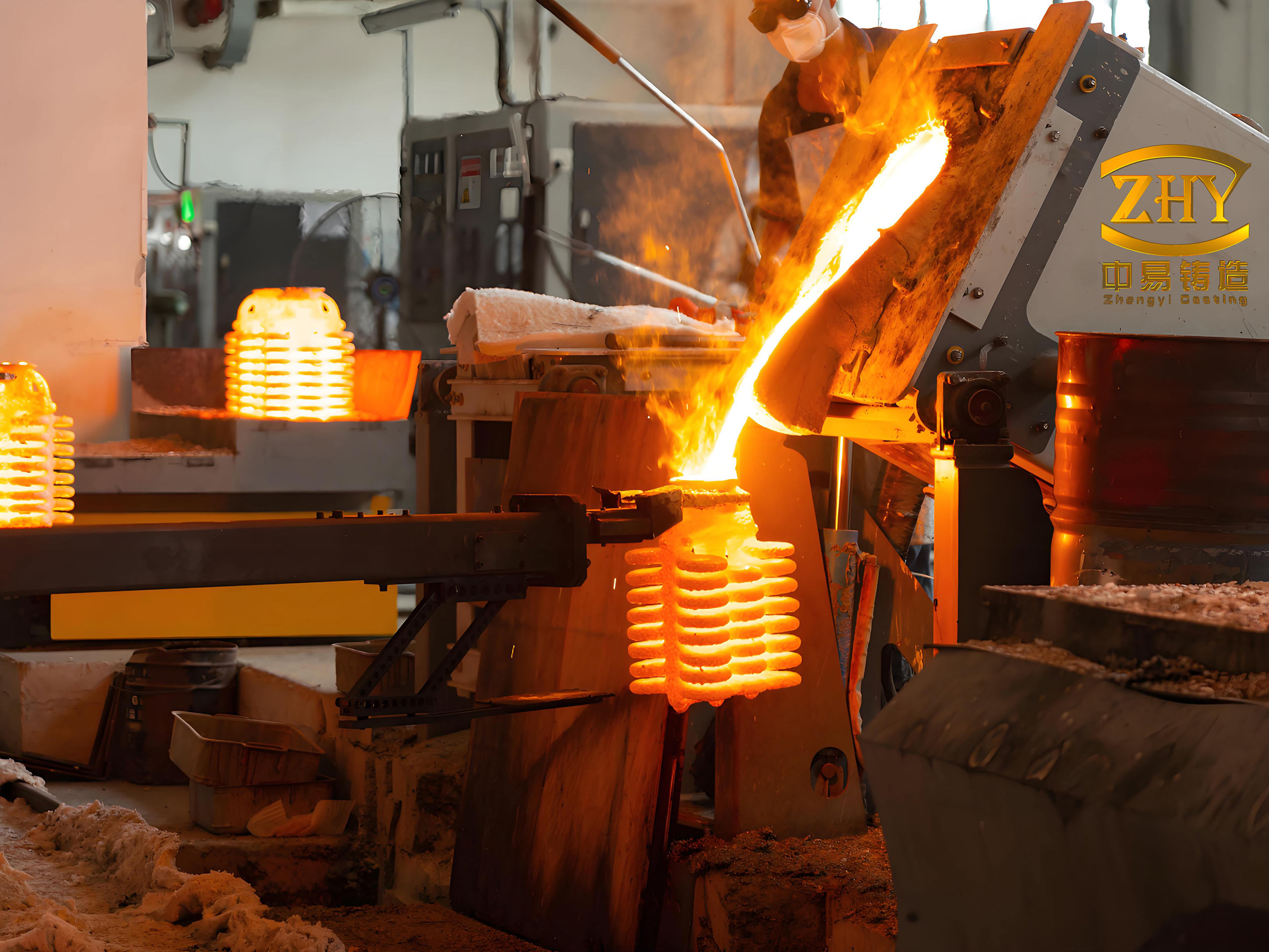
Gas porosity in lost wax casting of steel primarily manifests in three forms: precipitation porosity, invasion porosity, and entrainment porosity. Each type stems from distinct sources and requires tailored preventive measures. In lost wax casting, the controlled environment of ceramic molds can influence gas behavior, making it crucial to understand these phenomena. I will explore each category in detail, incorporating equations and tables to summarize key points, thereby providing a comprehensive guide for practitioners in the lost wax casting industry.
Precipitation Porosity
Precipitation porosity arises from gases that are dissolved in the molten steel and precipitate out during solidification. In lost wax casting, this is particularly relevant due to the high temperatures involved, which affect gas solubility. Precipitation porosity can be further divided into supersaturation precipitation porosity and reaction precipitation porosity.
Supersaturation Precipitation Porosity
This type of porosity occurs when gases like hydrogen and nitrogen become supersaturated in the steel melt and form bubbles upon solidification. The solubility of gases in liquid steel is governed by factors such as partial pressure and temperature, as described by Sieverts’ law. For hydrogen, the solubility decreases sharply during solidification, leading to potential bubble formation. The relationship can be expressed as:
$$ S = k \sqrt{P} \exp\left(-\frac{\Delta H}{RT}\right) $$
where \( S \) is the solubility, \( k \) is a constant, \( P \) is the partial pressure of the gas, \( \Delta H \) is the heat of dissolution, \( R \) is the gas constant, and \( T \) is the absolute temperature. In lost wax casting, hydrogen absorption often originates from moisture or rust in charge materials, tools, or the furnace lining. For instance, when water decomposes at high temperatures:
$$ \text{H}_2\text{O} \rightarrow 2\text{H} + \text{O} $$
the atomic hydrogen readily dissolves into the steel. To prevent this in lost wax casting, maintaining dry conditions is paramount. Nitrogen, while less critical due to its lower solubility and tendency to form stable nitrides, can still contribute if present in excess. The critical condition for bubble formation is when the gas pressure exceeds the external pressure:
$$ P_{\text{H}_2} \text{ or } P_{\text{N}_2} > P_{\text{atm}} + \rho g h + \frac{2\sigma}{r} $$
where \( P_{\text{atm}} \) is atmospheric pressure, \( \rho g h \) is the metallostatic pressure, and \( \frac{2\sigma}{r} \) is the surface tension effect. In lost wax casting, careful control of melting parameters can mitigate these issues.
| Gas Type | Source in Lost Wax Casting | Critical Solubility (wt.%) | Preventive Measures |
|---|---|---|---|
| Hydrogen (H₂) | Moisture, rust, damp materials | ~0.0002 in solid steel | Use dry charge materials, preheat tools, ensure furnace dryness |
| Nitrogen (N₂) | Air absorption, nitrogen compounds | Generally low due to nitride formation | Add nitride-forming elements (e.g., Al, Ti), control melting atmosphere |
Moreover, hydrogen can cause “fish-eye” white spots or hydrogen embrittlement, which exacerbates defects in lost wax casting components. Thus, in lost wax casting operations, degassing techniques or vacuum melting may be employed to reduce gas content.
Reaction Precipitation Porosity
This porosity results from chemical reactions within the molten steel, typically involving oxygen. In lost wax casting, oxygen can dissolve as FeO, and if the steel is inadequately deoxidized, it reacts with carbon to form carbon monoxide (CO) bubbles. The equilibrium between FeO and carbon is temperature-dependent, as shown in the following relation derived from experimental data:
$$ [\text{FeO}] + [\text{C}] \leftrightarrow \text{Fe} + \text{CO} \uparrow $$
The equilibrium constant \( K \) varies with temperature, influencing the risk in lost wax casting. For high-carbon steels, the equilibrium FeO content is lower, making them more prone to gas porosity in lost wax casting if deoxidation is insufficient. The reaction is exothermic, so during solidification, temperature drops can drive CO formation, leading to fine pinholes. Three manifestations are common: spherical pores from severe oxidation, uniform pinholes from incomplete deoxidation, and subsurface pinholes from secondary oxidation. In lost wax casting, subsurface pinholes often appear near gates or risers due to slower cooling and surface oxidation. To combat this, effective deoxidation is crucial. The balance between deoxidants like aluminum (Al) and silicon (Si) with FeO is key; for instance, aluminum offers a lower equilibrium FeO level. The required residual aluminum can be estimated as:
$$ [\text{Al}]_{\text{residual}} \approx \left(0.04\% – 0.08\% \times [\text{Mn}] \right) / 2 $$
In lost wax casting, practical measures include using clean charge materials, minimizing high-temperature exposure, and adding deoxidants like aluminum in controlled amounts (e.g., 0.03–0.06% by weight) to ensure thorough deoxidation.
| Porosity Type | Mechanism in Lost Wax Casting | Typical Location | Preventive Strategies |
|---|---|---|---|
| Spherical CO Pores | Severe oxidation, high FeO content | Upper sections of castings | Ensure full deoxidation, use rapid melting to limit oxidation |
| Uniform Pinholes | Incomplete deoxidation, temperature-driven CO formation | Throughout cross-section | Maintain residual Al > 0.002%, control cooling rates |
| Subsurface Pinholes | Secondary oxidation at slow-cooling areas | Near gates/risers | Enhance mold atmosphere control, add protective slag or coatings |
In lost wax casting, the ceramic mold’s inert nature reduces oxidation sources compared to sand casting, but residual salts or moisture can still pose risks, necessitating rigorous process control.
Invasion Porosity
Invasion porosity occurs when gases generated from the mold itself intrude into the molten steel during pouring. In lost wax casting, the ceramic shell is baked at high temperatures, but residual volatiles can cause issues. The primary gas source is sodium chloride (NaCl) from binders or hardening agents. During baking, NaCl may decompose or react, producing gases that can invade the steel if the gas pressure exceeds the sum of atmospheric, metallostatic, and surface tension pressures. The gas generation rate \( G \) and volume \( V \) influence defect formation; if \( G \) is high, as in under-baked shells, invasion porosity risk increases. The condition for invasion is:
$$ P_{\text{gas}} > P_{\text{atm}} + \rho g h + \frac{2\sigma}{r} $$
In lost wax casting, shell preparation is critical. Sources of NaCl include: (1) residual NaCl from sodium silicate hardening with NH₄Cl, and (2) NaCl formed during baking from reactions like Na₂CO₃ with HCl. Although NaCl has a melting point of 801°C and boils at 1465°C, prolonged baking above 800°C can remove it. However, if baking is insufficient, NaCl vapor may not fully escape, leading to localized gas evolution and defects like “toad skin” surface irregularities. Preventive measures in lost wax casting include:
- Avoiding damp shells; use hot-shell pouring to minimize gas generation.
- Ensuring uniform coating and thorough hardening during shell building to prevent NaCl buildup.
- Implementing sufficient baking cycles (e.g., above 900°C with hold times) to volatilize residues.
| Gas Source | Origin in Lost Wax Casting | Effect on Porosity | Best Practices for Prevention |
|---|---|---|---|
| NaCl Vapor | Residual salts from binders, incomplete baking | Can cause subsurface blowholes or surface pits | Bake shells until fume-free, control hardening parameters |
| Organic Residues | Wax debris, improper dewaxing | Generates CO₂ or H₂O vapors upon pouring | Optimize dewaxing with steam or solvent cleaning |
| Moisture | Ambient humidity, wet shell handling | Leads to steam explosions and gas entrapment | Store shells in dry conditions, preheat before pouring |
By addressing these factors, lost wax casting can achieve shells with minimal gas evolution, thereby reducing invasion porosity.
Entrainment Porosity
Entrainment porosity results from air being trapped or卷入 during turbulent filling of the mold cavity. In lost wax casting, the ceramic shell has low permeability, making air evacuation challenging. When molten steel flows irregularly, it can encapsulate air pockets, forming spherical or elongated pores. The filling dynamics are governed by factors such as gating design and pouring pressure. For thin-walled castings in lost wax casting, the pressure required for complete filling can be expressed as:
$$ P_p = \frac{\delta \lambda (T_p – T_m)}{\beta \left[ \frac{K_p \mu}{\rho c (T_p – T_f)} \right]^{1/2}} $$
where \( P_p \) is the pouring pressure, \( \delta \) is shell thickness, \( \lambda \) is thermal conductivity, \( T_p \) is pouring temperature, \( T_m \) is mold initial temperature, \( K_p \) is shell permeability, \( \mu \) is viscosity, \( \rho \) is density, \( c \) is specific heat, and \( T_f \) is fill termination temperature. Higher pressures may increase air entrainment. To mitigate this in lost wax casting, several strategies are effective:
- Design gating systems for smooth, laminar flow—e.g., using bottom gating or tapered runners to reduce turbulence.
- Incorporate vents, overflow wells, or排气 channels at the end of filling to allow air escape.
- Optimize shell properties: while strength is important, slightly reducing sintered density can enhance permeability without compromising integrity.
For instance, in a lost wax casting of a lever component, switching from top to bottom gating with an added集气包 eliminated porosity. Similarly, for thin sections, adding溢气槽 or排气 edges can vent trapped air. The table below summarizes approaches for lost wax casting.
| Design Element | Role in Lost Wax Casting | Impact on Porosity | Implementation Tips |
|---|---|---|---|
| Gating System | Directs metal flow; bottom gating reduces air卷入 | Lowers turbulence, minimizes air pockets | Use multiple gates, avoid abrupt direction changes |
| Vents and Overflows | Provide escape routes for air | Prevents air trapping at dead ends | Place at high points or filling termini; size based on section thickness |
| Shell Permeability | Influences air evacuation rate | Higher permeability reduces back-pressure | Adjust slurry配方 or sintering to achieve balanced strength and permeability |
| Pouring Practice | Controls fill speed and stability | Slow, steady pours decrease entrainment | Use automated pouring systems for consistency |
In lost wax casting, these modifications are essential for complex geometries where air entrapment is common.
Integrated Prevention Framework for Lost Wax Casting
To holistically address gas porosity in lost wax casting, a systematic approach combining melt treatment, shell management, and design optimization is required. Drawing from my实践, I propose a unified framework summarized in the table below. This encompasses all porosity types and emphasizes the unique aspects of lost wax casting.
| Porosity Category | Primary Causes in Lost Wax Casting | Key Preventive Measures | Monitoring Parameters |
|---|---|---|---|
| Supersaturation Precipitation | High hydrogen/nitrogen from moist materials, rust | Dry all charge materials, use degassing, control melting atmosphere | Gas content analysis (e.g., H₂ < 0.0002 wt.%), melt temperature logs |
| Reaction Precipitation | Inadequate deoxidation, high FeO, secondary oxidation | Add precise deoxidants (Al, Si), rapid melting, clean charges | Residual Al levels, FeO concentration, pouring temperature control |
| Invasion | Shell gases from NaCl, moisture, organics | Thorough shell baking, proper hardening, dry storage | Shell bake temperature/time, visual inspection for fumes |
| Entrainment | Turbulent filling, poor venting, low shell permeability | Optimize gating/venting, adjust shell porosity, controlled pouring | Flow simulation results, shell permeability tests, casting defect maps |
Implementing this framework in lost wax casting requires continuous improvement and adaptation to specific alloy and part geometries. For example, in lost wax casting of high-carbon steels, extra attention to deoxidation is needed, while for thin-walled parts, venting design takes priority. Moreover, statistical process control can help track variables like shell moisture content or melt gas levels, reducing variability in lost wax casting outputs.
Advanced Considerations and Future Directions
Beyond basic prevention, emerging technologies offer new avenues for mitigating gas porosity in lost wax casting. For instance, vacuum-assisted lost wax casting can drastically reduce gas solubility and entrainment by lowering ambient pressure during pouring. Similarly, computational fluid dynamics (CFD) simulations allow predicting air trap zones in lost wax casting molds, enabling proactive design changes. The integration of real-time monitoring sensors for gas evolution during baking or pouring could further enhance control. In lost wax casting, the use of alternative binders with lower gas generation, such as colloidal silica, is gaining traction. Additionally, post-casting treatments like hot isostatic pressing (HIP) can heal internal porosity, though prevention remains more cost-effective for lost wax casting. The interplay between metallurgy and mold engineering is crucial; for example, the equation for gas bubble nucleation highlights the role of surface tension \( \sigma \) and radius \( r \):
$$ \Delta P = \frac{2\sigma}{r} $$
where \( \Delta P \) is the pressure difference driving bubble growth. In lost wax casting, minimizing nucleation sites through clean melts and smooth mold surfaces can suppress porosity. Future research in lost wax casting might focus on nano-engineered coatings to reduce gas-mold interactions or AI-driven process optimization for defect prediction.
Conclusion
Gas porosity in lost wax casting of steel is a multifaceted challenge that demands a deep understanding of gas sources, mold behavior, and fluid dynamics. Through this first-person perspective, I have detailed the classifications—precipitation, invasion, and entrainment porosity—along with their mechanisms and remedies. The lost wax casting process, with its unique ceramic shell system, requires diligent control over melting, shell preparation, and design to minimize defects. By employing equations to model gas behavior and tables to summarize actionable insights, practitioners can enhance their lost wax casting operations. Key takeaways include: maintaining dry conditions to prevent hydrogen pickup, ensuring thorough deoxidation for reaction porosity, baking shells adequately to avoid invasion, and designing for laminar flow to reduce entrainment. As lost wax casting evolves, integrating advanced technologies will further push the boundaries of quality, making it indispensable for high-performance steel components. Ultimately, mastering gas porosity in lost wax casting is not just about fixing defects but about embracing a holistic approach to precision manufacturing.