
In this investigation, we explore the intriguing graphite morphologies that arise from the annealing of high-sulfur-phosphorus white cast iron. The core premise revolves around utilizing sulfur as a spheroidizing agent and phosphorus as a graphitizing agent in low-silicon molten iron, a approach that challenges conventional nodular iron production methods. The resultant microstructures, after appropriate heat treatments, exhibit a spectrum of graphite forms, from well-rounded spheroids to complex aggregated shapes, shedding light on the fundamental mechanisms of graphite crystallization and transformation in white cast iron systems. This article delves into the experimental observations, theoretical underpinnings, and analytical models, aiming to provide a comprehensive understanding of these phenomena. Throughout, the term “white cast iron” will be frequently reiterated to emphasize the specific material context, as it is the foundational matrix wherein these graphite evolution processes occur.
The initial motivation stems from the desire to achieve nodular graphite structures without relying on traditional magnesium or rare-earth additions. In white cast iron, which is typically characterized by its cementite-rich, graphite-free as-cast state, the introduction of specific elements can catalyze graphitization upon annealing. Here, sulfur and phosphorus play pivotal roles. Sulfur, often considered detrimental in cast irons due to its promotion of chill and graphite distortion, can act as a spheroidizer under controlled conditions. Phosphorus, known to enhance fluidity and graphitization, serves as a facilitator. By processing low-silicon iron melts with optimal amounts of these elements, we obtained samples that, after annealing, displayed graphite nodules with remarkable roundness and density, sometimes rivaling or surpassing those in rare-earth-magnesium treated ductile irons.
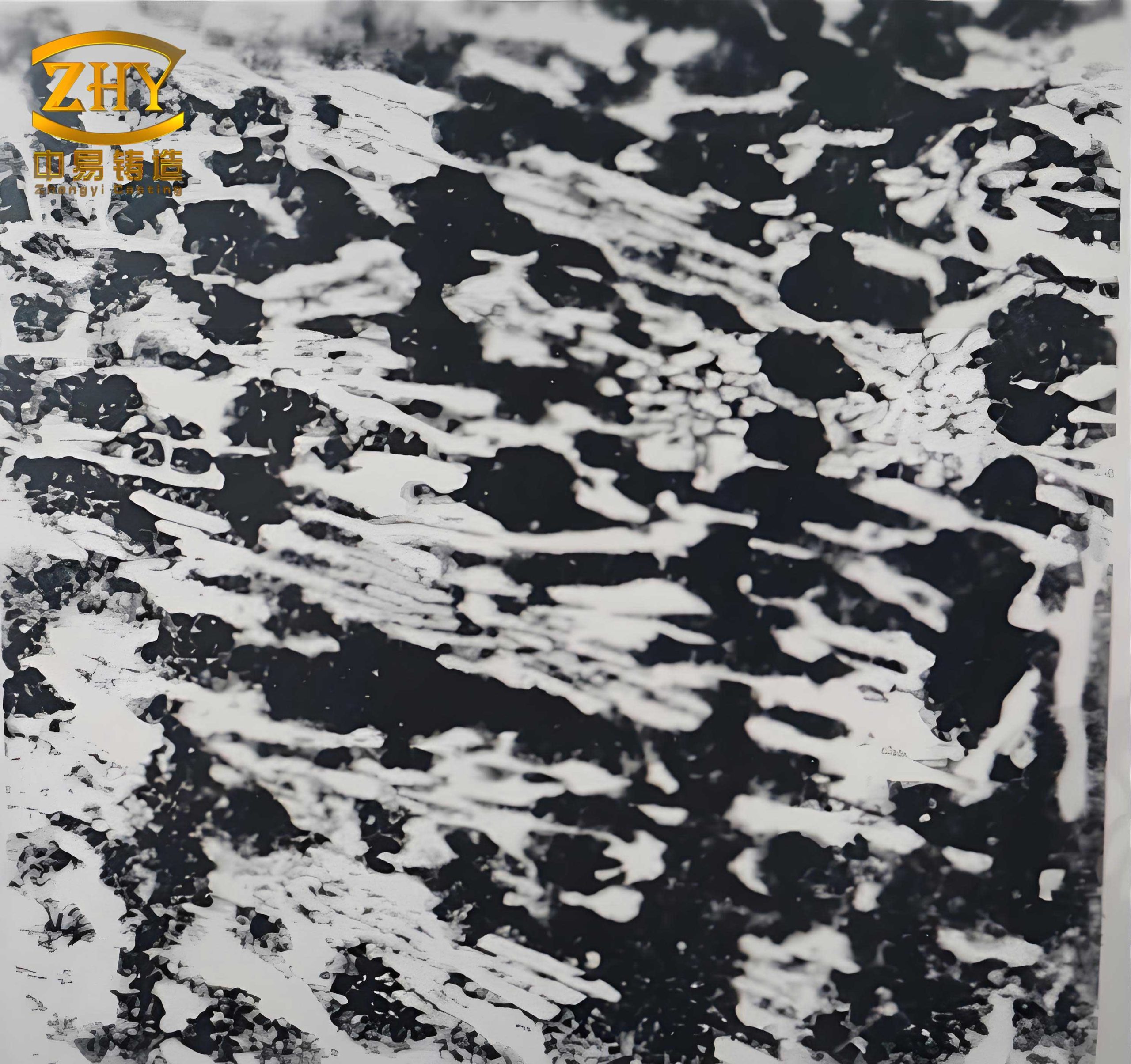
The experimental procedure involved melting base iron with carefully monitored compositions, followed by inoculating with sulfur and phosphorus compounds. The molten metal was cast into standard keel blocks and cylindrical specimens to vary cooling rates. Subsequently, annealing heat treatments were conducted in controlled atmosphere furnaces, with temperatures ranging from 850°C to 1050°C and holding times from 30 minutes to several hours. Metallographic preparation included grinding, polishing, and etching with nital or picral, with observations made under optical microscopy, including polarized light to assess graphite crystallography. The white cast iron matrix, initially devoid of graphite, transformed during annealing, yielding diverse graphite morphologies that are cataloged and analyzed herein.
One of the central observations is the recrystallization process of graphite during annealing. In the as-cast state, some regions of the white cast iron exhibited incipient graphite formation, often as fine flakes or clustered aggregates. Upon annealing, these structures evolved. For instance, flake graphite in “hairball” clusters became more curved, with increased width and densification. This transformation can be described by a diffusion-controlled growth model, where carbon atoms migrate to existing graphite sites, reducing interfacial energy. The kinetics can be approximated by the Johnson-Mehl-Avrami-Kolmogorov (JMAK) equation for phase transformation:
$$ f(t) = 1 – \exp\left(-(k t)^n\right) $$
where \( f(t) \) is the volume fraction transformed, \( k \) is a rate constant dependent on temperature and composition, and \( n \) is the Avrami exponent. For graphite growth in white cast iron, \( n \) may vary between 1 and 3, reflecting different nucleation and growth mechanisms. The rate constant \( k \) can be expressed via an Arrhenius relationship:
$$ k = A \exp\left(-\frac{Q}{RT}\right) $$
with \( A \) as the pre-exponential factor, \( Q \) the activation energy for carbon diffusion, \( R \) the gas constant, and \( T \) the absolute temperature. In high-sulfur-phosphorus white cast iron, the presence of sulfur and phosphorus alters \( Q \) and \( A \), accelerating graphitization in specific orientations.
Table 1 summarizes typical chemical compositions used in this study, highlighting the ranges for key elements. The “effective sulfur” content is crucial, as it dictates spheroidization efficiency, while phosphorus aids graphitization. Silicon is kept low to maintain the white cast iron character initially, preventing premature graphite formation during solidification.
| Element | Composition Range (wt%) | Role in White Cast Iron |
|---|---|---|
| Carbon (C) | 3.2 – 3.8 | Primary graphitizing element |
| Silicon (Si) | 0.8 – 1.2 | Limited to ensure as-cast white structure |
| Sulfur (S) | 0.08 – 0.20 | Spheroidizing agent |
| Phosphorus (P) | 0.10 – 0.30 | Graphitizing agent |
| Manganese (Mn) | 0.2 – 0.5 | Balances sulfur, affects carbide stability |
| Iron (Fe) | Balance | Matrix of white cast iron |
The diversity of graphite morphologies observed is striking. Under polarized light, many graphite nodules exhibit radial anisotropy, indicating spherulitic growth from a central nucleus. In some samples, graphite appears as compact spherical entities with high roundness, akin to those in commercial ductile iron. In others, transitional forms are seen, such as “rosette” clusters where the periphery shows radial polarization while the center remains dark, or vice versa. These morphologies suggest sequential growth stages. For example, in large-section samples of rare-earth-magnesium ductile iron, similar features are noted, but in our high-sulfur-phosphorus white cast iron, they occur with distinct patterns due to the unique solute interactions.
Another fascinating aspect is the growth of spheroidal graphite on flake graphite substrates. In annealed samples, large graphite aggregates often display polarization effects identical to vermicular graphite in rare-earth-treated irons. High-magnification examination of unannealed white cast iron reveals extremely fine graphite flakes that seem to act as nuclei for subsequent spheroidal growth during annealing. This nucleation-on-flakes mechanism can be modeled considering the interfacial energy reduction. The total energy change \( \Delta G \) for transforming a flake of surface area \( A_f \) into a sphere of surface area \( A_s \) is:
$$ \Delta G = \gamma_{gr} (A_s – A_f) + \Delta G_{chem} $$
where \( \gamma_{gr} \) is the graphite-matrix interfacial energy, and \( \Delta G_{chem} \) is the chemical driving force due to carbon supersaturation. In white cast iron, annealing provides the thermal activation to overcome energy barriers, allowing flakes to curl and spheroidize, especially when sulfur segregates to graphite interfaces, lowering \( \gamma_{gr} \).
Table 2 classifies the observed graphite morphologies in annealed high-sulfur-phosphorus white cast iron, along with their characteristics and probable formation conditions. This taxonomy aids in correlating microstructure with processing parameters.
| Morphology Type | Description | Polarized Light Response | Typical Annealing Conditions |
|---|---|---|---|
| Spheroidal Nodules | Well-rounded, dense graphite balls | Strong radial cross | 900-1000°C, 1-2 h |
| Transitional Rosettes | Central dark, peripheral radial zones | Partial radial | 850-950°C, 30-60 min |
| Hairball Clusters | Aggregates of curved flakes | Weak or mottled | As-cast + low-T anneal |
| Vermicular/Rope-like | Elongated, intertwined graphite | Streaked polarization | High P, moderate S |
| Hybrid Aggregates | Mixed spheroids and flakes | Varied | Intermediate compositions |
The role of sulfur as a spheroidizer in white cast iron is nuanced. At optimal levels, it adsorbs at growing graphite interfaces, inhibiting lateral growth and promoting radial expansion, leading to spherulitic forms. However, excess sulfur can lead to carbide stabilization, retarding graphitization. The effectiveness can be quantified by a spheroidization parameter \( S_p \), defined as:
$$ S_p = \frac{[S]_{eff}}{[S]_{tot}} \times \frac{1}{[O] + [N]} $$
where \( [S]_{eff} \) is the sulfur available for interface modification, \( [S]_{tot} \) is total sulfur, and \( [O] \) and \( [N] \) are oxygen and nitrogen contents, which can poison spheroidization. In our white cast iron, careful deoxidation practices ensured \( S_p \) values conducive to nodule formation.
Phosphorus, on the other hand, enhances graphitization by segregating to austenite/graphite boundaries and reducing the carbon diffusion activation energy. Its effect can be incorporated into the growth rate equation via a modification to \( Q \):
$$ Q_{eff} = Q_0 – \alpha [P] $$
with \( Q_0 \) as the activation energy in phosphorus-free white cast iron, and \( \alpha \) a positive constant. This linear approximation simplifies the accelerated kinetics observed in high-phosphorus white cast iron samples.
To further elucidate the transformation sequences, we conducted isothermal annealing experiments at various temperatures and times, measuring graphite nodule counts and sizes. The data, when fitted to the JMAK equation, yielded Avrami exponents \( n \approx 2.5 \) for spheroidal graphite formation, indicating diffusion-controlled growth with continuous nucleation. In contrast, flake graphite growth in low-sulfur samples gave \( n \approx 1 \), interface-controlled growth. Table 3 presents a subset of these kinetic parameters for different white cast iron compositions.
| Sample ID | Sulfur (wt%) | Phosphorus (wt%) | Annealing Temp (°C) | Avrami Exponent \( n \) | Rate Constant \( k \) (min⁻¹) |
|---|---|---|---|---|---|
| WCI-SP1 | 0.12 | 0.18 | 920 | 2.4 | 0.0056 |
| WCI-SP2 | 0.15 | 0.22 | 950 | 2.6 | 0.0089 |
| WCI-SP3 | 0.09 | 0.15 | 880 | 2.1 | 0.0032 |
| WCI-LowS | 0.04 | 0.25 | 920 | 1.2 | 0.0018 |
These results underscore how sulfur and phosphorus synergistically modify transformation kinetics in white cast iron. The higher \( n \) values in optimal compositions suggest complex nucleation events, possibly from pre-existing micro-segregations or carbide decompositions.
In addition to spheroidal forms, we observed “rope-like” graphite in some high-phosphorus white cast iron samples. This morphology consists of elongated, twisted graphite strands, showing streaked polarization. It likely arises from anisotropic growth conditions where phosphorus-rich boundaries guide graphite extension along specific crystallographic directions. The formation can be described by a growth anisotropy factor \( \beta \), defined as the ratio of growth rates along basal and prismatic directions in graphite:
$$ \beta = \frac{v_{basal}}{v_{prismatic}} $$
In normal flake graphite, \( \beta > 1 \), leading to plate-like shapes. In rope-like graphite, local solute fields (e.g., phosphorus gradients) may reduce \( \beta \) to near unity, allowing curved, helical growth. Computational simulations using phase-field models could capture this, but analytically, we approximate it with a modified Gibbs-Thomson equation for curved interfaces:
$$ \Delta \mu = \gamma \kappa V_m $$
where \( \Delta \mu \) is the chemical potential difference, \( \gamma \) is interfacial energy, \( \kappa \) is curvature, and \( V_m \) is molar volume. For white cast iron with sulfur and phosphorus, \( \gamma \) becomes orientation-dependent, leading to complex curvature evolutions.
The comparison with rare-earth-magnesium (RE-Mg) treated ductile iron is instructive. While RE-Mg irons achieve spheroidization via carbide modification and interfacial poisoning, our high-sulfur-phosphorus white cast iron relies on direct solute effects during solid-state annealing. Notably, some annealed white cast iron nodules displayed even better roundness and density than those in RE-Mg irons, indicating the potential of this route for specific applications. However, the white cast iron matrix requires careful annealing to avoid residual brittleness, whereas RE-Mg irons are often as-cast ductile.
From a practical standpoint, controlling graphite morphology in white cast iron opens avenues for tailored properties. For instance, spheroidal graphite improves toughness after full graphitization, while transitional morphologies might offer wear resistance due to hard matrix remnants. The annealing process must be optimized based on composition, as summarized in Table 4, which provides guidelines for achieving desired graphite forms in high-sulfur-phosphorus white cast iron.
| Target Morphology | Recommended S (wt%) | Recommended P (wt%) | Annealing Cycle | Expected Matrix |
|---|---|---|---|---|
| Fine Spheroids | 0.10-0.15 | 0.15-0.20 | 950°C × 2 h, slow cool | Ferritic with some pearlite |
| Coarse Nodules | 0.08-0.12 | 0.20-0.30 | 1000°C × 1 h, furnace cool | Mostly ferritic |
| Vermicular/Rope | 0.05-0.10 | 0.25-0.35 | 900°C × 3 h, air cool | Mixed ferrite-pearlite |
| Mixed Morphologies | 0.12-0.18 | 0.10-0.15 | 850°C × 4 h, step cool | Complex, layered |
To deepen the theoretical analysis, consider the thermodynamic stability of carbides in white cast iron. The dissolution of cementite (Fe₃C) during annealing provides carbon for graphite growth. The driving force \( \Delta G_{diss} \) can be expressed as:
$$ \Delta G_{diss} = RT \ln \left( \frac{a_C}{a_C^{eq}} \right) $$
where \( a_C \) is the activity of carbon in austenite, and \( a_C^{eq} \) is the equilibrium activity relative to graphite. Sulfur and phosphorus influence \( a_C \) by altering Fe-C interaction parameters. Empirical models suggest:
$$ \ln a_C = \ln [C] + \epsilon_C^C [C] + \epsilon_C^{S} [S] + \epsilon_C^{P} [P] $$
with \( \epsilon \) as interaction coefficients. For white cast iron, \( \epsilon_C^{S} \) is negative (carbon activity decreased by sulfur), promoting carbide stability, while \( \epsilon_C^{P} \) is positive, enhancing graphitization. This interplay dictates the annealing response.
Furthermore, the nucleation density of graphite in white cast iron is critical. It depends on undercooling and inoculant particles. In our case, sulfur and phosphorus may form sulfides or phosphides that act as nucleation sites. The nucleation rate \( I \) can be modeled as:
$$ I = I_0 \exp\left(-\frac{\Delta G^*}{kT}\right) $$
where \( \Delta G^* \) is the critical nucleation energy, reduced by heterogeneous sites. In high-sulfur-phosphorus white cast iron, \( \Delta G^* \) is lowered, leading to higher nodule counts observed in some samples.
In summary, this investigation demonstrates that through strategic alloying with sulfur and phosphorus, white cast iron can be engineered to yield a variety of graphite morphologies upon annealing. The processes involve recrystallization, diffusion-controlled growth, and interfacial energy modifications. The repeated reference to white cast iron throughout this text underscores its centrality as the material platform. The findings not only advance fundamental knowledge of graphite formation in ferrous alloys but also suggest alternative production routes for nodular graphite irons, potentially reducing reliance on critical elements. Future work could involve in-situ observations and advanced characterization to further unravel the atomic-scale mechanisms in these fascinating high-sulfur-phosphorus white cast iron systems.