
As a researcher focused on advancing materials for automotive applications, I have long been intrigued by the challenges associated with gray iron casting, particularly in critical components like brake drums for commercial vehicles. Gray iron casting is an indispensable Fe-C-Si multicomponent alloy in industry, prized for its wear resistance, heat tolerance, oxidation resistance, corrosion resistance, acid and alkali endurance, along with excellent damping and friction-reducing properties. Compared to other alloys, gray iron casting offers advantages such as a low melting point, good machinability, simple production facilities, straightforward forming processes, and cost-effectiveness. It is widely used in brake drums for automotive and engineering machinery braking systems, where its mechanical properties and metallographic structure are vital factors influencing service life and safe operation.
In recent years, as performance demands for gray iron casting brake drums have escalated, attention has turned to high carbon equivalent (CE ≥ 3.9%) gray iron casting. With increased carbon equivalent, graphite precipitation rises, and the reducing and cutting effects of flake graphite on the matrix become more pronounced. Specifically, the ends of graphite flakes are sharp like cones, with high stress concentration coefficients, leading to reduced strength metrics. However, friction-reducing performance and thermal conductivity tend to improve. Thus, developing high-carbon-equivalent, high-strength gray iron casting brake drums has been a persistent research direction.
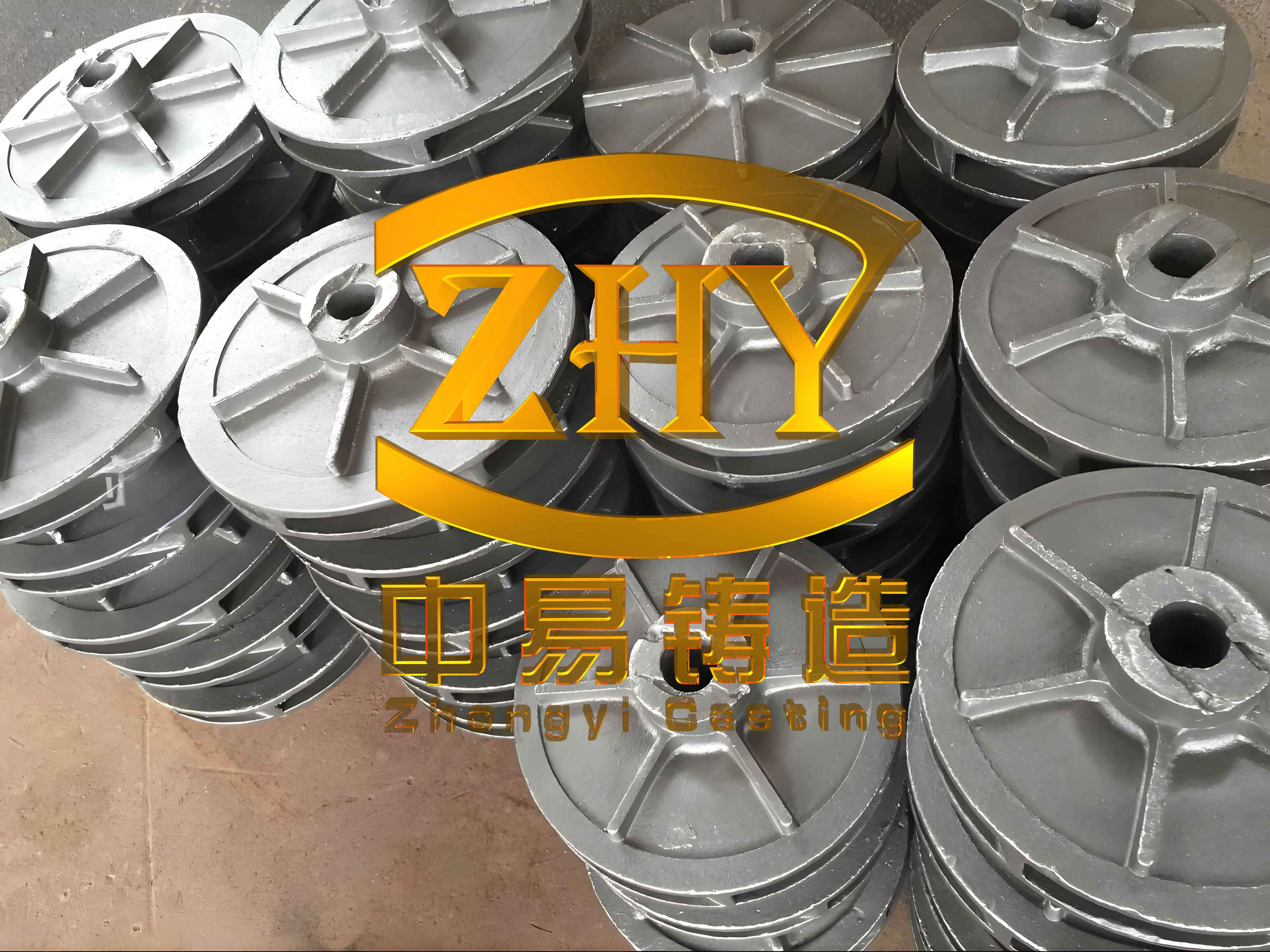
To address the issue of brake drum cracking failure caused by frequent thermal cycles during repeated braking in commercial vehicles, I propose a method that utilizes rare earth elements, nitrogen, and a passivation treatment process to blunt the ends of flake graphite. This approach aims to enhance conventional mechanical properties and thermal fatigue resistance in gray iron casting brake drums, providing technical support for producing heat-resistant and thermal fatigue-resistant castings. In this article, I will explore the material design and production process for graphite passivation in gray iron casting brake drums under high carbon equivalent conditions (CE ≥ 3.9%), delving into experimental methods, results, and analyses.
Graphite in gray iron casting is a crystalline form of carbon with low mechanical properties, around 20 MPa, existing in the matrix akin to cracks. The flake graphite in gray iron casting has sharp ends, which easily cause stress concentration. Graphite passivation refers to modifying the graphite morphology so that the ends of graphite flakes become rounded and blunt, without sharp edges. This passivated graphite morphology can be classified into four types, as summarized in Table 1.
| Class | Graphite Morphology Description |
|---|---|
| I | Both ends of graphite flakes are rounded and blunt, with a small length-to-width ratio, appearing short and thick. |
| II | Both ends of graphite flakes are relatively rounded and blunt, without sharp edges, with a larger length-to-width ratio. |
| III | One end of the graphite flake is relatively rounded, while the other end is sharp, with a larger length-to-width ratio. |
| IV | Both ends of graphite flakes are sharp, representing non-passivated graphite. |
Classes I and II are considered fully passivated graphite, while Class III is partially passivated, and Class IV is non-passivated. To quantify the effectiveness of passivation, the graphite passivation rate is evaluated. Under polished sample conditions, at 200x magnification, with a field diameter of Φ70 mm or an area no smaller, graphite cut by the field boundary is not counted. Graphite less than 50 μm in actual size (appearing as less than 10 mm at 200x) is also excluded. For product assessment, at least five fields are randomly selected, and the average is taken as the result. The passivation rate is calculated using the following formula:
$$ \text{Passivation rate} = \frac{N_{\text{I}} + N_{\text{II}} + 0.5 \times N_{\text{III}}}{N_{\text{total}}} \times 100\% $$
where \(N_{\text{I}}\), \(N_{\text{II}}\), and \(N_{\text{III}}\) are the numbers of Class I, II, and III graphite, respectively, and \(N_{\text{total}}\) is the total number of graphite flakes in the field.
In this study, I focused on a common commercial vehicle brake drum with dimensions of approximately 460 mm in diameter and 300 mm in height, having a rough casting weight of about 70 kg and a finished weight of 55 kg. The material design centered on high-carbon-equivalent gray iron casting, which offers good castability, friction reduction, and thermal conductivity, but typically suffers from lower tensile strength. The challenge was to improve strength while retaining these beneficial properties. From a cost perspective, I leveraged the passivating effects of rare earth elements and nitrogen on flake graphite ends.
Rare earth elements refine the pearlitic matrix structure, increasing interfaces that hinder dislocation movement. When rare earth content is below 0.1%, they refine graphite, making its distribution more uniform and blunting the ends. Rounded flake graphite reduces the cutting effect on the matrix, lowering the tendency for microcrack formation, thereby enhancing tensile strength in gray iron casting. Nitrogen influences gray iron casting structure by affecting graphite morphology and matrix organization. During solidification, nitrogen atoms adsorb onto the growing graphite front and dissolve into the graphite, impeding flake growth, reducing the length-to-width ratio, increasing curvature, blunting ends, and promoting branching, which refines graphite structure. This reduces graphite’s cutting effect on the matrix while increasing and refining pearlite. However, nitrogen must be within an optimal range (typically 90–120 ppm); excessive nitrogen leads to gas porosity, causing casting scrap.
By adding a specific amount of rare earth-containing passification treatment agent via cored wire and nitrogen via manganese nitride, along with microalloying, I aimed to refine the metal matrix, making graphite finer, more curved, and with blunter ends, thus improving mechanical and thermal cracking resistance in gray iron casting. The production process involved a 6-ton medium-frequency induction furnace, melting raw iron from scrap steel and carburizer, with dedicated returns. The tapping temperature was 1520–1540°C, with a ladle capacity of 1500 kg ± 15 kg. The base iron composition was controlled as shown in Table 2.
| Element | Composition Range (wt.%) |
|---|---|
| C | 3.40–3.50 |
| Si | 1.10–1.30 |
| Mn | 0.55–0.75 |
| S | 0.06–0.012 |
| P | ≤0.05 |
| Cr | 0.3–0.6 |
| Cu | 0.4–0.6 |
| N | 0.005–0.007 |
| Fe | Balance |
After tapping, 0.1–0.4% manganese nitride was added into the treatment ladle via plunging. Then, passivation and inoculation were performed using a wire-feeding process with passivating cored wire, whose chemical composition is given in Table 3.
| Element | Composition (wt.%) |
|---|---|
| Si | 40–50 |
| Ca | 2–3 |
| Ba | 5–8 |
| RE | 20–30 |
| Al | ≤1.0 |
| Fe | Balance |
The passivating cored wire addition ranged from 0.20% to 0.70%. After wire-feeding, a second inoculation was conducted during ladle transfer with an inoculant containing 72.35% Si, 0.89% Ca, and Al ≤ 1.0%, added at 0.7%. The molding line was a German KW static pressure molding line, with a casting layout of two brake drums per mold and a bottom-gating system. The initial pouring temperature was 1400–1420°C, with 0.1–0.2% rare earth inoculant added during pouring. The pouring time per ladle was controlled within 8 minutes to minimize inoculation fade and ensure melt quality consistency.
To verify the effects of different rare earth (via passivating wire) and nitrogen (via manganese nitride) additions on graphite morphology and matrix, while maintaining CE between 3.9% and 4.2% and increasing Si/C ratio to 0.5–0.6, I tested five batches of metal. The addition amounts for each batch are listed in Table 4, and the corresponding post-treatment chemical compositions are in Table 5.
| Sample No. | Passivating Wire Addition (wt.%) | Manganese Nitride Addition (wt.%) |
|---|---|---|
| 1# | 0.2 | 0.1 |
| 2# | 0.3 | 0.2 |
| 3# | 0.4 | 0.3 |
| 4# | 0.5 | 0.35 |
| 5# | 0.6 | 0.4 |
| Element (wt.%) | 1# | 2# | 3# | 4# | 5# |
|---|---|---|---|---|---|
| C | 3.42 | 3.42 | 3.41 | 3.42 | 3.41 |
| Si | 1.79 | 1.81 | 1.83 | 1.85 | 1.86 |
| Mn | 0.76 | 0.83 | 0.9 | 1.01 | 1.04 |
| S | 0.01 | 0.011 | 0.01 | 0.0098 | 0.01 |
| P | 0.023 | 0.023 | 0.022 | 0.023 | 0.022 |
| Cr | 0.44 | 0.45 | 0.46 | 0.45 | 0.44 |
| Cu | 0.46 | 0.46 | 0.458 | 0.46 | 0.46 |
| RE | 0.016 | 0.024 | 0.033 | 0.042 | 0.053 |
| N | 0.0078 | 0.0096 | 0.0114 | 0.012 | 0.0132 |
Mechanical performance testing included tensile and hardness tests. Tensile tests followed GB/T 228-2002, using Φ10 mm short proportional specimens sampled from the brake drum arm. Hardness tests used GB/T 231.1-2002, with samples taken from the flange. Metallographic observation involved cutting small specimens from the drum cylinder, preparing standard optical samples, polishing, etching, and examining graphite morphology and matrix structure under an XJL-03 optical microscope.
The tensile strength results for the gray iron casting samples are shown in Table 6, and the Brinell hardness results in Table 7.
| Sample No. | Tensile Strength (MPa) |
|---|---|
| 1# | 239 |
| 2# | 263 |
| 3# | 284 |
| 4# | 292 |
| 5# | 280 |
| Sample No. | Brinell Hardness (HB) |
|---|---|
| 1# | 195 |
| 2# | 202 |
| 3# | 213 |
| 4# | 223 |
| 5# | 200 |
To visualize the trends, the relationships between passivating wire and manganese nitride additions and the mechanical properties can be expressed. For tensile strength (\( \sigma_t \)), the data suggests an optimal point. A polynomial fit might approximate this behavior, but for simplicity, I note that strength increases up to a peak and then declines. Similarly, hardness (\( H_B \)) follows a comparable pattern. These trends highlight the importance of precise alloying in gray iron casting.
Metallographic analysis revealed significant changes in graphite morphology and matrix structure. As rare earth and nitrogen contents increased, graphite flakes became shorter, thicker, and more curved, with ends blunted. The passivation rates, estimated from micrographs, were approximately 20% for Sample 1#, 30% for Sample 2#, 35% for Sample 3#, 40% for Sample 4#, and 20% for Sample 5#. The matrix showed increased pearlite content, refined pearlite spacing, and more numerous, finer eutectic cells as rare earth and nitrogen rose. However, excessive additions (Sample 5#) led to decreased passivation rates, poorer castability, reduced internal density, and the appearance of porosity defects after machining.
The underlying mechanisms involve rare earth elements reacting with sulfur and oxygen in the melt to form rare earth compounds, lowering the interfacial energy between the graphite basal plane and the melt below that of the prismatic plane. This promotes graphite growth via spiral dislocations along the basal plane normal. Simultaneously, nitrogen atoms adsorb on the growing graphite front during solidification, dissolving into graphite and hindering flake growth, reducing the length-to-width ratio, increasing curvature, and blunting ends. Thus, graphite becomes finer, curved, and blunter. However, too much rare earth and nitrogen degrades the casting performance of gray iron casting, causing issues like poor fluidity and porosity.
To further quantify the effects, consider the relationship between passivation rate (\( P_r \)) and tensile strength (\( \sigma_t \)). Empirically, a higher passivation rate correlates with improved strength, up to a limit. This can be modeled as:
$$ \sigma_t = \sigma_0 + k \cdot P_r $$
where \( \sigma_0 \) is the base strength and \( k \) is a proportionality constant, but the relationship is nonlinear due to other factors like matrix refinement. For gray iron casting, the combined effect of rare earth and nitrogen on graphite morphology is critical. The optimal addition ranges observed were 0.042% RE and 120 ppm N, yielding a passivation rate of about 40% and peak mechanical properties.
In practice, controlling pouring temperature, pouring time, melt treatment amount, and the timing of passivating wire and nitrogen additions is crucial for consistent results in gray iron casting. This process enhances the thermal fatigue resistance of brake drums by reducing stress concentrations at graphite ends, thereby mitigating crack initiation under thermal cycling. Compared to alternative methods like high-strength brake drums, high-carbon-equivalent drums, or composite drums, this graphite passivation approach offers a balance of performance and cost-effectiveness for gray iron casting applications.
In conclusion, my investigation into graphite passivation for gray iron casting brake drums demonstrates that adding rare earth-containing passivating wire and manganese nitride significantly influences material properties. As additions increase, tensile strength and hardness in gray iron casting rise, peaking at 0.5% passivating wire and 0.35% manganese nitride, then decline. Graphite morphology progressively becomes shorter, thicker, and blunter, with passivation rate reaching about 40% at optimal levels. Beyond this, excessive rare earth and nitrogen impair casting performance and introduce defects. This research underscores the potential of graphite passivation to enhance the durability of gray iron casting components, particularly for demanding applications like commercial vehicle brake drums. Future work could explore synergistic effects with other microalloying elements or advanced treatment processes to further optimize gray iron casting performance.