
In my research on green foundry factory engineering design, I have explored the comprehensive framework for sustainable manufacturing in the casting industry. As a foundational sector of the economy, casting involves diverse products and high energy consumption, making green transformation essential under global carbon peak and neutrality goals. This article delves into the multifaceted aspects of green foundry design, emphasizing practical measures for sand casting manufacturers to achieve environmental and economic benefits. I will discuss the core concepts, design elements, and implementation strategies, supported by tables and formulas to quantify impacts.
The concept of green foundry encompasses three pillars: green casting products, green manufacturing processes, and green industrial buildings. Green casting products refer to components with high resource efficiency and low environmental impact throughout their lifecycle, such as critical machinery parts or energy-sector castings. For sand casting manufacturers, this means producing high-value, durable items that align with national policies. Green manufacturing processes involve selecting low-pollution, energy-efficient methods tailored to material type and production volume. This includes optimizing sand casting techniques to minimize waste. Green industrial buildings focus on resource conservation—land, energy, water, and materials—over their entire lifespan, ensuring a healthy workspace while reducing operational costs. Together, these pillars form the basis for designing sustainable foundries.
From an engineering perspective, green foundry factory design integrates sustainability principles into every phase. I have analyzed key areas where sand casting manufacturers can implement changes, as outlined below.
Energy Conservation and Utilization
Energy efficiency is critical for sand casting manufacturers due to high thermal processes. In my design approach, I prioritize reducing comprehensive energy consumption per unit output or floor area. This involves selecting high-efficiency equipment, such as medium-frequency furnaces with improved insulation, where the surface temperature does not exceed ambient by more than 25°C. The energy performance of utilities must meet national standards, and I use formulas to calculate savings. For instance, the energy efficiency ratio (EER) for cooling systems can be expressed as:
$$ \text{EER} = \frac{\text{Cooling Capacity (W)}}{\text{Power Input (W)}} $$
Targeting an EER above industry benchmarks ensures lower operational costs. Additionally, I design heat recovery systems for high-temperature equipment like melting furnaces and heat treatment ovens. The recovered heat can preheat fresh air or support drying processes, quantified by:
$$ Q_{\text{recovered}} = \dot{m} \cdot c_p \cdot (T_{\text{out}} – T_{\text{in}}) $$
where \( Q_{\text{recovered}} \) is the heat recovery rate, \( \dot{m} \) is the mass flow rate, \( c_p \) is specific heat capacity, and \( T \) represents temperatures. For compressed air systems, up to 60% of electrical energy converts to heat, which I divert for water heating or space heating, reducing primary energy use. Lighting is optimized with LED fixtures and natural daylighting, and automated controls adjust HVAC and pump operations based on real-time demand. Table 1 summarizes energy-saving measures for sand casting manufacturers.
| Category | Measure | Expected Impact |
|---|---|---|
| Equipment | High-efficiency melting furnaces and pumps | Reduce energy use by 15-20% |
| Heat Recovery | Capture waste heat from processes | Recover up to 30% of thermal energy |
| Building Envelope | Improved insulation and natural ventilation | Cut heating/cooling loads by 25% |
| Lighting | LEDs with motion sensors | Lower lighting power density by 40% |
| Power Management | Dynamic harmonic filters and reactive compensation | Enhance power factor to >0.95 |
Water Conservation and Resource Management
Water is vital in casting processes, especially for cooling and cleaning. I advocate for a closed-loop system where water reuse rates exceed 98%. This involves treating and recirculating cooling water from equipment like sand mixers and compressors. The water balance can be modeled as:
$$ \text{Water Reuse Rate} = \left(1 – \frac{\text{Fresh Water Input}}{\text{Total Water Usage}}\right) \times 100\% $$
Aiming for near-zero discharge, I integrate rainwater harvesting and greywater recycling for non-potable uses like toilet flushing and irrigation. For sand casting manufacturers, this reduces freshwater intake and minimizes wastewater treatment costs. Table 2 outlines water conservation metrics.
| Parameter | Target Value | Method |
|---|---|---|
| Cooling Water Recirculation | >98% | Closed-loop towers with filtration |
| Non-potable Water Usage | 30-50% of total | Rainwater and treated wastewater |
| Wastewater Generation | < 0.5 m³/ton of casting | Process optimization and reuse |
Material Efficiency and Circular Economy
Reducing material waste is key for sand casting manufacturers, as sand and metals are primary inputs. I focus on using recycled materials and designing for durability. The material resource efficiency can be expressed as:
$$ \text{Material Efficiency} = \frac{\text{Usable Casting Output (kg)}}{\text{Raw Material Input (kg)}} $$
High-strength steels and bio-based binders improve this ratio. I specify locally sourced materials within 800 km to cut transportation emissions, and prioritize industrial by-products like slag or reclaimed sand. For instance, sand reclamation systems can recover up to 90% of used sand, reducing disposal needs. Table 3 compares material choices.
| Material Type | Green Alternative | Benefits |
|---|---|---|
| Molding Sand | Reclaimed sand with organic binders | Lower waste, reduced toxicity |
| Metals | Recycled alloys and high-strength grades | Energy savings, longer product life |
| Building Materials | Prefabricated concrete and steel | Faster construction, less on-site waste |
Environmental Protection and Indoor Air Quality
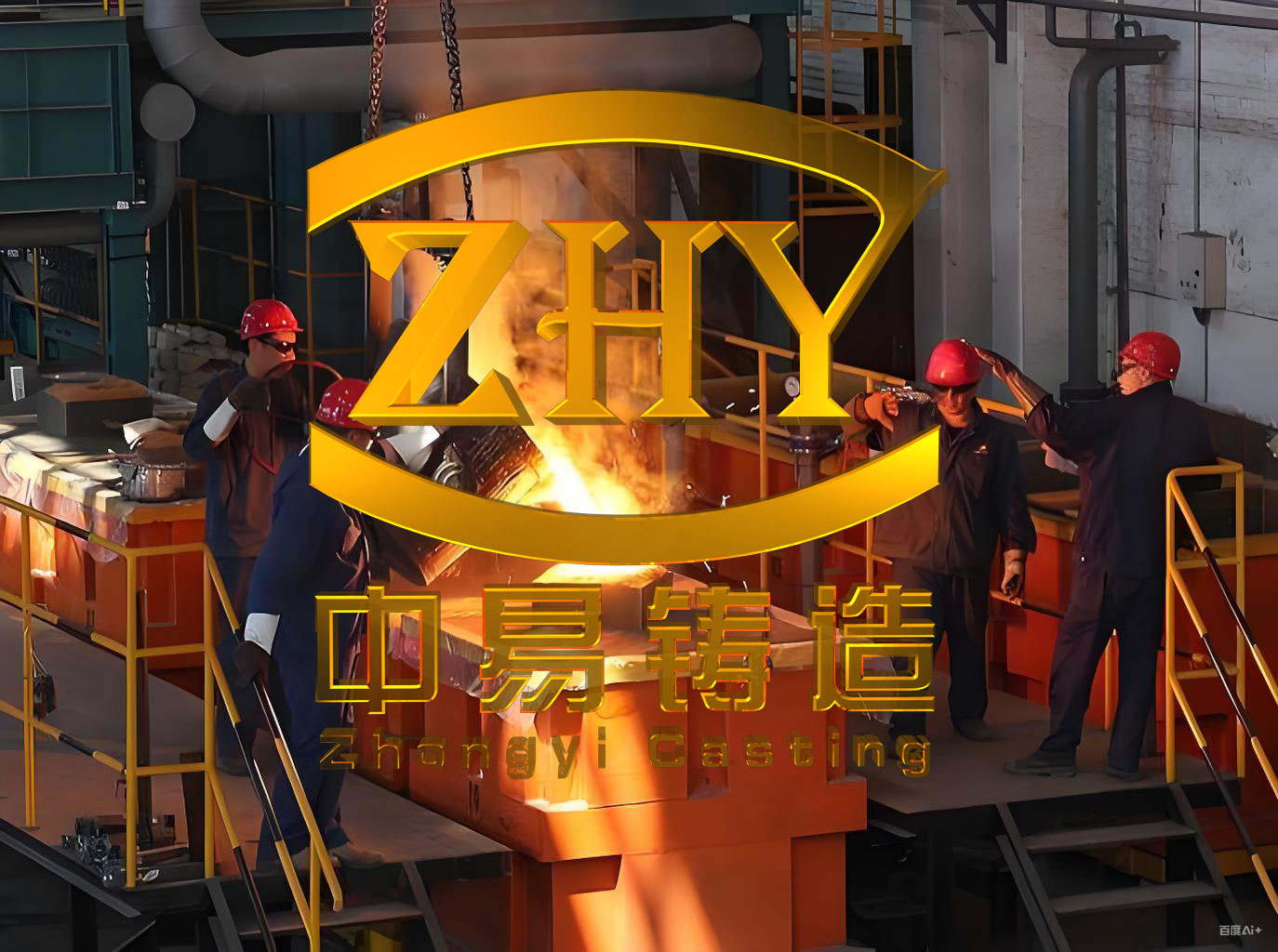
Pollution control is paramount in foundries. I design comprehensive systems to capture dust, fumes, and volatile organic compounds (VOCs). For sand casting manufacturers, dust from molding and shaking out processes is mitigated through localized exhaust with high-efficiency filters. The emission concentration must comply with standards like GB 16297, and I use equations to size filtration systems:
$$ \text{Collection Efficiency} = \left(1 – \frac{C_{\text{out}}}{C_{\text{in}}}\right) \times 100\% $$
where \( C_{\text{in}} \) and \( C_{\text{out}} \) are inlet and outlet pollutant concentrations. Enclosed spaces for grinding and painting prevent contaminant spread, and negative pressure zones contain odors. Noise and vibration are controlled using isolators and barriers, ensuring worker safety. Indoor air quality is maintained with adequate ventilation rates, calculated as:
$$ \dot{V} = \frac{Q}{C_{\text{indoor}} – C_{\text{outdoor}}} $$
where \( \dot{V} \) is the ventilation flow rate, \( Q \) is pollutant generation rate, and \( C \) are concentrations. This fosters a healthy environment for sand casting manufacturers’ employees.
Operational Management and Smart Systems
Effective management sustains green initiatives. I recommend implementing ISO 14001 and ISO 45001 systems for environmental and occupational health. Real-time monitoring of energy and emissions via IoT sensors allows data-driven decisions. For sand casting manufacturers, an energy management information system (EMIS) tracks consumption patterns, identifying savings opportunities. The overall equipment effectiveness (OEE) can be optimized using:
$$ \text{OEE} = \text{Availability} \times \text{Performance} \times \text{Quality} $$
Automated controls for utilities adjust based on production schedules, reducing idle losses. Regular audits and training ensure compliance, and predictive maintenance cuts downtime. This holistic approach enhances resource productivity for sand casting manufacturers.
Green Industrial Parks and Supply Chains
Scaling green practices to industrial parks offers synergies. In my research, I propose clustered facilities where sand casting manufacturers share utilities like centralized waste treatment or material recycling hubs. This reduces individual capital costs and improves efficiency. A green supply chain integrates suppliers and customers, promoting circularity. For example, used sand can be processed regionally and returned to foundries, minimizing transport. The economic benefit can be modeled as:
$$ \text{Cost Savings} = \sum (\text{Reduced Input Costs} + \text{Revenue from By-products}) $$
Such collaborations foster innovation and resilience for sand casting manufacturers.
Evaluation and Certification
Green foundry performance is assessed through standards like LEED or industry-specific criteria. I emphasize metrics such as carbon footprint per ton of casting, which can be calculated as:
$$ \text{Carbon Footprint} = \sum (\text{Energy Use} \times \text{Emission Factor}) $$
Certifications provide benchmarks and market recognition, driving continuous improvement for sand casting manufacturers.
Conclusion
In conclusion, green foundry factory engineering design is a multifaceted endeavor that balances environmental stewardship with economic viability. Through my analysis, I have highlighted strategies in energy, water, materials, and pollution control that sand casting manufacturers can adopt. Integrating smart technologies and collaborative models further amplifies benefits. While initial investments may be required, the long-term gains in efficiency and sustainability justify the approach, paving the way for a low-carbon future in casting industries.