
In the highly competitive machine tool industry, quality and delivery time are critical factors for market success. The geometric stability and precision of machine tool castings, particularly the bed or frame, directly influence the overall accuracy and performance of the final product. Residual stresses inherent in these machine tool castings, originating from the casting process, can lead to distortions, reduced fatigue life, and compromised dimensional stability over time. Therefore, developing efficient and effective methods to alleviate these stresses is paramount for manufacturers seeking to shorten production cycles while maintaining high quality. This article delves into an application analysis of harmonic vibration as a technique for eliminating residual stress in machine tool castings, presenting experimental results and theoretical insights from a first-person research perspective.
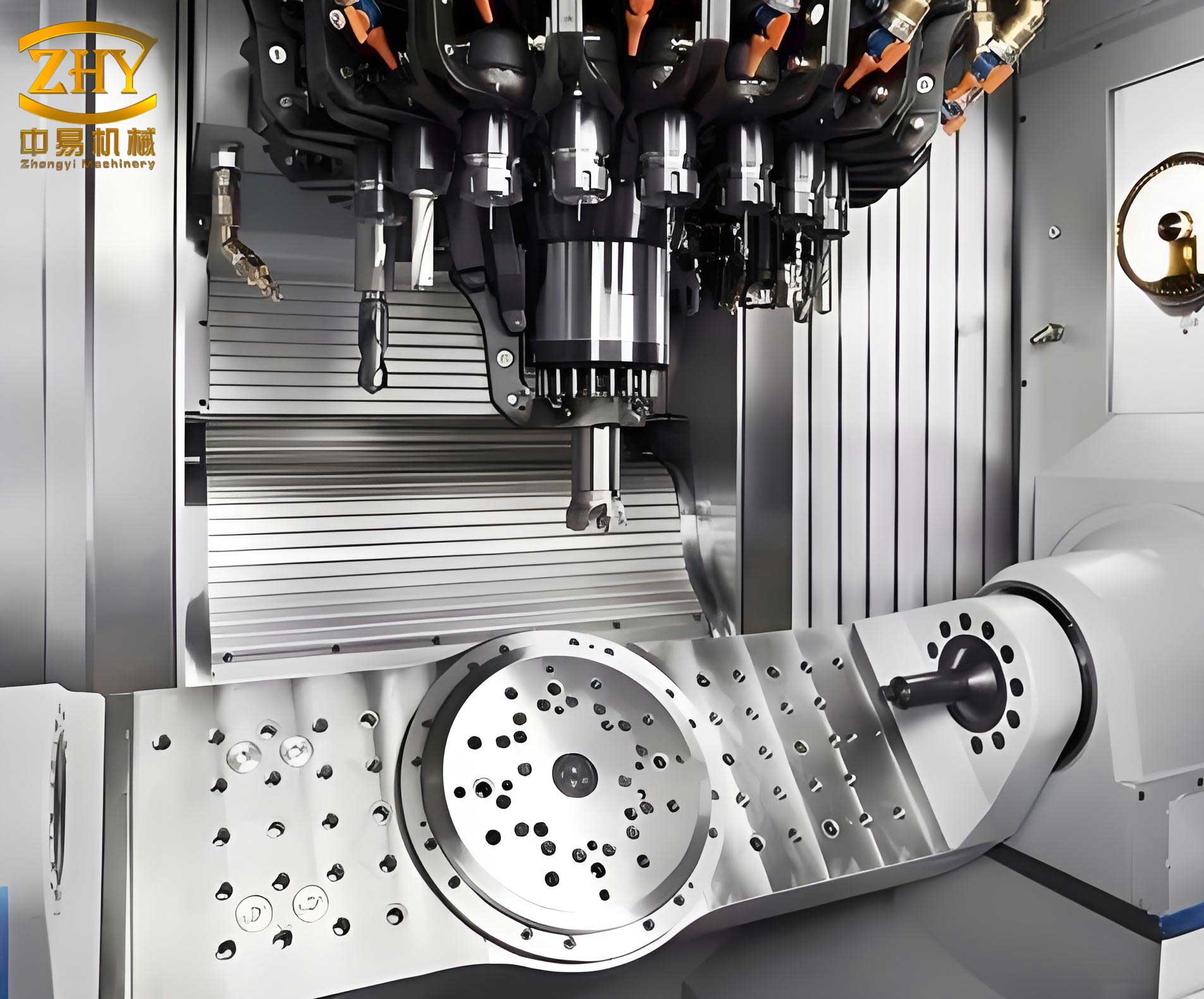
The foundational components of any machine tool, such as beds, columns, and housings, are typically produced as large, complex machine tool castings. During solidification and cooling, these machine tool castings develop internal residual stresses due to non-uniform temperature gradients, phase transformations, and mechanical constraints. The resultant stress state is a superposition of thermal stress, phase transformation stress, and mechanically induced stress. Mathematically, the total residual stress $\sigma_{total}$ in a casting can be expressed as:
$$\sigma_{total} = \sigma_{thermal} + \sigma_{phase} + \sigma_{mechanical}$$
Where $\sigma_{thermal}$ arises from differential cooling rates and can be approximated for simple cases by:
$$\sigma_{thermal} = E \cdot \alpha \cdot \Delta T$$
Here, $E$ is the Young’s modulus of the cast material (e.g., gray iron common in machine tool castings), $\alpha$ is the coefficient of thermal expansion, and $\Delta T$ is the temperature difference between different regions of the casting. Phase transformation stresses, $\sigma_{phase}$, are associated with volume changes during metallurgical transformations (e.g., austenite to pearlite in cast iron), while $\sigma_{mechanical}$ results from mold resistance or core restraints. These locked-in stresses are detrimental: they can cause elastic strain energy storage, which may later be released as distortion during machining or in service, critically affecting the straightness and alignment of guideways on machine tool castings. This compromises the foundational accuracy upon which all other components are assembled.
Traditionally, several methods have been employed to mitigate residual stresses in machine tool castings. The table below summarizes these common techniques, highlighting their key characteristics:
| Method | Principle | Typical Duration | Energy Consumption | Key Limitations |
|---|---|---|---|---|
| Natural Aging | Stress relaxation over time via atmospheric exposure and micro-creep. | Months to years | Very Low | Impractically long for modern production cycles. |
| Thermal Stress Relief (Heat Treatment) | Heating to elevated temperature (e.g., 500-600°C for cast iron) to lower yield strength and allow stress relaxation via creep. | 20-40 hours (including heat-up, soak, and controlled cool-down) | Very High | High capital and operational cost, large furnace footprint, energy-intensive, risk of distortion or oxidation. |
| Conventional Vibration Stress Relief (VSR) | Application of resonant mechanical vibration to induce localized plastic yielding where combined stresses exceed the yield limit. | 20-60 minutes | Low | Requires finding the fundamental resonant frequency, which can be challenging for complex shapes; less effective for multi-axial stress states. |
Seeking a more efficient alternative, we focused on an advanced variant of vibration technology: Spectrum Harmonic Vibration Stress Relief (SHVSR). This method is particularly promising for large, intricate machine tool castings. Unlike conventional VSR that uses a single resonant frequency often near the fundamental mode, SHVSR employs a Fourier spectrum analysis of the workpiece’s dynamic response to identify multiple harmonic frequencies. For a given machine tool casting, its vibration response can be modeled. The governing equation for forced vibration is:
$$ M\ddot{x} + C\dot{x} + Kx = F(t) $$
Where $M$, $C$, and $K$ are the mass, damping, and stiffness matrices of the casting structure, $x$ is the displacement vector, and $F(t)$ is the applied harmonic force, $F(t) = F_0 \sin(\omega t)$. Through spectral analysis, a set of $n$ significant harmonic frequencies $\omega_i$ (where $i=1,2,…,n$) are identified, corresponding to different natural mode shapes of the machine tool casting. The SHVSR algorithm then selects an optimal subset (typically four to five) of these harmonic frequencies that induce multi-axial stress fields. The principle is that the applied cyclic stress $\sigma_a(\omega_i, t)$ at a chosen harmonic frequency superimposes with the existing residual stress $\sigma_r$ at any point within the machine tool casting:
$$ \sigma_{combined}(t) = \sigma_r + \sigma_a(\omega_i, t) $$
When the amplitude of $\sigma_{combined}(t)$ locally exceeds the material’s yield strength $\sigma_y$, microscopic plastic deformation occurs, thereby reducing the peak residual stress and promoting a more homogeneous stress distribution. The process is repeated for the selected set of harmonic frequencies, effectively targeting stress concentrations from multiple vibrational modes. The total effective plastic strain $\epsilon_p$ accumulated can be related to the stress reduction. For a simplified one-dimensional model, the reduction in residual stress $\Delta \sigma_r$ after vibration can be estimated from:
$$ \Delta \sigma_r \approx E \cdot \epsilon_p $$
Where $\epsilon_p$ is the cumulative plastic strain induced. The multi-modal excitation in SHVSR ensures a more comprehensive treatment compared to single-frequency methods, making it highly suitable for the complex geometries of machine tool castings.
To validate the effectiveness of SHVSR for machine tool castings, we designed and conducted a controlled experiment. Three identical machine tool bed castings, made from the same batch of gray iron (Grade HT250, a common material for machine tool castings), were selected as test specimens. Their as-cast histories, including cooling time and initial rough machining, were kept identical to ensure comparability. The specimens were designated as follows:
| Specimen ID | Post-Casting Treatment | Objective |
|---|---|---|
| Specimen A (Test Piece) | Spectrum Harmonic Vibration Stress Relief (SHVSR) | To evaluate the new method’s efficacy. |
| Specimen B (Control Piece) | No stress relief treatment applied. | To establish a baseline for natural stress state and distortion. |
| Specimen C (Furnace-Treated Piece) | Traditional thermal stress relief (heated to 550°C, soaked for 6 hours, furnace-cooled). | To serve as a benchmark against the conventional industrial method. |
The SHVSR process for Specimen A was carried out using a commercial system. The machine tool casting was placed on elastic supports to simulate free-free boundary conditions. An accelerometer was attached to monitor the response. The system performed an automatic Fast Fourier Transform (FFT) analysis, identifying harmonic frequencies up to the 50th order. Five optimal harmonic frequencies were selected based on their ability to excite different bending and torsional modes. The vibration was applied sequentially at these frequencies, with each stage lasting approximately 10-15 minutes. The total processing time was under 90 minutes. The process parameters for the key harmonic modes are summarized below:
| Harmonic Mode Sequence | Frequency (Hz) | Dominant Vibration Mode Shape | Treatment Time (minutes) | Peak Induced Acceleration (m/s²) |
|---|---|---|---|---|
| 1 | 48.5 | First-order bending | 12 | 15.2 |
| 2 | 127.3 | Second-order bending | 10 | 18.7 |
| 3 | 215.8 | First-order torsion | 15 | 12.5 |
| 4 | 341.2 | Third-order bending | 12 | 16.3 |
| 5 | 502.7 | Combined bending/torsion | 14 | 14.8 |
After treatments, all three machine tool castings underwent identical finish machining processes to prepare the critical guideway surfaces. To assess stress relief effectiveness, we adopted the dimensional stability testing method, as per standardized guidelines. The straightness of the primary guideway surface, a direct indicator of stress-induced deformation, was measured using a high-precision dial indicator mounted on a surface plate. Measurements were taken at five equidistant points along the 3600 mm length of the bed, with the tail end as the zero reference. The measurement setup ensured that any deviation reflected the inherent distortion of the machine tool casting itself. The raw measurement data for the three specimens are presented in the table:
| Measurement Point Distance from Tail (mm) | Specimen A (SHVSR) Deviation (mm) | Specimen B (Control) Deviation (mm) | Specimen C (Furnace) Deviation (mm) |
|---|---|---|---|
| 0 (Reference) | 0.000 | 0.000 | 0.000 |
| 900 | -0.030 | -0.100 | +0.030 |
| 1800 | -0.070 | -0.300 | 0.000 |
| 2700 | -0.070 | -0.300 | -0.060 |
| 3600 (Head) | -0.050 | -0.270 | -0.100 |
The negative values indicate a concave deformation (sagging) of the guideway surface relative to the ends. To quantify the overall distortion, we can calculate the peak-to-valley (PV) straightness error for each machine tool casting. For a series of deviations $d_i$ at points $x_i$, a simple PV error is $PV = \max(d_i) – \min(d_i)$. However, since our reference is at one end, we analyze the maximum absolute deviation from the reference line connecting the ends. A more informative metric is the maximum absolute deviation from the ideal straight line fitted to the data. For simplicity, let’s define the deformation profile $y(x)$. The data suggests a curved profile. We can model the approximate deflection curve using a polynomial fit. For Specimen A (SHVSR), the deviations are relatively small. The effective curvature $\kappa$ can be roughly estimated. For a beam in pure bending, the relationship between bending moment $M$, stress $\sigma$, and curvature $\kappa$ is:
$$ \kappa = \frac{1}{\rho} = \frac{M}{EI} \approx \frac{\Delta \sigma}{E \cdot h} $$
Where $\rho$ is the radius of curvature, $I$ is the area moment of inertia, and $h$ is the distance from the neutral axis. The reduction in residual stress gradient $\Delta \sigma$ due to SHVSR leads to a smaller curvature $\kappa$ and hence less distortion. From the data, the maximum absolute deviation for Specimen A is 0.070 mm, for Specimen B is 0.300 mm, and for Specimen C is 0.100 mm. The SHVSR-treated machine tool casting shows a 76.7% reduction in maximum distortion compared to the untreated control and a 30% reduction compared to the thermally treated piece. This clearly demonstrates the superior effectiveness of harmonic vibration in stabilizing the geometry of machine tool castings.
Further analysis can be performed by considering the stress relaxation efficiency. Assuming the initial residual stress profile is sinusoidal along the length, the distortion $y$ is proportional to the internal stress gradient. The improvement factor $\eta$ for a stress relief method can be defined as:
$$ \eta = 1 – \frac{y_{treated}}{y_{control}} $$
For Specimen A versus Specimen B, $\eta_{SHVSR} \approx 1 – \frac{0.070}{0.300} = 0.767$ or 76.7%. For Specimen C versus B, $\eta_{Furnace} \approx 1 – \frac{0.100}{0.300} = 0.667$ or 66.7%. This quantitative comparison underscores the efficacy of SHVSR. Additionally, the harmonic vibration process not only reduces stress but also may enhance the mechanical properties of the machine tool casting through cold work hardening. The increase in dislocation density $\rho_d$ from plastic deformation can strengthen the material, as described by the Taylor hardening relation:
$$ \Delta \sigma_{strength} = \alpha G b \sqrt{\rho_d} $$
Where $\alpha$ is a constant, $G$ is the shear modulus, and $b$ is the Burgers vector. This secondary benefit contributes to the long-term stability of the machine tool castings under operational loads.
The economic and operational advantages of applying harmonic vibration to machine tool castings are substantial. To provide a comprehensive comparison, the following table contrasts key factors between SHVSR and traditional thermal stress relief for a typical batch of machine tool castings:
| Aspect | Spectrum Harmonic Vibration (SHVSR) | Thermal Stress Relief (Furnace) |
|---|---|---|
| Process Time | Very short (1-2 hours per casting, including setup). | Very long (24-40 hours per batch, including heat-up, soak, and slow cooling). |
| Energy Consumption | Extremely low (power for a small vibrator and control system, typically < 5 kWh per casting). | Extremely high (natural gas or electricity for heating a large furnace to >500°C for tens of hours, often >1000 kWh per batch). |
| Capital Investment | Moderate (cost of vibration system and supports). | Very high (cost of large furnace, foundation, exhaust system, and safety equipment). |
| Floor Space Requirement | Small (can be done near the machining line). | Large (dedicated furnace building or area). |
| Environmental Impact | Low (no emissions, minimal noise during controlled operation). | High (combustion emissions or high CO2 from electricity, significant waste heat). |
| Process Flexibility | High (easily adapted to different sizes and shapes of machine tool castings; portable systems available). | Low (limited by furnace chamber size; changeovers are slow). |
| Risk of Distortion/Oxidation | Very low (process occurs at room temperature). | Moderate to high (risk of thermal distortion, scaling, or decarbonization). |
| Integration with JIT Production | Excellent (short cycle time allows stress relief just before precision machining). | Poor (long lead time requires large inventories of stress-relieved castings). |
The data unequivocally supports the conclusion that spectrum harmonic vibration is a highly effective, rapid, and economical method for residual stress mitigation in machine tool castings. From our experimental findings, the harmonic vibration-treated machine tool casting exhibited the least distortion, surpassing even the thermally treated specimen. This translates directly into improved geometric accuracy and stability for the final machine tool assembly. The ability to significantly shorten the production cycle—from potentially weeks of natural aging or days of thermal treatment to just hours of vibration processing—offers a decisive competitive advantage. Moreover, the energy savings and reduced carbon footprint align with modern sustainable manufacturing goals. Therefore, the adoption of harmonic vibration technology for stress relieving machine tool castings is not merely a technical alternative but a strategic enhancement to manufacturing processes, promising higher quality, faster throughput, and lower operational costs for producers of precision machine tools. Future work could involve more detailed finite element modeling to predict optimal harmonic frequencies for specific casting geometries and material grades, further optimizing the process for diverse machine tool castings.