
Within the evolving landscape of the cast iron industry, the prominence of ductile and compacted graphite irons continues to rise. However, gray iron remains the dominant material by volume share, primarily due to its excellent castability and overall cost-effectiveness for a wide range of applications. In our foundry, the majority of casting part production is based on gray iron, with grades such as HT280 and HT300 (analogous to Class 275 and 300) being predominant. The conventional process route for achieving these higher strength grades relies on a high carbon equivalent (CE) combined with alloying. Specific types and quantities of alloys are added to the melt to enhance the tensile strength and hardness of the final casting part.
In recent years, the cost of alloying elements has surged significantly, with ferromolybdenum experiencing the most dramatic price increase. Ferromolybdenum now constitutes over 60% of our total alloy cost. This economic pressure has created an urgent need to identify an alternative methodology that can maintain the required mechanical properties while reducing or eliminating the use of molybdenum. One promising approach is the implementation of a high silicon-to-carbon (Si/C) ratio process.
The fundamental principle involves adjusting the base composition of the iron. By increasing the silicon content while proportionally decreasing the carbon content to maintain a constant carbon equivalent, we aim to alter the solidification characteristics and microstructure to achieve strength through composition control rather than heavy alloying. The carbon equivalent (CE) for gray iron is calculated using a standard formula, which for our purposes is:
$$ CE = \%C + \frac{\%Si}{3} $$
Our objective was to transition from a standard Cu-Cr-Mo-Sn alloyed gray iron to a modified Cu-Cr-Sn alloyed iron with an elevated Si/C ratio. This modification targets an average reduction of 0.15% in molybdenum addition, projecting a cost saving of approximately 600 RMB per ton of melted metal, while ensuring the casting part performance meets all specifications.
Theoretical Background and Microstructural Predictions
Under a constant carbon equivalent, increasing the Si/C ratio from approximately 0.55 to 0.70 induces several key changes in the solidification behavior, microstructure, and resultant properties of the casting part. These can be summarized as follows:
- Increased Primary Austenite: A lower carbon content leads to a larger fraction of the melt solidifying as primary austenite dendrites during the initial stage of cooling. This strengthened dendritic network provides a more robust metallic matrix.
- Reduced Graphite Content: The overall lower carbon content directly results in a decrease in the total volume fraction of graphite precipitated during the eutectic reaction. This reduces the notch effect and the segmenting influence of graphite flakes on the iron matrix, which is beneficial for strength.
- Change in Eutectoid Transformation: Silicon raises the eutectoid transformation temperature. Consequently, pearlite forms at a higher temperature, which can potentially lead to coarser pearlite lamellae. This microstructural coarsening typically has a negative impact on strength.
- Solid Solution Strengthening: Silicon has substantial solubility in ferrite. The increased silicon content in a high Si/C iron leads to greater solid solution strengthening of all ferrite, including the ferrite within the pearlite colonies. This effect counteracts the potential weakening from pearlite coarsening.
The net effect on the casting part mechanical properties depends on the balance between these competing factors: matrix strengthening from increased austenite and silicon solution hardening versus the potential weakening from coarser pearlite and the always-beneficial reduction in graphite amount. The interaction can be conceptually framed by considering the contributions to tensile strength ($\sigma_t$):
$$ \sigma_t \propto f(V_g, L_g, S_{p}, \sigma_{ss}) $$
Where $V_g$ is the graphite volume fraction (decreases with higher Si/C), $L_g$ is the graphite flake length (influenced by inoculation), $S_{p}$ is the fineness of the pearlite (may decrease with higher Si/C), and $\sigma_{ss}$ is the solid solution strength from silicon (increases with higher Si/C). Our process aims to optimize this balance.
Experimental Setup and Production Methodology
1. Melting Facilities and Raw Materials
Melting was conducted in medium-frequency coreless induction furnaces, typically of 8-ton capacity. The primary charge materials consisted of pig iron, steel scrap, and internal returns (gates, risers, and rejected casting parts). Additives included bulk ferrosilicon, ferromanganese, and recarburizer for final composition adjustment.
2. Furnace Melting and Base Iron Preparation
The standard charge makeup was 5-10% pig iron, 50-60% steel scrap, and the balance as returns. The charging sequence was pig iron, returns, and finally steel scrap. During the melting process, ferrosilicon, ferromanganese, and recarburizer were added to achieve the target base iron chemistry, as shown in Table 1.
| Element | C | Si | Mn | P | S |
|---|---|---|---|---|---|
| Target Range | 3.20 – 3.30 | 1.50 – 1.65 | 0.40 – 0.80 | < 0.06 | 0.08 – 0.12 |
3. Ladle Treatment and Alloying
Following melting, the ladle treatment was performed. Inoculant and alloying elements were added to the bottom of the treatment ladle prior to tapping. The tap temperature was controlled between 1480°C and 1540°C to ensure effective dissolution and absorption. The inoculant used was a silicon-barium type. For the standard HT280 grade, the alloying package typically included electrolytic copper, tin granules, ferrochromium, and ferromolybdenum. The functions of these elements are summarized below:
- Copper (Cu): Refines and homogenizes pearlite and graphite, reduces chill in thin sections, and improves section sensitivity.
- Tin (Sn): Suppresses or eliminates ferrite formation, stabilizes and refines pearlite, and improves section uniformity.
- Chromium (Cr): Refines graphite and pearlite, and stabilizes pearlite.
- Molybdenum (Mo): Refines graphite and pearlite, promotes carbide formation (in higher amounts), and significantly improves uniformity of microstructure in heavy sections.
The target final composition for the standard HT280 casting part is shown in Table 2. Elements like C, S, Mn, and P are primarily controlled via the base iron, with no further adjustment during ladle treatment.
| Si | Cu | Cr | Sn | Mo |
|---|---|---|---|---|
| 1.70 – 2.00 | 0.30 – 0.50 | 0.20 – 0.40 | 0.03 – 0.05 | 0.10 – 0.20 |
4. Molding, Pouring, and Inoculation
Test bars and actual casting parts were produced using molds made with alkaline phenolic resin no-bake sand. A crucial step during pouring was stream inoculation using a zirconium-bearing silicon inoculant (0.4-0.8 mm grain size, addition rate 0.08-0.12%). This was applied via a pneumatic dispensing system on the pouring line to ensure even distribution and absorption by the metal stream. The pouring temperature was maintained between 1360°C and 1400°C to ensure complete mold filling.
High Si/C Ratio Trial Formulation
The experimental plan was designed to maintain a constant carbon equivalent while eliminating molybdenum and adjusting the Si/C ratio. The carbon content was lowered by approximately 0.1%, and the silicon content was raised by about 0.4%, shifting the Si/C ratio from ~0.55 to ~0.70. The comparative compositional ranges are detailed in Table 3.
| Material Designation | Base Iron C | Base Iron Si | Final Si | Cu | Cr | Sn | Mo | Typical Si/C |
|---|---|---|---|---|---|---|---|---|
| Cu-Cr-Mo-Sn (Standard) | 3.20-3.30 | 1.50-1.65 | 1.70-2.00 | 0.30-0.50 | 0.20-0.40 | 0.03-0.05 | 0.10-0.20 | 0.55 |
| Cu-Cr-Sn (High Si/C) | 3.10-3.20 | 1.50-1.65 | 2.10-2.20 | 0.30-0.50 | 0.20-0.40 | 0.03-0.05 | – | 0.70 |
Trial Execution and Results
1. Procedure
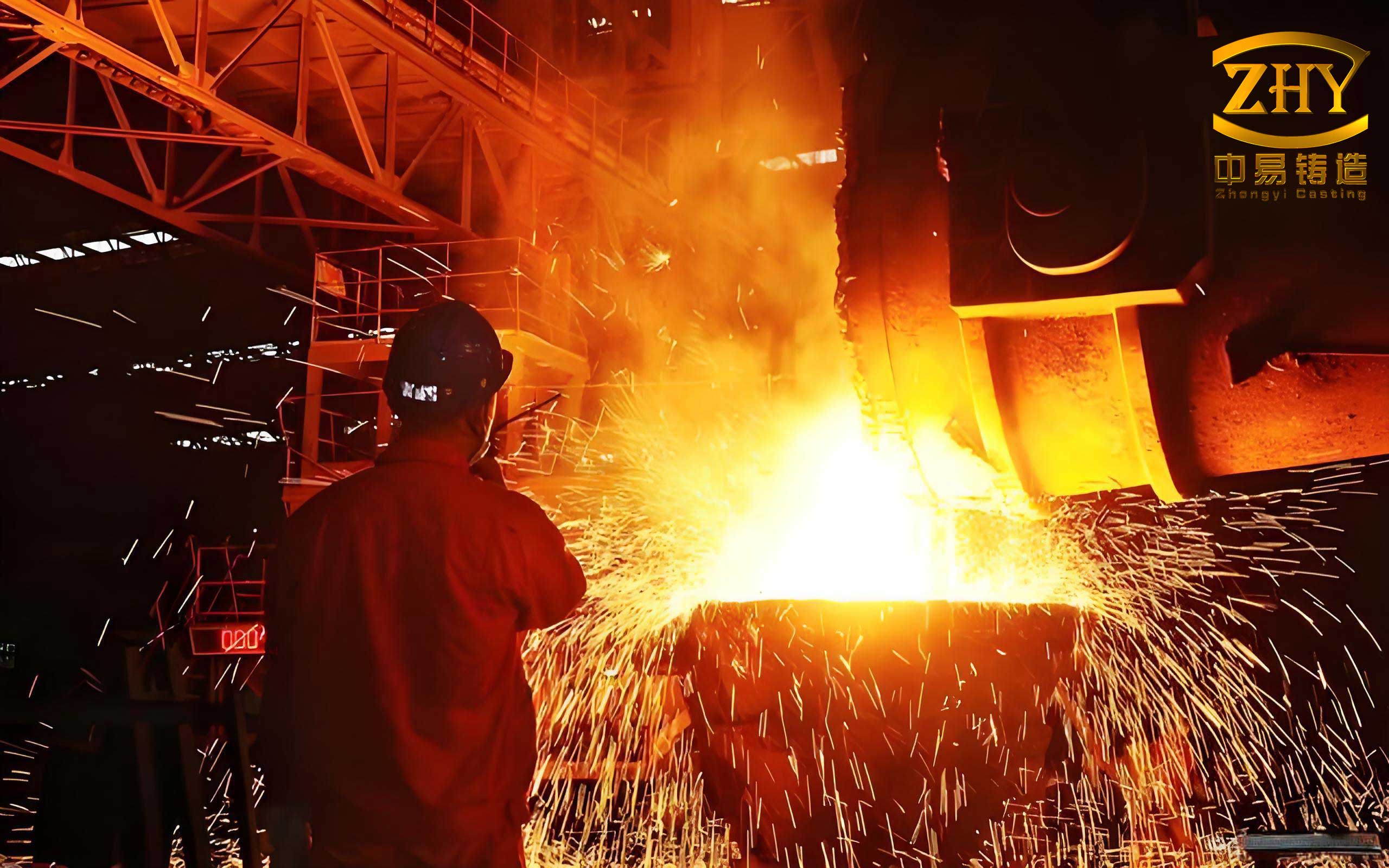
The base iron carbon was adjusted to the 3.10-3.20% range. During ladle treatment, the amount of silicon-barium inoculant was slightly increased, and the addition of ferromolybdenum was completely omitted. Other alloy additions (Cu, Cr, Sn) remained unchanged. For each trial, one ton of iron was tapped to pour separately cast test bars (for destructive testing) and to produce actual casting parts. Four separate trials were conducted. The test bars were evaluated for chemical composition, metallographic structure, and mechanical properties. Furthermore, critical sections from the produced casting parts were sectioned for similar analysis to evaluate bulk properties.
2. Results from Separately Cast Test Bars
The results for the Cu-Cr-Sn (High Si/C ~0.7) test bars are compiled in Table 4. All values meet the specified requirements for HT280 grade, which in our factory are: Tensile Strength ≥ 280 MPa, Hardness 190-260 HBW.
| Trial | Si/C | C (%) | Si (%) | Cu (%) | Cr (%) | Sn (%) | Graphite Structure | Matrix | Tensile (MPa) | Hardness (HBW) |
|---|---|---|---|---|---|---|---|---|---|---|
| 1 | 0.70 | 3.11 | 2.18 | 0.47 | 0.29 | 0.047 | Type A, Size 4 | 98% Pearlite | 295 | 209 |
| 2 | 0.67 | 3.15 | 2.11 | 0.45 | 0.25 | 0.040 | Type A, Size 4 | 98% Pearlite | 290 | 221 |
| 3 | 0.68 | 3.18 | 2.17 | 0.43 | 0.30 | 0.043 | Type A, Size 4 | 98% Pearlite | 300 | 211 |
| 4 | 0.69 | 3.12 | 2.16 | 0.40 | 0.24 | 0.043 | Type A, Size 4 | 98% Pearlite | 310 | 220 |
| Average | 0.69 | 3.14 | 2.15 | 0.44 | 0.27 | 0.043 | – | – | 299 | 215 |
3. Results from Casting Part Section Analysis
Samples were taken from a heavy section (approx. 50 mm thick) of a representative casting part, specifically from a main bearing cap bolt boss area. The results from the sectioned material, shown in Table 5, confirm that the bulk properties of the casting part itself also satisfy the performance requirements, demonstrating good section sensitivity control.
| Sample ID | Graphite Structure | Matrix | Tensile Strength (MPa) | Hardness (HBW) |
|---|---|---|---|---|
| 1# | Type A, Size 4 | 98% Pearlite | 262 | 183 |
| 2# | Type A, Size 4 | 98% Pearlite | 245 | 193 |
Comparative Analysis and Discussion
1. Performance Data Comparison
To establish a baseline, data from the standard Cu-Cr-Mo-Sn production process (Si/C ~0.55) is presented in Table 6. Additionally, to isolate the effect of molybdenum, supplementary trials were conducted using the Cu-Cr-Sn alloy with the standard low Si/C ratio (~0.55); these results are shown in Table 7. Iron from these verification trials was poured into test bars only and then returned to the furnace to prevent production of off-specification casting parts.
| Trial | Si/C | C (%) | Si (%) | Mo (%) | Tensile (MPa) | Hardness (HBW) |
|---|---|---|---|---|---|---|
| A | 0.58 | 3.25 | 1.89 | 0.15 | 335 | 246 |
| B | 0.57 | 3.24 | 1.85 | 0.12 | 325 | 246 |
| C | 0.55 | 3.26 | 1.79 | 0.12 | 285 | 263 |
| D | 0.55 | 3.30 | 1.80 | 0.13 | 310 | 245 |
| Average | 0.56 | 3.26 | 1.83 | 0.13 | 314 | 250 |
| Trial | Si/C | C (%) | Si (%) | Mo (%) | Tensile (MPa) | Hardness (HBW) |
|---|---|---|---|---|---|---|
| E | 0.57 | 3.25 | 1.85 | 0 | 275 | 200 |
| F | 0.57 | 3.26 | 1.85 | 0 | 295 | 210 |
| G | 0.54 | 3.30 | 1.79 | 0 | 280 | 208 |
| H | 0.56 | 3.26 | 1.83 | 0 | 285 | 195 |
| Average | 0.56 | 3.27 | 1.83 | 0 | 284 | 203 |
The performance comparison is striking. At a similar Si/C ratio (~0.55), the molybdenum-containing iron exhibits superior properties. The average tensile strength of the Cu-Cr-Mo-Sn iron is 314 MPa, which is 10.6% higher than the 284 MPa average of the Cu-Cr-Sn iron. The hardness difference is even more pronounced at 23% (250 HBW vs. 203 HBW). This clearly demonstrates the potent strengthening effect of molybdenum, primarily through its powerful pearlite-refining capability. Directly eliminating molybdenum without other compensatory measures carries a high risk of producing sub-standard casting parts.
The key finding is revealed when comparing the two Cu-Cr-Sn datasets. By increasing the Si/C ratio from ~0.56 to ~0.69, while maintaining the same carbon equivalent and other alloy additions (Cu, Cr, Sn), the average tensile strength improved by 5.3% (from 284 MPa to 299 MPa) and the hardness increased by 5.9% (from 203 HBW to 215 HBW). Most importantly, the high Si/C ratio, molybdenum-free iron achieved a robust average tensile strength of 299 MPa, which safely exceeds the 280 MPa minimum requirement for the HT280 casting part. The improvement can be attributed to the microstructural changes induced by the higher Si/C ratio, effectively compensating for the absence of molybdenum.
2. Metallographic Analysis
Microstructural examination provides visual evidence supporting the mechanical property data. The standard Cu-Cr-Mo-Sn iron shows a typical structure of well-refined pearlite with uniformly distributed Type A graphite. The high Si/C ratio Cu-Cr-Sn iron also displays a predominantly pearlitic matrix (98%) with Type A graphite. However, critical observations indicate that the graphite flakes in the high Si/C material are notably shorter, reducing their segmenting effect on the matrix. Furthermore, the pearlitic matrix, while similar in quantity, appears to have a slightly refined grain structure compared to what might be expected from the higher eutectoid transformation temperature. This is likely due to the combined effect of the remaining alloying elements (Cr, Sn, Cu) and effective inoculation. The microstructural changes align with the conceptual model: decreased $V_g$ (graphite volume) and potentially favorable adjustment in $L_g$ (graphite length) and $S_p$ (pearlite fineness), combined with increased $\sigma_{ss}$ (solid solution strength).
3. Cost-Benefit Analysis
The economic incentive for this process change is clear. The standard alloying practice uses approximately 0.13% Mo on average. Eliminating this addition, which constitutes the largest portion of alloy cost, results in direct savings. While the high Si/C process may involve a slight increase in silicon addition, the cost of ferrosilicon is negligible compared to ferromolybdenum. The projected saving of 600 RMB per ton of metal significantly enhances the competitiveness of the produced casting part without compromising its fitness for service. The relationship between cost (C) and composition can be simplified as:
$$ C_{alloy} = k_{Mo} \cdot \%Mo + k_{Si} \cdot \Delta\%Si + … $$
Where $k_{Mo}$ and $k_{Si}$ are the cost factors for Mo and Si additions, respectively, and $\Delta\%Si$ is the incremental silicon added. Since $k_{Mo} >> k_{Si}$, setting $\%Mo = 0$ yields substantial savings despite a positive $\Delta\%Si$.
Conclusions and Industrial Implications
1. The conventional Cu-Cr-Mo-Sn alloying method for producing high-grade gray iron casting parts, while effective, incurs high and volatile costs primarily driven by molybdenum. A direct reduction in alloy content without process modification jeopardizes the mechanical integrity of the casting part.
2. The strategic increase of the silicon-to-carbon ratio presents a viable technical pathway for cost reduction. By maintaining a constant carbon equivalent, eliminating molybdenum, and raising the Si/C ratio from approximately 0.55 to 0.70, a Cu-Cr-Sn alloyed iron can be produced that meets the mechanical property specifications for grades like HT280.
3. This study confirms that at a constant CE, increasing the Si/C ratio for a Cu-Cr-Sn iron improves its average tensile strength by about 5%. This enhancement is sufficient to compensate for the strength lost by omitting molybdenum, ensuring the casting part performance remains within specification limits.
4. In the context of rising raw material costs, the exploration of metallurgical pathways such as optimizing the Si/C ratio, rather than relying solely on expensive alloy additions, is a crucial strategy for foundries. This approach enhances the sustainability and cost-competitiveness of gray iron casting part production while maintaining quality. The successful implementation hinges on precise control over base composition, effective inoculation, and balanced use of supportive alloys like copper, chromium, and tin.