
As a casting engineer specializing in the production of high-integrity sand casting products, I have extensively worked with duplex stainless steels, particularly A995-5A grade. These materials are renowned for their excellent corrosion resistance and high strength, making them ideal for demanding applications like valves, pumps, and offshore components. However, producing thick-section sand casting products from A995-5A presents a significant challenge: the pronounced tendency to develop cracking defects during cooling. This issue is not merely a quality nuisance; it can lead to catastrophic failure in service and result in substantial financial losses due to scrapped castings. In this detailed account, I will share my experiences and analyses on how cooling process control is the paramount factor in mitigating these cracks, with a specific focus on heavy sand casting products.
Duplex stainless steels derive their name from their microstructure, which is an approximately 50/50 mix of ferrite and austenite phases. This structure grants them a yield strength nearly double that of standard austenitic stainless steels and superior resistance to stress corrosion cracking, pitting, and crevice corrosion, especially in chloride-rich environments. The chemical composition is critical, as outlined in the standard for A995-5A. The balance of elements like Chromium (Cr), Nickel (Ni), Molybdenum (Mo), and Nitrogen (N) is delicate. Cr enhances strength and corrosion resistance but promotes ferrite formation. Ni stabilizes the austenite phase and improves toughness. Mo boosts pitting resistance. However, this very alloy design, essential for performance, sows the seeds for manufacturing difficulties in sand casting products.
The core of the problem lies in the thermal history of the sand casting product after it solidifies. During the slow cooling inherent in a sand mold—especially for thick sections exceeding 150 mm—the casting spends a prolonged period in critical temperature ranges. Two metallurgical phenomena are primarily responsible for embrittlement and subsequent cracking:
- Formation of Sigma (σ) Phase: In the temperature range of approximately 600°C to 1000°C, there is a strong thermodynamic driving force for the precipitation of intermetallic phases, most notably the sigma (σ) phase. This phase is rich in chromium and molybdenum. Its formation is diffusion-controlled and highly time-dependent at these temperatures. The σ phase is extremely hard and brittle. Furthermore, its precipitation is accompanied by a localized volume change, inducing internal stresses. The combined effect of embrittlement and stress concentration dramatically reduces the ductility and fracture toughness of the sand casting product, making it highly susceptible to crack initiation and propagation, even under the residual thermal stresses from cooling.
- 475°C Embrittlement: This is a phenomenon specific to high-chromium ferritic and duplex stainless steels. When exposed to temperatures around 475°C for extended periods, spinodal decomposition occurs within the ferrite phase, leading to the formation of chromium-rich α’ precipitates. This results in a severe loss of impact toughness and an increase in hardness. For a thick sand casting product cooling slowly through this temperature range, the material can become exceptionally brittle.
The kinetics of σ phase formation can be conceptually described by transformations like the Johnson-Mehl-Avrami-Kolmogorov (JMAK) equation:
$$ f = 1 – \exp\left(-(k t)^n\right) $$
where \( f \) is the volume fraction of the σ phase formed, \( k \) is a temperature-dependent rate constant following an Arrhenius relationship \( k = k_0 \exp(-Q/RT) \), \( t \) is the isothermal hold time, and \( n \) is the Avrami exponent. For a sand casting product cooling continuously, the time spent in the critical temperature window \( \Delta t_{600-1000°C} \) is the integrating factor. A slower cooling rate dramatically increases \( \Delta t \), thereby significantly increasing \( f \), the amount of detrimental σ phase.
The critical cooling rate \( \dot{T}_{crit} \) to avoid a specific volume fraction of σ phase can be approximated by considering the integral of transformation kinetics over the cooling curve. A simplified expression highlights the dependency:
$$ \dot{T}_{crit} \propto \frac{(T_{start} – T_{end})}{\tau(T)} $$
where \( \tau(T) \) is the incubation time for σ phase nucleation at temperature \( T \), and \( T_{start} \) and \( T_{end} \) are the bounds of the critical temperature range. For thick sand casting products, achieving a high \( \dot{T} \) post-solidification is the primary engineering challenge.
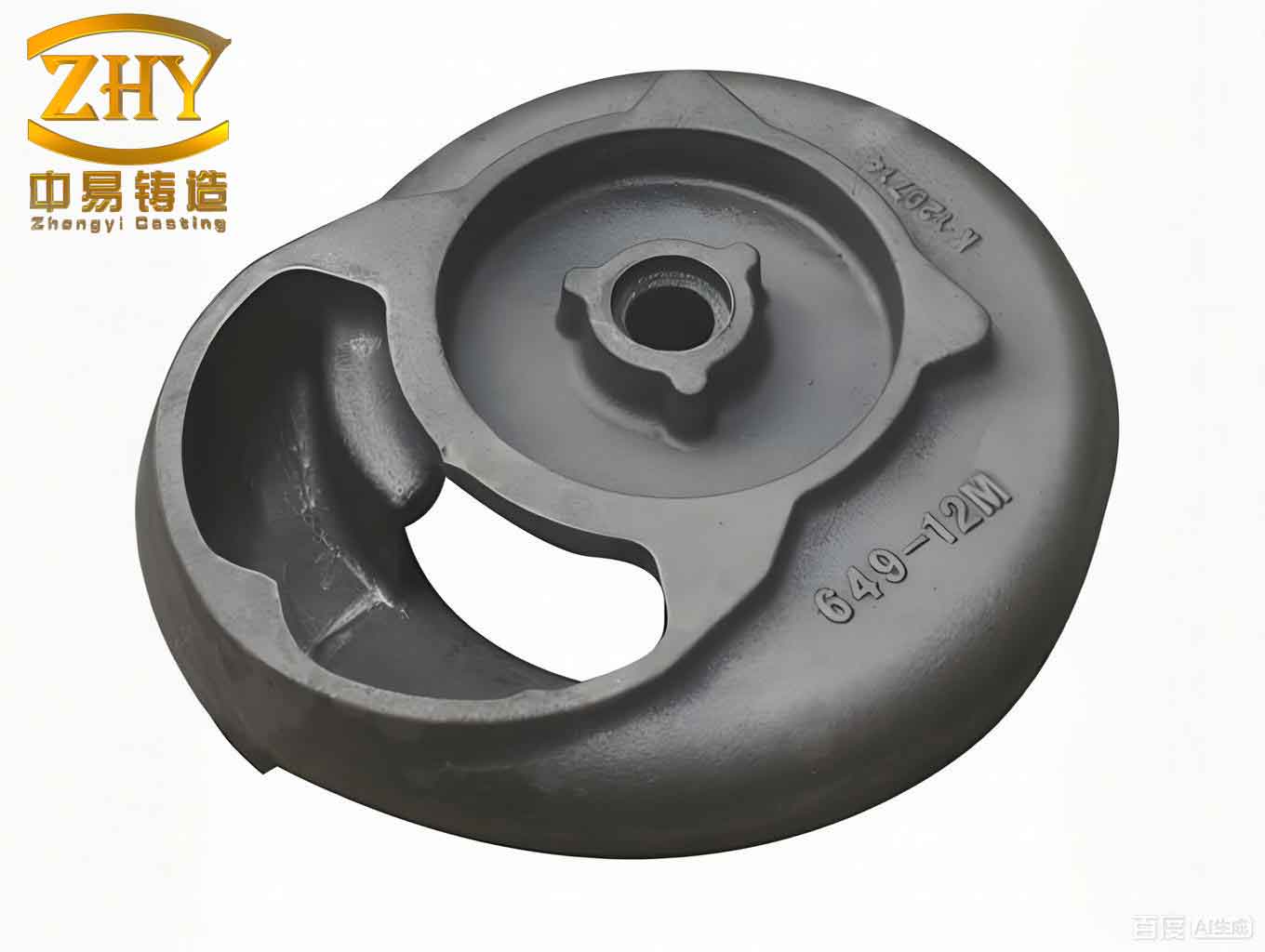
In my work, the most common and severe cracks manifest in areas of high thermal mass or geometric stress concentration. They often appear as intergranular or transgranular fractures visible only after extensive machining or during non-destructive testing like Liquid Penetrant Inspection (PT). This underscores that the damage occurs sub-surface during cooling. The prevention strategy, therefore, must focus on manipulating the cooling curve to minimize time in the embrittlement zones. Over the years, I have evaluated and implemented several cooling strategies for duplex stainless steel sand casting products, each with distinct advantages and severe drawbacks. The following table summarizes the four primary methods investigated.
| Cooling Method | Description | Advantages | Disadvantages & Risks | Suitability for Sand Casting Products |
|---|---|---|---|---|
| 1. High-Temperature Shakeout → Water Quench | Remove casting from mold immediately after solidification (≈900-1000°C) and submerge in water. | Extremely rapid cooling through σ-phase range. Minimizes both σ-phase and 475°C embrittlement. |
|
Not recommended for most sand casting products. Potentially viable only for very small, simple shapes. |
| 2. High-Temperature Shakeout → Direct Furnace Transfer → Solution Anneal & Quench | Shakeout at high temp, transfer to pre-heated furnace (>700°C), perform solution treatment (e.g., 1120°C), then water quench. | Maintains high temperature, avoiding σ-phase formation before treatment. Quench from solution temperature is effective. |
|
Poor suitability for typical foundry batch production of complex sand casting products due to safety and logistics. |
| 3. Slow Cool to Ambient → Post-Cast Heat Treatment | Allow casting to cool fully in mold to 100-150°C, then perform full heat treatment cycle, including solution annealing and quenching. | Avoids high-temperature handling. Standard heat treatment cycle applies. |
|
Unsuitable for thick-section sand casting products. May work for thin-wall (<50mm) castings with uniform sections. |
| 4. High-Temperature Shakeout → Forced Air/Spray Cooling | Shakeout after solidification, perform basic sand removal (hot), then apply forced air or air-water mist spray to accelerate cooling. |
|
|
Highly recommended for thick-section and complex geometry sand casting products. The most practical and reliable method for batch production. |
The evolution of my approach has solidified Method 4—High-Temperature Shakeout followed by Forced Air/Spray Cooling—as the cornerstone for producing crack-free, heavy-section A995-5A sand casting products. The implementation is data-driven. We use solidification simulation software to determine the precise moment the entire casting, including feeders, is fully solid. For a typical valve body weighing over 2000 kg with a maximum thickness of 170 mm, this might occur around 3 hours after pouring. At this point, the sand casting product’s temperature is fairly uniform and well above 900°C.
We then execute a controlled shakeout. Workers, protected by appropriate heat-resistant gear, remove the casting from the flask and knock off the bulk of the sand mold and cores. The residual sand, having been exposed to high temperatures for hours, is often friable. The casting is then placed on a grating or stand to allow airflow on all sides. High-capacity industrial fans are directed at the casting, particularly targeting the thickest sections. For extremely massive sand casting products, or in hotter climates, we employ fans equipped with water mist sprayers. The fine mist evaporates instantly upon contact with the hot metal, providing a dramatic heat extraction via latent heat of vaporization, yet without the thermal shock and explosion risk of full immersion quenching.
The cooling rate achieved is sufficient to reduce the time in the 600-1000°C window from many hours (in a sand mold) to perhaps 30-60 minutes. This drastically suppresses the driving force for σ-phase precipitation, as per the kinetic equations. The casting then cools through the lower temperature ranges more rapidly as well. Once the casting temperature drops below approximately 400°C (monitored with infrared pyrometers), the risk of new phase formation is low, and the casting can be left to cool to ambient temperature or proceed directly to riser removal and finishing. The resulting microstructure is predominantly ferrite-austenite with minimal deleterious phases, and the residual stress state is more favorable. This process has virtually eliminated the occurrence of cracks detectable by PT in our final machined sand casting products.
To further elaborate on the metallurgical principles, let’s consider the equilibrium and non-equilibrium phase diagrams. While the standard Fe-Cr-Ni pseudo-binary diagrams provide a baseline, the addition of Mo and N significantly shifts phase fields. The time-temperature-transformation (TTT) diagram for A995-5A is key. The “C-curve” for σ-phase precipitation noses into the time scale of minutes to hours in the 700-900°C range. The goal of our forced cooling is to cross this nose of the C-curve as quickly as possible. The critical cooling rate \( V_c \) to avoid the nose can be estimated from the TTT diagram:
$$ V_c = \frac{T_{\gamma} – T_{nose}}{t_{nose}} $$
where \( T_{\gamma} \) is the temperature where austenite is stable (above ~1000°C), \( T_{nose} \) is the temperature at the nose of the C-curve, and \( t_{nose} \) is the time to the start of transformation at that temperature. For heavy sand casting products, achieving \( V_c \) through the entire cross-section is challenging, but forced convection cooling brings the surface and near-surface regions well within safe limits, and the thermal mass helps pull the core through acceptably fast.
Another crucial aspect is the role of chemical composition within the specification limits. Even within A995-5A, minor variations can affect phase stability. We meticulously control the melt chemistry to optimize castability and phase balance. A key parameter is the Pitting Resistance Equivalent Number (PREN), which must exceed 40 for this grade:
$$ PREN = \%Cr + 3.3 \times \%Mo + 16 \times \%N $$
While PREN predicts corrosion resistance, the Cr and Mo contents also directly influence σ-phase kinetics. Higher Cr+Mo increases the driving force for σ formation. Therefore, for sand casting products, we aim for the mid-range of the specification to balance corrosion performance with manufacturability. The following table illustrates a target chemistry we use for robust production of thick-section sand casting products, alongside the standard limits.
| Element | ASTM A995-5A Specification | Target for Heavy Sand Casting Products | Rationale for Target |
|---|---|---|---|
| C | ≤ 0.03 | ≤ 0.02 | Minimize carbide precipitation, improve weldability and corrosion resistance. |
| Cr | 24.0 – 26.0 | 25.0 | Mid-range to ensure PREN while slightly reducing σ-phase driving force vs. max limit. |
| Ni | 6.0 – 8.0 | 7.0 | Mid-range to stabilize austenite phase, ensuring a near 50/50 phase balance after solution treatment. |
| Mo | 4.0 – 5.0 | 4.5 | Mid-range for optimal pitting resistance without excessively promoting σ-phase. |
| N | 0.10 – 0.30 | 0.22 | Upper-mid range to strongly stabilize austenite and boost PREN, countering ferritizers. |
| Ferrite Number (FN) | — | 40-60 | Measured after solution treatment. Ensures the correct duplex structure, avoiding excessive ferrite which is more prone to σ-phase and 475°C embrittlement. |
The successful application of forced cooling after high-temperature shakeout is not without its nuances. The design of the sand casting product itself plays a role. Sharp re-entrant corners, drastic changes in section thickness, and poorly designed feeder connections act as stress raisers. When combined with residual embrittlement, these features are prime crack initiation sites. Therefore, close collaboration between design and process engineering is essential. Riser placement must ensure directional solidification towards the feeder, minimizing isolated hot spots. Chills are used strategically to accelerate solidification in thick areas, but their removal during hot shakeout must be considered. For our most complex sand casting products, we often use exothermic sleeves on risers to improve yield and thermal management.
Furthermore, the heat treatment following the accelerated cooling is still mandatory. The forced cooling process is a preventive measure to avoid cracking during the initial cooling from solidification. It does not replace the solution annealing treatment required to dissolve any minor precipitates that may have formed, homogenize the microstructure, and restore the optimal ferrite-austenite balance. The standard heat treatment for A995-5A sand casting products involves heating to 1020-1120°C (typically 1100°C), holding for sufficient time (usually 1 hour per inch of thickness), followed by rapid quenching in water or polymer. This final quench is performed from a uniformly high temperature on a clean, descaled casting, which is a safe and controlled operation. The difference is profound: instead of trying to heal a heavily embrittled and micro-cracked structure (Method 3), we are now performing a solution treatment on a sound, crack-free body that merely requires phase rebalancing.
In conclusion, the battle against cracks in thick-section A995-5A duplex stainless steel sand casting products is won or lost in the hours immediately following solidification. The traditional foundry practice of allowing castings to cool slowly in the mold is a recipe for disaster with this material class, leading to significant scrap losses. While drastic measures like direct water quenching from the mold address the metallurgical need for speed, they introduce unacceptable safety risks for industrial production of sand casting products. The optimal pathway, developed through rigorous experience and analysis, is a balanced, controlled process: determining the precise solidification endpoint via simulation, performing a high-temperature shakeout with basic sand removal, and then applying forced convective cooling—using air or air-water mist—to rapidly shepherd the casting through the critical σ-phase and embrittlement temperature zones. This method reliably produces sound, crack-free sand casting products, ensuring their structural integrity for severe service applications. It underscores a fundamental principle in advanced foundry engineering: for high-performance alloys, thermal process control is as critical as the metallurgy itself, and mastering the cooling curve is the key to unlocking the full potential of duplex stainless steel sand casting products.