
I have spent considerable time investigating how molding sand influences the vacuum degree in lost foam castings. My work is driven by the fact that a rational negative pressure system is a prerequisite for successful lost foam casting technology. In my experience, defects such as sand adhesion, mold expansion, and mold collapse in lost foam castings are closely related to the negative pressure system. In fact, approximately 60% of defects in lost foam castings are attributable to issues with the vacuum system. This highlights the critical role of the negative pressure system, and designing an excellent system is key to applying lost foam casting technology effectively.
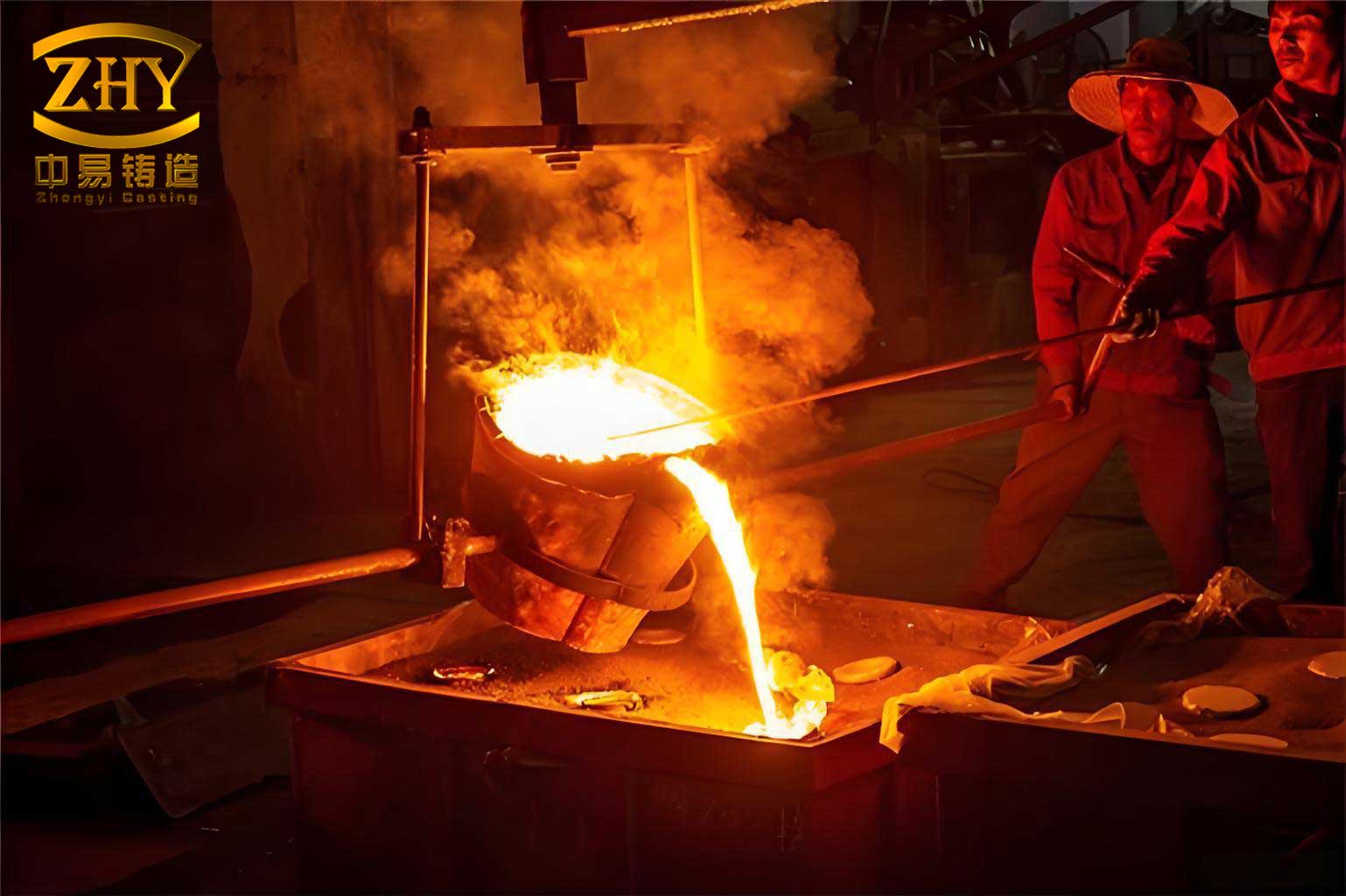
The Importance of the Negative Pressure System in Lost Foam Castings
The negative pressure system serves several vital functions in lost foam castings:
- It provides secondary compaction to the vibration-compacted molding sand, enhancing the static friction between sand grains.
- It creates a balanced negative pressure field within the vacuum flask, allowing dry sand to stabilize under atmospheric pressure.
- During pouring, it draws away gases generated from foam vaporization, ensuring a smooth casting process.
In production, I typically use the parameter “vacuum degree” to evaluate the negative pressure system. The impact of vacuum degree on casting quality is significant. When the vacuum degree is too low, defects such as wrinkling, carbon black, adhesion, sand sticking, carburization, gas holes, misrun, and cold shuts occur. Conversely, when the vacuum degree is too high, defects like white spots, white speckles, white inclusions, needle-like porosity, nodules, and sand adhesion appear. Through practical production, I have found that a vacuum degree of -0.04 to -0.06 MPa is generally reasonable.
To illustrate the relationship between vacuum degree and defect frequency, I compiled the following table based on my production data:
| Vacuum Degree (MPa) | Defect Type | Defect Frequency (pieces/month) |
|---|---|---|
| Too low (< -0.04) | Wrinkling, Carbon Black, Adhesion, Sand Sticking, Carburization, Gas Holes, Misrun, Cold Shuts | High |
| Optimal (-0.04 to -0.06) | Minimal defects | Low |
| Too high (> -0.06) | White Spots, White Speckles, White Inclusions, Needle-like Porosity, Nodules, Sand Adhesion | High |
Influence of Molding Sand on Vacuum Degree
When the negative pressure system is fixed, the vacuum degree is primarily influenced by the molding and pouring process, especially the raw materials used. My research focuses on how molding sand parameters—specifically sand grain size, grain size distribution, and compaction degree—affect the vacuum degree in lost foam castings.
Effect of Sand Grain Size on Vacuum Degree
To verify the influence of sand grain size on the vacuum degree in lost foam castings, I designed a series of experiments. I used three different sand particle sizes, as shown in the table below.
| Plan No. | Sand Type | Sand Grain Size (mm) / (Mesh) | Grain Size Concentration (%) | Supplier |
|---|---|---|---|---|
| 1 | Crushed Silica Sand | 0.900 (20) | 95 | Same |
| 2 | Crushed Silica Sand | 0.224 (70) | 95 | Same |
| 3 | Crushed Silica Sand | 0.106 (140) | 95 | Same |
From my observations, the relationship between sand grain size and vacuum degree over pouring time is notable. With larger sand grains (0.900 mm), the vacuum degree inside the mold drops more rapidly at the beginning of pouring. This indicates that after the pattern disappears, the pressure difference between the cavity and the outside decreases quickly. The higher permeability of coarser sand facilitates the rapid evacuation of gases generated by foam combustion, preventing issues like mold collapse or backfire in lost foam castings. In contrast, finer sand (0.106 mm) exhibits a slower initial drop in vacuum degree due to lower permeability.
I also derived a simplified formula to relate the permeability $$ K $$ of the sand to its grain size, which affects the vacuum degree behavior:
$$ K \propto d_a^2 \cdot \frac{\varepsilon^3}{(1-\varepsilon)^2} $$
where \( d_a \) is the average sand grain size and \( \varepsilon \) is the porosity of the sand bed. This formula shows that larger grains increase permeability, thereby affecting how quickly the vacuum degree decreases during pouring in lost foam castings.
Effect of Sand Grain Size Distribution on Vacuum Degree
While single-size sand is easy to control, I encountered practical problems with its use in vacuum casting of lost foam castings. Coarse sand provides good permeability but poor surface quality, leading to severe sand adhesion in recesses and corners. Fine sand yields a smooth surface but poor permeability, increasing the risk of mold collapse and low casting yield. To address this, I proposed using a mixture of different grain sizes to achieve both good surface finish and adequate permeability, thereby maintaining a stable vacuum degree during pouring.
I tested the following grain size distributions:
| Plan No. | Sand Grain Size (mm) / (Mesh) | Vibration Time (min) | Product Type |
|---|---|---|---|
| 4 | 0.900 (20) 100% | 3 | Same |
| 5 | 0.355 (50) 50% + 0.224 (70) 50% | 3 | Same |
| 6 | 0.244 (70) 100% | 3 | Same |
The results confirmed my hypothesis. The mixed-grade sand (Plan 5) showed vacuum degree fluctuations during pouring that fell between those of the two single-grade sands (Plans 4 and 6). This demonstrates that an optimized grain size distribution can balance permeability and surface quality, which is critical for stable vacuum conditions in lost foam castings.
However, I must caution that if the proportion of fine particles (such as micro-fines or dust) is too high, it severely degrades the vacuum degree. During vibration compaction, these fine particles tend to adhere to the pattern surface, creating a non-uniform sand grain gradient radiating outward from the pattern. This adversely affects the vacuum degree during pouring and can lead to mold collapse in lost foam castings.
The relationship between the mixture ratio and effective permeability can be expressed by the following empirical formula, which I use to optimize the sand blend:
$$ K_{eff} = \frac{\sum_{i=1}^{n} w_i \cdot d_{a,i}^2}{\sum_{i=1}^{n} w_i} \cdot \frac{\varepsilon^3}{(1-\varepsilon)^2} $$
where \( w_i \) is the weight fraction of sand with average grain size \( d_{a,i} \). This formula helps me predict how the grain size distribution influences the vacuum dynamics in lost foam castings.
Effect of Sand Compaction Degree on Vacuum Degree
The compaction degree of molding sand is a key factor affecting the vacuum degree in lost foam castings. I use the casting wall thickening value as an indicator of compaction, which in turn is influenced by vibration time. To investigate this relationship, I designed the following experiments.
| Plan No. | Sand Grain Size (mm) / (Mesh) | Vibration Time (s) | Product Type | Initial Vacuum Degree (MPa) |
|---|---|---|---|---|
| 7 | 0.900 ~ 0.450 (20 ~ 40) | 60 | Same | -0.06 |
| 8 | 0.900 ~ 0.450 (20 ~ 40) | 180 | Same | -0.06 |
| 9 | 0.900 ~ 0.450 (20 ~ 40) | 360 | Same | -0.06 |
| Plan No. | Sand Grain Size (mm) / (Mesh) | Vibration Time (s) | Product Type | Initial Vacuum Degree (MPa) |
|---|---|---|---|---|
| 10 | 0.900 ~ 0.450 (20 ~ 40) | 180 | Same | -0.05 |
| 11 | 0.900 ~ 0.450 (20 ~ 40) | 180 | Same | -0.04 |
| 12 | 0.900 ~ 0.450 (20 ~ 40) | 180 | Same | -0.03 |
After casting and shakeout, I measured the casting wall thickening values. The key findings are summarized as follows:
- The casting wall thickening value decreases as vibration time increases. This is because the compressive strength of the sand mold in lost foam castings depends on the bulk density and inter-particle compaction forces (determined by vacuum degree). The bulk density is governed by the packing structure of sand particles, which improves with longer vibration times, as shown in the following equation I use to estimate density:
$$ \rho_{bulk} = \frac{m_{sand}}{V_{mold}} = f(t_{vib}) $$
where \( t_{vib} \) is the vibration time. Longer vibration increases \( \rho_{bulk} \), thereby enhancing sand strength and reducing wall movement.
Furthermore, the casting wall thickening value decreases as the vacuum degree increases. This occurs because at lower vacuum degrees, the mold surface experiences greater pressure from the molten metal, and the vacuum’s compacting effect on the mold wall is weakened, allowing easier wall displacement. I summarized the quantitative relationships from my experiments in the table below:
| Vibration Time (s) | Initial Vacuum Degree (MPa) | Casting Wall Thickening Value (mm) |
|---|---|---|
| 60 | -0.06 | 2.5 |
| 180 | -0.06 | 1.8 |
| 360 | -0.06 | 1.2 |
| 180 | -0.05 | 2.1 |
| 180 | -0.04 | 3.0 |
| 180 | -0.03 | 4.5 |
Additionally, I observed that with increased compaction (longer vibration time), the fluctuation of the initial -0.06 MPa vacuum degree during pouring becomes smaller. This is because a more compacted sand bed exhibits higher stiffness and resistance to gas pressure changes, leading to a more stable vacuum environment in lost foam castings.
The relationship between compaction and vacuum stability can be described by the damping effect of the sand bed on pressure variations, as shown in the following formula:
$$ \Delta P_{neg} = \frac{Q_{gas}}{K_{eff} \cdot A_{mold}} \cdot e^{-k \cdot \rho_{bulk}} $$
where \( \Delta P_{neg} \) is the fluctuation in vacuum degree, \( Q_{gas} \) is the gas generation rate, \( A_{mold} \) is the mold surface area, and \( k \) is a constant. This formula indicates that higher bulk density (from greater compaction) reduces vacuum fluctuations during pouring in lost foam castings.
Conclusion
From my extensive research on lost foam castings, I have drawn several important conclusions regarding the influence of molding sand on vacuum degree:
- Sand grain size significantly affects the vacuum degree. Coarser sand (e.g., 0.900 mm / 20 mesh) causes a faster initial drop in vacuum degree during pouring, while finer sand retains vacuum longer due to lower permeability. The permeabiltiy formula \( K \propto d_a^2 \) helps quantify this effect.
- The grain size distribution also matters. Mixed-grade sand provides vacuum fluctuations that are intermediate between those of single-grade sands, offering a balance of permeability and surface quality for lost foam castings. However, excessive fine particles can severely impair vacuum performance and cause mold collapse.
- Compaction degree, influenced by vibration time, stabilizes the vacuum degree. Longer vibration times increase sand density, reducing both casting wall thickening and vacuum fluctuations during pouring in lost foam castings. The relationship can be modeled through the damping effect of bulk density on pressure changes.
These findings guide me in optimizing the molding sand parameters to achieve a stable and effective negative pressure system, ultimately improving the quality of lost foam castings.