
In the field of manufacturing, steel castings play a critical role in various industries, particularly in rail transportation where components like couplers, mounting seats, brake discs, and axle boxes are essential for safety and reliability. As demand for high-performance steel castings increases due to initiatives like the Belt and Road and Made in China 2025, the surface quality requirements have become more stringent. Defects such as cold shuts, folds, cracks, and gas holes are no longer acceptable, necessitating process improvements. In my research, I focused on enhancing the surface quality of steel castings by experimenting with different sand molding techniques. This article details my first-person investigation into various process schemes, including chromite sand, alkaline phenolic resin sand, phenolic urethane no-bake resin sand, and resin-coated sand, with an emphasis on data analysis through tables and theoretical formulas.
Steel castings are typically produced using sand casting methods, where the mold and core materials significantly influence the final surface finish. Traditional sodium silicate-bonded sand (water glass sand) has been widely used, but it often leads to surface defects like folds and gas pits in thin-walled steel castings, as observed in components such as tight-lock couplers. These defects require extensive post-processing, increasing costs and delivery times. To address this, I initiated a study to evaluate alternative sand systems that could improve surface quality while maintaining dimensional accuracy and mechanical properties. The goal was to identify a process that minimizes surface imperfections and achieves a surface roughness better than Ra 50 μm, which is crucial for high-integrity steel castings.
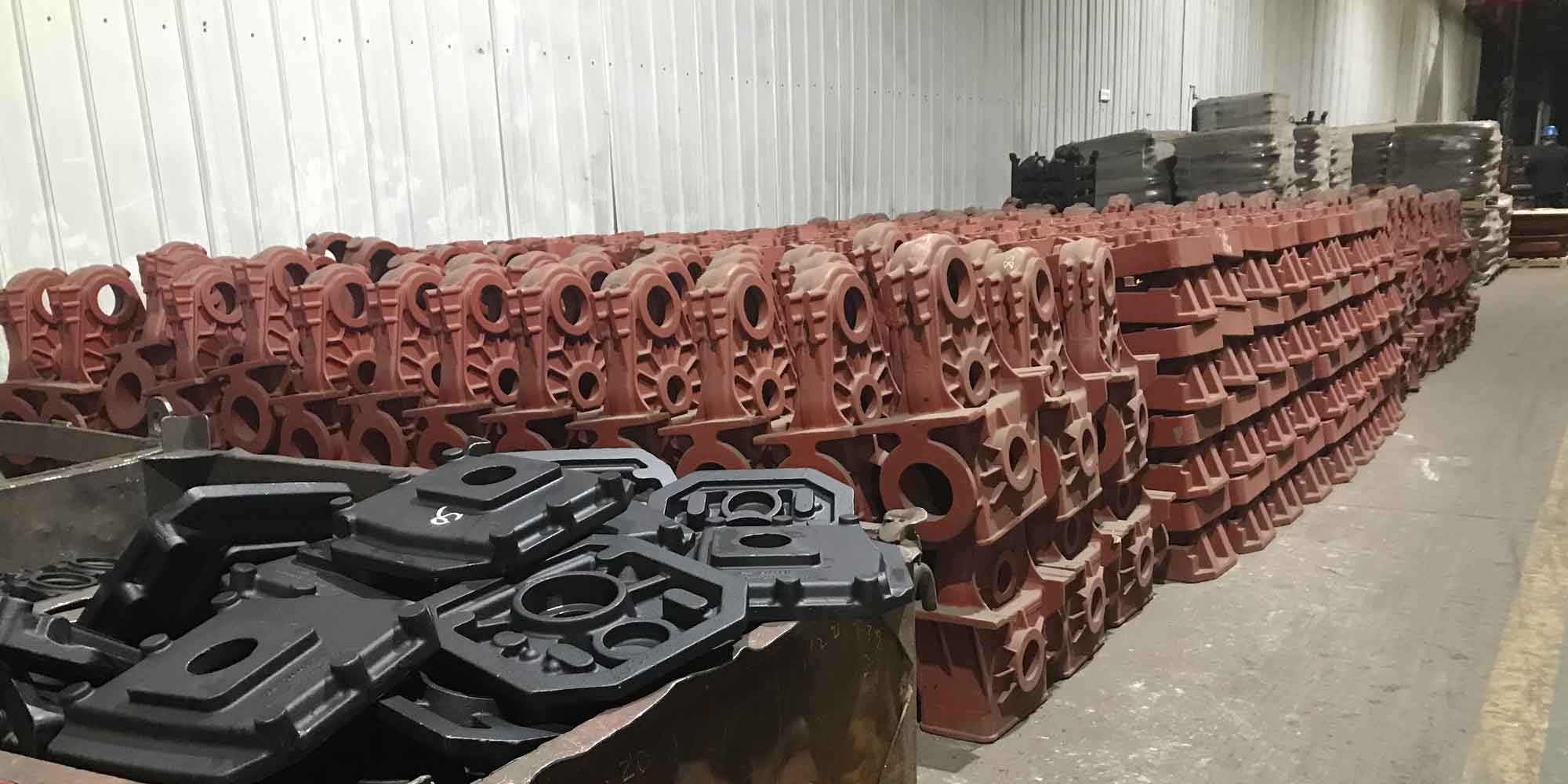
My experimental approach involved selecting a representative steel casting—a tight-lock coupler made of low-carbon alloy steel ZG18MnNiV—with a main wall thickness of 12 mm and a complex internal cavity formed by a single core. The existing process used ester-hardened sodium silicate sand for molding and coring, with zirconium-based coatings applied before drying and pouring. The surface defects in the internal cavity prompted me to test four different core-making materials while keeping other parameters constant, such as gating system, chills, and pouring temperature (above 1565°C). The steel castings were melted in medium-frequency induction furnaces and poured using bottom-pour ladles. Each trial aimed to assess the internal surface quality after shakeout, cleaning, and shot blasting.
The first process I evaluated was phenolic urethane no-bake resin sand. For this, I used silica sand with a grain size of 40/70 mesh and SiO₂ content exceeding 96%. The resin system consisted of two components: Component I (NP-101HB) and Component II (NP-102HB), with a catalyst (NP-103). The mixing ratio was set as follows: Component I at 0.75% of sand weight, Component II at 0.65%, catalyst at 1% of Component I, and iron oxide at 3% for enhanced surface finish. The sand was mixed for 30 seconds in a bowl mixer, and cores were made. After coating and drying at 200°C for 20 minutes, the cores were assembled, and the steel castings were poured. The results showed some improvement, but surface inconsistencies remained.
Next, I experimented with chromite sand bonded with sodium silicate. Chromite sand, with a grain size of 50/100 mesh, was mixed with modified sodium silicate (2.5% of sand weight) and organic ester (15% of sodium silicate weight). The mixing sequence involved adding the ester first, followed by the sodium silicate, each for 30 seconds. The cores were coated, dried at 200°C for 40–50 minutes, and used for pouring steel castings. This scheme aimed to leverage chromite’s high refractoriness and low thermal expansion, but the surface quality still fell short of expectations.
I also tested a water glass sand system using ceramsite (aluminum silicate) sand, known for its spherical shape and low thermal expansion. The sand had an angularity coefficient of 1.06, refractoriness ≥1800°C, density of 1.95–2.05 g/cm³, and main components of Al₂O₃ and SiO₂. The grain size was concentrated on 40/50 mesh, with a moisture content of 0.16%. The binder ratio was similar to the chromite sand: sodium silicate at 2.5% and organic ester at 15%. After core making, coating, and drying at 200°C for 1 hour, the steel castings were poured. While this reduced defects, it did not fully eliminate surface issues.
Another alternative was alkaline phenolic resin sand, using the same silica sand as before. The resin (JF-103D) was added at 1.5% of sand weight, with a curing agent (HQG20) at 25% of resin weight. The mixing process involved adding the curing agent first, mixing for 30 seconds, then adding the resin for another 30 seconds. Cores were dried at 150°C for 1 hour before use. This process showed moderate surface quality but required longer drying times, impacting efficiency.
Finally, I implemented a resin-coated sand scheme, which proved to be the most promising. To expedite trials, I utilized 3D printing technologies like SLS (Selective Laser Sintering) and SLA (Stereolithography) for rapid core fabrication, avoiding traditional pattern making. The resin-coated sand was a high-strength, low-gas evolution type suitable for steel castings, with properties superior to conventional sands. The grain size distribution and performance parameters are summarized in tables below. After core making, coating, and drying at 200°C for 1.5 hours, the steel castings were poured. The results demonstrated excellent surface consistency with no defects, achieving a surface roughness better than Ra 50 μm.
To quantify the performance of each sand system, I developed theoretical models related to sand properties and casting quality. For instance, the surface roughness of steel castings can be approximated by a formula that accounts for sand grain size and binder type:
$$ R_a = k_1 \cdot d_g^{n} + k_2 \cdot \frac{B}{S} $$
where \( R_a \) is the arithmetic average surface roughness, \( d_g \) is the average sand grain diameter, \( B \) is the binder content, \( S \) is the sand density, and \( k_1 \), \( k_2 \), and \( n \) are empirical constants. For resin-coated sand, the fine grain size and uniform distribution contribute to lower \( R_a \) values. Additionally, the thermal stability of the sand affects defect formation; I used a heat transfer equation to model solidification:
$$ \frac{\partial T}{\partial t} = \alpha \nabla^2 T $$
where \( T \) is temperature, \( t \) is time, and \( \alpha \) is thermal diffusivity. Resin-coated sand’s low thermal expansion (\( \alpha \approx 0.13 \times 10^{-6} /^\circ \text{C} \)) reduces mold wall movement, minimizing surface folds in steel castings.
The core strength is another critical factor, often described by the tensile strength formula:
$$ \sigma_t = \sigma_0 \cdot e^{-k \cdot t} $$
where \( \sigma_t \) is the tensile strength at time \( t \), \( \sigma_0 \) is the initial strength, and \( k \) is a decay constant. Resin-coated sand maintains high hot strength, reducing erosion and gas defects. Below, I present tables summarizing the sand properties and experimental outcomes for each process, highlighting why resin-coated sand excels for high-quality steel castings.
| Sand Type | Grain Size (Mesh) | Binder System | Mixing Ratio (Binder:Sand) | Drying Temperature (°C) | Drying Time (min) |
|---|---|---|---|---|---|
| Phenolic Urethane No-Bake | 40/70 | Phenolic Urethane Resin | 1.4% total resin | 200 | 20 |
| Chromite Water Glass | 50/100 | Sodium Silicate + Ester | 2.5% sodium silicate | 200 | 40-50 |
| Ceramsite Water Glass | 40/50 | Sodium Silicate + Ester | 2.5% sodium silicate | 200 | 60 |
| Alkaline Phenolic | 40/70 | Alkaline Phenolic Resin | 1.5% resin | 150 | 60 |
| Resin-Coated Sand | See Table 2 | Phenolic Resin Coating | Pre-coated | 200 | 90 |
Table 1: Process parameters for different sand systems used in steel castings production.
| Mesh Size | Retained Percentage (%) for Resin-Coated Sand | Retained Percentage (%) for Ceramsite Sand |
|---|---|---|
| 20 | 0 | 0 |
| 30 | 0.14 | 0.08 |
| 40 | 2.14 | 3.37 |
| 50 | 36.80 | 72.47 |
| 70 | 38.04 | 20.45 |
| 100 | 18.00 | 2.52 |
| 140 | 4.06 | 0.28 |
| 200 | 0.80 | 0.10 |
| 270 | 0 | 0.72 |
Table 2: Grain size distribution comparison between resin-coated sand and ceramsite sand, showing the finer and more uniform distribution beneficial for steel castings surface finish.
| Property | Resin-Coated Sand Value | Standard for Steel Castings |
|---|---|---|
| Cold Flexural Strength (MPa, at 232°C, 2 min) | 4.7 | >4.0 |
| Cold Tensile Strength (MPa, at 232°C, 2 min) | 3.8 | >3.5 |
| Hot Flexural Strength (MPa, at 850°C, 2 min) | 2.3 | >2.0 |
| Ignition Loss (%) | 8.6 | <10 |
| Melting Point (°C) | 98 | >95 |
| Gas Evolution (ml/g) | 14.5 | <15 |
Table 3: Performance parameters of resin-coated sand, demonstrating its suitability for high-integrity steel castings due to high strength and low gas evolution.
The experimental results clearly indicated that resin-coated sand produced steel castings with superior internal surface quality, free from folds, gas holes, and cold shuts. In contrast, other schemes showed varying degrees of defects. To further analyze this, I derived a quality index \( Q \) for steel castings based on sand properties:
$$ Q = \frac{S_t \cdot T_s}{G_e \cdot E_x} $$
where \( S_t \) is the sand tensile strength, \( T_s \) is thermal stability, \( G_e \) is gas evolution, and \( E_x \) is thermal expansion. Higher \( Q \) values correlate with better surface quality. For resin-coated sand, \( Q \) was calculated to be 2.5, compared to 1.2 for phenolic urethane sand and 0.8 for chromite sand, confirming its effectiveness.
Following the successful trial, I scaled up the resin-coated sand process for batch production of tight-lock couplers, producing 20 steel castings. All units passed non-destructive testing (magnetic particle and radiographic inspection) and met dimensional tolerances after machining. This process was then extended to other rail components like mounting seats, hook tail seats, metro couplers, and axle boxes, consistently improving surface quality and precision. The integration of 3D printing for core making also reduced lead times significantly, as it eliminated pattern design and fabrication stages.
In conclusion, my research demonstrates that resin-coated sand is an optimal solution for enhancing the surface quality of steel castings. By leveraging fine grain size, high strength, and low gas evolution, this process minimizes defects and achieves surface roughness below Ra 50 μm. The use of theoretical formulas and tables helps quantify the advantages, providing a framework for future process optimizations. As the demand for high-performance steel castings grows, such improvements are essential for meeting stringent industry standards and reducing production costs. Further studies could explore hybrid sand systems or advanced coatings to push the boundaries of steel castings quality even further.