
As a researcher deeply immersed in the field of advanced casting technologies, I have observed that the lost foam casting process stands out as a pivotal and innovative method for producing complex, near-net-shape components. This process, often termed a “green engineering” feat within foundries, involves the vaporization and replacement of a polymer foam pattern by molten metal within a unbonded sand mold under a negative pressure. The quality of the final casting is intrinsically linked to the complex thermal, mass, and momentum transfer events, coupled with intricate physico-chemical reactions that occur at the interface between the molten metal and the decomposing foam pattern. Among the various challenges, surface carbon defects remain a persistent and critical issue, directly impacting the aesthetic appeal, mechanical integrity, and machinability of cast components. This article synthesizes current research from a first-person perspective, focusing on the foam pattern—the “white model” or “sacrificial pattern”—as the primary variable influencing carburization and wrinkling defects. It will employ extensive analysis, tables, and mathematical formulations to elucidate the mechanisms and explore material science-driven solutions.
1. Introduction to Lost Foam Casting and the Carbon Defect Challenge
The lost foam casting process offers unparalleled advantages in design flexibility, dimensional accuracy, and reduced need for post-casting machining. Its fundamental principle relies on a foam pattern, typically made from expandable polystyrene (EPS), which is coated with a refractory layer and embedded in dry sand. Upon pouring, the molten metal causes the rapid thermal degradation of the foam pattern. The success of lost foam casting hinges on the precise control of this degradation to ensure complete pattern removal and the prevention of by-product entrapment. However, the interaction is seldom perfect. The decomposition of the hydrocarbon-based foam generates a mixture of gaseous, liquid, and solid products. When these products, particularly the carbon-rich solid and liquid residues, are not completely evacuated through the permeable coating, they interact with the solidifying metal front. This leads to a class of flaws broadly categorized as carbon defects. These manifest as surface carburization (a hardened, carbon-enriched layer), lustrous carbon films, wrinkles (folded, glossy surface imperfections), pinholes, slag inclusions, and micro-cracks. Such defects are detrimental, especially for ferrous alloys where surface composition and finish are critical. Therefore, understanding the genesis of these defects from the perspective of the foam pattern’s properties is not merely an academic exercise but a necessary industrial pursuit to elevate the reliability and quality of lost foam casting.
2. Mechanisms of Carbon Defect Formation in Lost Foam Casting
The formation of carbon defects is a direct consequence of the incomplete and complex degradation of the foam pattern during the lost foam casting process. The primary defect types—surface carburization and wrinkles—have distinct yet interrelated formation mechanisms rooted in pattern decomposition kinetics and product interaction.
2.1 Surface Carburization Mechanism
In lost foam casting of steels, surface carburization is a predominant concern. The process can be conceptually divided into three stages: (1) the generation and transport of carbonaceous products to the metal interface, (2) the interfacial reactions and carbon transfer across the boundary layer, and (3) the diffusion of carbon into the bulk molten or solidifying metal.
When the molten metal contacts the foam in lost foam casting, intense heat flux causes almost instantaneous pyrolysis. Given the low thermal conductivity of foam materials (approximately 0.04 W/(m·K)), heat transfer is largely confined to the advancing interface. The degradation products vary with temperature. For common patterns like EPS, the simplified overall pyrolysis can be represented as:
$$ \text{EPS (C}_8\text{H}_8\text{)} \rightarrow 8\text{C} + 4\text{H}_2 \uparrow $$
This equation, while illustrative, oversimplifies the reality. Pyrolysis in the oxygen-starved environment of a lost foam casting mold yields a spectrum of products: light gases (H₂, CH₄, C₂H₄), aromatic vapors (styrene, toluene, benzene), a viscous liquid condensate (often termed “liquid polymer”), and solid carbonaceous residues like soot and lustrous carbon. Under the applied vacuum, lighter gases permeate the coating. However, the higher molecular weight liquid and solid phases struggle to escape, leading to their accumulation at the coating-metal interface.
The carburizing potential of this residue is high. At the high temperatures prevalent in lost foam casting, these deposits can further crack, generating active carbon species (e.g., C atoms, CHx radicals). The driving force for carbon ingress is the concentration gradient between this carbon-saturated interface and the lower-carbon steel melt. Research indicates that carburization is most severe in low-carbon steels; when the melt carbon content approaches 1.5-2.0%, the gradient diminishes, and carburization becomes negligible. The carbon mass transfer can be modeled conceptually by Fick’s laws, where the flux \( J \) is proportional to the diffusivity \( D \) and the concentration gradient \( \frac{dC}{dx} \):
$$ J = -D \frac{dC}{dx} $$
The process continues until solidification creates a physical barrier to diffusion, often resulting in a hypereutectoid carbon-rich layer on the casting surface.
2.2 Wrinkling (Cockle) Defect Mechanism
In lost foam casting of cast irons, where the base carbon content is high, gross carburization is less common, but the surface is highly susceptible to wrinkling defects. These appear as shiny, folded, wave-like imperfections often covered with flaky carbon films. The mechanism is a synergy of incomplete gasification and fluid dynamic instabilities during mold filling.
The fundamental cause is considered to be the incomplete gasification of the foam pattern. When decomposition is too slow relative to the metal advance—often due to low pouring temperature or high pattern density—it generates an excessive amount of the viscous liquid polymer phase. This sticky, tar-like substance adheres to the coating. The advancing metal front does not simply push this liquid aside; instead, it interacts with it dynamically. A leading theory posits a pulsating filling mechanism: the liquid polymer and forming gases create a transient, cool, viscous film on the metal meniscus. The subsequent pressure from incoming metal ruptures this film, pushing the carbon-rich residue towards the mold wall where it gets trapped as a folded layer. This cycle repeats, creating the characteristic wrinkled morphology.
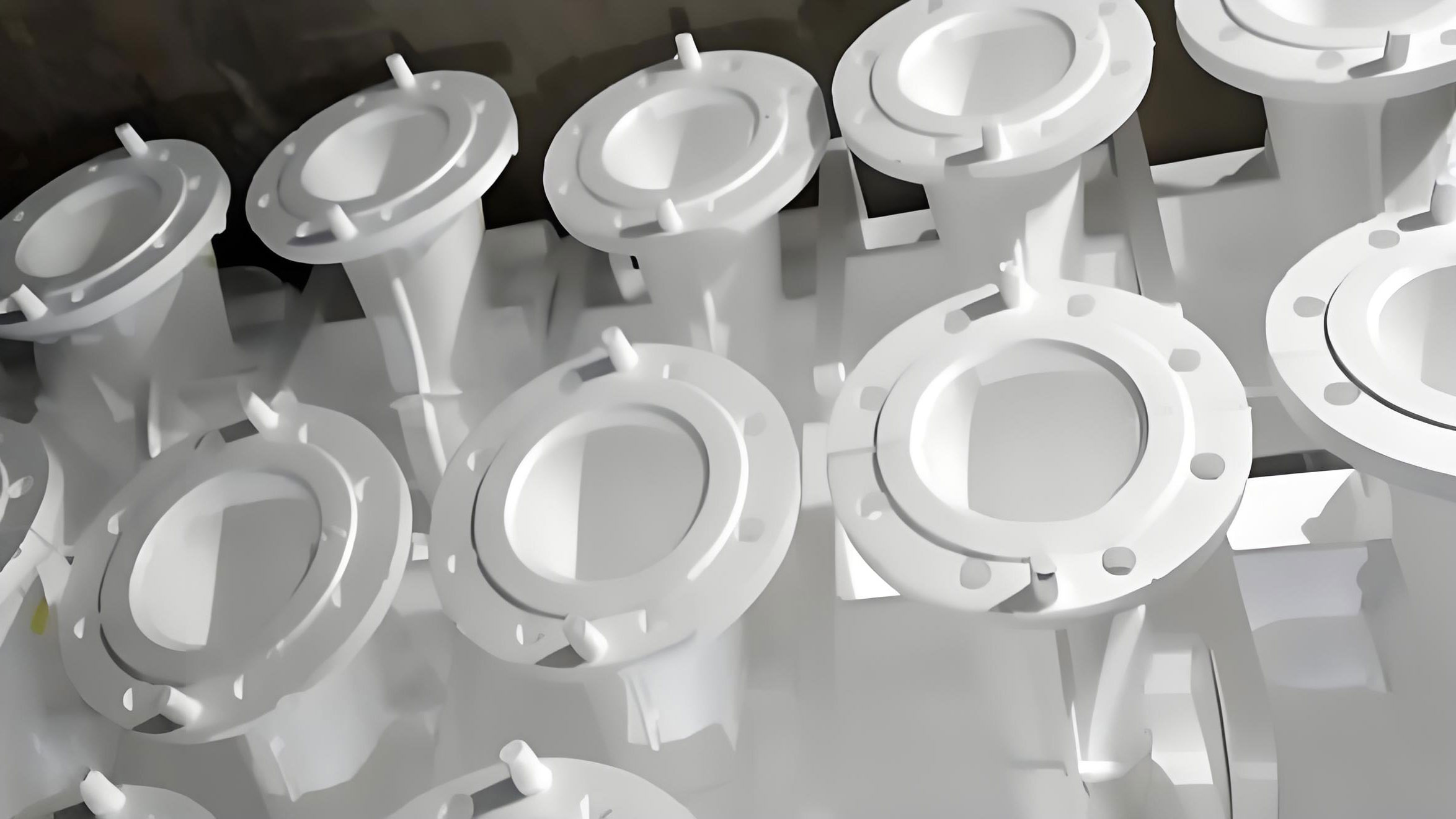
Furthermore, the gaseous products from foam decomposition in lost foam casting, if not vented rapidly, can cause back-pressure, momentarily slowing the metal flow. This start-stop progression exacerbates the folding and entrapment of the liquid pyrolysis products. Thus, wrinkling is not merely a surface appearance issue but a direct indicator of unfavorable pattern degradation dynamics during the lost foam casting process.
3. The Core Variable: Selection of Foam Pattern Material in Lost Foam Casting
The choice of polymer for the foam pattern is arguably the most significant factor in mitigating carbon defects in lost foam casting. The material’s chemical composition, molecular structure, and thermal degradation pathway dictate the nature and quantity of residues.
3.1 Conventional Materials and Their Limitations
EPS has been the workhorse material for lost foam casting due to its low cost and ease of processing. However, its high inherent carbon content (approximately 92 wt%) and tendency to produce substantial solid carbon and liquid polymer make it a prime contributor to carbon defects. Expandable Polymethyl Methacrylate (EPMMA) is another option. Its pyrolysis is different:
$$ \text{EPMMA (C}_5\text{H}_8\text{O}_2\text{)} \rightarrow 3\text{C} + 2\text{CO} \uparrow + 4\text{H}_2 \uparrow $$
EPMMA has a lower carbon content (~60 wt%) and generates more gas (CO) per mass, which can help flush decomposition products from the interface. However, it decomposes at a higher temperature than EPS, which can alter filling characteristics and sometimes lead to different defect modes if the process is not adjusted accordingly.
3.2 Copolymers: A Strategic Compromise
To balance the drawbacks of pure EPS and EPMMA, copolymer beads, typically of styrene and methyl methacrylate, have been developed. These materials aim to combine the favorable lower gasification temperature of EPS with the reduced carbon yield and higher gas evolution of EPMMA. A common industrial blend is 70% EPMMA / 30% EPS, with a carbon content around 69.6%. This material has demonstrated a significant reduction in both carburization and wrinkling defects in lost foam casting production, offering a more stable and forgiving process window.
3.3 Exploratory and Alternative Materials
Research continues to explore polymers beyond the traditional triad. Studies on Expandable Polyethylene (EPE) and Expandable Polypropylene (EPP) have shown mixed results. While EPE in lost foam casting of aluminum required substantially higher pouring temperatures to avoid misruns and sand fusion, it showed promisingly low carbon pickup in steel casting trials, despite its high density. This suggests that the polymer type and backbone structure (e.g., aliphatic vs. aromatic) may influence degradation chemistry more profoundly than carbon content alone. Biodegradable options like Expandable Polylactic Acid (EPLA) have been produced at a laboratory scale using gas saturation techniques, presenting a novel, sustainable avenue for future lost foam casting patterns, though their casting performance remains largely unvalidated.
| Material | Approx. Carbon Content | Primary Pyrolysis Gases | Relative Gas Yield | Typical Decomposition Temp. | Advantages | Disadvantages |
|---|---|---|---|---|---|---|
| EPS | ~92% | H₂, CH₄, Aromatics | Low | Lower | Low cost, easy processing | High carbon defects, more liquid residue |
| EPMMA | ~60% | CO, H₂ | High | Higher | Less carbon residue, high gas flush | Higher cost, higher pouring temp. often needed |
| EPS/EPMMA Copolymer | ~65-75% | Mix of H₂, CO, CH₄ | Medium-High | Intermediate | Balanced properties, reduced defects | Cost higher than EPS |
| EPE | ~86% | Aliphatic hydrocarbons | Varies | High | Low carburization in some steels | Very high pouring temp. needed, slow fill |
4. The Influence of Pattern Density in Lost Foam Casting
The density of the molded foam pattern, a direct result of the pre-expansion and molding process parameters, is a critical but often misunderstood variable in lost foam casting. It influences the mass of decomposable material per unit volume and the morphology of the degradation front.
The theoretical minimum density of the molded pattern \( \rho_{\text{min}}^{\text{mod}} \) is related to the pre-expanded bead density \( \rho_{\text{min}} \) and the bead mass loss during molding \( m \) (as a fraction):
$$ \rho_{\text{min}}^{\text{mod}} = \frac{\rho_{\text{min}}}{1 – m} $$
In practice, recommended densities for ferrous lost foam casting typically range from 18 to 25 kg/m³.
Lower density patterns contain less polymer mass per unit volume. During lost foam casting, this leads to:
- Lower Total Gas Generation: Less material to decompose reduces the volumetric rate of gas production.
- Reduced Gas Gap Pressure: The pressure in the gap between the metal and the receding foam is lower, minimizing the risk of mold wall collapse or “back-pressure” that can distort filling.
- Potentially Faster Fill Rates: With lower resistance from gas generation, metal flow can be more rapid and uniform, reducing the time for liquid polymer accumulation.
Consequently, lower densities (within the structural integrity limits of the pattern) are generally associated with a decreased propensity for wrinkling defects in lost foam casting of iron.
However, the relationship is not monotonic nor universally applicable to all defects. Extremely low densities may compromise pattern strength, leading to handling damage or deformation under the weight of unbonded sand. Furthermore, as indicated by studies with alternative polymers, a very low-density EPS pattern may decompose so quickly that it causes turbulent metal entry and other filling-related defects. Some experiments have even shown that for certain materials and conditions, a slightly higher density might yield better overall surface finish, underscoring that density interacts with material type. The dominant factor may shift from density to the intrinsic pyrolysis characteristics of the polymer backbone itself.
| Pattern Density | Mass of Decomposable Material | Gas Generation Rate | Gas Gap Pressure | Filling Rate | Typical Impact on Carbon Defects |
|---|---|---|---|---|---|
| Low (e.g., 18 kg/m³) | Low | Low | Low | Higher, more stable | Reduces wrinkling tendency |
| Optimal Range (e.g., 20-23 kg/m³) | Moderate | Moderate | Controllable | Stable, good control | Minimizes both wrinkling & carburization |
| High (e.g., >25 kg/m³) | High | High | High, risky | Slower, pulsation possible | Increases wrinkling & carburization risk |
5. Future Research Directions and Concluding Perspectives
Based on the synthesis of current research, the path forward for eliminating carbon defects in lost foam casting lies in a more sophisticated, multi-faceted approach to foam pattern engineering. Future work should focus on the following avenues:
1. Molecular Engineering of Pattern Polymers: The evidence that copolymer performance surpasses that of homopolymers, and that aliphatic polymers like EPE behave differently despite high carbon content, points to molecular architecture as a key lever. Research should delve deeper into designing polymers with tailored backbone structures (e.g., incorporating oxygenated groups, aliphatic chains) that promote cleaner, more complete gasification into non-condensable gases at the temperatures specific to lost foam casting. The development of novel expandable copolymers or terpolymers using advanced polymerization techniques holds great promise.
2. Integrated Process-Material Optimization: Pattern density should not be viewed in isolation. Future studies must adopt a systems approach, modeling and experimentally validating the interaction between polymer type, density, bead size distribution, coating permeability, vacuum level, and pouring temperature. The goal is to define process windows that synchronize pattern degradation rate with metal advance for different alloy systems.
3. Advanced Characterization of Degradation Products: Real-time or post-hoc analysis of the gases, liquids, and solids produced during the lost foam casting process under simulated conditions can provide direct data to calibrate pyrolysis models. Understanding the exact chemical nature of the “liquid polymer” and the conditions for its formation is crucial.
4. Sustainable Pattern Materials: The exploration of bio-sourced, biodegradable foams like EPLA aligns with broader environmental goals. Their pyrolysis chemistry and interaction with metals need thorough investigation to assess their viability as next-generation materials for lost foam casting.
In conclusion, the foam pattern is the linchpin in the lost foam casting process, whose properties dictate the thermal and chemical boundary conditions at the most critical interface. Carbon defects, primarily carburization and wrinkling, are direct manifestations of suboptimal pattern degradation. While moving from EPS to tailored copolymers and optimizing pattern density within an 18-25 kg/m³ range are established effective strategies, the future lies in a fundamental materials science approach. By designing polymers that decompose preferentially into harmless gases and by precisely controlling the process to match this decomposition, the full potential of the lost foam casting process—to produce pristine, high-integrity castings with exceptional surface quality—can be consistently realized. The journey to perfect the lost foam casting process continues to be a compelling intersection of polymer science, metallurgy, and thermal-fluid dynamics.