
As someone deeply immersed in the field of advanced manufacturing, I have witnessed a remarkable transformation in casting and forging technologies over the years. The traditional methods, which often involved lengthy, multi-step processes with significant environmental footprints, are being rapidly supplanted by innovative approaches that promise greater efficiency, sustainability, and performance. In this article, I will delve into two pivotal advancements: the “micro-casting-forging” technique and the development of large-scale nodular cast iron components. These innovations not only address longstanding industrial challenges but also pave the way for a new era in manufacturing. Through detailed analysis, including tables and formulas, I aim to provide a comprehensive overview of these technologies and their implications. The journey begins with a look at how additive manufacturing is merging with traditional metallurgy to create superior parts.
The concept of “micro-casting-forging” represents a paradigm shift in metal fabrication. Traditionally, manufacturing large forgings required separate casting, forging, heat treatment, and machining steps—a process that was not only time-consuming but also relied on massive forging presses and generated considerable pollution. Moreover, complex components often had to be forged in sections and welded together, compromising their integrity and reliability. Meanwhile, emerging additive manufacturing (3D printing) techniques offered the promise of near-net-shape production but typically resulted in as-cast microstructures lacking the forged qualities essential for high fatigue resistance. This gap led to the development of a hybrid approach that integrates casting and forging within a single, continuous operation.
In my exploration, I have found that the micro-casting-forging technique essentially performs casting and forging simultaneously during the 3D printing process. This is achieved by applying localized forging forces to each deposited layer of metal, thereby refining the grain structure and eliminating defects in real-time. The benefits are profound: it enables short-process green manufacturing, enhances mechanical properties such as strength and toughness, and improves fatigue life and reliability. This technology is particularly advantageous for difficult-to-form materials like gradient composites, high-temperature alloys, and ultra-high-strength steels. To illustrate, consider the application in blast furnace tuyeres, critical components in metallurgy, energy, and chemical industries. These tuyeres are subjected to extreme thermal shocks and abrasive wear from ore impacts, necessitating exceptional durability.
Traditionally, tuyeres manufactured via conventional methods, such as plasma spraying, had limited service lives—averaging around six months—due to poor thermal shock resistance and wear characteristics. The micro-casting-forging approach addresses this by depositing a gradient functional composite reinforcement layer on the inner wall of the tuyere. This layer significantly increases surface hardness and thermal shock resistance, extending service life by over five times compared to traditional methods. The economic impact is substantial, reducing downtime for replacements and boosting overall productivity. To quantify the improvements, we can examine key performance metrics. For instance, the fatigue life of a component can be modeled using the Basquin equation:
$$ N_f = C \cdot (\Delta \sigma)^{-m} $$
where \( N_f \) is the number of cycles to failure, \( \Delta \sigma \) is the stress range, and \( C \) and \( m \) are material constants. In micro-casting-forged parts, the refined microstructure leads to higher \( C \) values and reduced \( m \), indicating enhanced fatigue resistance. Additionally, the wear resistance can be correlated with hardness through the Archard wear equation:
$$ V = k \cdot \frac{F \cdot L}{H} $$
where \( V \) is the wear volume, \( k \) is a wear coefficient, \( F \) is the normal load, \( L \) is the sliding distance, and \( H \) is the material hardness. By increasing \( H \) through gradient materials, wear is minimized.
To further elucidate the differences between traditional and micro-casting-forging methods, I have compiled a comparative table:
| Aspect | Traditional Manufacturing | Micro-Casting-Forging |
|---|---|---|
| Process Steps | Casting, forging, heat treatment, machining (separate) | Integrated casting and forging in one step |
| Environmental Impact | High pollution and energy consumption | Reduced emissions and waste (green manufacturing) |
| Component Size Limitation | Limited by forging press capacity; often requires welding | Enables large, monolithic structures without welding |
| Microstructure | Coarse grains; potential defects from welding | Fine, equiaxed grains due to in-situ forging |
| Fatigue Performance | Lower fatigue life due to cast structure or weld seams | Improved fatigue life approaching forged quality |
| Material Flexibility | Limited to forgeable alloys | Suitable for gradient materials and hard-to-form alloys |
| Economic Efficiency | High cost from multiple steps and tooling | Lower cost through shortened process and less waste |
This table underscores the transformative potential of micro-casting-forging. However, the innovation does not stop there. Another critical area of advancement is in the realm of nodular cast iron, particularly for heavy-duty applications such as radioactive waste transport containers. Nodular cast iron, also known as ductile iron, is renowned for its combination of strength, ductility, and castability, making it ideal for large, complex components. Recently, I have followed progress in producing hundred-ton-scale nodular cast iron vessel bodies for spent fuel transport—a feat that presents unique technical hurdles.
The challenges in manufacturing such massive nodular cast iron castings are multifaceted. First, thick-section nodular cast iron components are prone to graphite degeneration, such as the formation of chunky graphite, in thermal centers if cooling is not meticulously controlled. This can severely degrade mechanical properties. Second, the material must exhibit uniform properties under low-temperature and multi-load conditions, necessitating precise alloy design and processing. Third, the casting must have high density to accommodate deep internal machining for functional features. Lastly, non-destructive testing standards for ultra-thick nodular cast iron are still evolving, adding to the complexity. The production of these castings requires enormous infrastructure: molding equipment over 8 meters tall, cranes capable of lifting 250 tons, and facilities with pits deeper than 7 meters. Moreover, handling approximately 150 tons of molten iron within a short timeframe for inoculation, spheroidization, and pouring is critical to prevent microstructural anomalies.
In my analysis, key factors for success include optimized cooling rates to avoid defects. The cooling time \( t \) for a thick section can be estimated using Fourier’s law of heat conduction:
$$ \frac{\partial T}{\partial t} = \alpha \nabla^2 T $$
where \( T \) is temperature, \( t \) is time, and \( \alpha \) is thermal diffusivity. By implementing controlled cooling strategies, such as chills or forced convection, the solidification process can be managed to minimize thermal gradients. Additionally, the mechanical properties of nodular cast iron depend heavily on nodule count and matrix structure. The yield strength \( \sigma_y \) can be expressed as:
$$ \sigma_y = \sigma_0 + k_y \cdot d^{-1/2} $$
where \( \sigma_0 \) is a friction stress, \( k_y \) is a strengthening coefficient, and \( d \) is the grain size. Fine graphite nodules and a pearlitic or ferritic matrix enhance strength and toughness. To illustrate typical properties, here is a table summarizing grades of nodular cast iron per international standards:
| Grade (e.g., EN-GJS-XXX) | ||||
|---|---|---|---|---|
| EN-GJS-400-18 | 400 | 250 | 18 | 130-180 |
| EN-GJS-500-7 | 500 | 320 | 7 | 170-230 |
| EN-GJS-600-3 | 600 | 370 | 3 | 190-250 |
| EN-GJS-700-2 | 700 | 420 | 2 | 225-305 |
| EN-GJS-800-1 | 800 | 480 | 1 | 245-335 |
These grades highlight the versatility of nodular cast iron, but for nuclear applications, additional criteria like fracture toughness at low temperatures are vital. The fracture toughness \( K_{IC} \) can be measured using standardized tests, and it correlates with nodule morphology and matrix integrity. After casting, the hundred-ton vessel body undergoes rigorous testing, including tensile, impact, fracture toughness, and metallographic analysis, to ensure compliance with stringent safety requirements.
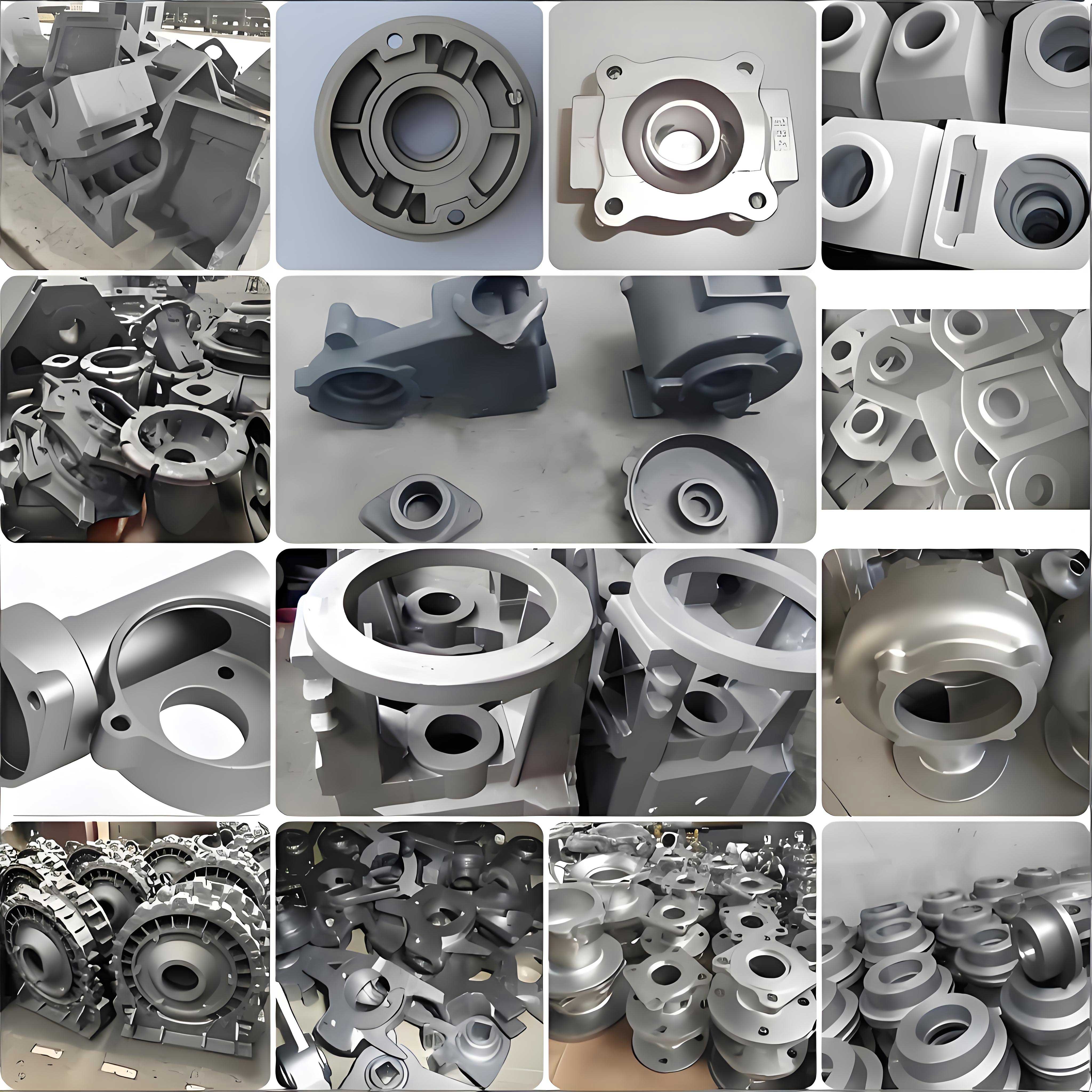
The image above provides a visual representation of a nodular cast iron casting process, showcasing the scale and complexity involved. In my experience, such imagery helps contextualize the technical discussions, though the focus remains on the underlying principles. The successful pouring of these massive nodular cast iron components marks a milestone in nuclear logistics, enabling safer and more efficient transport of spent fuel. This achievement is part of a broader trend towards leveraging advanced materials and processes in critical industries.
Beyond specific technologies, the casting industry is also evolving through knowledge-sharing platforms. I have attended various forums where experts discuss trends like green manufacturing, quality control, and the integration of new materials. For instance, topics often include the use of inorganic binders in aluminum and iron castings, the importance of recycled sand quality metrics such as electrical conductivity, and applications in 3D printing frontiers. These discussions emphasize the holistic approach needed to advance casting practices. To capture some key insights, here is a table summarizing common themes and their implications:
| Discussion Theme | Key Points | Impact on Industry |
|---|---|---|
| Green Technologies | Reduction of emissions and waste through sustainable materials and processes | Lower environmental footprint and regulatory compliance |
| Quality Control Metrics | Introduction of new indicators like electrical conductivity for sand reuse | Improved consistency and defect reduction in castings |
| Advanced Materials | Use of gradient composites and high-performance alloys in traditional and 3D printing | Enhanced component performance and lifespan |
| Process Optimization | Integration of digital tools for monitoring and controlling casting parameters | Increased efficiency and reduced scrap rates |
| Industry Collaboration | Shared research and development efforts across academia and enterprises | Accelerated innovation and technology adoption |
These themes resonate with my observations on the ground. For example, in nodular cast iron production, optimizing inoculation practices is crucial for achieving high nodule counts. The inoculation effect can be modeled using kinetics equations, where the rate of nodule formation \( R_n \) depends on factors like inoculant composition and cooling rate:
$$ R_n = A \cdot e^{-E_a / (R T)} \cdot [\text{Inoculant}]^n $$
where \( A \) is a pre-exponential factor, \( E_a \) is activation energy, \( R \) is the gas constant, \( T \) is temperature, and \( n \) is the reaction order. By fine-tuning these parameters, manufacturers can produce nodular cast iron with superior properties. Additionally, the role of computational simulations cannot be overstated. Finite element analysis (FEA) is used to predict thermal stresses during solidification, helping to design molds and cooling systems that prevent defects. The governing equation for stress \( \sigma \) in a casting is:
$$ \sigma = E \cdot \epsilon + \eta \cdot \dot{\epsilon} $$
where \( E \) is Young’s modulus, \( \epsilon \) is strain, \( \eta \) is viscosity, and \( \dot{\epsilon} \) is strain rate. Simulations allow for virtual prototyping, reducing trial-and-error costs.
Looking ahead, I believe the convergence of technologies like micro-casting-forging and advanced nodular cast iron will drive further innovations. For instance, combining gradient materials with in-situ forging could yield components with tailored properties for aerospace or automotive applications. Moreover, the push towards circular economy principles is encouraging the use of recycled materials in nodular cast iron, which not only reduces costs but also aligns with sustainability goals. The life cycle assessment (LCA) of such processes can be quantified using formulas like:
$$ \text{LCA Impact} = \sum_{i} (m_i \cdot f_i) $$
where \( m_i \) is the mass of material \( i \) and \( f_i \) is its environmental impact factor. By minimizing waste and energy use, modern casting techniques contribute positively to LCA metrics.
In conclusion, as I reflect on these developments, it is clear that the casting industry is undergoing a renaissance. The micro-casting-forging technique exemplifies how additive manufacturing can be enhanced with traditional forging principles to overcome limitations of both methods. Meanwhile, the successful production of hundred-ton nodular cast iron components demonstrates the enduring relevance of this material, especially when coupled with sophisticated process controls. Throughout this article, I have emphasized nodular cast iron due to its critical role in heavy industry and its ongoing evolution. The integration of tables and formulas, I hope, has provided a detailed, analytical perspective. The future will likely see more hybrid approaches, digital integration, and sustainable practices, all aimed at producing stronger, more reliable, and environmentally friendly castings. As someone passionate about this field, I am excited to witness and contribute to these advancements, knowing that they hold the key to solving some of manufacturing’s most persistent challenges.