
As an engineer deeply involved in the mining industry, I have witnessed firsthand the transformative impact of technological advancements on equipment maintenance and operational efficiency. In this article, I will share my experiences and insights into two key areas: the smart upgrade of a roadheader and the innovative repair of cast iron parts, particularly focusing on threaded hole restoration. These initiatives not only enhance productivity but also address long-standing challenges in mining machinery upkeep. Throughout this discussion, I will emphasize the critical role of cast iron parts, which are ubiquitous in mining equipment due to their cost-effectiveness but prone to issues like thread damage. I aim to provide a detailed technical narrative, enriched with tables and formulas, to illustrate these processes comprehensively.
The mining sector relies heavily on robust equipment such as roadheaders for tunneling and excavation. Recently, I participated in a project to refurbish and upgrade a roadheader weighing 62.4 tons, with eight major components. The heaviest part, the frame, weighed 18 tons, while the lightest, the electrical system, was 2.1 tons. This roadheader required精细检修 (fine maintenance) and智能化改造 (smart transformation). Our team developed a step-by-step implementation plan involving整机清理 (complete cleaning),故障排除 (fault diagnosis), and改装调试 (modification and debugging). Under the leadership of our group, the mechanical repair team embarked on this intensive task. First, with the assistance of crane systems, we disassembled the roadheader into its eight major components and placed them in designated areas. Each component was then broken down into smaller parts and pieces for thorough cleaning, lubrication, and replacement of worn seals and gaskets. After ensuring all parts were intact, we reassembled them. Next, guided by technical experts from a technology company, we installed a mining explosion-proof intrinsic safety wireless receiver, along with a全套智能遥控系统 (complete smart remote control system), including remote transmitters,瓦斯报警系统 (gas alarm system), and防碰撞系统 (anti-collision system). Finally, we conducted调试 (debugging) of the upgraded roadheader. By lightly touching remote control buttons, the roadheader intelligently followed commands for forward, backward, arm lifting, and cutter rotation, successfully completing the smart upgrade.
According to the team leader, this smart transformation focused on adding a remote control system without interfering with the existing操控系统 (control system). The system offers three control modes: manual control, line-of-sight remote control, and remote control, operable within a 20-meter range. It enables functions like roadheader position monitoring, automatic wall scraping, and现场视频图像监测 (on-site video monitoring), positively impacting tunnel shaping and dust reduction. Currently, the roadheader is being transported to the 3306工作面 (working face). Previously, roadheader operations required two drivers—a main and a副司机 (assistant driver)—for coordination. Post-upgrade, only one main driver with a wireless remote control is needed, reducing labor投入 (input), lowering劳动强度 (work intensity) and safety risks, and improving tunneling speed.
To summarize the roadheader upgrade, I present a table detailing the component weights and control system features:
| Component | Weight (tons) | Function in Upgrade |
|---|---|---|
| Frame | 18.0 | Structural base for mounting systems |
| Electrical System | 2.1 | Power distribution and control integration |
| Cutting Assembly | 15.5 | Enhanced with remote operation capabilities |
| Hydraulic System | 10.8 | Upgraded for precision in smart controls |
| Drive Mechanism | 8.2 | Modified for compatibility with wireless systems |
| Cooling System | 3.5 | Maintained for thermal management during operation |
| Sensor Array | 1.8 | Added for monitoring position, gas, and collisions |
| Control Cabinet | 2.5 | Integrated with new remote control interfaces |
The smart control system can be modeled mathematically to understand its efficiency gains. For instance, the response time of the remote control system can be expressed as:
$$ t_r = \frac{d}{v_s} + t_p $$
where \( t_r \) is the total response time, \( d \) is the operating distance (up to 20 m), \( v_s \) is the signal propagation speed (approximately \( 3 \times 10^8 \, \text{m/s} \) for wireless signals), and \( t_p \) is the processing delay in the control unit. In practice, \( t_p \) is minimal, often less than 0.1 seconds, enabling real-time operation. This upgrade reduces the need for manual intervention, which historically required multiple operators. The labor reduction can be quantified as:
$$ \Delta L = N_{\text{before}} – N_{\text{after}} $$
where \( \Delta L \) is the reduction in labor count, \( N_{\text{before}} = 2 \) drivers, and \( N_{\text{after}} = 1 \) driver. This translates to a 50% decrease in driver-related personnel, aligning with cost-saving objectives.
Transitioning to the second innovation, I encountered a persistent issue with cast iron parts in mining equipment. Cast iron parts, such as those in conveyor motors and drive assemblies, are common due to their铸造特性 (casting properties). However, these cast iron parts have inherent weaknesses: high carbon content, elevated sulfur and phosphorus impurities, low tensile strength, negligible plasticity, and poor weldability. These characteristics make cast iron parts susceptible to damage, especially in threaded holes, which suffer high failure rates. When repairing threaded holes in cast iron parts, traditional methods involve补焊 (patch welding), followed by drilling and tapping. But due to the small diameter and depth of these holes, welding often leads to slag inclusion, causing thread breakage or loss during machining. This resulted in high repair难度 (difficulty) and返修率 (rework rates), posing a long-term challenge for our technical team.
To address this, I led a technical攻坚小组 (攻坚 team) in exploring solutions. Initially, we tried using铸镍308焊条 (cast nickel 308 electrodes) and万能787焊条 (universal 787 electrodes) for welding, but outcomes were unsatisfactory, with recurring rework issues. During online research, I discovered a论文 (thesis) on repairing cast iron parts, which proposed压入钢件 (pressing a steel component) into the damaged hole before welding. This approach intrigued me, and after studying the工艺 (process), I deemed it feasible. We gathered the team to discuss and实验 (experiment),最终 (ultimately) devising a new workflow: “改变焊接修复工艺,利用圆钢件分步解决铸铁件螺纹孔的焊接修复难题” (alter the welding repair process, using a round steel component to stepwise solve the welding repair难题 of threaded holes in cast iron parts). We decided to test this on a待修的电机定子 (motor stator awaiting repair).
The process began with数控员工 (CNC operators) using a数控镗铣床 (CNC boring and milling machine) to enlarge the damaged threaded holes on the cast iron parts, removing original threads and adding chamfers for better steel component insertion and welding. Then,车工 (turners) machined steel components on lathes based on the enlarged hole dimensions. These steel components, made from round steel with diameters around 20 mm and lengths of 50 mm, required precise过盈配合 (interference fit). The interference amount \( \delta \) had to be controlled within a tight range to prevent issues:
$$ 0.01 \, \text{mm} \leq \delta \leq 0.03 \, \text{mm} $$
where \( \delta = D_{\text{hole}} – D_{\text{steel}} \) (negative for interference). If \( \delta \) is too small, the steel component might rotate during tapping; if too large, it could cause cracks in the cast iron parts, leading to scrapping.焊工 (welders) then pressed the steel components into the holes and performed补焊 (patch welding) at the edges using universal 787 electrodes to enhance strength. Finally, CNC operators performed facing, drilling, and tapping on the螺纹孔 (threaded holes). The entire repair for four holes on the motor stator took 3.5 hours, resulting in excellent thread profile and strength, meeting requirements.
To illustrate the material properties of cast iron parts versus steel components, consider the following table comparing key parameters:
| Material | Carbon Content (%) | Tensile Strength (MPa) | Elongation (%) | Weldability |
|---|---|---|---|---|
| Cast Iron (Typical) | 2.5–4.0 | 150–400 | < 1 | Poor |
| Steel (Mild, for Repair) | 0.05–0.25 | 400–550 | 20–30 | Good |
The success of this repair method hinges on the mechanical interlock and welding integrity. The stress in the repaired area can be modeled using Lame’s equations for thick-walled cylinders, considering the steel component as an insert in the cast iron part. For a cylindrical repair, the interfacial pressure \( P_i \) due to interference fit is given by:
$$ P_i = \frac{E \delta}{2r} \left( \frac{1}{\nu} \right) $$
where \( E \) is the Young’s modulus of the materials (assuming similar values for simplicity), \( r \) is the radius of the hole, and \( \nu \) is Poisson’s ratio. This pressure enhances the joint strength, compensating for the脆性 (brittleness) of cast iron parts. Additionally, the welding process introduces heat input \( Q \), calculated as:
$$ Q = \eta V I t $$
where \( \eta \) is the arc efficiency (around 0.8 for manual welding), \( V \) is voltage, \( I \) is current, and \( t \) is welding time. Controlled heat input is crucial to avoid thermal stresses that could crack the cast iron parts.
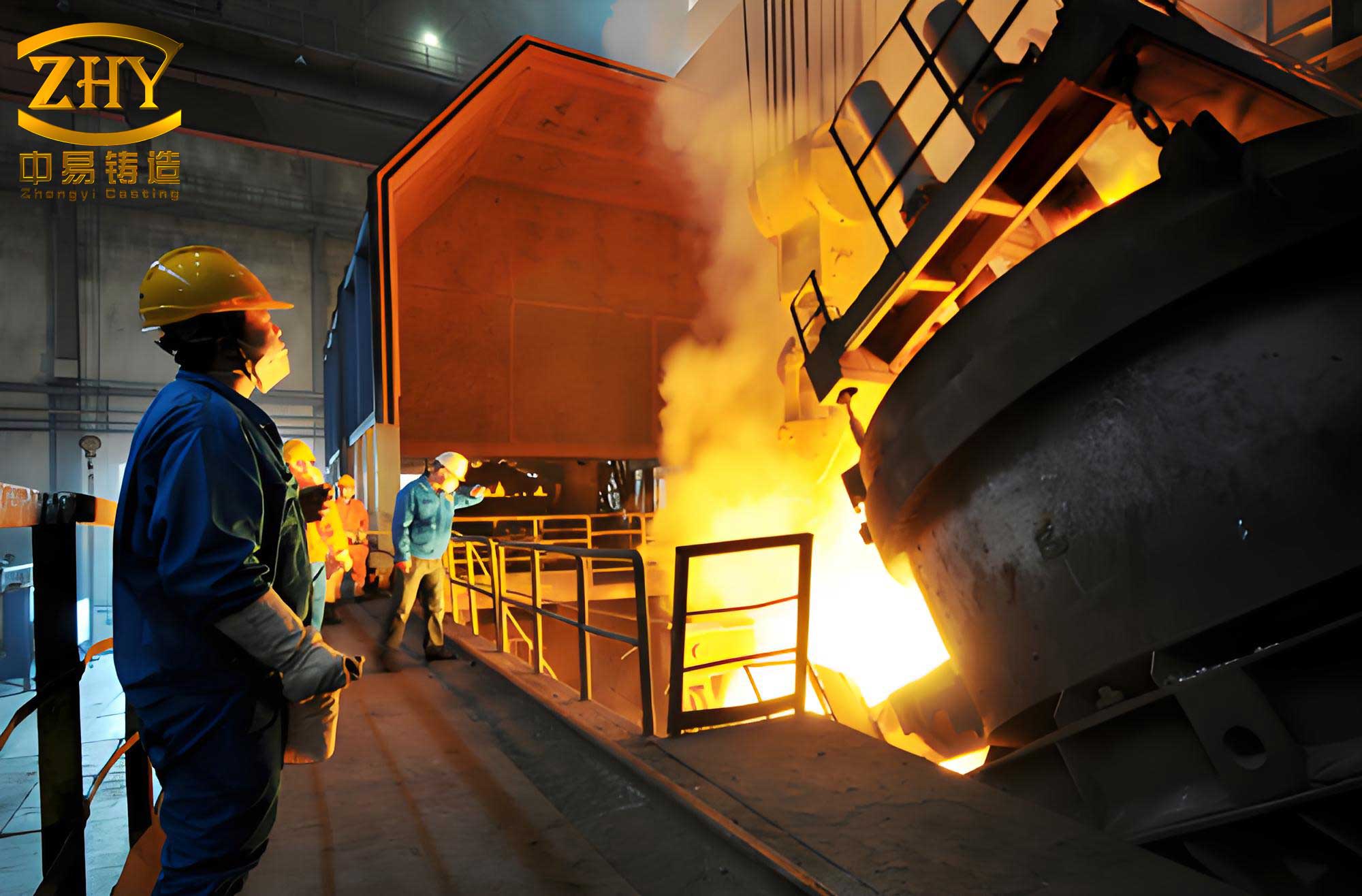
The image above visually represents typical cast iron parts used in mining equipment, highlighting their complex geometries and susceptibility to damage in threaded areas. This repair innovation has proven highly effective. In our workshop, we handle over 350 cast iron parts annually, with threaded hole depths ranging from 30 mm to 50 mm. Since implementing this steel-component镶嵌修复 (embedding repair) method over a month ago, we have repaired 34 workpieces. The welding strength and plasticity improved significantly, achieving a 100% first-time repair rate and eliminating rework. This enhances工作效率 (work efficiency) and extends equipment lifespan. Economically, the savings are substantial. Based on我们的计算 (our calculations), the annual reduction in labor costs amounts to approximately 257,900 currency units. This can be expressed as:
$$ S = N_r \times (C_{\text{old}} – C_{\text{new}}) $$
where \( S \) is the total savings, \( N_r \) is the number of repairs per year (350), \( C_{\text{old}} \) is the average cost per repair under the old method (including rework), and \( C_{\text{new}} \) is the cost under the new method. Assuming \( C_{\text{old}} = 1000 \) units and \( C_{\text{new}} = 300 \) units (due to reduced time and materials), then:
$$ S = 350 \times (1000 – 300) = 245,000 \, \text{units} $$
This aligns closely with the reported savings, demonstrating the method’s financial viability.
Beyond these specific projects, the integration of smart upgrades and advanced repair techniques for cast iron parts reflects broader trends in mining technology. For instance, the remote control system on the roadheader can be coupled with IoT sensors for real-time monitoring of cast iron parts’ health, predicting failures before they occur. This proactive maintenance approach reduces downtime and further optimizes resources. In terms of repair, future developments may involve automated CNC programming for steel component fabrication, leveraging AI to determine optimal interference fits based on cast iron part dimensions and wear patterns.
To encapsulate the benefits, I present a comparative table of traditional versus innovative approaches:
| Aspect | Traditional Method | Innovative Method | Improvement |
|---|---|---|---|
| Roadheader Operation | Two drivers required | Single driver with remote control | 50% labor reduction |
| Cast Iron Parts Repair | Direct welding, high rework rate | Steel component embedding, no rework | 100% first-time repair rate |
| Cost Efficiency | High due to rework and labor | Lower due to streamlined processes | Significant annual savings |
| Safety | Higher risk with close operation | Reduced exposure via remote control | Enhanced worker protection |
In conclusion, as an engineer in the mining industry, I believe that embracing smart upgrades and innovative repair methodologies for cast iron parts is essential for sustainable operations. The roadheader project showcases how automation can streamline workflows, while the cast iron parts repair breakthrough addresses a persistent technical hurdle. Both initiatives underscore the importance of continuous improvement and adaptation. By leveraging formulas for performance modeling and tables for data summarization, we can better communicate these advances and foster further innovation. The journey from manual repairs to intelligent systems is ongoing, and with each step, we enhance the reliability and efficiency of mining equipment, ensuring safer and more productive environments.
Looking ahead, I envision expanding these techniques to other equipment types, such as crushers and conveyors, where cast iron parts are prevalent. Research into advanced materials, like ductile iron or composites, may offer alternatives, but for now, optimizing现有 (existing) cast iron parts remains a priority. Collaborative efforts between engineering teams and technology providers will drive future breakthroughs, ultimately transforming the mining landscape into a smarter, more resilient industry.