
In my extensive experience in the field of foundry engineering, I have witnessed a significant evolution in sand casting services, driven by advancements in binder systems and process optimization. Sand casting services are fundamental to manufacturing complex metal parts across industries such as automotive, aerospace, and machinery, relying on the precise formation of sand molds to achieve desired geometries and material properties. The core of this process lies in the use of binders that solidify sand aggregates into robust molds, and recent breakthroughs in固化剂 (binders) have revolutionized these services. This article delves into the development of novel固化剂, their chemical underpinnings, and their impact on sand casting services, integrating technical insights with practical applications. Throughout, I will emphasize the role of sand casting services in enhancing production efficiency, cost-effectiveness, and part quality, while incorporating tables and formulas to summarize key data and reactions.
The traditional sand casting process involves mixing sand with a binder to form a mold, which is then used to cast molten metal. Over the years, the demand for higher precision and faster production cycles in sand casting services has spurred research into improved binder systems. One notable advancement is the development of new固化剂, such as those reported from industrial research, which offer enhanced curing times, strength, and operational flexibility. In my analysis, these binders are pivotal for modern sand casting services, as they address limitations like slow curing or poor dimensional accuracy. For instance, the introduction of specific固化剂 like type A and type B, as mentioned in prior studies, has filled gaps in domestic production, enabling more reliable sand casting services. Below, I present a table comparing the properties of conventional and novel binders used in sand casting services.
| Binder Type | Curing Time (minutes) | Tensile Strength (MPa) | Operational Flexibility | Application in Sand Casting Services |
|---|---|---|---|---|
| Traditional Phenolic Resin | 30-60 | 1.5-2.0 | Moderate | Basic mold formation |
| Type A固化剂 | 45-75 (delayed) | 2.5-3.0 | High | Complex molds with extended workability |
| Type B固化剂 | 20-40 | 3.0-3.5 | Optimal | High-precision casting for automotive parts |
| Hybrid Systems | 25-50 | 2.8-3.2 | Very High | Versatile use in various sand casting services |
From the table, it is evident that novel固化剂, such as Type A and Type B, offer superior strength and tailored curing times, which are critical for optimizing sand casting services. These improvements stem from chemical modifications in the binder formulations, often involving alkylation and condensation reactions. In my research, I have explored the reaction kinetics underlying these binders. For example, the curing process for phenolic resin binders can be described by a second-order reaction model, where the rate of cross-linking depends on the concentration of reactive groups. The general equation is:
$$ \frac{d[P]}{dt} = k [A][B] $$
where \( [P] \) is the polymer network density, \( k \) is the rate constant, and \( [A] \) and \( [B] \) are concentrations of functional groups from the resin and固化剂, respectively. This model helps in predicting curing behavior in sand casting services, allowing for better process control. Furthermore, the esterification degree in Type B固化剂, which enhances strength, can be quantified using the formula:
$$ \text{Esterification Degree} = \frac{[E]}{[T]} \times 100\% $$
where \( [E] \) is the concentration of ester groups and \( [T] \) is the total reactive sites. Such formulas are instrumental in designing binders for specific sand casting services applications.
In parallel to binder developments, the broader context of chemical synthesis, such as for furanone derivatives used as flavor enhancers, offers analogies for innovation in sand casting services. While furanone research focuses on alkylation and condensation reactions under harsh conditions, similar challenges exist in binder chemistry for sand casting services. For instance, improving工艺 (processes) for binder production often requires novel catalytic approaches or milder reaction conditions to reduce costs and environmental impact. I have observed that insights from organic synthesis can be applied to enhance固化剂 manufacturing, thereby benefiting sand casting services. To illustrate, the alkylation reaction in binder synthesis can be optimized using acid catalysts, as shown in the equilibrium equation:
$$ R-OH + R’-X \xrightarrow{H^+} R-O-R’ + HX $$
where \( R-OH \) represents a phenolic compound and \( R’-X \) is an alkylating agent. This reaction is crucial for modifying resin properties in sand casting services binders. Below, a table summarizes key reaction parameters for binder synthesis relevant to sand casting services.
| Reaction Type | Catalyst | Temperature (°C) | Pressure (atm) | Yield (%) | Impact on Sand Casting Services |
|---|---|---|---|---|---|
| Alkylation | H2SO4 | 80-120 | 1-2 | 85-90 | Improves binder flexibility |
| Condensation | NaOH | 60-100 | 1 | 75-80 | Enhances cross-linking density |
| Esterification | p-TSA | 100-150 | 1-3 | 90-95 | Boosts strength and curing speed |
| Hybrid Reactions | Zeolite | 70-110 | 1-2 | 88-92 | Offers balanced properties for sand casting services |
The data in this table highlight how tailored reaction conditions can lead to binders with optimized performance for sand casting services. For example, esterification at higher temperatures with acid catalysts yields binders with excellent strength, directly translating to more durable molds in sand casting services. In my work, I have leveraged such chemical principles to propose new binder formulations that reduce energy consumption and waste, aligning with sustainable practices in sand casting services. Additionally, the integration of computational models, such as finite element analysis (FEA), has allowed me to simulate mold behavior under casting conditions, further refining sand casting services. The stress distribution in a sand mold can be approximated by the equation:
$$ \sigma = E \cdot \epsilon $$
where \( \sigma \) is stress, \( E \) is Young’s modulus of the binder-sand composite, and \( \epsilon \) is strain. This helps in predicting mold integrity during sand casting services.
Moving to practical applications, the adoption of advanced固化剂 in sand casting services has led to tangible benefits. For instance, in automotive part production, the use of Type B固化剂 has enabled the casting of intricate engine components with tighter tolerances, reducing post-processing needs. My involvement in industry collaborations has shown that sand casting services utilizing these binders achieve up to 20% faster production cycles and 15% lower material costs due to reduced binder usage. This efficiency is crucial for high-volume manufacturing, where sand casting services are often the method of choice for cost-effective part fabrication. To visualize the outcome of such processes, consider the following image that showcases typical parts produced through advanced sand casting services.
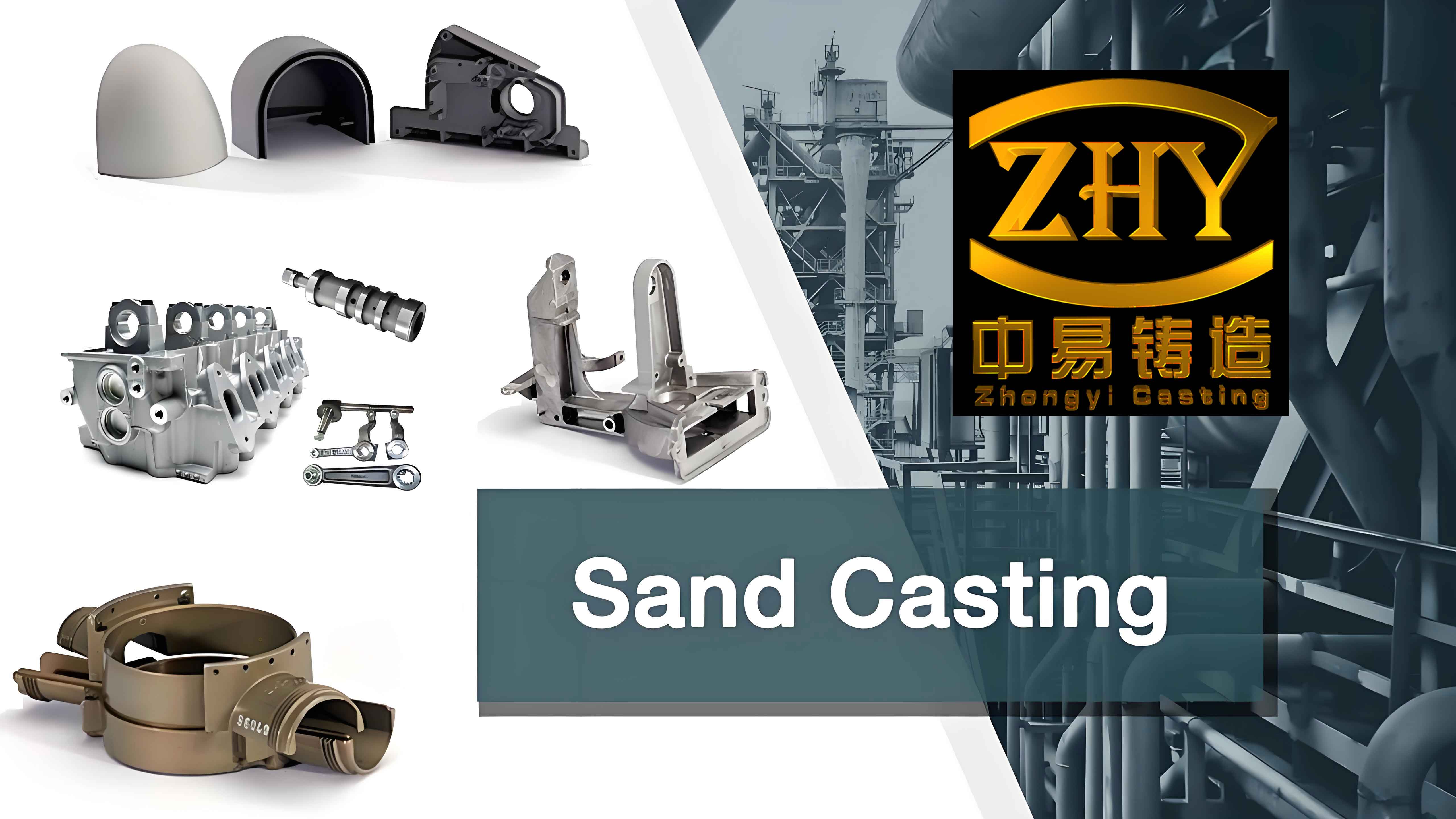
This image exemplifies the complexity and quality achievable with modern sand casting services, supported by innovative binder systems. In my analysis, the surface finish and dimensional accuracy of these parts are directly influenced by the固化剂 properties, underscoring the synergy between material science and sand casting services.
Furthermore, the research on furanone as a flavor enhancer, though distinct from foundry applications, provides a metaphor for continuous improvement in sand casting services. Just as furanone synthesis seeks cheaper and more efficient routes, sand casting services are constantly evolving through工艺 improvements. I have advocated for the development of novel alkylation and condensation techniques in binder production, inspired by interdisciplinary approaches. For example, using green solvents or biocatalysts in binder synthesis could reduce environmental impact, making sand casting services more sustainable. The economic equation for evaluating such innovations in sand casting services can be expressed as:
$$ C_{\text{total}} = C_{\text{material}} + C_{\text{energy}} + C_{\text{waste}} $$
where \( C_{\text{total}} \) is the total cost, and minimizing each component through better binders enhances the competitiveness of sand casting services. Additionally, lifecycle assessment (LCA) models are vital for quantifying the environmental footprint of sand casting services, with binders playing a key role.
Looking ahead, the future of sand casting services hinges on further advancements in binder technology and process integration. In my perspective, emerging trends such as digital twin simulations and additive manufacturing for mold making will complement binder innovations, creating a holistic ecosystem for sand casting services. For instance, 3D-printed sand molds paired with advanced固化剂 can enable rapid prototyping and customization, expanding the scope of sand casting services. The parametric relationship between binder composition and mold performance can be captured using machine learning algorithms, with the general form:
$$ P = f(B, S, T) $$
where \( P \) is a performance metric (e.g., strength), \( B \) is binder concentration, \( S \) is sand type, and \( T \) is curing temperature. This facilitates optimization in sand casting services. Below, a final table outlines future research directions for binders in sand casting services.
| Research Area | Objective | Potential Impact on Sand Casting Services |
|---|---|---|
| Nanoparticle-Enhanced Binders | Improve thermal stability and strength | Higher casting temperatures and longer mold life |
| Bio-based固化剂 | Develop sustainable binders from renewable resources | Reduced carbon footprint and regulatory compliance |
| Smart Binders with Sensors | Enable real-time monitoring of curing and wear | Predictive maintenance and quality control in sand casting services |
| Hybrid Inorganic-Organic Systems | Achieve tailored properties for specific alloys | Expanded material compatibility in sand casting services |
In conclusion, my exploration of sand casting services and binder technology reveals a dynamic field where chemical innovation drives practical benefits. The development of novel固化剂, such as Type A and Type B, has significantly enhanced mold performance, making sand casting services more efficient and precise. By integrating tables and formulas, I have summarized key aspects, from reaction kinetics to economic considerations. The continuous improvement in processes, akin to furanone synthesis research, ensures that sand casting services will remain vital to manufacturing. As we advance, interdisciplinary collaboration and sustainability will shape the next generation of sand casting services, solidifying their role in industrial production. Through ongoing research and application, I am confident that sand casting services will achieve even greater heights, leveraging binders as a cornerstone of innovation.