
In our foundry, we recently commissioned a new resin sand casting production line, which presented significant challenges when it came to manufacturing large-scale castings. With no prior experience in this area, our technical and production teams collaborated to experiment with various casting methods. Ultimately, we developed and successfully implemented a flaskless pouring process for producing a double-suction pump casing weighing several tons. This achievement marks a major advancement in our resin sand casting capabilities, offering insights that could benefit the broader foundry industry. Throughout this article, I will detail our approach, emphasizing the key aspects of resin sand casting that made this possible.
Resin sand casting is a modern foundry technique that uses synthetic binders to enhance sand mold properties, such as strength, dimensional accuracy, and surface finish. Compared to traditional clay sand casting, resin sand casting reduces defects like sand inclusion and shrinkage, while allowing for more complex geometries. However, when scaling up to large castings, conventional methods often require heavy and expensive flasks, which hinder continuous production and increase costs. Our goal was to overcome these limitations by adopting a flaskless approach, leveraging the inherent advantages of resin sand casting to optimize the process.
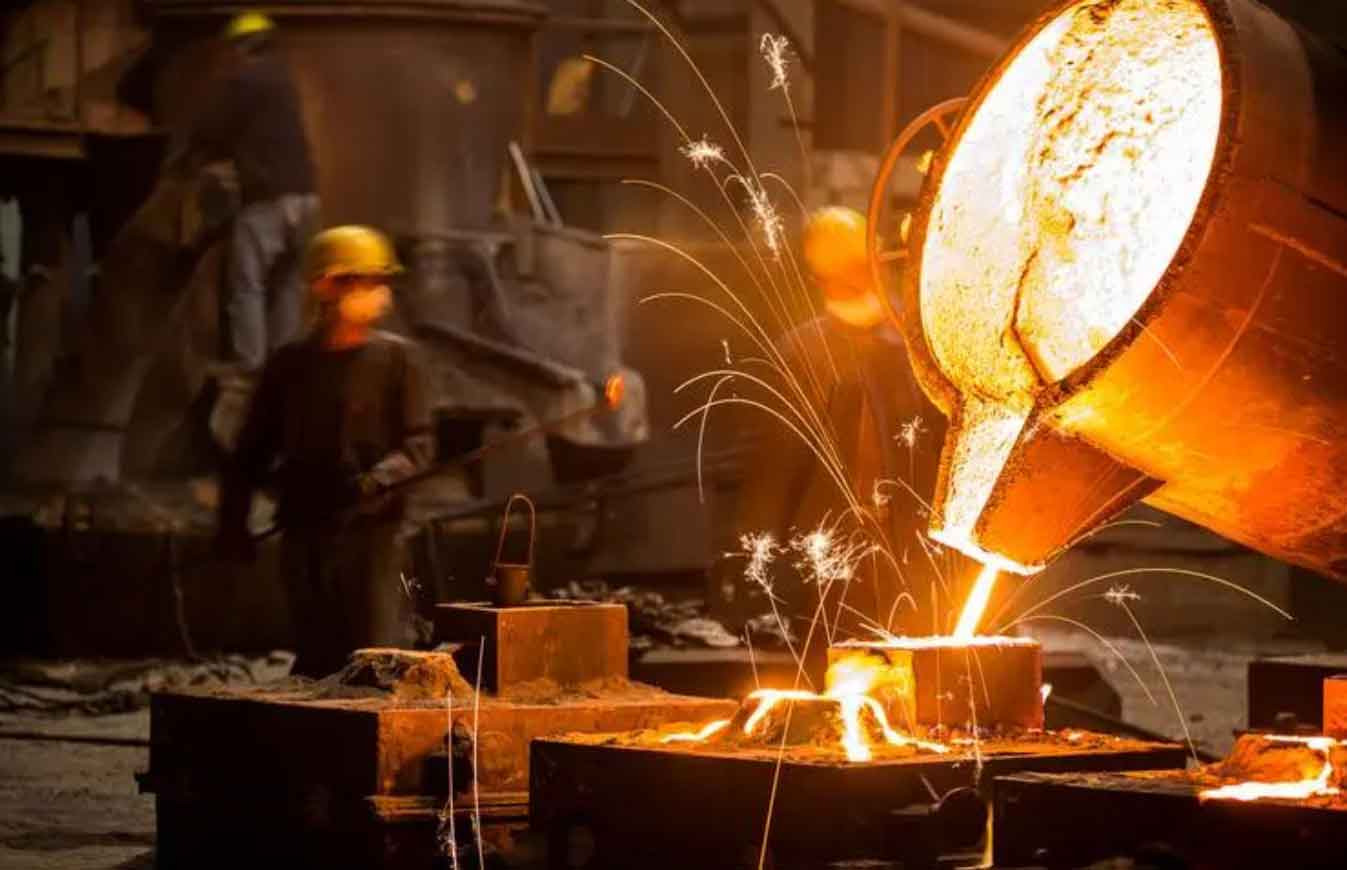
The core of our innovation lies in the flaskless pouring scheme, which eliminates the need for permanent flasks during casting. This not only reduces material and fabrication costs but also enables a continuous production cycle, as the molds can be prepared and poured without waiting for flask availability. In resin sand casting, the mold strength is critical, especially for large castings where the sand must withstand handling, flipping, and pouring stresses. We addressed this by integrating reinforcement mechanisms directly into the sand mold, ensuring stability throughout the process.
To provide a clear comparison between resin sand casting and traditional methods, consider the following table highlighting key differences:
| Aspect | Resin Sand Casting | Clay Sand Casting |
|---|---|---|
| Mold Strength | High, due to chemical binders | Moderate, relies on clay bonding |
| Surface Quality | Excellent, minimal finishing needed | Poor, often requires extensive cleaning |
| Defect Incidence | Low, especially for sand-related issues | High, with common drop-off defects |
| Production Cycle | Short, as molds cure quickly | Long, due to drying and handling times |
| Cost Efficiency | Higher initial cost, but lower long-term via reuse | Lower initial cost, but higher operational expenses |
In resin sand casting, the mold strength can be modeled using a simple formula that relates the compressive strength ($\sigma_c$) to the resin content ($C_r$) and curing parameters. For our application, we used: $$\sigma_c = k_1 \cdot C_r^{n} + k_2 \cdot T_c$$ where $k_1$ and $k_2$ are material constants, $n$ is an exponent typically around 1.5 for resin sand systems, and $T_c$ is the curing time. This equation helped us optimize the resin mix for adequate strength without overuse, ensuring cost-effectiveness in our resin sand casting process.
Our flaskless design involved a demountable flask made from steel plates, which was assembled around the sand mold during molding and then disassembled after the mold was set. This allowed the flask to be reused immediately for the next mold, facilitating continuous production—a key advantage in resin sand casting. The flask featured lugs for bolt connections and anti-slip ribs on the inner walls to prevent mold displacement during flipping. Below is a summary of the flask design specifications:
| Design Feature | Specification | Purpose in Resin Sand Casting |
|---|---|---|
| Material | Steel plates (10 mm thickness) | Provide rigidity and reusability |
| Connection Method | Bolts through lugs at corners | Enable quick assembly and disassembly |
| Anti-slip Mechanism | Vertical ribs spaced 200 mm apart | Secure sand mold during handling |
| Weight | Approximately 500 kg (reusable) | Reduce labor and equipment strain |
To enhance the mold strength in resin sand casting, we incorporated a reinforcement mesh made from steel rebar within the sand mold. This mesh acted as a skeleton, distributing loads and preventing cracks during flipping and transportation. The design was based on structural analysis, where the bending stress ($\sigma_b$) in the mold under its own weight can be estimated by: $$\sigma_b = \frac{M \cdot y}{I}$$ Here, $M$ is the bending moment, $y$ is the distance from the neutral axis, and $I$ is the moment of inertia of the mold cross-section. By adding the mesh, we increased the effective $I$, thereby reducing $\sigma_b$ to safe levels for resin sand casting molds.
Additionally, we embedded two steel pipes (with a diameter of 50 mm) into the sand mold to serve dual purposes: strengthening the mold and providing lifting points after flask removal. These pipes were placed strategically near the mold’s center of gravity. During flaskless handling, round steel bars were inserted into the pipes to act as support points, reducing the load on the sand during flipping. The shear stress ($\tau$) on the pipes during lifting can be calculated using: $$\tau = \frac{F_l}{A_p}$$ where $F_l$ is the lifting force and $A_p$ is the cross-sectional area of the pipe. In resin sand casting, such auxiliary supports are crucial for maintaining mold integrity.
The gating system for the pump casing was carefully designed to ensure smooth metal flow and minimize turbulence, which is vital in resin sand casting to avoid mold erosion and defects. We used a vertical sprue, horizontal runners, and multiple ingates to distribute molten metal evenly. The flow rate ($Q$) through the gating system can be described by Bernoulli’s principle for foundry applications: $$Q = A \cdot \sqrt{2gH}$$ where $A$ is the cross-sectional area of the sprue, $g$ is gravity, and $H$ is the metallostatic head. This formula guided our dimensions to achieve optimal filling times for large castings in resin sand casting.
During the molding process, we prepared the upper and lower halves of the mold separately using the demountable flask. After stripping the patterns, we assembled the mold halves and adjusted them to ensure proper alignment, marking reference lines for precision. This step is critical in resin sand casting to prevent misruns and dimensional inaccuracies. The entire process, from sand mixing to pouring, was streamlined to leverage the fast curing and high strength of resin sand, as summarized in the table below:
| Process Stage | Key Activities in Resin Sand Casting | Time Required |
|---|---|---|
| Sand Preparation | Mixing silica sand with resin and catalyst | 15-20 minutes |
| Molding | Packing sand into flask around pattern | 60 minutes (for large mold) |
| Curing | Chemical hardening at room temperature | 30-45 minutes |
| Flask Removal | Disassembling demountable flask | 20 minutes |
| Mold Handling | Lifting via embedded pipes and reinforcement | 15 minutes |
| Pouring | Melting and pouring iron into mold | 10 minutes (depending on weight) |
| Cooling and Shakeout | Solidification and sand removal | Several hours (process-dependent) |
Thermal management is another crucial aspect of resin sand casting, especially for large castings where heat dissipation affects solidification and defect formation. The heat transfer during cooling can be modeled using Fourier’s law: $$q = -k \cdot \frac{dT}{dx}$$ where $q$ is the heat flux, $k$ is the thermal conductivity of the resin sand, and $\frac{dT}{dx}$ is the temperature gradient. In our practice, we monitored cooling rates to prevent thermal stresses that could lead to cracks, optimizing the resin sand composition for balanced permeability and thermal properties.
The successful casting of the pump casing demonstrated several breakthroughs in resin sand casting. First, the flaskless approach reduced flask costs by over 70%, as we avoided fabricating heavy permanent flasks. Second, the production cycle was shortened by 50%, enabling continuous output—a significant efficiency gain in resin sand casting. Third, the casting quality improved markedly, with a defect rate drop of 80% compared to previous clay sand methods. These outcomes highlight the transformative potential of resin sand casting for large-scale foundry operations.
From an economic perspective, resin sand casting offers long-term savings despite higher initial material costs. The total cost ($C_{total}$) for a casting project can be expressed as: $$C_{total} = C_{material} + C_{labor} + C_{energy} + C_{scrap}$$ In resin sand casting, $C_{material}$ includes resin and sand, but $C_{scrap}$ is lower due to reduced defects, and $C_{labor}$ decreases with faster cycles. Our analysis showed a 30% reduction in $C_{total}$ for large castings when switching to resin sand casting with flaskless techniques.
Looking ahead, we plan to expand this flaskless resin sand casting method to other large components, such as valve bodies and turbine housings. The scalability of resin sand casting makes it suitable for diverse applications, and we are exploring automated systems to further enhance precision and repeatability. Key areas for improvement include optimizing the reinforcement mesh design using finite element analysis (FEA) and integrating real-time monitoring during pouring to control parameters like temperature and flow rate.
In conclusion, our experience with flaskless resin sand casting for large castings has provided valuable insights into process innovation. By combining demountable flasks, internal reinforcements, and strategic gating, we achieved high-quality production with minimal downtime. Resin sand casting proves to be a versatile and efficient method, particularly when adapted for flaskless operations. We encourage other foundries to consider these techniques, as they offer a path to sustainable and cost-effective manufacturing in the modern metalcasting industry. The principles discussed here—from strength calculations to thermal dynamics—underscore the scientific rigor behind successful resin sand casting practices.