
As a design engineer specializing in automotive components, I have witnessed firsthand the transformative impact of integrating advanced software tools with traditional manufacturing processes. In this article, I will delve into the comprehensive design workflow for aluminum alloy wheels, emphasizing the critical role of sand casting manufacturers in bringing these designs to life. The fusion of Computer-Aided Design (CAD), Computer-Aided Engineering (CAE), and casting expertise not only accelerates development cycles but also enhances product quality, making it indispensable for modern sand casting manufacturers seeking competitive advantages.
The design journey begins with conceptualization, where aesthetic and functional requirements are balanced. For aluminum wheels, factors such as weight reduction, structural integrity, and aerodynamic efficiency are paramount. Here, collaboration with sand casting manufacturers is crucial early on, as their input on manufacturability guides design choices. For instance, draft angles, wall thickness uniformity, and gating system feasibility must be considered to avoid defects during casting. This synergy ensures that designs are not only innovative but also viable for high-volume production by sand casting manufacturers.
To streamline this process, I employ a multi-software approach, leveraging the strengths of AutoCAD for 2D drafting, UG (now Siemens NX) for 3D modeling, and ANSYS for finite element analysis (FEA). The seamless data exchange between these tools, often via formats like IGES or STEP, eliminates bottlenecks. Below is a table summarizing their roles and how they interface with sand casting manufacturers:
| Software | Primary Function | Advantage for Design | Relevance to Sand Casting Manufacturers |
|---|---|---|---|
| AutoCAD | 2D Sketching and Drafting | Precise dimensioning and annotation for technical drawings | Provides foundational blueprints that sand casting manufacturers use for pattern-making and mold preparation. |
| UG (Siemens NX) | 3D Parametric and Surface Modeling | Complex geometry creation, including sculpted wheel spokes and rims | Enables simulation of casting processes (e.g., flow analysis) to optimize designs for sand casting manufacturers. |
| ANSYS | Finite Element Analysis (FEA) | Structural, thermal, and dynamic simulation to validate performance | Ensures wheels meet safety standards, reducing prototyping costs for sand casting manufacturers. |
The 2D design phase in AutoCAD involves creating detailed sketches of the wheel’s cross-section, bolt patterns, and offset specifications. These drawings serve as the basis for 3D modeling and are essential for sand casting manufacturers to develop precise molds. For example, the wheel’s mounting surface and bead seat geometry must be accurately defined to ensure compatibility with vehicle hubs and tires. By incorporating feedback from sand casting manufacturers, I can adjust tolerances to account for shrinkage and distortion during casting, which is typically around 1-2% for aluminum alloys. This collaboration minimizes rework and enhances yield rates for sand casting manufacturers.
Transitioning to 3D modeling in UG, I construct a digital twin of the wheel. This involves extruding the 2D profile, adding complex features like spokes, and applying fillets for stress reduction. The model’s accuracy is vital for sand casting manufacturers, as it directly influences the mold cavity. UG’s advanced tools allow for topology optimization, where material is redistributed to achieve lightweight designs without compromising strength. The objective function for such optimization can be expressed as:
$$ \text{Minimize } M = \int_V \rho \, dV \quad \text{subject to } \sigma_{\text{max}} \leq \sigma_{\text{yield}}, $$
where \( M \) is the mass, \( \rho \) is the material density, \( V \) is the volume, \( \sigma_{\text{max}} \) is the maximum von Mises stress, and \( \sigma_{\text{yield}} \) is the yield strength of the aluminum alloy. This equation guides design iterations, ensuring that wheels are both light and durable—a key selling point for sand casting manufacturers targeting high-performance markets.
Once the 3D model is finalized, I export it to ANSYS for structural analysis. The wheel undergoes simulated loading conditions, such as radial fatigue, cornering, and impact tests. FEA helps identify stress concentrations, which often occur at spoke-root junctions or valve stem holes. By refining these areas, I reduce the risk of failure, thereby enhancing reliability for end-users and reducing warranty claims for sand casting manufacturers. The stress-strain relationship in the linear elastic region is given by:
$$ \sigma = E \epsilon, $$
where \( \sigma \) is stress, \( E \) is Young’s modulus for aluminum (approximately 70 GPa), and \( \epsilon \) is strain. For dynamic analysis, I evaluate natural frequencies to avoid resonance with vehicle vibrations, using the equation:
$$ f_n = \frac{1}{2\pi} \sqrt{\frac{k}{m}}, $$
where \( f_n \) is the natural frequency, \( k \) is the stiffness, and \( m \) is the mass. These analyses are critical for sand casting manufacturers to validate designs before committing to expensive tooling.
The integration of these software tools is facilitated by robust data exchange protocols. For instance, IGES (Initial Graphics Exchange Specification) ensures that geometric data is preserved during transfers. This interoperability is a boon for sand casting manufacturers, as it allows them to import designs directly into their casting simulation software, such as MAGMA or ProCAST. There, they can analyze mold filling, solidification, and porosity formation. A typical governing equation for fluid flow in casting is the Navier-Stokes equation:
$$ \rho \left( \frac{\partial \mathbf{v}}{\partial t} + \mathbf{v} \cdot \nabla \mathbf{v} \right) = -\nabla p + \mu \nabla^2 \mathbf{v} + \mathbf{f}, $$
where \( \rho \) is the fluid density, \( \mathbf{v} \) is the velocity vector, \( t \) is time, \( p \) is pressure, \( \mu \) is dynamic viscosity, and \( \mathbf{f} \) represents body forces. By simulating these processes, sand casting manufacturers can optimize pouring rates and cooling gradients, reducing defects like shrinkage cavities—a common challenge in aluminum casting.
Beyond software, the physical manufacturing process hinges on the expertise of sand casting manufacturers. Sand casting, particularly green sand or resin-bonded sand methods, is widely used for aluminum wheels due to its cost-effectiveness and flexibility. The process involves creating a pattern, packing sand around it to form a mold, pouring molten aluminum, and then finishing the casting. For sand casting manufacturers, key parameters include sand composition, binder content, and pouring temperature, which influence surface finish and dimensional accuracy. The heat transfer during solidification can be modeled using Fourier’s law:
$$ q = -k \nabla T, $$
where \( q \) is the heat flux, \( k \) is the thermal conductivity, and \( \nabla T \) is the temperature gradient. Controlling this gradient is essential for sand casting manufacturers to achieve uniform microstructure and mechanical properties.
To illustrate the collaboration between design and manufacturing, consider the following table outlining common design modifications suggested by sand casting manufacturers:
| Design Feature | Potential Issue in Casting | Recommended Modification | Impact on Performance |
|---|---|---|---|
| Sharp corners | Stress concentration and hot tearing | Add radii (e.g., R5 mm minimum) | Improves fatigue life and reduces crack initiation |
| Thin-walled sections | Incomplete filling or cold shuts | Increase thickness to 4-6 mm | Enhances rigidity but may increase weight; optimized via FEA |
| Complex undercuts | Difficulty in mold extraction | Redesign with draft angles (2-3 degrees) | Maintains aesthetics while ensuring manufacturability |
| Non-uniform mass distribution | Shrinkage porosity in thick zones | Use coring or ribs to balance material | Improves casting yield and structural homogeneity |
These adjustments underscore the iterative nature of design, where feedback from sand casting manufacturers drives continuous improvement. In my experience, this partnership reduces time-to-market by up to 30%, as potential issues are flagged early. For example, by simulating the casting process in UG or dedicated software, I can predict thermal stresses and modify the design accordingly, saving sand casting manufacturers from costly trial-and-error runs.
Quality control is another area where integration pays dividends. After casting, wheels undergo non-destructive testing (NDT) such as X-ray inspection to detect internal defects. The design phase can incorporate features that facilitate NDT, like access points for probes. This proactive approach is valued by sand casting manufacturers, as it aligns with industry standards like ISO 9001. Moreover, statistical process control (SPC) is used to monitor casting parameters. A key metric is the process capability index, \( C_pk \), defined as:
$$ C_{pk} = \min \left( \frac{\text{USL} – \mu}{3\sigma}, \frac{\mu – \text{LSL}}{3\sigma} \right), $$
where USL and LSL are the upper and lower specification limits, \( \mu \) is the process mean, and \( \sigma \) is the standard deviation. For critical dimensions like wheel offset, a \( C_{pk} \geq 1.33 \) is often targeted by sand casting manufacturers to ensure consistency.
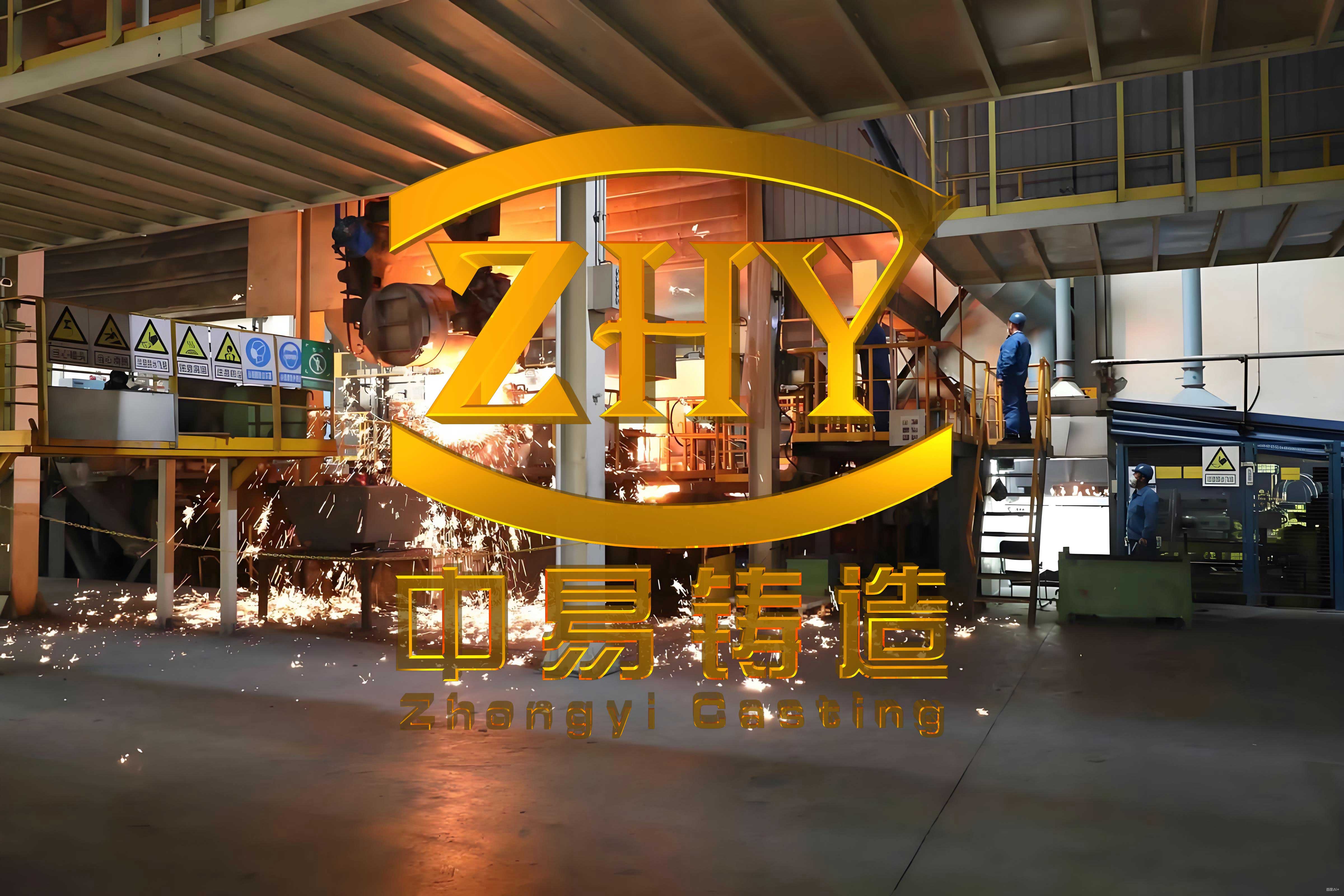
The image above illustrates a state-of-the-art foundry environment, reminiscent of facilities operated by leading sand casting manufacturers. Such setups leverage automation and real-time monitoring to produce high-integrity castings. In my collaborations with sand casting manufacturers, I have seen how digital twins—virtual replicas of the casting process—enable predictive maintenance and quality assurance. For instance, sensors track molten metal temperature and sand moisture, with data fed back to designers for refinement. This closed-loop system embodies Industry 4.0 principles, where sand casting manufacturers become integral partners in the value chain.
From a materials perspective, aluminum alloys like A356 (Al-Si-Mg) are preferred for wheels due to their excellent castability and strength-to-weight ratio. The alloy’s properties can be tailored through heat treatment, such as T6 tempering, which involves solution heat treatment, quenching, and artificial aging. The strengthening mechanism is described by precipitation hardening, where intermetallic phases like Mg2Si impede dislocation motion. The yield strength after aging follows an Arrhenius-type relationship:
$$ \sigma_y = \sigma_0 + A \exp\left(-\frac{Q}{RT}\right), $$
where \( \sigma_0 \) is the base strength, \( A \) is a constant, \( Q \) is the activation energy, \( R \) is the gas constant, and \( T \) is the aging temperature. Sand casting manufacturers must carefully control these parameters to achieve desired mechanical properties, often specified in customer requirements.
In terms of design optimization, I frequently use response surface methodology (RSM) to balance multiple objectives. For a wheel, these might include minimizing mass, maximizing stiffness, and reducing manufacturing cost. A quadratic model can be fitted to simulation data, with the response \( Y \) expressed as:
$$ Y = \beta_0 + \sum_{i=1}^k \beta_i x_i + \sum_{i=1}^k \beta_{ii} x_i^2 + \sum_{i<j} $$="" +=""
where \( x_i \) are design variables (e.g., spoke thickness, fillet radius), \( \beta \) are coefficients, and \( \epsilon \) is error. By solving this model, I identify Pareto-optimal solutions that offer trade-offs between performance and cost, which are then reviewed with sand casting manufacturers for feasibility. This collaborative optimization is key to delivering value, as it aligns design aspirations with production realities.
Sustainability is an emerging concern, and sand casting manufacturers are increasingly adopting eco-friendly practices. For example, reclaimed sand and biodegradable binders reduce environmental impact. In design, lightweighting directly contributes to fuel efficiency in vehicles, lowering carbon emissions. The mass reduction \( \Delta m \) translates to fuel savings over the vehicle’s lifetime, estimated by:
$$ \Delta F = \alpha \cdot \Delta m \cdot L, $$
where \( \Delta F \) is the fuel saved, \( \alpha \) is a factor (typically 0.3–0.5 L/100 km per 100 kg), and \( L \) is the total distance traveled. Thus, efficient designs not only benefit sand casting manufacturers through material savings but also support broader sustainability goals.
To further elucidate the workflow, here is a table mapping design stages to activities and stakeholder involvement, highlighting the pervasive role of sand casting manufacturers:
| Design Phase | Key Activities | Software Tools Used | Interaction with Sand Casting Manufacturers |
|---|---|---|---|
| Conceptualization | Market analysis, sketch creation | AutoCAD, Adobe Illustrator | Consult on material selection and casting feasibility |
| Detailed Design | 2D drafting, 3D modeling | AutoCAD, UG | Review drawings for mold-making requirements |
| Engineering Analysis | FEA, dynamic simulation | ANSYS, UG/NX Nastran | Validate load cases and discuss fatigue life implications |
| Prototyping | Rapid prototyping, pattern fabrication | 3D printers, CNC machines | Supply patterns for sand mold trials; adjust based on feedback |
| Production | Casting, machining, finishing | MAGMA, CAD/CAM software | Oversee casting process; implement SPC for quality |
| Validation | Testing, certification | Lab equipment, data loggers | Conduct NDT and provide certification for batches |
This table underscores how sand casting manufacturers are embedded throughout the lifecycle, from ideation to validation. Their expertise in process variables—such as sand grain size, binder ratio, and pouring speed—complements digital design, ensuring that virtual models translate into physical products without compromise. For instance, during prototyping, sand casting manufacturers might conduct trial casts to verify flow characteristics, using data to fine-tune the gating system. This empirical validation is irreplaceable, as it captures nuances not fully modeled in simulation.
In conclusion, the integrated approach to aluminum wheel design—melding AutoCAD, UG, and ANSYS—represents a paradigm shift in automotive component development. By fostering close collaboration with sand casting manufacturers, designers can create innovative, high-performance wheels that are manufacturable at scale. The synergy reduces development time, cuts costs, and elevates quality, benefiting all stakeholders. As technology advances, this partnership will only deepen, with AI-driven design and smart foundries enabling next-generation wheels. For sand casting manufacturers, embracing this integrated mindset is not just an option but a necessity to thrive in a competitive global market. Through continuous dialogue and shared goals, we can push the boundaries of what’s possible in casting and design, delivering products that excel in both form and function.